Why Jezioro Zdręczno Nature Reserve stands out
Jezioro Zdręczno is best known for protecting a small eutrophic forest lake in the course of natural overgrowth, together with floating and emergent aquatic vegetation, reed marsh communities, and adjacent peatland. Its defining character is the combination of open lake water, marsh, and peat-forming bog, with conditions that support protected and relict plant species typical of nutrient-rich lake margins in the Bory Tucholskie region.
Jezioro Zdręczno Nature Reserve history and protected-area timeline
The reserve was established in 1982 through an act published in the Polish legal register, initially covering an area of approximately 15.74 hectares. Its creation reflected an interest in preserving a representative example of an overgrown eutrophic lake and associated wetland vegetation in the central part of the Tuchola Landscape Park.
In 2024, the reserve was expanded to roughly 22.19 hectares and provided with a formal protective buffer zone of about 38.76 hectares. Alongside this enlargement, protective tasks were formally defined for the area, strengthening its long-term management framework. These changes reflect a broader shift in Polish nature conservation toward tighter hydrological protection and clearer management planning for small wetland reserves embedded within larger protected landscapes.
Jezioro Zdręczno Nature Reserve landscape and geographic character
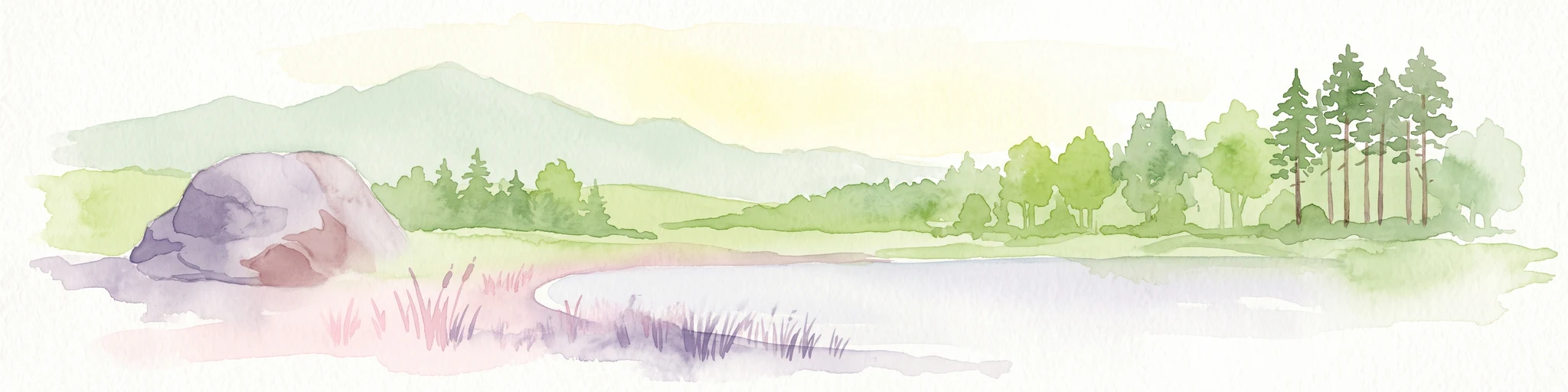
The landscape of Jezioro Zdręczno is shaped by a small forest lake sitting in a basin surrounded by coniferous and mixed forest typical of the Bory Tucholskie region. The lake is in an advanced stage of natural overgrowth, so its open water surface is increasingly bordered and interrupted by aquatic plants, emergent marsh vegetation, and developing peatland. The wider terrain is gently undulating, reflecting the post-glacial origins of the Tuchola Forest landscape, and the reserve sits within a continuous matrix of woodland that limits access and visual disturbance.
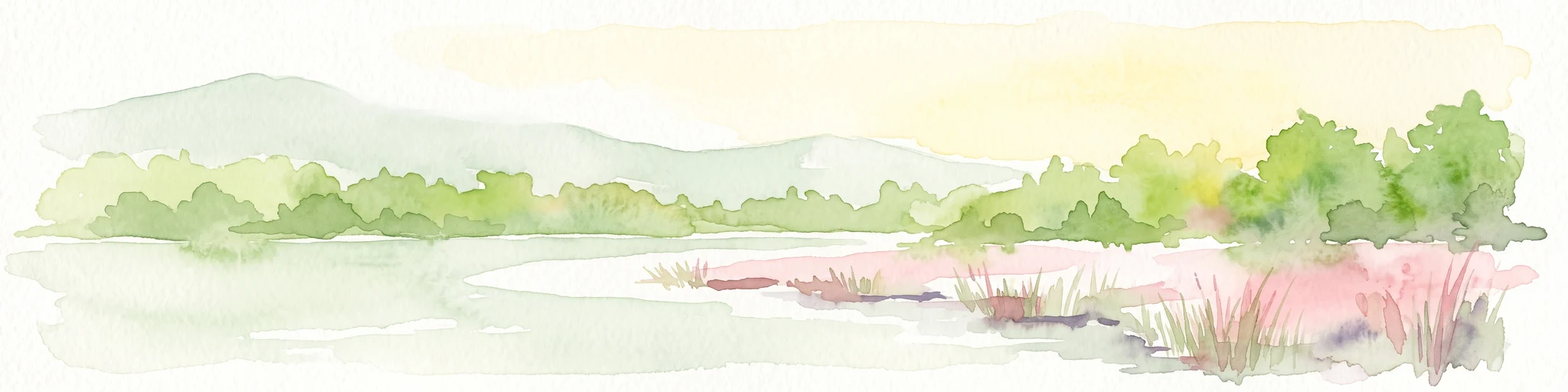
The shoreline character is soft and transitional rather than steep or rocky. Reed marsh and sedge communities fringing the lake grade into peat-forming vegetation at the water's edge, creating a layered wetland margin. The surrounding forests are dominated by the pine-rich woodlands characteristic of the sandy Bory Tucholskie soils, which contrast with the wet, organic-rich substrates of the lake basin itself.
Jezioro Zdręczno Nature Reserve ecosystems, habitats, and plant life
Ecologically, the reserve protects a closely linked set of wetland habitats centered on the eutrophic lake. The lake itself supports aquatic vegetation communities adapted to nutrient-rich conditions, while its margins are defined by reed marsh and sedge formations typical of overgrown lowland lakes. Beyond the immediate shoreline, peatland communities have formed, contributing organic-rich mires that further diversify the wetland character of the site.
This combination of open water, marsh, and peatland forms a compact ecological gradient within a very small area. The result is a habitat mosaic that is richer in ecological transitions than its modest size would suggest. The relict and protected plant species tied to these habitats are a key reason the site was designated as a nature reserve.
Because the reserve lies within the larger Tuchola Landscape Park, its habitats are also functionally connected to a much wider network of forests, lakes, and peatlands. This broader landscape context reinforces the role of Jezioro Zdręczno as a refuge for wetland-dependent species in the Bory Tucholskie mesoregion.
Jezioro Zdręczno Nature Reserve wildlife and species highlights
The reserve is officially classified as a faunistic-type water reserve focused on non-forest communities, although the available documentation centers primarily on the botanical and hydrological values of the lake and its margins rather than on detailed animal inventories. The wetland mosaic supports fauna typical of overgrown eutrophic lakes and peatlands, including bird, amphibian, and invertebrate communities associated with reed marsh and open water habitats.
The forested surroundings extend the available habitat range for woodland species, and the undisturbed, low-disturbance character of the site likely supports species sensitive to human presence. However, the source material does not provide specific detail on individual animal species, so any further wildlife statement should remain general and tied to the wetland and forest setting rather than to specific fauna.
Jezioro Zdręczno Nature Reserve conservation status and protection priorities
Jezioro Zdręczno is a water nature reserve of faunistic character, classified under non-forest community subtype, and plays a focused conservation role within the broader Tuchola Landscape Park. It safeguards a small but ecologically representative example of an overgrown eutrophic lake together with peatland and marsh communities that are increasingly rare and vulnerable in intensively developed lowland Europe.
The 2024 expansion and the formal establishment of a protective buffer zone, along with defined protective tasks, mark a notable strengthening of the reserve's conservation status. The buffer zone helps protect the reserve's hydrology, vegetation, and relict plant populations from external pressures such as forest management changes, drainage, or shoreline alteration. By preserving wetland vegetation and peat-forming processes that support protected and relict species, the reserve contributes to maintaining regional biodiversity within the Bory Tucholskie landscape.
Jezioro Zdręczno Nature Reserve cultural meaning and human context
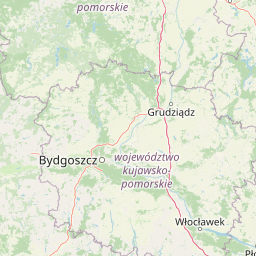
The reserve sits in the Bory Tucholskie region, a historic forested area of northern Poland that has long been shaped by its isolation, sandy soils, and numerous lakes. The surrounding Tuchola Landscape Park reflects a regional tradition of conservation-led landscape protection, integrating human use of the forest with the preservation of its lakes, peatlands, and pine woodlands. The small commune of Tuchola and the locality of Woziwoda lie nearby, but the reserve itself remains primarily a natural rather than a cultural focus.
Top sights and standout views in Jezioro Zdręczno Nature Reserve
Jezioro Zdręczno is a compact but ecologically dense wetland reserve, defined by its overgrown eutrophic lake, reed marsh margins, and adjacent peatland. The site's most distinctive qualities are its protected and relict plant species, its role as a refuge within the larger Tuchola Landscape Park, and its 2024 expansion, which broadened the reserve and added a formal buffer zone. Although small in size, the reserve captures a complete wetland gradient, from open lake water through marsh to peat-forming vegetation, within a continuous Bory Tucholskie forest setting.
Best time to visit Jezioro Zdręczno Nature Reserve
The reserve is most appealing in late spring and summer, when aquatic and reed vegetation is fully developed and wetland bird activity is at its height. Warmer months also highlight the contrast between the open water, marsh, and surrounding pine forest. Autumn brings quieter conditions and seasonal change in the surrounding woodland, while frozen or partially frozen conditions in winter emphasize the remote, undisturbed character of the site. Visitors should note that this is primarily a conservation-focused reserve rather than a developed tourist attraction, and on-site visitation is limited.