Mori Atlas logo
Nature reserveRezerwat przyrody Jodły Oleśnickie

Examining the ecological boundaries and silver fir habitats in Lodzkie Voivodeship

Rezerwat przyrody Jodły Oleśnickie: Protected Forest Landscape and Regional Geography

Rezerwat przyrody Jodły Oleśnickie serves as a critical protected area within the Lodzkie Voivodeship of central Poland. Established to preserve a remnant natural fir forest, the reserve sits near the northern limit of the European fir distribution. This site provides a rare opportunity to study a multi-layered mixed forest habitat, featuring mature silver fir stands that characterize the unique ecological structure of this lowland landscape.

forest reservephytocenotic reservefir forestedge of rangesilver firhornbeam

Rezerwat przyrody Jodły Oleśnickie

Nature reserve

Park overview

Structured park overview, official facts, and landscape profile for Jodły Oleśnickie Nature Reserve

Jodły Oleśnickie Nature Reserve park facts, protected area profile, and essential visitor context

Review the core facts for Jodły Oleśnickie Nature Reserve, including designation, size, terrain, visitor scale, habitats, and operating context in one park-focused overview.

About Jodły Oleśnickie Nature Reserve

Jodły Oleśnickie is a compact forest nature reserve in the Łódź Voivodeship of central Poland, falling within the Lutomiersk commune of Pabianice County. It lies in the Łaska Highland, a flat to gently undulating region typical of much of central Polish countryside. Although the reserve is small, its conservation importance is strongly defined, because it was created specifically to safeguard a piece of natural fir woodland at the periphery of the species' overall geographic distribution.

The site is classified as a phytocenotic reserve, meaning that its central purpose is to protect a particular forest community rather than a single species, geological feature, or landscape element. The forest type preserved here corresponds to the fresh mixed forest habitat, but the dominant species, and the reason for protection, is the European silver fir. This combination gives the reserve a clear scientific profile: it is a place where forest composition, age structure, and marginal-range ecology can be observed in an intact, protected setting.

The reserve's value is amplified by its layered structure. The upper canopy is formed by fir, with the most prized central portion of the site containing groups of mature trees that have grown for a century or longer. Beneath the fir canopy, hornbeam contributes to the lower tree layer, helping maintain the multi-stratum forest architecture typical of well-preserved Central European mixed forests. This richness of vertical structure, rather than the reserve's modest area, is what gives the site its enduring research and educational significance.

Quick facts and research context for Jodły Oleśnickie Nature Reserve

Jodły Oleśnickie is a phytocenotic forest nature reserve situated in the Łódź Voivodeship of central Poland, within the Łaska Highland mezoregion. It was created in 1962 by order of the Minister of Forestry and the Wood Industry to preserve a section of natural fir forest near the boundary of the fir's range, a setting that gives the site strong scientific and educational relevance.

The reserve is administered under an active protection regime established through a 2018 conservation plan. Its forest character is defined by a multi-layered fir stand on fresh mixed-forest habitat, with groups of older mature firs forming the central, most valued portion of the protected area alongside hornbeam in the lower stratum.

Protection and recognition

Analysis of terrestrial protected area parameters and formal designation records

Rezerwat przyrody Jodly Olesnickie Protection Status and Documented Conservation Scope

Rezerwat przyrody Jodly Olesnickie maintains a documented terrestrial protection scope within the regional conservation framework. Official records compile administrative parameters and verified boundary data without external international designations.

Protection details

Protection scope
Terrestrial
Transboundary protection
No
Park context

Deeper park guide and search-rich context for Jodły Oleśnickie Nature Reserve

Jodły Oleśnickie Nature Reserve history, landscape, wildlife, and travel context

Explore Jodły Oleśnickie Nature Reserve through its history, landscape character, ecosystems, wildlife, conservation priorities, cultural context, and seasonal travel timing in a structured park guide built for atlas discovery and search intent.

Why Jodły Oleśnickie Nature Reserve stands out

The reserve is best known for protecting a natural silver fir stand located close to the geographic edge of the fir's range in Poland. This edge-of-range position is the defining feature of the site, since populations of European fir at the limit of their distribution are ecologically distinctive and have long been treated as important objects of conservation, research, and teaching. Within this small protected area, the most valued elements are clusters of mature firs that have reached ages of roughly a century or more. The combination of an intact multi-layered forest structure, the presence of older trees, and the boundary-of-range context makes the reserve a classic example of a Polish phytocenotic reserve created for the protection of a single forest-forming species beyond its main distribution area.

Jodły Oleśnickie Nature Reserve history and protected-area timeline

Jodły Oleśnickie was established on 31 January 1962 through an order of the Minister of Forestry and the Wood Industry, at a time when Polish forestry administration was actively building a network of small reserves to safeguard representative forest communities and noteworthy species stands across the country. The founding legal act cited the scientific and didactic value of preserving a fragment of natural fir forest standing at the boundary of the fir's natural range in Poland.

The original establishing document described a slightly smaller area than the present reserve, indicating that the protected zone was later adjusted or remeasured. Decades after its creation, the reserve continued to be managed as a forest protection site, and in 2018 a formal conservation plan was approved, putting the area under an active protection regime that guides present-day management and silvicultural decisions.

Jodły Oleśnickie Nature Reserve landscape and geographic character

The reserve lies within the Łaska Highland, a lowland mesoregion of central Poland characterized by gently rolling terrain rather than dramatic relief. On the ground, this translates into a quiet agricultural and forest landscape, where woodland patches alternate with fields and small villages, and where landforms are too subtle to dominate the visitor's perception of the place.

Within this broader plain-like setting, the reserve itself is a modest stand of mixed forest. Its terrain is typical of lowland Polish forests: level to gently undulating, with no cliffs, escarpments, watercourses of note, or unusual geomorphological features inside the protected boundary. The landscape significance of Jodły Oleśnickie is therefore ecological rather than scenic; the reserve's character is shaped by what grows there, especially the age and arrangement of its fir trees, rather than by striking topography.

Jodły Oleśnickie Nature Reserve ecosystems, habitats, and plant life

Ecologically, Jodły Oleśnickie is defined by the presence of a natural silver fir community on fresh mixed-forest habitat, a phytosociological setting that combines coniferous and broadleaf elements in a layered structure. The fresh mixed forest type supports both conifers such as fir and broadleaf trees, and the reserve demonstrates this mixture clearly, with fir dominating the upper layers and hornbeam contributing notably to the lower tree stratum.

A key ecological feature of the reserve is its position at the edge of the fir's natural range. Edge-of-range populations often show distinct demographic and structural patterns compared with populations in the core of the species' distribution, and this is part of what gives the site its scientific interest. The presence of older fir groups, together with a multi-layered canopy, points to a forest community that has maintained continuity and natural regeneration patterns, which is precisely the kind of condition a phytocenotic reserve is intended to preserve.

Jodły Oleśnickie Nature Reserve wildlife and species highlights

The source material describing Jodły Oleśnickie is principally focused on the forest community and the role of silver fir, and does not document a distinctive or widely noted fauna associated with the reserve. The site's biological interest is overwhelmingly botanical and phytosociological, centered on the structure of the fir stand, its age composition, and the presence of hornbeam in the lower layers.

Because the reserve protects an intact, multi-layered Central European mixed forest of the type typical of the Łódź region, it can be assumed to host the generalist animal life associated with such habitat, including typical forest birds and small mammals, but the available sources do not provide specific guidance on fauna, and detailed claims should not be invented.

Jodły Oleśnickie Nature Reserve conservation status and protection priorities

The conservation value of Jodły Oleśnickie rests on its role as a protected reference site for a marginal fir population in central Poland. By safeguarding a natural fir stand near the limit of the species' range, the reserve contributes to preserving the genetic and structural diversity of Polish fir forests, including examples of older trees that are increasingly rare in actively managed production forests.

The reserve is administered under an active protection framework formalized through a 2018 conservation plan. Active protection in this context typically involves deliberate management interventions aimed at maintaining or restoring desirable forest characteristics, in this case the multi-layered fir-dominated structure and the continuity of older fir groups. The site's combination of legal protection, scientific purpose, and educational mission makes it a small but meaningful component of Poland's network of forest nature reserves.

Jodły Oleśnickie Nature Reserve cultural meaning and human context

The reserve sits in one of Poland's historically densely settled lowland regions, where forests like this have long coexisted with agricultural land use and small rural communities. The naming of the reserve, drawing on the local tradition of referring to fir stands as 'jodły', reflects the long-standing importance of fir woodlands in the regional identity and folk knowledge of central Poland, even though the specific cultural history of this site is not extensively documented in the available sources.

Top sights and standout views in Jodły Oleśnickie Nature Reserve

The most distinctive feature of Jodły Oleśnickie is its protected natural fir stand located at the edge of the fir's geographic range, a relatively unusual conservation context in Poland. Within the reserve, the central portion contains clusters of older mature firs, whose age and height make them the focal point of the site's scientific and educational significance.

Equally important is the reserve's intact multi-layered forest structure, with fir forming the upper canopy and hornbeam occupying the lower tree layer on fresh mixed-forest habitat. This combination of range-edge location, mature fir groups, and preserved forest architecture gives the reserve a clearly defined ecological identity despite its small size.

Best time to visit Jodły Oleśnickie Nature Reserve

Because the reserve is a small, scientifically oriented forest site, the experience of a visit is shaped less by dramatic seasonal change and more by the conditions of a Central European mixed forest. Late spring and early summer tend to bring out the lushness of the understory and fresh foliage, while autumn highlights the contrast between evergreen firs and the changing broadleaf component, including hornbeam.

Winter visits can be quieter and may offer clearer views into the forest structure, making it easier to appreciate the layered architecture of the stand. Visitors should keep in mind that this is a protected research-oriented reserve rather than a developed tourist attraction, so the goal of any visit is observational rather than activity-based.
Monthly climate preview

Long term representative point measurements for monthly temperature and precipitation variation

Rezerwat przyrody Jodły Oleśnickie Climate and Annual Temperature Rhythm

Representative coordinates record annual temperature swings alongside consistent monthly precipitation rates across the landscape. Detailed monthly averages track long term thermal shifts and moisture patterns for deeper environmental study.
Annual mean9 °C
-3 °C20 °C
Jan-3°
Feb-1°
Mar
Apr
May14°
Jun18°
Jul20°
Aug20°
Sep15°
Oct
Nov
Dec-1°
Warmest month
July

20.3 °C

Coolest month
January

-3.1 °C

Wettest month
July

2.5 mm/day

Driest month
January

1.3 mm/day

Park location guide

Geography guide, regional context, and park location map for Jodły Oleśnickie Nature Reserve

Jodły Oleśnickie Nature Reserve park geography, regions, and map view in Poland

Understand where Jodły Oleśnickie Nature Reserve sits in Poland through a broader geographic reading of the surrounding landscape, nearby location context, and its mapped position within the national park landscape.

How Jodły Oleśnickie Nature Reserve fits into Poland

Poland, officially the Republic of Poland, is a Central European country spanning from the Baltic Sea in the north to the Carpathian Mountains in the south. It borders Germany, Czech Republic, Slovakia, Ukraine, Belarus, Lithuania, and Kaliningrad Oblast. The country has a temperate climate, diverse landscapes, and is known for its rich history, cultural heritage, and strong economic position within the EU.

Wider geography shaping Jodły Oleśnickie Nature Reserve in Poland

Poland occupies 312,696 km2 in Central Europe, extending from the Baltic Sea coast in the north to the Sudetes and Carpathian Mountains in the south. It borders Germany to the west, Czech Republic and Slovakia to the south, Ukraine and Belarus to the east, and Lithuania and Kaliningrad Oblast to the northeast. The landscape includes lowland plains, uplands, and mountain ranges.

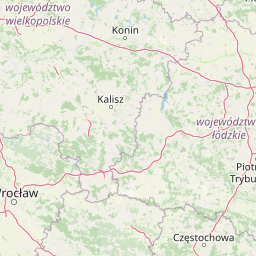
Map view of Jodły Oleśnickie Nature Reserve

Use this park location map to pinpoint Jodły Oleśnickie Nature Reserve in Poland, understand its exact geographic position, and read its mapped placement within the surrounding landscape more clearly.

Pigeon | © OpenStreetMap contributors

Location context for Jodły Oleśnickie Nature Reserve

Lodzkie Voivodeship
Park atlas

Compare regional forest reserves and mapped lowland terrain across central Poland

Parks Near Rezerwat przyrody Jodły Oleśnickie And Surrounding Protected Areas

Browsing other protected areas near Rezerwat przyrody Jodły Oleśnickie reveals connected forest habitats and lowland landscapes across the region. Regional park comparison expands the geographic context beyond single forest reserves into broader conservation networks.
Nature reserveLodz Voivodeship
About 29 km away#1 closest

West

Rezerwat przyrody Jeziorsko: Protected Wetland and Reservoir Geography

A significant inland nature reserve in Lodz Voivodeship

Spanning roughly 1,968 hectares on the Warta River, Rezerwat przyrody Jeziorsko functions as a primary faunal nature reserve and wetland sanctuary. It provides essential habitat for waterbirds, including significant breeding populations of the great egret, within the context of the larger Jeziorsko Reservoir. This area offers a unique look at inland aquatic landscapes and the conservation frameworks shaping regional geography in central Poland.

Area
19.677 km²
Established
1998
Water
Major water bodies
A minimalist watercolor painting showing stylized evergreen trees, rolling hills, and distant mountains in soft green, pink, and yellow tones against a white background.
Nature reserveLodz Voivodeship
About 32 km away#2 closest

South

Rezerwat przyrody Jodły Łaskie im. Stanisława Kostki Wisińskiego Protected Area Atlas

Mapping forest ecosystems and glacial geography in Lodz Voivodeship.

The Rezerwat przyrody Jodły Łaskie im. Stanisława Kostki Wisińskiego serves as a key reference point for central European lowland forest conservation. This nature reserve protects a rare silver fir stand along with mature oaks and pines, showcasing a complex mosaic of forest community types across its uniquely varied glacial lowland terrain.

Area
0.584 km²
Established
1991
Relief
Lowland
Scope
Terrestrial
A watercolor painting of a rolling forested landscape with soft hills and light colors.
Nature reserveLodz Voivodeship
About 37 km away#3 closest

Southeast

Rezerwat przyrody Molenda: Nature Reserve and Ancient Forest Geography in Lodz Voivodeship

Mapping the protected old-growth forest stands of central Poland.

Rezerwat przyrody Molenda represents an essential piece of central Polish geography, safeguarding a mature mixed-forest enclave near Tuszyn. By protecting rare admixtures of fir and beech alongside 150-year-old oaks, the reserve maintains a distinct ecological character. This site provides a look into the region's historical forest heritage, showcasing structurally complex woodlands that contrast with the surrounding lowlands and agricultural terrain.

Area
1.471 km²
Established
1959
Relief
Lowland
Scope
Terrestrial
A horizontal watercolor painting showing a soft, stylized landscape of rolling hills, grassy meadows, and clusters of trees under a bright, open sky.
Protected landscapeŁódź Voivodeship
About 39 km away#4 closest

East

Park Krajobrazowy Wzniesień Łódzkich: Geographic Overview of Central Poland's Uplands

Mapped protected landscape featuring glacial relief and forest ecosystems

Gain insights into the physical character of Park Krajobrazowy Wzniesień Łódzkich, an area defined by its striking northern edge and deep river valleys. This protected landscape preserves significant glacial erratics, a central watershed, and diverse forest cover that contrasts with the surrounding Polish plains.

Area
115.8 km²
Established
1996
Relief
Upland
Climate
Temperate
A pale, soft watercolor illustration showing a winding river flowing through green hills and forests against a light sky.
Nature reserveŁódź Voivodeship
About 53 km away#5 closest

North

Dąbrowa Świetlista Nature Reserve: A Detailed Atlas of Protected Polish Oak Woodlands

Examining the ecological terrain and landscape boundaries of a central Polish forest reserve

This park detail provides a structured look at Dąbrowa Świetlista Nature Reserve, a 40-hectare deciduous forest site in Łódź Voivodeship. Discover the geographic importance of this thermophilic oak community, which functions as a protected island of biodiversity within the surrounding lowland terrain of the Wysoczyzna Kłodawska region.

Area
0.401 km²
Established
1990
Relief
Lowland
Climate
Temperate
Nature reserveLodzkie Voivodeship
About 57 km away#6 closest

East

Doliska Nature Reserve: Protected Forest Boundaries and Geographic Landscape Context in Poland

A study in regional forest conservation and woodland ecology

Located in the Lodzkie Voivodeship, Doliska Nature Reserve is a designated phytocenotic forest area established to preserve specific woodland communities. Its primary geographic value lies in the protection of silver fir populations that exist outside their natural distribution range, making this a foundational site for regional conservation history and ecological study in the heart of lowland Poland.

Area
0.033 km²
Established
1954
Relief
Upland
Scope
Terrestrial
Nature reserveŁódź Voivodeship
About 62 km away#7 closest

Southeast

Rezerwat przyrody Dęby w Meszczach: Protected Oak Forest and Regional Geography

Nature reserve in the Równina Piotrkowska of central Poland.

Located in Łódź Voivodeship, this nature reserve is defined by its ancient pedunculate oaks, some over 250 years old. The site protects a unique blend of oak-hornbeam and mixed coniferous forest communities, serving as an ecologically vital fragment of lowland woodland within an agricultural landscape.

Area
0.392 km²
Established
1989
Relief
Lowland
Climate
Temperate
Protected landscapeLodzkie Voivodeship
About 63 km away#8 closest

Southeast

Sulejowski Park Krajobrazowy: Geography and Protected Landscape Mapping

Central Polish river valley and reservoir terrain

Examine the territorial boundaries and landscape character of Sulejowski Park Krajobrazowy. This protected area integrates riverine corridors, large reservoir habitats, and mixed lowland forests across the Lodzkie Voivodeship, providing a core reference for understanding the ecological geography of the central Pilica valley.

Area
170.26 km²
Established
1994
Relief
Lowland
Climate
Temperate

Common questions about visiting, size, designation, and location context for Jodły Oleśnickie Nature Reserve

Jodły Oleśnickie Nature Reserve FAQs for park facts, access, geography, and protected area context

Find quick answers about Jodły Oleśnickie Nature Reserve, including protected-area facts, park geography, trail and visitor context, and how the park fits into its surrounding country and regional landscape.
MoriAtlas Explorer

Continue Your Protected Areas Search Across the Global Atlas

Deepen your exploration by continuing the structured search for national parks and protected areas worldwide. Utilize the comprehensive filtering capabilities to compare different conservation landscapes and refine your understanding of global park geography. Discover more about the distribution and characteristics of protected natural areas.

Global natural geography