Mori Atlas logo
Nature reserveJodły Sieleckie Nature Reserve

Mapping the natural terrain and historical industrial heritage in the Wzgórza Opoczyńskie region.

Jodły Sieleckie Nature Reserve: A Detailed Geographic Atlas of Protected Forest Landscapes

(Rezerwat przyrody Jodły Sieleckie)

Jodły Sieleckie Nature Reserve represents a key protected area within the Łódź Voivodeship of central Poland. Established to conserve specific forest communities and natural fir regeneration, the reserve occupies undulating terrain characteristic of the Wzgórza Opoczyńskie mesoregion. Beyond its botanical importance, this protected area features distinct geological and cultural layers, including preserved evidence of traditional siderite iron ore mining.

forest reservephytocoenotic reservefir forestWzgórza Opoczyńskiemixed woodlandnature reserve

Jodły Sieleckie Nature Reserve

Nature reserve

Park overview

Structured park overview, official facts, and landscape profile for Jodły Sieleckie Nature Reserve

Jodły Sieleckie Nature Reserve park facts, protected area profile, and essential visitor context

Review the core facts for Jodły Sieleckie Nature Reserve, including designation, size, terrain, visitor scale, habitats, and operating context in one park-focused overview.

About Jodły Sieleckie Nature Reserve

Jodły Sieleckie Nature Reserve is a compact protected area in the heart of Poland, representing a piece of the forested landscape that once stretched more widely across the Wzgórza Opoczyńskie hills. Although the reserve is small, it was established with a clearly defined protective purpose: to safeguard, for scientific and educational reasons, a fragment of forest that still supports natural regeneration of fir, alongside reminders of older human activity in the landscape.

The reserve sits in Sielec, a village within gmina Żarnów in powiat opoczyński, Łódź Voivodeship. The broader mesoregion, Wzgórza Opoczyńskie, provides the reserve with its characteristic terrain of rolling, modestly elevated land that supports the kind of mixed deciduous and coniferous forest communities that the reserve is specifically intended to protect.

Beyond its botanical mission, Jodły Sieleckie stands out because it also shelters traces of small-scale iron ore mining. Historically, siderite ores were extracted here using the duklowa method, a traditional mining technique. The combination of forest conservation and preserved mining heritage gives the reserve an unusually layered identity for an area of its size.

Quick facts and research context for Jodły Sieleckie Nature Reserve

Jodły Sieleckie is a forest nature reserve of the phytocoenotic subtype, dedicated to the protection of forest communities. It is located in Sielec, gmina Żarnów, powiat opoczyński, Łódź Voivodeship, within the Wzgórza Opoczyńskie mesoregion in central Poland. The reserve was established by ministerial order on 21 December 1998 and covers about 32.74 hectares. Its stated goals include preserving a stand with naturally regenerating fir and safeguarding traces of historical siderite iron ore extraction using the duklowa method.

Protection and recognition

Documented terrestrial conservation scope and official status records

Jodły Sieleckie Nature Reserve Protection Status and Recognition Data

Jodły Sieleckie Nature Reserve maintains a documented terrestrial protection scope within the regional conservation network. Official records compile available management parameters and international recognition data for structured geographic analysis.

Protection details

Protection scope
Terrestrial
Park context

Deeper park guide and search-rich context for Jodły Sieleckie Nature Reserve

Jodły Sieleckie Nature Reserve history, landscape, wildlife, and travel context

Explore Jodły Sieleckie Nature Reserve through its history, landscape character, ecosystems, wildlife, conservation priorities, cultural context, and seasonal travel timing in a structured park guide built for atlas discovery and search intent.

Why Jodły Sieleckie Nature Reserve stands out

The reserve is best known for protecting a fragment of mixed forest where fir (jodła) regenerates naturally, a relatively uncommon and ecologically valuable feature in this part of Poland. It is also notable for preserving visible traces of historical siderite iron ore mining carried out with the traditional duklowa technique, making it a site where woodland conservation and industrial heritage overlap.

Jodły Sieleckie Nature Reserve history and protected-area timeline

The reserve was created by order of the Minister of Environmental Protection, Natural Resources and Forestry on 21 December 1998, formalizing protection of an area in Sielec, gmina Żarnów. The founding act specified both a scientific and educational objective: protecting a fragment of forest containing naturally regenerating fir, along with the remnants of historic siderite iron ore mining conducted using the traditional duklowa method. The original founding document listed the area as 33.13 hectares, while the currently recognized size is approximately 32.74 hectares.

Jodły Sieleckie Nature Reserve landscape and geographic character

Jodły Sieleckie lies within the Wzgórza Opoczyńskie, a mesoregion characterized by gently rolling terrain rather than dramatic peaks, but distinctive enough within central Poland to support specific forest communities. The reserve itself occupies a woodland fragment on this undulating ground, with terrain shaped by both natural processes and older human activity. The presence of old mining traces from historical siderite extraction using the duklowa method adds a subtle cultural texture to the physical landscape, blending woodland relief with reminders of the area's industrial past.

Jodły Sieleckie Nature Reserve ecosystems, habitats, and plant life

Ecologically, the reserve is intended to protect forest communities typical of the Wzgórza Opoczyńskie, with a particular focus on stands where fir (jodła) regenerates naturally. Such natural regeneration is ecologically significant because fir has become less common across many parts of lowland and upland Poland due to historical forest management practices, making self-sustaining fir populations an important conservation target. The reserve's phytocoenotic classification reflects this community-level focus, emphasizing the preservation of representative forest assemblages rather than individual species alone.

Jodły Sieleckie Nature Reserve conservation status and protection priorities

The reserve's conservation value rests on two complementary dimensions. First, it protects a fragment of forest community in the Wzgórza Opoczyńskie where fir naturally regenerates, supporting the persistence of a forest type that has become uncommon in this region. Second, it preserves cultural-industrial heritage in the form of traces from historical siderite ore mining using the duklowa method, ensuring that an important element of the area's land-use history remains intact within a protected natural setting. The 1998 legal designation as a phytocoenotic forest reserve confirms its dual scientific and educational role.

Jodły Sieleckie Nature Reserve cultural meaning and human context

The reserve carries a tangible historical layer: it preserves traces of local siderite iron ore extraction that was carried out using the traditional duklowa mining method. This element of cultural-industrial heritage is explicitly cited in the founding act of 1998 as part of what the reserve is meant to protect, recognizing that the landscape of the Wzgórza Opoczyńskie carries not only ecological but also mining-historical significance.

Top sights and standout views in Jodły Sieleckie Nature Reserve

A forest nature reserve in the Wzgórza Opoczyńskie mesoregion of central Poland, established in 1998 to protect woodland communities with natural fir regeneration. Notable for combining ecological protection with preserved traces of historical siderite iron ore mining using the traditional duklowa method. Compact in size but clearly defined in purpose, serving both scientific study and public education.
Monthly climate preview

Long-term representative point measurements tracking annual temperature and precipitation cycles

Jodły Sieleckie Nature Reserve Climate Normals and Monthly Weather Records

Representative coordinates record measured monthly temperature swings from negative winter minimums to positive summer maximums alongside consistent daily precipitation averages. Exploring the full twelve-month profile reveals granular climate patterns across the protected terrain.
Annual mean8 °C
-3 °C20 °C
Jan-3°
Feb-2°
Mar
Apr
May14°
Jun18°
Jul20°
Aug20°
Sep14°
Oct
Nov
Dec-2°
Warmest month
July

20.1 °C

Coolest month
January

-3.5 °C

Wettest month
July

2.8 mm/day

Driest month
January

1.3 mm/day

Park location guide

Geography guide, regional context, and park location map for Jodły Sieleckie Nature Reserve

Jodły Sieleckie Nature Reserve park geography, regions, and map view in Poland

Understand where Jodły Sieleckie Nature Reserve sits in Poland through a broader geographic reading of the surrounding landscape, nearby location context, and its mapped position within the national park landscape.

How Jodły Sieleckie Nature Reserve fits into Poland

Poland, officially the Republic of Poland, is a Central European country spanning from the Baltic Sea in the north to the Carpathian Mountains in the south. It borders Germany, Czech Republic, Slovakia, Ukraine, Belarus, Lithuania, and Kaliningrad Oblast. The country has a temperate climate, diverse landscapes, and is known for its rich history, cultural heritage, and strong economic position within the EU.

Wider geography shaping Jodły Sieleckie Nature Reserve in Poland

Poland occupies 312,696 km2 in Central Europe, extending from the Baltic Sea coast in the north to the Sudetes and Carpathian Mountains in the south. It borders Germany to the west, Czech Republic and Slovakia to the south, Ukraine and Belarus to the east, and Lithuania and Kaliningrad Oblast to the northeast. The landscape includes lowland plains, uplands, and mountain ranges.

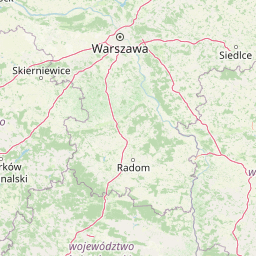
Map view of Jodły Sieleckie Nature Reserve

Use this park location map to pinpoint Jodły Sieleckie Nature Reserve in Poland, understand its exact geographic position, and read its mapped placement within the surrounding landscape more clearly.

Pigeon | © OpenStreetMap contributors

Location context for Jodły Sieleckie Nature Reserve

Lodzkie Voivodeship
Park atlas

Compare regional forest reserves and mapped woodland geography across central Poland

Exploring Parks Near Jodły Sieleckie Nature Reserve and Surrounding Protected Areas

Browsing other protected areas near Jodły Sieleckie Nature Reserve reveals related forest communities and undulating regional landscapes. Extending the geographic review helps map connected woodland reserves and compare local conservation settings across central Poland.
Nature reserveLodzkie Voivodeship
About 11 km away#1 closest

West

Rezerwat przyrody Diabla Góra: Nature Reserve and Geological Landmark in Lodzkie Voivodeship

Mapped sandstone outcrops in the Opoczno Hills

Located in central Poland, Rezerwat przyrody Diabla Góra protects an unusual elevated woodland site characterized by exposed sandstone formations and distinct regional biodiversity. The reserve stands as a prominent geographic feature within the local landscape, offering insights into the natural history and terrain composition of the Opoczno Hills region.

Area
1.612 km²
Established
1987
Relief
Upland
Climate
Temperate
Protected landscapeLodzkie Voivodeship
About 16 km away#2 closest

Northwest

Sulejowski Park Krajobrazowy: Geography and Protected Landscape Mapping

Central Polish river valley and reservoir terrain

Examine the territorial boundaries and landscape character of Sulejowski Park Krajobrazowy. This protected area integrates riverine corridors, large reservoir habitats, and mixed lowland forests across the Lodzkie Voivodeship, providing a core reference for understanding the ecological geography of the central Pilica valley.

Area
170.26 km²
Established
1994
Relief
Lowland
Climate
Temperate
National parkMasovian Voivodeship
About 30 km away#3 closest

North

Kampinos National Park: Geographic Profile and Protected Forest Landscape Map

Inland dune formations and wetland habitats in Masovian Voivodeship

The expansive woodland of Kampinos National Park represents a critical protected area in Poland, characterized by its parabolic sand dunes and low-lying marshes. Gain insights into the geomorphological features of this UNESCO biosphere reserve and trace the complex hydrological network that defines its unique forest environment.

Area
385.44 km²
Established
1959
IUCN
II
Relief
Lowland
A soft watercolor illustration of a marshy landscape with low rolling hills, scattered trees, and a winding stream, rendered in light green and yellow tones on a white background.
National parkMasovian Voivodeship
About 30 km away#4 closest

North

Kampinoski Park Narodowy: Mapping the Inland Dune and Wetland Landscapes of Central Poland

A vital protected area in Masovian Voivodeship

The landscape of Kampinoski Park Narodowy is defined by the Grochalskie Piachy dune complex and diverse riparian habitats. This atlas entry covers the geological history and protected boundaries of this significant lowland forest, tracing the Vistula river valley's influence on the surrounding terrain and ecological character.

Area
385.443 km²
Established
1959
Visitors
1M annual
Relief
Lowland
Protected landscapeŚwiętokrzyskie Voivodeship
About 30 km away#5 closest

Southeast

Suchedniowsko-Oblęgorski Park Krajobrazowy: A Protected Landscape in Świętokrzyskie

Geographic terrain, forest ecosystems, and industrial heritage

Located in the Świętokrzyskie Voivodeship, this protected area preserves significant forest stands and historic industrial remnants. The terrain captures the intersection of plateau geology and hill country, hosting the headwaters of the Bobrza and Krasna rivers within a culturally layered, heavily forested environment.

Area
198.95 km²
Established
1988
Relief
Mountain
Climate
Temperate
Nature reserveŁódzkie Voivodeship
About 31 km away#6 closest

West

Łąka w Bęczkowicach Nature Reserve: Mapping Wetland Habitats in Central Poland

Riparian ecosystems and protected peat meadow geography

Łąka w Bęczkowicach serves as a specialized nature reserve in the Łódzkie Voivodeship. Defined by its peat extraction legacy and subsequent development into a vibrant wetland habitat, the area provides essential shelter for rare orchids and riparian wildlife along the Luciąża River, showcasing the ecological evolution of lowland meadows in central Poland.

Area
1.912 km²
Established
2008
Relief
Lowland
Climate
Temperate
Nature reserveLodzkie Voivodeship
About 35 km away#7 closest

North

Łąki Ciebłowickie Nature Reserve: A Central Poland Floodplain Landscape Analysis

Protected riparian ecosystems and riverine lowland geography

Łąki Ciebłowickie represents an ecologically rich floodplain environment within the Lodzkie Voivodeship. This nature reserve preserves a sequence of vital lowland habitats ranging from marshy meadows to oak-hornbeam forests. Analyze the mapped boundaries and natural terrain features that define this protected riverine mosaic in the heart of central Europe.

Area
4.772 km²
Relief
Lowland
Climate
Temperate
Access
Access unknown
Nature reserveLodzkie Voivodeship
About 36 km away#8 closest

Northwest

Rezerwat przyrody Meszcze Nature Reserve: Mapped Protected Landscape and Forest Ecology

Protected fresh mixed forest within the Sulejów Landscape Park context

Rezerwat przyrody Meszcze represents a compact, protected forest block in central Poland. Known for its historical small-leaved lime regeneration, this reserve provides a key case study for forest structure and lowland biodiversity within the Lodzkie Voivodeship, serving as an important part of the Sulejów Landscape Park's protected corridor.

Area
0.353 km²
Established
1959
Relief
Lowland
Scope
Terrestrial

Common questions about visiting, size, designation, and location context for Jodły Sieleckie Nature Reserve

Jodły Sieleckie Nature Reserve FAQs for park facts, access, geography, and protected area context

Find quick answers about Jodły Sieleckie Nature Reserve, including protected-area facts, park geography, trail and visitor context, and how the park fits into its surrounding country and regional landscape.
MoriAtlas Explorer

Continue Your Protected Areas Search Across the Global Atlas

Deepen your exploration by continuing the structured search for national parks and protected areas worldwide. Utilize the comprehensive filtering capabilities to compare different conservation landscapes and refine your understanding of global park geography. Discover more about the distribution and characteristics of protected natural areas.

Global natural geography