
Why Kleanza Creek Provincial Park stands out
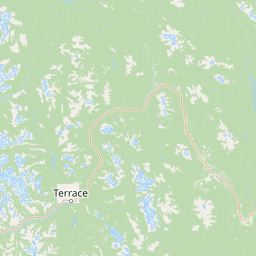
Kleanza Creek Provincial Park is best known for its forested rock canyons and cascades along Kleanza Creek, and for its role as a key pink salmon spawning stream. The park also carries a distinctive cultural and historical identity through its Gitxsan-derived name, 'Kleanza', meaning gold, which links the landscape to the placer gold-mining era of the 1890s.
Kleanza Creek Provincial Park history and protected-area timeline
The history of Kleanza Creek Provincial Park begins with the creek itself and its nineteenth-century role in British Columbia's gold-rush era. The name 'Kleanza' derives from the Gitxsan word for gold, reflecting the long-standing recognition by Indigenous peoples of the area's mineral wealth. In the 1890s, placer miners arrived along the creek seeking gold in the gravels of the streambed.
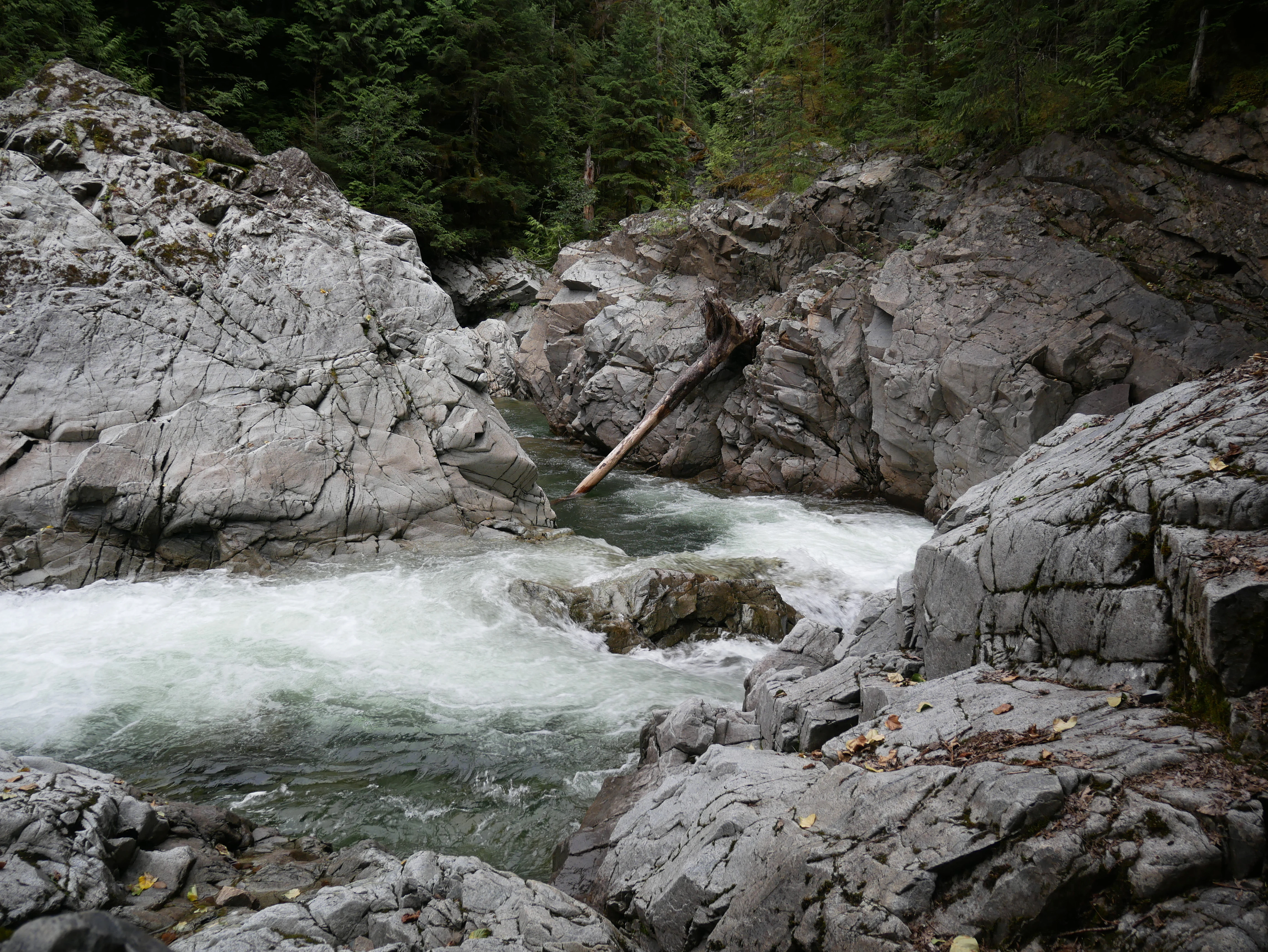
That mining activity proved short-lived. The miners discovered that the creek was too deep and the volume of water too great to allow efficient extraction, and the workings were eventually abandoned. The physical traces of those early efforts, including old mine features, can still be observed within the rock canyons that define the park today, giving the landscape a tangible connection to this gold-rush past.
In 1956, the area was formally protected as Kleanza Creek Provincial Park, placing the canyon, the creek, and its surrounding forests under the management of BC Parks. Since then, the park's significance has shifted from mining heritage to ecological protection, particularly as a refuge for the salmon populations that continue to run up Kleanza Creek each year.
Kleanza Creek Provincial Park landscape and geographic character
Kleanza Creek Provincial Park occupies a visually dramatic slice of the Coast Mountains. The terrain is shaped by Kleanza Creek itself, which has cut a series of rock canyons through forested mountainside near Terrace. The result is a landscape of narrow gorges, exposed rock faces, and tumbling cascades, framed by the dense coniferous forest typical of British Columbia's coastal interior.
Rather than broad alpine vistas, the park's scenic character is defined by contrast: dark forested slopes pressing in against pale canyon walls and white water. The creek threads through this rocky corridor, creating a constantly shifting pattern of cascades, pools, and exposed bedrock. This intimate canyon-and-creek scenery, set within the larger Coast Mountains frame, is the defining feature of the park's physical geography.
Kleanza Creek Provincial Park ecosystems, habitats, and plant life
Ecologically, Kleanza Creek Provincial Park sits at the meeting point between coastal mountain forest and freshwater aquatic habitat. The hillslopes hosting the creek carry the characteristic coastal-interior forest cover of the region, dominated by conifers adapted to the wet, temperate conditions of northwestern British Columbia. Beneath this canopy, the rock-walled canyon system creates distinct microhabitats where forest, rock, and flowing water interact.
The creek is the ecological backbone of the park. Its cold, fast-moving waters and gravel beds support spawning habitat for salmon, while the surrounding canyon walls and riparian forest shelter the broader network of life tied to the stream. This combination of intact forest cover and a healthy, flowing creek gives the park a layered ecological identity, integrating forest, freshwater, and canyon ecosystems within a small but coherent protected footprint.
Kleanza Creek Provincial Park wildlife and species highlights
The wildlife profile of Kleanza Creek Provincial Park is shaped above all by the creek's role as a salmon-bearing river. Kleanza Creek is a major migratory waterway for pink salmon, which return to the creek during the fall to spawn in its gravel beds. These seasonal salmon runs are the most prominent and widely recognized wildlife feature of the park, drawing attention to the importance of protecting undisturbed spawning habitat.
Beyond the aquatic life centered on the salmon, the surrounding forest and canyon habitats support the broader fauna typical of the Coast Mountains in this part of British Columbia. The combination of intact forest cover, rocky canyon terrain, and a productive stream creates conditions favorable for the regional birdlife, mammals, and aquatic species associated with salmon-bearing creeks in northwestern BC.
Kleanza Creek Provincial Park conservation status and protection priorities
Kleanza Creek Provincial Park contributes to conservation in British Columbia by safeguarding both a distinctive canyon landscape and an ecologically important salmon stream. The park's protected status, established in 1956 and managed by BC Parks, ensures that the rock canyons carved by Kleanza Creek and the surrounding forested slopes remain intact, while also keeping the creek's waters free from the kinds of disturbance that can degrade spawning habitat.
The pink salmon run that returns to Kleanza Creek each fall is the park's central conservation concern. By protecting the creek corridor and its gravel spawning grounds, the park helps maintain a functioning stretch of salmon habitat within the larger Skeena River watershed, which is one of the most significant salmon systems on the Pacific coast of North America. In this way, a modest 269-hectare park plays a meaningful role in preserving both landscape character and freshwater biodiversity in the Coast Mountains.
Kleanza Creek Provincial Park cultural meaning and human context
The cultural significance of Kleanza Creek Provincial Park is closely tied to its name. 'Kleanza' is a Gitxsan word meaning gold, reflecting Indigenous knowledge of the creek's mineral content long before European-era mining arrived. The Gitxsan, whose traditional territory lies in the Skeena River region of northwestern British Columbia, have long-standing cultural and historical connections to the waterways around Terrace, including Kleanza Creek itself.
The 1890s placer gold rush then layered a second wave of cultural history onto the landscape. Although that mining effort was brief, abandoned because the creek ran too deep and too fast, the remnants of early workings remain visible in the canyons. Together, the Gitxsan origins of the name and the gold-rush heritage give the park a cultural depth that complements its natural values, anchoring the site within the broader human story of the Skeena region.
Top sights and standout views in Kleanza Creek Provincial Park
Kleanza Creek Provincial Park stands out for the unusual concentration of canyon scenery, forest, and salmon habitat packed into a small Coast Mountains protected area near Terrace. The cascades and rock-walled sections of Kleanza Creek give the park immediate visual appeal, while the seasonal return of pink salmon anchors its ecological identity.
Layered onto these natural attributes is the historical resonance of the Gitxsan-derived name and the surviving traces of late-nineteenth-century placer mining. This combination of canyon landscape, salmon-bearing waters, protected forest, and gold-rush heritage makes Kleanza Creek Provincial Park a distinctive and multi-layered destination within British Columbia's network of provincial parks.
Best time to visit Kleanza Creek Provincial Park
The character of a visit to Kleanza Creek Provincial Park shifts with the seasons in ways that reflect both landscape and wildlife. Late summer and early autumn are particularly significant because that is when pink salmon return to Kleanza Creek to spawn, making the river corridor a focal point of seasonal activity. Cooler autumn weather also tends to stabilize water levels, allowing the cascades to be seen under more typical flow conditions.
Spring and summer bring warmer conditions for exploring the canyon's forested approach and viewing the cascades under higher snowmelt-driven flow. Winter visits are possible but bring heavier precipitation, cooler temperatures, and potentially more challenging footing along the canyon terrain, which is best appreciated when rock, water, and forest can be experienced safely.