
Why Kleiner Selberg stands out
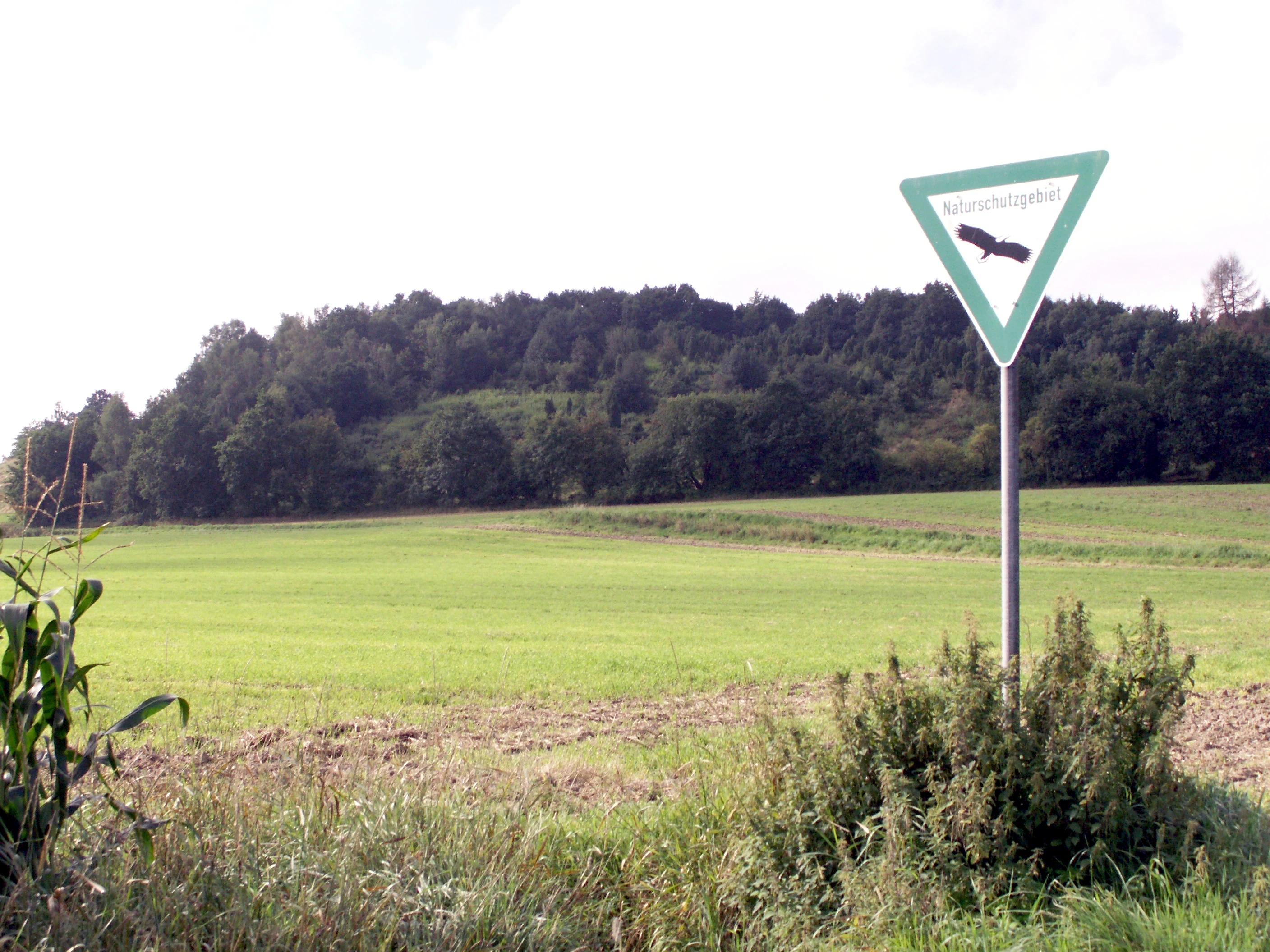
Kleiner Selberg is best known for its protected juniper heath (Wacholderheide), a comparatively rare cultural landscape habitat in the region. The reserve preserves a mosaic of juniper shrubs, woodland, bilberry-dominated dwarf shrub heath, and nutrient-poor grasslands along a modest but ecologically significant hill in the Lipper Bergland. It is also recognized for its conservation history: the hill was nearly bare in the 1930s, was partially reforested on its western slopes, and has since been managed through shrub removal, soil stripping, and heather reintroduction to revive characteristic heath vegetation. The presence of species such as the red-backed shrike, tree pipit, small copper butterfly, and field cricket underscores its continued ecological value as a small but rich nature reserve in East Westphalia-Lippe.
Kleiner Selberg history and protected-area timeline
The hill's recent ecological history is closely tied to changing land use. In the 1930s the Kleiner Selberg was still nearly bare of woody vegetation, an open state consistent with traditional grazing use. During that decade the western, steeper slope sections were planted with shrubs and trees, after which woody vegetation began to spread across additional parts of the hill.
The site was first designated as the Naturschutzgebiet Kleiner Selberg in 1971, establishing formal protection for its juniper heath, woodland, and poor grassland habitats. A renewed designation followed in 1998 through the landscape plan (Landschaftsplan) of Vlotho, reaffirming and updating conservation boundaries and management objectives for the area.
The Kreis Herford acquired the heath areas on the north-eastern side of the hill and has maintained them through regular 'Entkusseln', the removal of encroaching shrubs. Traditional sheep grazing was carried out only sporadically in recent decades. In 2008 and 2009, partial sections were stripped of their topsoil and vegetation with excavators and other equipment, and the exposed raw soil was seeded with heather from the Senne region to encourage recolonization. After many young heather plants died back during the dry summer of 2010, additional heather seed was introduced in 2011, leading to successful recolonization of the stripped areas. These restoration measures were supported by the state of North Rhine-Westphalia and the European Union.
In the south and southeast of the reserve, meadow areas are now managed extensively under contract nature conservation agreements: they are no longer fertilized and are only mown after 15 June, supporting late-season flowering and invertebrates.
Kleiner Selberg landscape and geographic character
Kleiner Selberg is a low but prominent hill crowning the surrounding agricultural and forested land of the eastern Lipper Bergland. At 271.7 meters it is not high in absolute terms, but within the rolling terrain of the Vlotho area it forms part of the most notable group of summits in the Kreis Herford, paired visually and topographically with the slightly higher Großer Selberg immediately to the west.
The physical character of the hill is shaped by contrasting slope aspects. The north-facing slope, sheltered and cooler, supports bilberry-dominated dwarf shrub heath and a band of taller junipers higher up, giving way to the steeper, partially wooded western flank. The east-facing slope is more open and carries nutrient-richer meadows and pastures, while the southeastern foot of the hill connects to the Bonstapel and Nettelberg heights. Across the eastern side flows the Linnenbeeke, a small brook whose spring lies at the Bonstapel, creating the moist valley habitat that links the Kleiner Selberg reserve to the neighboring Linnenbeeke nature reserve.
Overall, the landscape impression is one of a small, rounded hill harboring a fine-grained mosaic of dry heath, shrubs, woodland patches, and grassy slopes, set against the broader rural scenery of the Weserbergland foothills.
Kleiner Selberg ecosystems, habitats, and plant life
Ecologically, Kleiner Selberg is defined by its heathland character, one of the more unusual habitat types preserved in the Lipper Bergland. The protected area safeguards a juniper heath (Wacholderheide) populated by more than 1,000 juniper bushes, some reaching four meters in height, alongside mixed woodland and nutrient-poor meadows and pastures. These habitats are conservation priorities because traditional juniper heaths have become rare across much of central Germany.
The vegetation shows a clear pattern related to slope and soil conditions. On the north slope, dry conditions favor a dwarf shrub heath dominated by bilberry, with junipers concentrated in the upper zone. The hill also supports protected fern species, including the mountain male fern and the hard fern, which add to the botanical interest of the woodland fringes. On the east slope, deeper soils and more nutrient availability support richer meadows and pastures.
The reserve is therefore best understood as a small, structurally diverse landscape: dry, juniper-rich upper slopes and cool, bilberry-clad north-facing slopes contrast with more mesic grassland and the moist habitats along the Linnenbeeke valley that fringes the protected area.
Kleiner Selberg wildlife and species highlights
Although a small site, Kleiner Selberg supports several rare and protected species, reflecting the value of its heath-grassland mosaic for invertebrates, birds, and other fauna. Bird records from within the nature reserve include the red-backed shrike, a characteristic species of open countryside rich in shrubs and insects, and the tree pipit, a ground-nesting songbird of heath edges and light woodland.
The invertebrate fauna is equally notable. The protected small copper butterfly has been documented in the area, alongside the field cricket, an insect that thrives in the warm, dry, low-vegetation conditions maintained by the reserve's management. The combination of dry juniper heath, open meadows, and nearby brook-side vegetation in the adjoining Linnenbeeke reserve likely supports additional insect diversity, even where the official records focus on these few highlighted species.
Overall, the wildlife significance of Kleiner Selberg lies less in richness of large mammals and more in the persistence of specialized heathland species that depend on the open, warm, shrub-rich conditions actively maintained by the reserve's conservation work.
Kleiner Selberg conservation status and protection priorities
Kleiner Selberg's conservation value centers on the protection and active restoration of a juniper heath landscape within the Lipper Bergland. The site has been formally protected as a nature reserve since 1971 and was reaffirmed through the 1998 Vlotho landscape plan, covering around 13.6 hectares of juniper heath, woodland, and nutrient-poor grassland that connects ecologically to the adjoining Linnenbeeke nature reserve.
Active management has been central to the reserve's character. The Kreis Herford owns key heath areas on the north-eastern side of the hill and carries out regular shrub removal to prevent woodland encroachment. Where shrub cover advanced, restoration crews in 2008 and 2009 stripped topsoil and reseeded using heather sourced from the Senne region, a technique aimed at re-establishing the typical heath flora. A follow-up seeding in 2011 compensated for losses during the very dry summer of 2010, and the stripped plots were subsequently colonized by numerous young heather plants.
In the southern and southeastern parts of the reserve, grassland is managed under contract nature conservation: meadows are no longer fertilized and are mown only after 15 June, ensuring late-season habitats for insects and wild plants. These measures, supported by the state of North Rhine-Westphalia and the European Union, together with the long-standing protection status, make Kleiner Selberg a representative example of small-scale, intensively managed heath conservation in East Westphalia-Lippe.
Kleiner Selberg cultural meaning and human context
The cultural context of Kleiner Selberg is tied to the long tradition of grazing and small-scale agriculture on hills in the Lipper Bergland. Extensive historical grazing is what kept the hill nearly bare of woody vegetation as late as the 1930s and shaped the open heath character that is now actively conserved. The partial reforestation of the steeper western slopes in the 1930s represents a turning point in that traditional land-use pattern.
In the broader regional sense, the hill belongs to the Weserbergland, a landscape with strong identity in northern German cultural geography, and it is documented as part of the cluster of protected areas (Naturschutzgebiete) within the Vlotho area, alongside the Eiberg, Linnenbeeke, and other neighboring reserves. The reserve also appears in regional scientific literature, such as a 2013 comparative study of nature reserves in the Kreis Herford, indicating its recognized place within local natural history and conservation scholarship.
Top sights and standout views in Kleiner Selberg
The standout features of Kleiner Selberg are its protected juniper heath with more than 1,000 recorded juniper bushes, its bilberry-dominated dwarf shrub heath on the cooler north slope, and its mosaic of dry heath, woodland, and nutrient-poor grassland along a small Weserbergland hill. The reserve's value is reinforced by its direct ecological linkage with the neighboring Linnenbeeke nature reserve and its parallel conservation role with the nearby Eiberg reserve.
Equally notable is the reserve's active restoration record: soil-stripping operations in 2008 and 2009, supported by NRW and EU funding, followed by a successful 2011 heather reseeding that revived typical heath vegetation on former bare plots. The 2013 comparative study of nature reserves in the Kreis Herford by Heinz Lienenbecker provides a documented scientific baseline for the site's flora and fauna.
Best time to visit Kleiner Selberg
Because Kleiner Selberg is a small nature reserve centered on heath and juniper habitats, late spring through early autumn is the most rewarding period to visit, when the heath vegetation is fully developed and species such as butterflies and birds are most active. The dwarf shrub heath on the north slope and the juniper stands are best appreciated in late spring and summer, when the bilberry foliage and juniper foliage are in full growth and insects such as the small copper butterfly are on the wing.
Late summer also reveals the conservation result of the reserve's mowing regime in the southern meadows, which are not cut until after mid-June, allowing late-flowering plants and seed set. Visitors in cooler months will find a quieter, more subdued landscape, with bare juniper silhouettes and fewer active species, but the underlying heath mosaic remains structurally visible year-round.