Why Markowe Błota Nature Reserve stands out
Markowe Błota is best known for its patchwork of peat bogs and beech-dominated forest on the Gorzów Plain. The reserve combines species-rich wetlands with mature beech and mixed woodland, creating a mosaic that supports bog flora such as round-leaved sundew and white water lily alongside nesting habitats for birds like the white-tailed eagle and common crane.
Markowe Błota Nature Reserve history and protected-area timeline
The Markowe Błota reserve was created on 26 January 1994 by order of the Polish Minister of Environmental Protection, Natural Resources, and Forestry. Its original extent was larger than today, covering 193.4 hectares at the time of establishment. The legal basis was published in the Polish Monitor (Monitor Polski) of 1994.
In 2016, the boundaries of the reserve were adjusted, reducing its total area to roughly 93.80 hectares. The current official size cited for the reserve is 92.74 hectares. With this reduction, the protection status inside the reserve was also reorganized: about 42.95 hectares are now under strict protection (ochrona ścisła), where natural processes are allowed to unfold without active intervention, while about 49.79 hectares are under active protection (ochroną czynną), where management actions support particular conservation goals.
The founding purpose of the reserve, as recorded in the establishing act, was to preserve the bogs with their typical flora and fauna, along with beech and mixed forest stands, for scientific, educational, and landscape reasons. The current official formulation of the protection objective emphasizes preserving the mosaic of forest ecosystems together with bogs and their characteristic flora and fauna, reflecting an updated understanding of the site as an integrated wetland-forest system rather than a collection of separate habitats.
Markowe Błota Nature Reserve landscape and geographic character
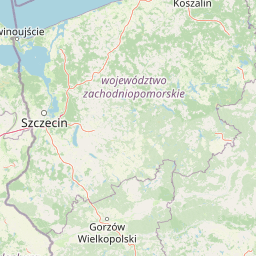
The reserve lies on the Równina Gorzowska, the Gorzów Plain, a lowland region shaped by Pleistocene glaciation and subsequent post-glacial hydrological development. The result is a generally flat to gently undulating terrain, marked by shallow depressions where wetland processes have taken hold. These depressions fill with rainwater and slowly draining groundwater, building up peat layers and supporting bog and marsh vegetation.
Within the reserve, the landscape alternates between raised and transitional bog features and surrounding dry-ground forest. Wet hollows, soft peat substrates, and small pools or slow channels contrast with the firmer, better-drained land that carries the beech and mixed forest. This alternating pattern of bog and forest is the central feature of the reserve's land surface and gives the protected area much of its physical identity.
The wider Barlinecko-Gorzowski Landscape Park, in which Markowe Błota sits, surrounds the reserve with a managed landscape of forest, agricultural land, and small watercourses. Within this broader setting, the reserve itself functions as a relatively undisturbed core of bog and forest, helping to anchor the natural character of the surrounding park landscape.
Markowe Błota Nature Reserve ecosystems, habitats, and plant life
Markowe Błota is defined ecologically by the coexistence of bog communities and forest communities across a small area. The bogs include both open peat-forming sections and wetter margins where the transition between bog and forest creates distinctive edge habitats. These conditions support a specialized plant flora adapted to nutrient-poor, acidic, waterlogged substrates, alongside more common wetland species found in pools and channels.
The forest component is dominated by beech (Fagus sylvatica), with mixed stands that incorporate other broadleaf species. The interaction between these beech and mixed forests and the bog system is one of the defining features of the reserve, and it is the reason the original reserve order specifically mentioned beech and mixed forest stands alongside bog habitats. The combination produces a habitat mosaic where dry-ground forest, wet forest margins, open bog, and bog pools all occur within short distances of one another.
Depending on season and water levels, visitors and researchers may encounter flowing or standing water in the bog sections, saturated peat surfaces, and the characteristic zonation from open wetland to closed-canopy forest. These conditions, combined with the reserve's protected status, allow the natural ecological processes of both forest and bog systems to continue with minimal disturbance.
Markowe Błota Nature Reserve wildlife and species highlights
The reserve is recognized for its importance to breeding birds associated with large, undisturbed bog and forest habitats. Among the notable breeding species recorded here are the white-tailed eagle (Haliaeetus albicilla) and the common crane (Grus grus). The presence of these species indicates that the reserve provides the kind of quiet, heterogeneous landscape that larger and more sensitive birds require for nesting.
The bog flora and fauna also support a broader community of wetland-dependent species, from invertebrates associated with peat substrates to amphibians that use the bog pools. The beech and mixed forest component provides habitat for woodland invertebrates, small mammals, and bird species typical of mature deciduous forests in the region. Together, these communities make the reserve a small but ecologically rich site within the Barlinecko-Gorzowski Landscape Park.
Markowe Błota Nature Reserve conservation status and protection priorities
Markowe Błota is protected as a nature reserve under Polish conservation law, and it is also embedded within the broader Barlinecko-Gorzowski Landscape Park, which gives it an additional layer of regional landscape protection. The reserve is supervised by the Barlinek Forest District (Nadleśnictwo Barlinek), which is responsible for managing forestry and conservation on the ground.
Conservation attention focuses on the integrity of the bog-forest mosaic. Strict protection across a substantial portion of the reserve allows natural hydrological and successional processes to operate without direct intervention, while active protection in other zones supports management aimed at maintaining open bog features and preventing unwanted changes to forest composition. The 2016 boundary adjustment and zoning update reflect a continuing effort to align the reserve's extent and management with current ecological understanding of the site.
Beyond its local significance, Markowe Błota is a representative example of lowland bog and beech forest co-occurring in northwestern Poland, and it contributes to the broader network of protected areas that maintain wetland and forest habitats across the West Pomeranian region.
Top sights and standout views in Markowe Błota Nature Reserve
The reserve's most distinctive quality is the close coexistence of peat bog and beech forest on the flat terrain of the Gorzów Plain. Within a compact area, visitors encounter open bog hollows, marsh vegetation, bog pools, and mature beech and mixed woodland, creating an unusually varied ecological landscape for such a small reserve.
Markowe Błota is also notable for its combination of strict and active protection zones, reflecting the need to manage both natural bog processes and forest stands within a single site. The reserve's location within the Barlinecko-Gorzowski Landscape Park further strengthens its role as a protected core within a larger managed landscape in northwestern Poland.
Best time to visit Markowe Błota Nature Reserve
The character of the reserve varies with the seasons in ways that reflect the contrast between its bog and forest components. Late spring and early summer typically bring the most active vegetation in the bog sections and the strongest bird activity, including nesting for crane and other wetland species. Late summer and early autumn can offer quieter conditions and the visual contrast of maturing forest canopy alongside bog habitats. Winter brings a different atmosphere, with frozen bog surfaces, snow-covered beech stands, and a generally hushed and minimal-disturbance environment, though specific winter access conditions are not described in the source material and may depend on current management rules.