
Mori Atlas logo
Nature reserveRezerwat przyrody Mechowiska Sulęczyńskie

A groundwater-fed mire and peatland sanctuary in the Kashubian Lake District of Poland

Rezerwat przyrody Mechowiska Sulęczyńskie: Protected Alkaline Fen Landscapes and Map Context

Rezerwat przyrody Mechowiska Sulęczyńskie represents a critical alkaline fen landscape shaped by young-glacial processes in the Pomeranian Voivodeship. This protected area serves as a primary site for the study of groundwater-fed mires and bog orchid habitats. The terrain features a mosaic of moss-rich fens, spring mires, and wet woodland that provide essential ecological context for the broader Kashubian Lake District geography.

peatland reservealkaline fengroundwater-fed mireKashubian Lake DistrictNatura 2000 siteprotected landscape

Rezerwat przyrody Mechowiska Sulęczyńskie

Nature reserve

Park overview

Structured park overview, official facts, and landscape profile for Mechowiska Sulęczyńskie Nature Reserve

Mechowiska Sulęczyńskie Nature Reserve park facts, protected area profile, and essential visitor context

Review the core facts for Mechowiska Sulęczyńskie Nature Reserve, including designation, size, terrain, visitor scale, habitats, and operating context in one park-focused overview.

About Mechowiska Sulęczyńskie Nature Reserve

Mechowiska Sulęczyńskie Nature Reserve is a compact but scientifically significant peatland reserve in the Kashubian Lake District of northern Poland. Although it covers only around 25 hectares, it concentrates an exceptional amount of botanical and ecological value into a small area, anchored by a well-preserved alkaline fen fed by groundwater seepage. The reserve was formally designated in 2014, making it a relatively young protected area, but the peatland system it safeguards is much older and represents a fragment of the natural heritage of the post-glacial landscape of Pomerania.

The reserve lies in the Gmina Sulęczyno, in the Kartuzy County of Pomeranian Voivodeship, an area shaped by the last glaciation and dotted with lakes, kettle hollows, and mires. Within this regional context, Mechowiska Sulęczyńskie stands out for its unusually intact alkaline peatland communities. Rather than being dominated by acidic Sphagnum raised bog, the fen here is base-rich, sustained by mineral-rich groundwater that supports a distinctive flora including brown bog-rush sweeps, bladder sedge springs, and rich bryophyte mats.

Beyond its ecological role, the reserve also illustrates a modern model of peatland protection in Poland. Its creation was driven by Klub Przyrodników, a grassroots conservation organization, which bought some of the land with support from the European Union's LIFE+ programme. The reserve sits inside the broader Gowidliński Protected Landscape Area and is partially coincident with the Natura 2000 site PLH220017, integrating it into both national and European conservation frameworks. Active management under a 2017 protection plan helps maintain the hydrological conditions on which the fen's rare species depend.

Quick facts and research context for Mechowiska Sulęczyńskie Nature Reserve

Mechowiska Sulęczyńskie is a peatland (torfowiskowy) nature reserve in the Pomeranian Voivodeship of northern Poland, within the Kashubian Lake District mesoregion. It was established in 2014 through a regional legal act and covers roughly 25 hectares, with a buffer zone of about 38 hectares.

The reserve is classified as a biocenotic and physiocenotic reserve protecting natural and semi-natural biocenoses. It falls inside the Gowidliński Protected Landscape Area and partly coincides with the Natura 2000 habitat site PLH220017. Active conservation management applies under a protection plan adopted in 2017.

Protection and recognition

Examine the terrestrial protection scope and documented conservation status for this natural reserve.

Rezerwat przyrody Mechowiska Sulęczyńskie Protection Status and Designation Records

Rezerwat przyrody Mechowiska Sulęczyńskie maintains a documented terrestrial protection scope within its regional conservation framework. Official records compile available designation history, management scope, and recognition data for structural analysis.

Protection details

Protection scope
Terrestrial
Transboundary protection
No
Buffer area
0.38 km²
Park context

Deeper park guide and search-rich context for Mechowiska Sulęczyńskie Nature Reserve

Mechowiska Sulęczyńskie Nature Reserve history, landscape, wildlife, and travel context

Explore Mechowiska Sulęczyńskie Nature Reserve through its history, landscape character, ecosystems, wildlife, conservation priorities, cultural context, and seasonal travel timing in a structured park guide built for atlas discovery and search intent.

Why Mechowiska Sulęczyńskie Nature Reserve stands out

Mechowiska Sulęczyńskie is best known for harboring one of the most intact alkaline, groundwater-fed fens in the Kashubian Lake District. The reserve's central feature is a mosaic of bryophyte-rich fens dominated by Menyanthes trifoliata and slender sedge communities, alongside spring mires, sweeping sedge stands, and remnants of more typical peatland vegetation. The reserve is also renowned among botanists for an enormous population of Liparis loeselii, the fen orchid, estimated at several tens of thousands of individuals, and for a remarkable orchid flora overall. Its compact size, protected status, and Natura 2000 recognition make it a reference site for alkaline-fen conservation in young-glacial landscapes.

Mechowiska Sulęczyńskie Nature Reserve history and protected-area timeline

The reserve is a relatively young protected area, formally established in 2014 under a Pomeranian Voivodeship regulation. Its creation was the culmination of a longer conservation effort by Klub Przyrodników, a Polish naturalists' organization, which identified the site as a priority for peatland protection.

Funding from the European Union's LIFE+ programme, applied through the project for the protection of alkaline fens in the young-glacial landscape of northern Poland, allowed Klub Przyrodników to purchase key parcels of private land in and around the peatland. These acquisitions became part of the new reserve, which combined state-owned land with the organization's bought holdings, while adjoining private parcels remained outside its boundaries.

In 2017, a formal protection plan was adopted for the reserve, introducing active conservation management. Oversight rests with the Regional Director of Environmental Protection in Gdańsk. Although the legal designation is recent, the underlying peat complex is a long-established natural feature of the Kashubian landscape, shaped over millennia after the retreat of the last ice sheet.

Mechowiska Sulęczyńskie Nature Reserve landscape and geographic character

Mechowiska Sulęczyńskie lies in the classic post-glacial terrain of the Kashubian Lake District, where ice-age scouring left a mosaic of lakes, kettle depressions, and sedge-fringed hollows. The reserve itself sits in one such depression, occupied by a relatively flat, waterlogged basin of peat. The surrounding landscape is gently undulating, with mixed forests, agricultural land, and small lakes typical of the mesoregion.

Within the reserve, the visible landforms are subtle rather than dramatic: low peat mounds, shallow pools, saturated moss carpets, and soft transitions from open fen to marginal reeds and wet woodland. There are no cliffs, peaks, or large rivers; instead the scenery is defined by still, moist surfaces, dense low vegetation, and the quiet texture of a living mire.

Mechowiska Sulęczyńskie Nature Reserve ecosystems, habitats, and plant life

Ecologically, the reserve is defined by alkaline peatland communities rather than the acidic raised bogs more often associated with northern Poland. Groundwater seepage keeps the substrate base-rich, supporting a moisture-loving flora that includes specialists of calcareous fens. The vegetation mosaic includes brown moss fens with bogbean, communities of slender sedge and thread sedge, spring mires with dioecious sedge, and stands of few-flowered spike-rush, interspersed with fragments of more widely distributed mire vegetation.

The reserve's flora is unusually rich for its size: surveys have recorded 228 vascular plant species, of which 66 are formally protected in Poland. Among the bryophytes, several notable mosses and liverworts have been documented, including shining hook-moss and thread mosses typical of well-preserved fens. This combination of species richness, alkaline substrate, and intact hydrology gives the reserve an ecological character closer to Central European spring-fen landscapes than to typical Pomeranian bogs.

Mechowiska Sulęczyńskie Nature Reserve wildlife and species highlights

The source material is primarily botanical and does not provide detailed information about vertebrate fauna. Because the reserve is a small, waterlogged peatland, its visible wildlife value lies mostly in birds, invertebrates, and amphibians typical of Polish fens, although specific species are not documented in the available material. The wildlife section is therefore left thin rather than padded.

Mechowiska Sulęczyńskie Nature Reserve conservation status and protection priorities

Mechowiska Sulęczyńskie is a conservation site of clearly outsized importance relative to its size. The alkaline fen it protects is among the best-preserved of its kind in the Kashubian Lake District, and the reserve overlaps with the Natura 2000 habitat site PLH220017, embedding it in the European Union's nature protection network. The combination of formal nature reserve status, Natura 2000 recognition, and location within the Gowidliński Protected Landscape Area creates a layered protection regime.

Active conservation management, introduced under a 2017 protection plan, is necessary because the reserve's ecological integrity depends on stable, groundwater-fed hydrology. The principal long-term threat is drainage of the surrounding catchment. By securing key parcels of land with LIFE+ funding and bringing them under a single protective regime, Klub Przyrodników and the regional environmental authorities have created a buffer against gradual peatland degradation; the active conservation designation allows targeted interventions to maintain hydrology, prevent shrub encroachment, and sustain the rare plant populations the site is known for.

Mechowiska Sulęczyńskie Nature Reserve cultural meaning and human context

The reserve sits in an area of Kashubian regional identity, where local communities historically interacted with peatlands through small-scale use of mires and surrounding farmland. The name Mechowiska refers directly to the moss-rich character of the peatland, and the locality Sulęczyno gives the reserve its geographic identity. Deeper indigenous or ethnographic context is not detailed in the source material, so this section is intentionally restrained.

Top sights and standout views in Mechowiska Sulęczyńskie Nature Reserve

The highlights of Mechowiska Sulęczyńskie center on a small but extraordinarily well-preserved alkaline fen containing one of Poland's largest known populations of the fen orchid Liparis loeselii, alongside other notable orchids and a rich protected flora of 66 formally protected plant species out of 228 total. The reserve also stands out for its layered protection status: national nature reserve, Natura 2000 habitat site, and component of the Gowidliński Protected Landscape Area. Its creation through LIFE+ land purchases and Klub Przyrodników stewardship makes it a showcase of modern peatland conservation in the young-glacial north Polish landscape.

Best time to visit Mechowiska Sulęczyńskie Nature Reserve

The source material does not provide seasonal visitation information. In general, late spring through early summer is the natural window when base-rich fens in this part of Poland are most biologically expressive, with flowering orchids and sedges at their peak, though any specific guidance would go beyond what is supported.

Monthly climate preview

Long-term representative temperature ranges and monthly precipitation patterns across the protected landscape

Rezerwat przyrody Mechowiska Sulęczyńskie Climate Normals and Annual Weather Rhythm

Representative coordinates record sustained sub-zero winter minimums alongside warm summer peaks reaching average maximums near thirty degrees. Detailed monthly normals quantify shifting precipitation rates and thermal boundaries across the protected area.
Annual mean8 °C
-3 °C18 °C
Jan-3°
Feb-2°
Mar
Apr
May12°
Jun16°
Jul18°
Aug18°
Sep14°
Oct
Nov
Dec-1°
Warmest month
July

18.3 °C

Coolest month
January

-2.7 °C

Wettest month
July

2.8 mm/day

Driest month
April

1.3 mm/day

Park location guide

Geography guide, regional context, and park location map for Mechowiska Sulęczyńskie Nature Reserve

Mechowiska Sulęczyńskie Nature Reserve park geography, regions, and map view in Poland

Understand where Mechowiska Sulęczyńskie Nature Reserve sits in Poland through a broader geographic reading of the surrounding landscape, nearby location context, and its mapped position within the national park landscape.

How Mechowiska Sulęczyńskie Nature Reserve fits into Poland

Poland, officially the Republic of Poland, is a Central European country spanning from the Baltic Sea in the north to the Carpathian Mountains in the south. It borders Germany, Czech Republic, Slovakia, Ukraine, Belarus, Lithuania, and Kaliningrad Oblast. The country has a temperate climate, diverse landscapes, and is known for its rich history, cultural heritage, and strong economic position within the EU.

Wider geography shaping Mechowiska Sulęczyńskie Nature Reserve in Poland

Poland occupies 312,696 km2 in Central Europe, extending from the Baltic Sea coast in the north to the Sudetes and Carpathian Mountains in the south. It borders Germany to the west, Czech Republic and Slovakia to the south, Ukraine and Belarus to the east, and Lithuania and Kaliningrad Oblast to the northeast. The landscape includes lowland plains, uplands, and mountain ranges.

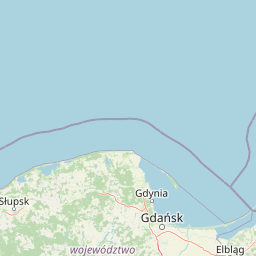
Map view of Mechowiska Sulęczyńskie Nature Reserve

Use this park location map to pinpoint Mechowiska Sulęczyńskie Nature Reserve in Poland, understand its exact geographic position, and read its mapped placement within the surrounding landscape more clearly.

Pigeon | © OpenStreetMap contributors

Location context for Mechowiska Sulęczyńskie Nature Reserve

Pomeranian Voivodeship
Park atlas

Compare surrounding post-glacial terrain and related northern reserves.

Parks Near Rezerwat przyrody Mechowiska Sulęczyńskie: Regional Protected Landscapes

Browsing other protected areas near Rezerwat przyrody Mechowiska Sulęczyńskie reveals the broader ecological character of the Kashubian Lake District. Comparing adjacent post-glacial terrain and regional reserves offers deeper context into northern wetland conservation networks.
Nature reservePomeranian Voivodeship
About 19 km away#1 closest

Southwest

Studzienickie Torfowiska Nature Reserve: Geographic Atlas and Wetland Habitat Context

Protected peatland terrain in Pomeranian Voivodeship

Studzienickie Torfowiska represents a vital protected peatland system characterized by its mosaic of transitional mires, dystrophic lakes, and regenerating bog forests. The landscape focus lies on the interplay between saturated ground and peat accumulation, offering a clear regional perspective on wetland conservation within northern Poland's lowland geography.

Area
1.75 km²
Relief
Lowland
Climate
Temperate
Access
Access unknown
Nature reservePomeranian Voivodeship
About 21 km away#2 closest

Northeast

Rezerwat przyrody Jezioro Turzycowe: Wetland Protected Area in Pomeranian Voivodeship

Kashubian Lake District bog forest and dystrophic lake atlas

Rezerwat przyrody Jezioro Turzycowe protects a concentrated mosaic of post-glacial wetland environments, including a dystrophic lake and raised bog habitats. This nature reserve offers deep insight into the specific hydrological and botanical conditions defining northern Polish wilderness corridors.

Area
0.114 km²
Established
1959
Relief
Upland
Climate
Temperate
Protected landscapePomeranian Voivodeship
About 24 km away#3 closest

Southwest

Zaborski Park Krajobrazowy: Geographic Profile of a Polish Protected Landscape Area

Tuchola Forest region, Pomeranian Voivodeship

Investigate the unique terrain of Zaborski Park Krajobrazowy, a protected landscape defined by its dense network of glacial lakes and sandy outwash plains. This territory provides a comprehensive view of northern Polish lowland geography, highlighting the ecological significance of its river valleys and relic forest habitats within the broader Tuchola Forest ecosystem.

Area
340.3 km²
Established
1990
Relief
Lowland
Climate
Temperate
Protected landscapePomeranian Voivodeship
About 25 km away#4 closest

South

Wdzydzki Park Krajobrazowy: Protected Landscape and Post-Glacial Lakeland Geography

Explore glacial lake networks and Tuchola Forest woodlands

Wdzydzki Park Krajobrazowy preserves a major post-glacial lakescape, characterized by the irregular Lake Wdzydze and its dense surroundings of pine forests, bog islands, and river-linked basins. This protected area in the Pomeranian Voivodeship provides a critical look at the integration of freshwater ecosystems and coniferous terrain, offering an essential reference for understanding the geography of northern Poland.

Area
178.32 km²
Established
1983
Relief
Lowland
Climate
Temperate
A soft watercolor illustration depicting a flat wetland landscape with low hills in the background and clusters of green trees and shrubs in the foreground.
Nature reservePomeranian Voivodeship
About 29 km away#5 closest

Southwest

Mechowisko Radość Nature Reserve: Atlas of Protected Alkaline Fen Landscapes in Pomeranian Voivodeship

A rare calcareous mire ecosystem within the Bory Tucholskie post-glacial terrain

Mechowisko Radość Nature Reserve protects a specialized alkaline peatland ecosystem that developed in a formerly mesotrophic lakeside bay. This site highlights the complex hydrological and ecological processes of the Bory Tucholskie region, where flat, post-glacial landscapes sustain rare orchid and bryophyte assemblages through dedicated active conservation management.

Area
0.096 km²
Established
2013
Relief
Lowland
Scope
Terrestrial
Protected areaPomeranian Voivodeship
About 30 km away#6 closest

South

Sandr Brdy: Protected Glacial Landscapes and Hydrological Networks in Pomeranian Voivodeship

A vital reference site for lowland habitat conservation and post-glacial terrain.

Sandr Brdy spans 7,492 hectares of outwash plains in northern Poland. Its terrain hosts a complex mosaic of calcareous fens, acid oak forests, and lobelia lakes, established to preserve fragile aquatic and terrestrial species like the gray wolf and lady's slipper orchid within a unique glacial framework.

Area
74.926 km²
Scope
Terrestrial
Water
Major water bodies
Watercolor painting of a soft, hazy wetland landscape with green foliage, pink marsh vegetation, and distant hills in pale tones.
Nature reservePomeranian Voivodeship
About 32 km away#7 closest

Southwest

Rezerwat przyrody Dolina Kulawy: Mapping Peatlands and Wetlands in Pomeranian Voivodeship

A protected landscape featuring soligenous mires and glacial lakes.

Discover the intricate geography of Rezerwat przyrody Dolina Kulawy, a nature reserve centered on the Kulawa River valley in northern Poland. This protected area offers a unique look at soligenous peatlands, floodplain forests, and mesotrophic lake systems, providing essential context for the post-glacial landscape of the Bory Tucholskie region.

Area
1.546 km²
Established
2009
Relief
Lowland
Climate
Temperate
Nature reservePomeranian Voivodeship
About 35 km away#8 closest

Southeast

Mechowisko Krag Nature Reserve: Mapping the Protected Peatlands of the Pomeranian Voivodeship

A specialized alkaline fen within the Bory Tucholskie forest region

Mechowisko Krag Nature Reserve serves as a key site for wetland conservation in Poland. This protected landscape preserves a rare alkaline peatland that sustains diverse moss communities and rare vascular flora, including bog Saxifrage, while providing shelter for wetland birds within the expansive Bory Tucholskie forest region.

Area
0.038 km²
Established
2016
Relief
Lowland
Scope
Terrestrial

Common questions about visiting, size, designation, and location context for Mechowiska Sulęczyńskie Nature Reserve

Mechowiska Sulęczyńskie Nature Reserve FAQs for park facts, access, geography, and protected area context

Find quick answers about Mechowiska Sulęczyńskie Nature Reserve, including protected-area facts, park geography, trail and visitor context, and how the park fits into its surrounding country and regional landscape.
MoriAtlas Explorer

Continue Your Protected Areas Search Across the Global Atlas

Deepen your exploration by continuing the structured search for national parks and protected areas worldwide. Utilize the comprehensive filtering capabilities to compare different conservation landscapes and refine your understanding of global park geography. Discover more about the distribution and characteristics of protected natural areas.

Global natural geography