Mori Atlas logo
Nature reserveRezerwat przyrody Jezioro Turzycowe

A focused geographic survey of dystrophic lake systems and peatland habitats within the Kashubian region

Rezerwat przyrody Jezioro Turzycowe: Mapping the Protected Wetland Landscapes of Northern Poland

Rezerwat przyrody Jezioro Turzycowe serves as an essential case study of the glacially formed wetland systems characteristic of the Kashubian Lake District in the Pomeranian Voivodeship. This protected area integrates a dark dystrophic lake, a surrounding bog forest, and a distinctive raised bog into one compact ecological unit. The reserve provides critical habitat for specialized plant species, including the rare loose-flowered sedge, within a protected framework that bridges local, regional, and European conservation layers.

floristic reservedystrophic lakebog forestraised bogwetlandKashubian Lake District

Rezerwat przyrody Jezioro Turzycowe

Nature reserve

Park overview

Structured park overview, official facts, and landscape profile for Jezioro Turzycowe Nature Reserve

Jezioro Turzycowe Nature Reserve park facts, protected area profile, and essential visitor context

Review the core facts for Jezioro Turzycowe Nature Reserve, including designation, size, terrain, visitor scale, habitats, and operating context in one park-focused overview.

About Jezioro Turzycowe Nature Reserve

Jezioro Turzycowe Nature Reserve is a compact floristic reserve located in the heart of the Kashubian Lake District, a region shaped by Pleistocene glaciation and dotted with lakes, kames, and moraine ridges. Despite its very small size of just over eleven hectares, the reserve encapsulates a tightly integrated sequence of wetland habitats: a dystrophic lake at its core, a ring of bog forest around the lake margins, and an adjacent raised bog ecosystem.

The reserve is part of the larger Kashubian Landscape Park (Kaszubski Park Krajobrazowy), which means its protection is layered within both national nature reserve status and the broader landscape-level protections of the surrounding park. Its position on the Kashubian Lake District mesoregion places it firmly within a landscape known for sandy, acidic, nutrient-poor soils that favor bog and heath vegetation rather than fertile forest.

The core feature of the reserve is its dystrophic lake. Dystrophic lakes are characterized by humic, acidic, low-nutrient waters, often brownish in color due to high organic content. In northern Poland, lakes of this type are typically small, surrounded by peat-forming vegetation, and host distinctive flora adapted to such conditions. The reserve's lake is encircled by bog forest, a type of coniferous forest that develops on waterlogged, peat-covered ground, dominated in this region by pine and ericaceous understory plants.

Nearby the lake lies a fragment of raised bog, an ecologically valuable peatland formation fed primarily by rainwater rather than groundwater, and famous for its unique hydrology and plant communities. Together, these habitats form a coherent unit that illustrates the classic zonation of glacial wetland systems: open water, floating and emergent vegetation, bog forest, and raised bog.

Although the reserve was originally designated for the protection of a single rare sedge, its small area today is significant because it falls within two Natura 2000 sites, linking local Polish nature reserve protection to the wider European ecological network. This dual designation reflects the broader biodiversity value of the area beyond the single species of original concern.

Quick facts and research context for Jezioro Turzycowe Nature Reserve

Established in 1959 by Polish legal decree, Jezioro Turzycowe was originally only 0.30 hectares before being expanded to 11.39 hectares in 1989. It lies in the Kashubian Lake District mesoregion, in the Pomeranian Voivodeship, within the Kashubian Landscape Park.

The reserve lies in the communes of Sierakowice and Kartuzy in Kartuzy County (powiat kartuski), and sits within two Natura 2000 protected areas: Kurze Grzędy (PLH220014) and Lasy Mirachowskie (PLB220008). A tourist trail, the Szlak Wzgórz Szymbarskich, crosses the reserve's territory.

Protection and recognition

Documented terrestrial protection scope, management framework, and status records

Rezerwat przyrody Jezioro Turzycowe Protection Status and Conservation Data

Rezerwat przyrody Jezioro Turzycowe maintains a documented terrestrial protection scope within the regional conservation network. Official records compile available designation history and management frameworks for this protected area.

Protection details

Protection scope
Terrestrial
Transboundary protection
No
Park context

Deeper park guide and search-rich context for Jezioro Turzycowe Nature Reserve

Jezioro Turzycowe Nature Reserve history, landscape, wildlife, and travel context

Explore Jezioro Turzycowe Nature Reserve through its history, landscape character, ecosystems, wildlife, conservation priorities, cultural context, and seasonal travel timing in a structured park guide built for atlas discovery and search intent.

Why Jezioro Turzycowe Nature Reserve stands out

The reserve is best known for protecting turzyca skąpokwiatowa (loose-flowered sedge), the rare wetland plant for which the reserve was originally created and which still shapes its identity. It is also notable for hosting a full suite of acid bog and dystrophic lake vegetation, including sundews, bog cranberry, bog rosemary, and threatened brown peat moss. The combination of a small dystrophic forest lake, surrounding bog forest, and adjacent raised bog in one compact unit makes the reserve unusually representative of the glacially formed wetland systems of the Kashubian Lake District.

Jezioro Turzycowe Nature Reserve history and protected-area timeline

The reserve was established in 1959 by Polish legal decree, originally covering an area of just 0.30 hectares. Its creation was motivated by the need to protect the local population of turzyca skąpokwiatowa, a rare sedge associated with bog and dystrophic lake margins, which became the defining element of the reserve's identity and gave Jezioro Turzycowe its name.

In 1989, the reserve was significantly expanded to its current size of 11.39 hectares. The enlargement appears to have been motivated by a recognition that the initial tiny parcel was insufficient to protect the surrounding bog forest and raised bog systems that are ecologically inseparable from the original lake habitat.

In more recent years, conservation efforts have continued to focus on the original target species. A programme has been underway to restore suitable habitat conditions for turzyca skąpokwiatowa within the reserve, reflecting an active management approach rather than passive protection alone.

The reserve's later integration into the Natura 2000 network, specifically the Kurze Grzędy Habitats site and the Lasy Mirachowskie Birds Directive site, marks an additional layer of European-scale recognition.

Jezioro Turzycowe Nature Reserve landscape and geographic character

The landscape of Jezioro Turzycowe is shaped by post-glacial processes that defined the entire Kashubian Lake District. The terrain here is a mosaic of glacial lake basins, sand and gravel deposits, and thin, acidic soils that tend toward peat formation rather than productive agriculture. The reserve sits within this mosaic as a small but concentrated wetland pocket.

The physical heart of the reserve is a dystrophic lake, small and enclosed by surrounding vegetation. Such lakes are typically shallow, dark, acidic, and low in nutrients, conditions that severely limit aquatic diversity but create a very specific, stable environment for bog-associated species.

Around the lake, the bog forest (bór bagienny) forms a distinctive ring of stunted, often sparse pine woodland rooted in saturated, peaty substrate. The forest floor is typically carpeted with Sphagnum mosses and ericaceous shrubs, giving the landscape a damp, sombre character.

Beyond the bog forest, a fragment of raised bog extends the reserve's landscape complexity. Raised bogs, fed by rainfall alone, are dome-shaped peat formations with their own distinct hydrology; they support vegetation that cannot survive the mineral-rich groundwater typical of other wetland types.

Together, these features form a compact but ecologically layered landscape: open dystrophic water, transitional mire, bog forest, and raised bog, all within walking distance of one another.

Jezioro Turzycowe Nature Reserve ecosystems, habitats, and plant life

The reserve's ecological value lies in its tight concentration of acid bog and dystrophic lake habitats. These two habitat types are closely linked ecologically. Dystrophic lakes are typically surrounded by peatlands, and the gradual accumulation of organic matter around their margins allows bog forest and eventually raised bog communities to develop.

Roughly thirty vascular plant species have been recorded in the reserve, a relatively high diversity for such a small wetland polygon. Among them are several strictly protected species, including bagno zwyczajne (sweet gale, Myrica gale), rosiczka okrągłolistna (round-leaved sundew), and widłak jałowcowaty (juniper clubmoss), as well as partially protected species such as grążel żółty (yellow water-lily) and kruszyna pospolita (alder buckthorn).

The understory of the bog forest is dominated by ericaceous shrubs and peatland specialists, including bażyna czarna (crowberry), borówka bagienna (bog bilberry), modrzewnica zwyczajna (bog rosemary), and przygiełka biała (white beak-sedge). The presence of turzyca bagienna (bog sedge) gives the lake itself part of its identity, while the marginal wetlands support characteristic peat-forming mosses, including the threatened torfowiec brunatny (brown peat moss, Sphagnum fuscum).

This combination of habitats and species makes the reserve ecologically dense: a small patch of land here contains a near-complete miniature of the bog-lake ecosystem complex found across much larger areas of the Kashubian Lake District.

Jezioro Turzycowe Nature Reserve wildlife and species highlights

The reserve is fundamentally a botanical and habitat-focused site, and its wildlife profile is dominated by rare plant species rather than large mammals or charismatic fauna.

Fauna typical of Polish dystrophic lake systems and bog forests may be expected in the reserve, but the available source material does not provide detailed wildlife species records beyond the plant communities. The reserve's bird importance is reflected more by its inclusion in the Lasy Mirachowskie Birds Directive area than by site-specific documentation of nesting or migrating species.

The most distinct wildlife-related features of the reserve are its insectivorous plants, particularly the round-leaved sundew, which captures small invertebrates on its sticky leaves and represents a notable ecological adaptation in bog environments.

Because the available sources focus heavily on plant communities, a detailed species-level wildlife section cannot be reliably constructed.

Jezioro Turzycowe Nature Reserve conservation status and protection priorities

Jezioro Turzycowe has layered conservation status. As a Polish nature reserve, it has the country's strongest domestic level of habitat protection, restricting destructive activities and development within its boundaries. Its expansion in 1989 from 0.30 hectares to 11.39 hectares reflects an evolving recognition that the original reserve was too small to protect the full ecological system that supports the rare sedge.

The reserve's conservation importance is reinforced by its location within the Kashubian Landscape Park, which provides additional landscape-level protection to the surrounding area.

At the European level, the reserve falls within two Natura 2000 sites. Kurze Grzędy (PLH220014) is a Habitats Directive site, while Lasy Mirachowskie (PLB220008) is a Birds Directive site. This dual designation means the reserve contributes to the conservation of both habitat types and bird populations that are protected under EU law.

Active management remains focused on the original target species. A programme is underway to restore habitat conditions suitable for turzyca skąpokwiatowa, signaling that the reserve is treated not just as a passive refuge but as an actively managed conservation site.

Jezioro Turzycowe Nature Reserve cultural meaning and human context

The reserve lies in the Kashubian region, an area with a distinct cultural and linguistic identity. The Kashubian language, recognized as a regional language in Poland, has its own name for the lake: Jezoro Charztë, reflecting the integration of this protected wetland into local cultural and linguistic heritage.

Beyond this linguistic connection, the surrounding area is shaped by centuries of human interaction with a glacially formed landscape in which small lakes, bogs, forests, and sandy outwash plains alternate. Traditional uses have historically been limited by the acidic, waterlogged soils, leaving such sites comparatively undisturbed and today forming the basis for much of the region's conservation value.

Top sights and standout views in Jezioro Turzycowe Nature Reserve

The reserve's tight integration of dystrophic lake, bog forest, and raised bog habitats within just over eleven hectares is its standout feature, making it an unusually compact representative example of Kashubian wetland systems.

Its layered protection status, from Polish nature reserve through Kashubian Landscape Park to two Natura 2000 sites, places this small reserve within multiple overlapping conservation frameworks.

The active restoration programme centered on turzyca skąpokwiatowa, the species for which the reserve was originally created, continues to define its mission.

Best time to visit Jezioro Turzycowe Nature Reserve

The reserve's wetland and bog habitats are most accessible and visually distinctive during late spring and summer, when vegetation is fully developed, insectivorous plants such as sundews are most easily observed, and peatland mosses show their characteristic coloration.

Autumn can offer a different perspective, as bog forest vegetation takes on seasonal hues and the contrast between dark bog water and surrounding foliage becomes particularly pronounced.

Winter conditions, with potential snow cover and frozen peatland surfaces, can make bog terrain especially difficult and potentially unsafe to traverse, and are not generally recommended for casual visits to sensitive bog ecosystems like this one.

Monthly climate preview

Long term climate normals and twelve month weather patterns for Rezerwat przyrody Jezioro Turzycowe

Rezerwat przyrody Jezioro Turzycowe Average Temperature and Precipitation Patterns

Historical coordinates outline the measured annual temperature and precipitation rhythm across twelve distinct observation periods for Rezerwat przyrody Jezioro Turzycowe. Examining the complete monthly climate normals unlocks detailed metrics regarding long term temperature ranges and precipitation trends.
Annual mean8 °C
-1 °C18 °C
Jan-1°
Feb-1°
Mar
Apr
May11°
Jun15°
Jul18°
Aug18°
Sep14°
Oct
Nov
Dec
Warmest month
August

17.8 °C

Coolest month
January

-1.4 °C

Wettest month
July

2.7 mm/day

Driest month
April

1.3 mm/day

Park location guide

Geography guide, regional context, and park location map for Jezioro Turzycowe Nature Reserve

Jezioro Turzycowe Nature Reserve park geography, regions, and map view in Poland

Understand where Jezioro Turzycowe Nature Reserve sits in Poland through a broader geographic reading of the surrounding landscape, nearby location context, and its mapped position within the national park landscape.

How Jezioro Turzycowe Nature Reserve fits into Poland

Poland, officially the Republic of Poland, is a Central European country spanning from the Baltic Sea in the north to the Carpathian Mountains in the south. It borders Germany, Czech Republic, Slovakia, Ukraine, Belarus, Lithuania, and Kaliningrad Oblast. The country has a temperate climate, diverse landscapes, and is known for its rich history, cultural heritage, and strong economic position within the EU.

Wider geography shaping Jezioro Turzycowe Nature Reserve in Poland

Poland occupies 312,696 km2 in Central Europe, extending from the Baltic Sea coast in the north to the Sudetes and Carpathian Mountains in the south. It borders Germany to the west, Czech Republic and Slovakia to the south, Ukraine and Belarus to the east, and Lithuania and Kaliningrad Oblast to the northeast. The landscape includes lowland plains, uplands, and mountain ranges.

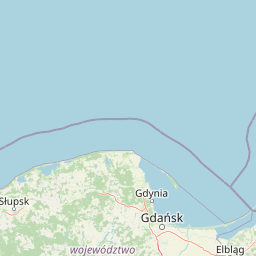
Map view of Jezioro Turzycowe Nature Reserve

Use this park location map to pinpoint Jezioro Turzycowe Nature Reserve in Poland, understand its exact geographic position, and read its mapped placement within the surrounding landscape more clearly.

Pigeon | © OpenStreetMap contributors

Location context for Jezioro Turzycowe Nature Reserve

Pomeranian Voivodeship
Park atlas

Compare adjacent wetland reserves, post-glacial lake basins, and regional conservation landscapes.

Explore Parks Near Rezerwat przyrody Jezioro Turzycowe and Surrounding Protected Areas

Browse other parks near Rezerwat przyrody Jezioro Turzycowe to examine related wetland habitats across the Kashubian Lake District. Comparing adjacent protected areas reveals broader regional conservation patterns and post-glacial terrain variations.
Nature reservePomeranian Voivodeship
About 21 km away#1 closest

Southwest

Rezerwat przyrody Mechowiska Sulęczyńskie: Geography and Protected Area Landscape Analysis

Alkaline fen and peatland habitat in Pomeranian Voivodeship

Study the geographic distribution and protected status of Rezerwat przyrody Mechowiska Sulęczyńskie, an essential alkaline fen ecosystem in northern Poland. This reserve highlights the role of groundwater-fed landscapes in maintaining orchid populations and bryophyte-rich mires within a post-glacial region. The site serves as a reference point for peatland conservation and structural landscape integrity.

Area
0.252 km²
Established
2014
Relief
Lowland
Climate
Temperate
Nature reservePomeranian Voivodeship
About 27 km away#2 closest

North

Rezerwat przyrody Długosz Królewski w Łęczynie: Botanical Protected Area in Pomerania

Floristic nature reserve focused on royal fern conservation

Located in the heart of the Puszcza Wierzchucińska, this nature reserve is a critical site for the study and conservation of Osmunda regalis. The surrounding terrain of damp, peat-influenced woodland defines the unique character of this small, specialized protected area in northern Poland.

Area
0.02 km²
Established
1977
Scope
Terrestrial
Water
Minor water
Protected landscapePomeranian Voivodeship
About 37 km away#3 closest

East

Trójmiejski Park Krajobrazowy: Protected Landscape and Glacial Geography in Pomerania

Exploring the forested moraine upland near the Baltic coast

Covering nearly 20,000 hectares, Trójmiejski Park Krajobrazowy forms an essential green belt along the Kashubian moraine. Its terrain is defined by dramatic erosion, including 80-meter deep ravines and extensive pine-beech forests that host rare relic plant species and protected peatland habitats.

Area
199.3 km²
Established
1979
Relief
Upland
Climate
Temperate
A horizontal watercolor illustration showing a gentle river landscape with soft green meadows, trees, and rolling hills in the background.
Nature reservePomeranian Voivodeship
About 37 km away#4 closest

East

Kacze Łęgi Nature Reserve: Mapped Protected Woodland and River Valley Geography

Riparian floodplain forest in the Pomeranian Voivodeship of Poland

Kacze Łęgi functions as a crucial nature reserve that maintains an unusually well-preserved fragment of elm and alder floodplain forest. Nestled along the Kacza River valley in Gdynia, this site offers a concentrated look at the original vegetation of Baltic river valleys. It remains a key component of the regional protected landscape, providing a deep study of moisture-loving woodland within the larger context of the Pomeranian coastal lowlands.

Area
0.09 km²
Established
1983
Relief
Lowland
Scope
Terrestrial
Nature reservePomeranian Voivodeship
About 38 km away#5 closest

East

Dolina Strzyży Nature Reserve Protected Forest and Stream Valley Geography

Natural riparian forest in Pomeranian Voivodeship

Explore the geographic profile of Dolina Strzyży Nature Reserve, a protected valley woodland in the Pomeranian Voivodeship of Poland. This reserve maintains dense oak-hornbeam habitats and stream-side ecosystems, functioning as a vital green connection between urban Gdańsk and the expansive Trójmiejski Park Krajobrazowy, preserving historic forest remnants.

Area
0.385 km²
Established
2007
Relief
Upland
Climate
Temperate
Nature reservePomeranian Voivodeship
About 39 km away#6 closest

Southwest

Studzienickie Torfowiska Nature Reserve: Geographic Atlas and Wetland Habitat Context

Protected peatland terrain in Pomeranian Voivodeship

Studzienickie Torfowiska represents a vital protected peatland system characterized by its mosaic of transitional mires, dystrophic lakes, and regenerating bog forests. The landscape focus lies on the interplay between saturated ground and peat accumulation, offering a clear regional perspective on wetland conservation within northern Poland's lowland geography.

Area
1.75 km²
Relief
Lowland
Climate
Temperate
Access
Access unknown
Protected landscapePomeranian Voivodeship
About 41 km away#7 closest

South

Wdzydzki Park Krajobrazowy: Protected Landscape and Post-Glacial Lakeland Geography

Explore glacial lake networks and Tuchola Forest woodlands

Wdzydzki Park Krajobrazowy preserves a major post-glacial lakescape, characterized by the irregular Lake Wdzydze and its dense surroundings of pine forests, bog islands, and river-linked basins. This protected area in the Pomeranian Voivodeship provides a critical look at the integration of freshwater ecosystems and coniferous terrain, offering an essential reference for understanding the geography of northern Poland.

Area
178.32 km²
Established
1983
Relief
Lowland
Climate
Temperate
Watercolor illustration of sand dunes, tall grasses, pine trees, and distant mountains under a soft sky
National parkPomeranian Voivodeship
About 43 km away#8 closest

Northwest

Slovincian National Park: Moving Dunes and Baltic Coast Protected Landscape Exploration

Discover its unique geography and mapped terrain.

Slovincian National Park is a protected area in Pomeranian Voivodeship, Poland, celebrated for its impressive moving sand dunes and coastal wetland ecosystems. These dynamic dunes, some reaching 30 meters high, migrate inland, creating an ever-changing landscape. The park also features large shallow lakes like Łebsko and Gardno, vital for migratory birds. Explore the mapped boundaries and geographic context of this significant protected area, a Ramsar site and UNESCO biosphere reserve.

Area
186.18 km²
Established
1967
IUCN
II
Visitors
319K annual

Common questions about visiting, size, designation, and location context for Jezioro Turzycowe Nature Reserve

Jezioro Turzycowe Nature Reserve FAQs for park facts, access, geography, and protected area context

Find quick answers about Jezioro Turzycowe Nature Reserve, including protected-area facts, park geography, trail and visitor context, and how the park fits into its surrounding country and regional landscape.
MoriAtlas Explorer

Continue Your Protected Areas Search Across the Global Atlas

Deepen your exploration by continuing the structured search for national parks and protected areas worldwide. Utilize the comprehensive filtering capabilities to compare different conservation landscapes and refine your understanding of global park geography. Discover more about the distribution and characteristics of protected natural areas.

Global natural geography