
Why Kacze Łęgi Nature Reserve stands out
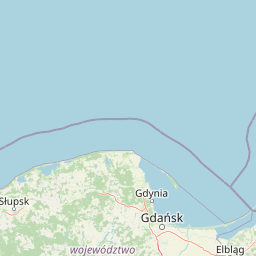
The reserve is best known for protecting a rare and unusually well-preserved fragment of elm floodplain forest along a small Baltic coastal river, embedded within a much larger protected landscape park and surrounded by the urban fabric of Gdynia.
Kacze Łęgi Nature Reserve history and protected-area timeline
The reserve was created in 1983 under the legal act recorded in the Polish Journal of Laws of that year, reflecting growing recognition in late twentieth-century Poland of the need to protect small but ecologically valuable fragments of natural forest embedded in urbanizing landscapes. Its establishment aimed to safeguard a particularly well-preserved piece of floodplain woodland on the Kacza River at a moment when much of the surrounding vegetation was being altered by suburban development in the Tri-City area.
Since its designation, Kacze Łęgi has been managed as part of the national forest administration through Nadleśnictwo Gdańsk, while environmental supervision rests with the Regional Directorate for Environmental Protection. The reserve's inclusion within the broader Trójmiejski Park Krajobrazowy has provided an additional layer of landscape protection around its small core area.
Kacze Łęgi Nature Reserve landscape and geographic character
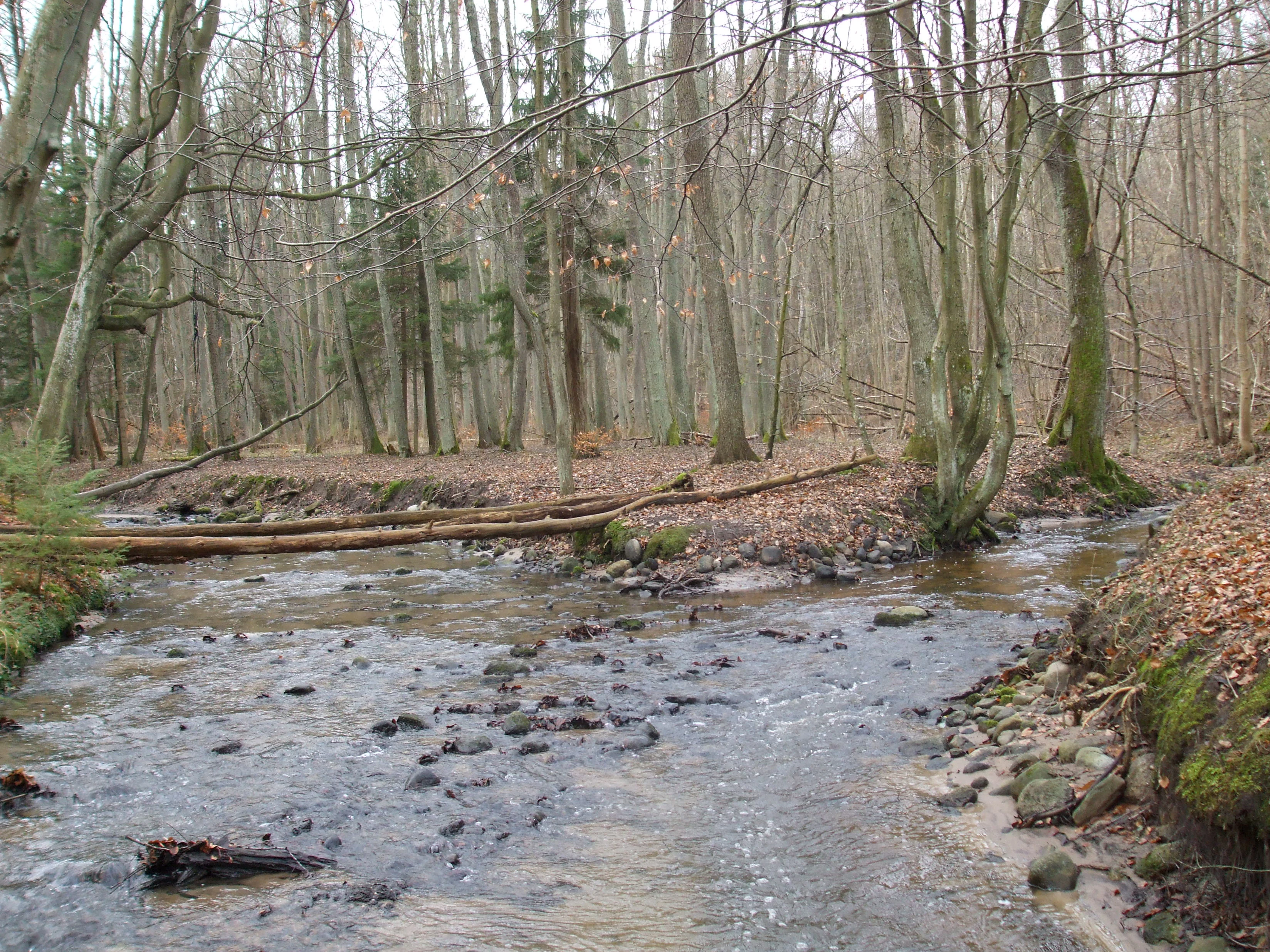
The local landscape is shaped by the shallow valley of the Kacza River and a small tributary, where the streams meet within the forested core of the reserve. The terrain is gentle and low-lying, characteristic of the Kashubian Coast, with floodplain conditions that support moisture-loving woodland rather than dry upland forest.
A defining feature is the confluence of the tributary known as Źródło Marii with the Kacza River itself, which cuts through the protected area and gives the reserve its characteristic wet, shaded, and structurally complex forest interior. In the wider setting, the reserve is enveloped by the wooded buffer of the Trójmiejski Park Krajobrazowy, so even though the protected core is small, the surrounding hills, slopes, and forested ridges of the landscape park frame it within a much larger green belt.
Kacze Łęgi Nature Reserve ecosystems, habitats, and plant life
Ecologically, Kacze Łęgi represents a surviving fragment of natural floodplain forest, an elm-type community that once clothed the bottoms of small river valleys along the southern Baltic coast. The canopy is dominated by black alder and tall ash, producing a tall, layered, and distinctly shaded forest interior shaped by regular water availability from the river and its tributary.
A particularly interesting feature is the unusually rich vascular plant flora of 210 recorded species within a very small area, including a notable representation of plants more typical of upland and submontane regions. This blend of lowland floodplain habitat and upland-loving species gives the reserve a botanical profile that feels richer and more varied than the surrounding coastal lowlands would normally support.
Kacze Łęgi Nature Reserve wildlife and species highlights
Kacze Łęgi's wildlife value is closely linked to its wet floodplain forest character. The combination of alder and ash canopy, dense understory, and flowing water creates habitat for forest-dwelling birds, small mammals, and the invertebrates associated with old deciduous woodland and streamside conditions. Such floodplain forests in this region typically support typical lowland forest bird communities, amphibians breeding in slow-moving stretches of the stream, and a rich insect fauna around the wet ground flora. The reserve's ecological significance lies more in its intact habitat structure than in any single flagship species, offering a refuge of native forest habitat in an otherwise heavily urbanized setting.
Kacze Łęgi Nature Reserve conservation status and protection priorities
Kacze Łęgi is ecologically important because it preserves a habitat type, the small-river floodplain forest, that has become rare and fragmented across the southern Baltic coastal lowlands. By shielding a representative example from logging, drainage, and urban encroachment, the reserve maintains natural vegetation structure, hydrological function, and genetic continuity of the forest community that has been heavily reduced elsewhere.
Within the broader conservation framework, the reserve is strengthened by its location inside the Trójmiejski Park Krajobrazowy, which protects the wider landscape context around the small core area. This layered protection gives the site disproportionate importance for biodiversity conservation in the Tri-City area, functioning both as a refuge for woodland species and as a reference site for the historical natural vegetation of Kashubian river valleys.
Kacze Łęgi Nature Reserve cultural meaning and human context
The reserve's Kashubian-language name, Kaczé Łãdżi, reflects the strong Kashubian cultural presence in the Pomeranian region around Gdynia, an area where Kashubian identity, language, and rural traditions continue to shape local heritage. The Kacza River valley itself is woven into regional identity and place-name traditions, and the reserve lies within a district of Gdynia, Mały Kack, whose name forms part of the local cultural landscape. Beyond place names, the reserve's survival as a patch of traditional floodplain forest amid modern suburban development speaks to a broader local narrative of balancing urban growth with the protection of small natural sites that carry regional character.
Top sights and standout views in Kacze Łęgi Nature Reserve
Kacze Łęgi stands out for the unusual combination of a small protected area and a remarkably well-developed natural floodplain forest, with a tall black alder and ash canopy over a deeply shaded riverside interior. Another highlight is the confluence of the Źródło Marii tributary with the Kacza River, which gives the reserve its distinctive hydrological structure.
Its botanical richness for such a small site, with 210 vascular plant species and a notable share of upland-loving plants in a coastal lowland setting, makes it a compelling reference area for understanding the original vegetation of small Baltic river valleys. Layered inside the much larger Trójmiejski Park Krajobrazowy, the reserve offers a compact but ecologically meaningful unit within one of northern Poland's most important urban landscape parks.
Best time to visit Kacze Łęgi Nature Reserve
As a small forest reserve, Kacze Łęgi has a different experience across the seasons rather than a strict best window. Late spring and early summer are particularly rewarding for visitors interested in the reserve's rich vascular plant flora, when the herb layer is fully developed and the alder and ash canopy is in full leaf, creating a lush green floodplain forest atmosphere. Autumn highlights the structural beauty of the old-growth trees and any remaining moisture in the floodplain, while winter offers clearer views into the valley and the confluence of the Kacza River with its tributary. The reserve is sheltered woodland rather than open scenery, so conditions are generally best for quiet walks during mild, dry weather, with appropriate footwear for wet ground.