Mori Atlas logo
Nature reserveMechowisko Krag Nature Reserve

A vital wetland sanctuary protecting rare flora and bird habitats within the Bory Tucholskie forest region

Mechowisko Krag Nature Reserve: Mapping the Alkaline Peatland Landscapes of Pomeranian Voivodeship

(Rezerwat przyrody Mechowisko Krąg)

Mechowisko Krag Nature Reserve represents a critical protected landscape in northern Poland, preserving a unique alkaline peatland ecosystem that developed from a former inlet of Lake Krag. This compact, waterlogged terrain serves as a distinct ecological contrast to the surrounding sandy outwash plains and pine forests of the Bory Tucholskie mesoregion. The site remains managed under active protection as part of the broader Natura 2000 network, providing essential refuge for specialized mosses, rare bog Saxifrage, and various marsh bird species.

peatlandalkaline fenmosseswetland birdsNatura 2000Bory Tucholskie

Mechowisko Krag Nature Reserve

Nature reserve

Park overview

Structured park overview, official facts, and landscape profile for Mechowisko Krag Nature Reserve

Mechowisko Krag Nature Reserve park facts, protected area profile, and essential visitor context

Review the core facts for Mechowisko Krag Nature Reserve, including designation, size, terrain, visitor scale, habitats, and operating context in one park-focused overview.

About Mechowisko Krag Nature Reserve

Mechowisko Krąg Nature Reserve is a compact but ecologically focused protected area in northern Poland, established to safeguard a small alkaline peatland that holds unusual interest within the broader Bory Tucholskie forest landscape. Although the region is famous for vast tracts of pine-dominated woodland on sandy soils, this reserve protects a contrasting mosaic of calcareous peat and wetland vegetation shaped by its geological history as a former bay of Lake Krąg.

The reserve was created in 2016 by decision of the Regional Director of Environmental Protection in Gdańsk, following sustained conservation work led by the Klub Przyrodników naturalists' association. The club had already implemented active protection measures on the site, partly funded by European Union programs, which set the stage for formal reserve designation. Additional protection planning followed in 2018, giving the area a structured framework for ongoing management.

Ecologically, the reserve is significant for its alkaline peatland ecosystem, which supports rare bryophyte communities, specialized vascular plants such as Saxifraga hirculus, and provides refuge for marsh and water birds. Its placement inside the Natura 2000 network ensures that the habitat is recognized both at the national and European levels, reinforcing its importance as a living example of the peatland diversity that can survive even within heavily forested regions.

The reserve's compact core area of about 3.81 hectares is complemented by a buffer zone of roughly 17.07 hectares, much of which remains in private hands. This arrangement highlights both the conservation priority of the core peatland and the challenges of coordinating buffer protection when surrounding land is owned privately.

Quick facts and research context for Mechowisko Krag Nature Reserve

Mechowisko Krąg is a biocenotic and physio-cenotic nature reserve of Poland's peatland category, focused on protecting natural and semi-natural biocoenoses. It covers roughly 3.81 hectares and is surrounded by a buffer zone of about 17.07 hectares, located in the cadastral area of Konarzyny within gmina Stara Kiszewa.

The reserve lies inside the Bory Tucholskie mesoregion and is entirely contained within two Natura 2000 areas: the Bory Tucholskie bird protection site (PLB220009) and the Lake Krąg habitat protection site (PLH220070). It was legally designated on 25 May 2016, following active conservation work already initiated by the Klub Przyrodników naturalists' club.

The reserve is managed under active protection (ochrona czynna) based on a protection plan established in 2018 by the Regional Director of Environmental Protection in Gdańsk.

Protection and recognition

Examine the official terrestrial protection scope and documented designation records.

Mechowisko Krag Nature Reserve Protection Status and Governance Data

Mechowisko Krag Nature Reserve maintains a recorded terrestrial protection scope within the national conservation inventory. Consult the verified designation framework to understand its administrative parameters and recognized boundaries.

Protection details

Protection scope
Terrestrial
Transboundary protection
No
Buffer area
0.17 km²
Park context

Deeper park guide and search-rich context for Mechowisko Krag Nature Reserve

Mechowisko Krag Nature Reserve history, landscape, wildlife, and travel context

Explore Mechowisko Krag Nature Reserve through its history, landscape character, ecosystems, wildlife, conservation priorities, cultural context, and seasonal travel timing in a structured park guide built for atlas discovery and search intent.

Why Mechowisko Krag Nature Reserve stands out

Mechowisko Krąg is best known for preserving an alkaline peatland that supports a distinctive moss and vascular plant flora, including the rare bog Saxifrage (Saxifraga hirculus). The site also shelters wetland and marsh birdlife within the larger Bory Tucholskie forest landscape. The peatland itself is unusual in regional terms because it developed from a former inlet of Lake Krąg, creating calcareous, nutrient-rich peat conditions that favor specialized plant species not commonly found in the surrounding acidic pine forests.

Mechowisko Krag Nature Reserve history and protected-area timeline

The protection effort behind Mechowisko Krąg began before the reserve itself existed. The Klub Przyrodników naturalists' club identified the alkaline peatland near Lake Krąg as a site of high ecological value and undertook active conservation management funded through European Union programs. These early interventions helped stabilize the habitat and laid the groundwork for formal legal protection.

The reserve was officially designated on 25 May 2016 through an order issued by the Regional Director of Environmental Protection in Gdańsk on 12 April 2016, published in the official journal of the Pomeranian Voivodeship. The designation recognized both the peatland's ecological significance and the conservation work that had already been carried out on site.

In 2018, a formal protection plan was established for the reserve, defining a framework for ongoing active management of the peatland, its hydrology, and its specialized flora. The plan remains the guiding instrument for the reserve's day-to-day management and long-term ecological integrity.

Mechowisko Krag Nature Reserve landscape and geographic character

The reserve occupies a small but ecologically distinct depression within the Bory Tucholskie, a vast lowland region shaped by glacial processes and dominated by sandy outwash plains and pine forests. Within this broader setting, the Mechowisko Krąg site itself is defined by the calm, waterlogged terrain of an alkaline peatland that developed inside a former inlet of Lake Krąg.

The land surface is gently contoured and saturated, with conditions that favor peat accumulation rather than the dry, acidic soils typical of the wider Bory Tucholskie forests. Surrounding the core peatland is a buffer zone that helps shield the fragile hydrology from disturbances originating on neighboring lands. The result is a small wetland pocket set within an otherwise dry forested landscape, giving the site its visual and ecological contrast with the region at large.

Mechowisko Krag Nature Reserve ecosystems, habitats, and plant life

The defining ecological feature of Mechowisko Krąg is its alkaline peatland ecosystem, a habitat type shaped by calcareous groundwater influence and unusual within a region dominated by acidic, sandy substrates. This chemistry supports a community of bryophytes and vascular plants adapted to nutrient-rich, base-saturated peat.

The reserve is part of the broader habitat network of the Bory Tucholskie, but its small-scale vegetation stands apart from the surrounding woodlands. Wilow and sedge communities, marsh plants, and moss-rich turf combine to form the characteristic flora of the site. The presence of Saxifraga hirculus, a rare bog species, underscores the conservation value of the peatland at both national and European scales.

Mechowisko Krag Nature Reserve wildlife and species highlights

The wetland conditions of the reserve create habitat for marsh and water-associated bird species, which use the open, waterlogged peatland as a refuge within the larger forested landscape. These birds benefit from the contrast between the wet meadows and surrounding woodlands.

Although the reserve is small, its ecological richness extends to specialist plant-dependent fauna associated with peatlands and mires. The protected peatland functions less as a large wildlife area than as a habitat island for moisture-loving species that would otherwise struggle to persist in the dry pine forests of the Bory Tucholskie.

Mechowisko Krag Nature Reserve conservation status and protection priorities

Mechowisko Krąg holds significant conservation value because it protects a rare alkaline peatland within a region where such habitats are uncommon. Its full inclusion in the Natura 2000 network, both as part of the Bory Tucholskie bird protection zone and the Lake Krąg habitat protection zone, elevates its importance from a local designation to a site of European ecological relevance.

Active protection measures are central to its management, aiming to maintain the hydrology and vegetation of the peatland against natural succession and human pressures. The 2018 protection plan formalizes these efforts, and the reserve's buffer zone is intended to absorb disturbance from surrounding land uses. Nonetheless, the fact that much of the buffer remains in private hands reflects the ongoing challenge of conserving wetland fragments embedded within working forest landscapes.

Top sights and standout views in Mechowisko Krag Nature Reserve

Mechowisko Krąg stands out as one of the few alkaline peatland reserves inside the vast Bory Tucholskie pine forest region, preserving a habitat type that contrasts sharply with its surroundings.

The reserve protects Saxifraga hirculus and a distinctive moss flora, while also providing shelter for wetland birds, all within a compact area managed under active protection and integrated into the Natura 2000 network.
Monthly climate preview

Long-term monthly temperature and precipitation averages recorded at a representative coordinate

Mechowisko Krag Nature Reserve Climate Normals and Temperature Rhythms

Historical climate data for Mechowisko Krag Nature Reserve reveals measured monthly temperature swings from sub-zero winter lows to warm summer maximums alongside consistent precipitation rates. Detailed monthly normals provide deeper insight into long-term meteorological patterns across the protected landscape.
Annual mean8 °C
-3 °C19 °C
Jan-3°
Feb-2°
Mar
Apr
May12°
Jun16°
Jul19°
Aug18°
Sep14°
Oct
Nov
Dec-1°
Warmest month
July

18.5 °C

Coolest month
January

-2.9 °C

Wettest month
July

2.7 mm/day

Driest month
April

1.3 mm/day

Park location guide

Geography guide, regional context, and park location map for Mechowisko Krag Nature Reserve

Mechowisko Krag Nature Reserve park geography, regions, and map view in Poland

Understand where Mechowisko Krag Nature Reserve sits in Poland through a broader geographic reading of the surrounding landscape, nearby location context, and its mapped position within the national park landscape.

How Mechowisko Krag Nature Reserve fits into Poland

Poland, officially the Republic of Poland, is a Central European country spanning from the Baltic Sea in the north to the Carpathian Mountains in the south. It borders Germany, Czech Republic, Slovakia, Ukraine, Belarus, Lithuania, and Kaliningrad Oblast. The country has a temperate climate, diverse landscapes, and is known for its rich history, cultural heritage, and strong economic position within the EU.

Wider geography shaping Mechowisko Krag Nature Reserve in Poland

Poland occupies 312,696 km2 in Central Europe, extending from the Baltic Sea coast in the north to the Sudetes and Carpathian Mountains in the south. It borders Germany to the west, Czech Republic and Slovakia to the south, Ukraine and Belarus to the east, and Lithuania and Kaliningrad Oblast to the northeast. The landscape includes lowland plains, uplands, and mountain ranges.

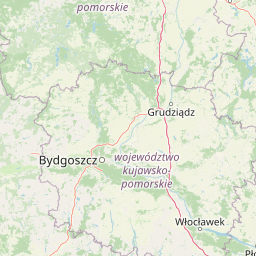
Map view of Mechowisko Krag Nature Reserve

Use this park location map to pinpoint Mechowisko Krag Nature Reserve in Poland, understand its exact geographic position, and read its mapped placement within the surrounding landscape more clearly.

Pigeon | © OpenStreetMap contributors

Location context for Mechowisko Krag Nature Reserve

Pomeranian Voivodeship
Park atlas

Compare regional wetland habitats and forest reserves across northern Poland

Parks Near Mechowisko Krag Nature Reserve and Surrounding Protected Landscapes

Browsing other protected areas near Mechowisko Krag Nature Reserve reveals connected wetland networks and diverse regional forest ecosystems. Exploring adjacent conservation zones provides deeper geographic context for understanding northern Polish lowland terrain.
Protected landscapePomeranian Voivodeship
About 15 km away#1 closest

West

Wdzydzki Park Krajobrazowy: Protected Landscape and Post-Glacial Lakeland Geography

Explore glacial lake networks and Tuchola Forest woodlands

Wdzydzki Park Krajobrazowy preserves a major post-glacial lakescape, characterized by the irregular Lake Wdzydze and its dense surroundings of pine forests, bog islands, and river-linked basins. This protected area in the Pomeranian Voivodeship provides a critical look at the integration of freshwater ecosystems and coniferous terrain, offering an essential reference for understanding the geography of northern Poland.

Area
178.32 km²
Established
1983
Relief
Lowland
Climate
Temperate
Biosphere reserveKuyavian-Pomeranian Voivodeship
About 23 km away#2 closest

South

Rezerwat Biosfery Bory Tucholskie: Protected Forest and Regional Landscape Map

Key protected zones in the Kuyavian-Pomeranian Voivodeship

Rezerwat Biosfery Bory Tucholskie encompasses the largest continuous forest complex in Poland, structured into a formal UNESCO framework. The terrain features postglacial outwash plains, chain lakes, and rare yew reserves that create a distinct ecological mosaic. This overview details the park's geographic layout, surrounding landscape parks, and the connection between its core nature reserves and the wider regional basin.

Area
3,195 km²
Established
2010
Relief
Lowland
Climate
Temperate
Protected landscapeKuyavian-Pomeranian Voivodeship
About 25 km away#3 closest

South

Tuchola Landscape Park: Mapped Protected Area and Riverine Geography in Poland

Pine-covered outwash plains and the meandering Brda River corridor

Covering a significant portion of northern Poland, Tuchola Landscape Park protects a distinctive postglacial landscape of sandy plains and dense pine forests. The park geography is anchored by the Brda River, which flows through a series of rapids and breakthroughs before reaching deep into the surrounding pine-clad outwash plain. Detailed map data provides insight into the park's eight nature reserves, which preserve critical wetland, bog, and riverine habitats.

Area
369.83 km²
Established
1985
Relief
Lowland
Climate
Temperate
Protected landscapePomeranian Voivodeship
About 26 km away#4 closest

West

Zaborski Park Krajobrazowy: Geographic Profile of a Polish Protected Landscape Area

Tuchola Forest region, Pomeranian Voivodeship

Investigate the unique terrain of Zaborski Park Krajobrazowy, a protected landscape defined by its dense network of glacial lakes and sandy outwash plains. This territory provides a comprehensive view of northern Polish lowland geography, highlighting the ecological significance of its river valleys and relic forest habitats within the broader Tuchola Forest ecosystem.

Area
340.3 km²
Established
1990
Relief
Lowland
Climate
Temperate
A minimalist watercolor painting showing a calm lake or wetland surrounded by soft green trees and gentle hills under a light sky.
Protected areaKuyavian-Pomeranian Voivodeship
About 27 km away#5 closest

Southeast

Sandr Wdy Protected Area: Glacial Geography and Wetland Habitats in Northern Poland

An essential reference area for Bory Tucholskie forest ecology.

Sandr Wdy is a distinctive Natura 2000 protected area shaped by post-glacial processes. The landscape features a flat outwash plain punctuated by lake basins, river valleys, and diverse mire systems. With multiple strict nature reserves integrated into its boundaries, the site provides a comprehensive view of how hydrological and soil conditions influence habitat distribution within the broader forest landscape of Poland.

Area
63.21 km²
Established
2011
Relief
Lowland
Climate
Temperate
Nature reservePomeranian Voivodeship
About 31 km away#6 closest

Southwest

Rezerwat przyrody Mętne: An Atlas View of Peatlands in the Pomeranian Voivodeship, Poland

A preserved mosaic of mires, bog ecosystems, and forest lake habitats.

Rezerwat przyrody Mętne is a specialized protected area in northern Poland, centered on the intricate peat-building processes of the Tuchola Forest. The reserve features rare dwarf birch populations and sensitive bog communities, functioning as a critical natural site for hydrological stability. Gain insights into the mapped extent of these mire habitats and their ecological integration within the wider Bory Tucholskie landscape.

Area
1.034 km²
Established
1963
Relief
Lowland
Scope
Terrestrial
Protected landscapeKuyavian-Pomeranian Voivodeship
About 33 km away#7 closest

South

Wdecki Park Krajobrazowy: Protected Landscape Atlas and Regional Geography

Forest and river basin terrain in Poland

Examine the geographic foundation of Wdecki Park Krajobrazowy, a protected landscape characterized by the Wda River drainage, glacial erratics, and extensive pine forests. The area supports a rich variety of wetland flora, mires, and managed reservoirs such as the Żur, making it a significant conservation landmark within the wider Bory Tucholskie region of northern Poland.

Area
191.77 km²
Established
1993
Relief
Lowland
Climate
Temperate
Nature reservePomeranian Voivodeship
About 35 km away#8 closest

Northwest

Rezerwat przyrody Mechowiska Sulęczyńskie: Geography and Protected Area Landscape Analysis

Alkaline fen and peatland habitat in Pomeranian Voivodeship

Study the geographic distribution and protected status of Rezerwat przyrody Mechowiska Sulęczyńskie, an essential alkaline fen ecosystem in northern Poland. This reserve highlights the role of groundwater-fed landscapes in maintaining orchid populations and bryophyte-rich mires within a post-glacial region. The site serves as a reference point for peatland conservation and structural landscape integrity.

Area
0.252 km²
Established
2014
Relief
Lowland
Climate
Temperate

Common questions about visiting, size, designation, and location context for Mechowisko Krag Nature Reserve

Mechowisko Krag Nature Reserve FAQs for park facts, access, geography, and protected area context

Find quick answers about Mechowisko Krag Nature Reserve, including protected-area facts, park geography, trail and visitor context, and how the park fits into its surrounding country and regional landscape.
MoriAtlas Explorer

Continue Your Protected Areas Search Across the Global Atlas

Deepen your exploration by continuing the structured search for national parks and protected areas worldwide. Utilize the comprehensive filtering capabilities to compare different conservation landscapes and refine your understanding of global park geography. Discover more about the distribution and characteristics of protected natural areas.

Global natural geography