Mori Atlas logo
Nature reserveRezerwat przyrody Modrzyna

Explore the geography and old-growth forest boundaries of this protected nature reserve in the Beskid Niski

Rezerwat przyrody Modrzyna: A Protected Carpathian Landscape and Rare Larch Forest Reserve

Located within the village of Barwinek in the Podkarpackie Voivodeship, Rezerwat przyrody Modrzyna serves as a critical protected area for ancient Polish larch stands and mixed fir-larch forest. This 17-hectare reserve represents a compact but vital section of the broader Jaśliska Landscape Park, preserving significant forest habitat on the slopes of the Beskid Niski range. The reserve offers deep insight into Carpathian mountain forest ecology, featuring centuries-old trees and a rich diversity of protected plant, fungi, and wildlife species.

floristic reserveCarpathian forestsPolish larchmixed fir-larch forestold-growth treesrare fungi

Rezerwat przyrody Modrzyna

Nature reserve

Park overview

Structured park overview, official facts, and landscape profile for Modrzyna Nature Reserve

Modrzyna Nature Reserve park facts, protected area profile, and essential visitor context

Review the core facts for Modrzyna Nature Reserve, including designation, size, terrain, visitor scale, habitats, and operating context in one park-focused overview.

About Modrzyna Nature Reserve

Modrzyna Nature Reserve is a small but ecologically significant protected area in the western Carpathians of southeastern Poland. Established through a 1953 official decree, it was created with a focused botanical mandate: to conserve a natural stand of Polish larch, a regionally rare conifer, in its typical mixed forest setting with silver fir.

Geographically, the reserve lies within the Beskid Niski, a gentle, forested mountain range along Poland's border with Slovakia. Although the local terrain is not high in elevation, the area belongs to the ecological category of mountain and submontane forests, and approximately half of the reserve is composed of mixed fir-larch forest, known as grąd jodłowy with modrzew.

Over the decades the reserve has been expanded from its original 6.80 hectares to 17.32 hectares, reflecting both the importance of the larch population and the broader value of the associated Carpathian forest habitat. Today the reserve forms part of a layered landscape protection framework, sitting within the Jaśliska Landscape Park and managed as part of the Barwinek forestry unit of the Dukla Forest Inspectorate.

Within its compact footprint, Modrzyna supports ancient individual trees, several legally protected plant species, rare fungi tied to fir hosts, and a Carpathian fauna that includes large predators, bats, owls, woodpeckers, and a suite of amphibians and reptiles typical of lower mountain forests.

Quick facts and research context for Modrzyna Nature Reserve

Modrzyna is a floristic nature reserve of the shrubs and trees subtype, focused on the protection of a natural Polish larch stand. It lies within Jaśliska Landscape Park and is part of the Dukla Forest Inspectorate's Barwinek forest district. The protected area covers roughly 17.32 hectares within the mountainous Beskid Niski region near the Slovak border.

Protection and recognition

Documented terrestrial protection scope and conservation recognition data

Rezerwat przyrody Modrzyna Protection Status and Designation Records

Rezerwat przyrody Modrzyna maintains a recorded terrestrial protection scope within official conservation inventories. Designated status records provide baseline management context without implying external international recognition programmes.

Protection details

Protection scope
Terrestrial
Transboundary protection
No
Park context

Deeper park guide and search-rich context for Modrzyna Nature Reserve

Modrzyna Nature Reserve history, landscape, wildlife, and travel context

Explore Modrzyna Nature Reserve through its history, landscape character, ecosystems, wildlife, conservation priorities, cultural context, and seasonal travel timing in a structured park guide built for atlas discovery and search intent.

Why Modrzyna Nature Reserve stands out

Modrzyna is best known for being one of Poland's key natural sites for the rare Polish larch (modrzew polski), a Carpathian conifer subspecies. The reserve preserves mature mixed fir-larch forest with trees well over two centuries old and exceptionally wide trunks.

Modrzyna Nature Reserve history and protected-area timeline

Modrzyna Nature Reserve was established in 1953 as a floristic reserve under Polish law. Its founding act designated the protection of a natural stand of Polish larch growing in mixed stands with fir, reflecting early post-war conservation priorities focused on preserving rare native tree populations in the Carpathians.

Originally the reserve covered 6.80 hectares. In 1959 it was expanded to 14.46 hectares, and it has since reached its current size of 17.32 hectares. The reserve was also reclassified as a floristic reserve of the shrubs and trees subtype, underscoring its lasting emphasis on woody plant communities rather than open communities or non-vegetation features.

Today Modrzyna remains a small but well documented example of Poland's tradition of creating specialist forest reserves. Its location inside Jaśliska Landscape Park and its integration into the Dukla Forest Inspectorate's management framework reflect the broader evolution of Polish nature protection from isolated reserve creation toward broader landscape-scale conservation in the Carpathians.

Modrzyna Nature Reserve landscape and geographic character

Modrzyna lies on the slopes of the Beskid Niski, a part of the Western Carpathians characterized by relatively gentle, heavily forested ridges rather than dramatic alpine peaks. The terrain is typical of the lower mountain and submontane zone, with mixed deciduous and coniferous forest stretching across the surrounding landscape.

Approximately half of the protected area consists of mixed fir-larch forest, with the remainder made up of related Carpathian forest communities that grade outward into the wider forest mosaic of the Jaśliska Landscape Park. The reserve fits naturally into this broader forested terrain, the surface shaped by long-term forest cover rather than by open meadows or human-modified land.

The reserve's relatively low elevation and sheltered Carpathian slope context create a cool, humid microclimate consistent with the region's mixed fir-dominated forests. This climatic setting is central to the survival of the Polish larch stand and of the associated ancient fir-larch grąd that defines the reserve.

Modrzyna Nature Reserve ecosystems, habitats, and plant life

The reserve's nature is defined by its core plant community: mixed fir-larch forest, called grąd jodłowy with Polish larch, which covers nearly half of the protected area. The remaining woodland belongs to related Carpathian forest types typical of the Beskid Niski.

A particular ecological focus of Modrzyna is the population of Polish larch itself. In 1997 the reserve contained 596 living and 48 dead specimens of this rare conifer, with individual trees exceeding 200 years in age and reaching trunk diameters of more than 90 cm. The presence of so many old individuals makes the reserve a genetic and structural reservoir for the species in the Polish Carpathians.

Alongside the dominant larch and fir, the reserve protects several legally protected plant species, including mezereon (wawrzynek wilczełyko) and white helleborine (podkolan biały). A rare protected fungus, Hericium flagellum (soplówka jodłowa), has also been recorded, tied ecologically to old fir hosts and therefore closely linked to the health of the reserve's ancient tree population.

Modrzyna Nature Reserve wildlife and species highlights

Modrzyna supports a typically rich Carpathian forest fauna. Among larger mammals, red deer, roe deer, foxes, wolves, and Eurasian lynx are recorded, with brown bears and European wildcats appearing rarely. The reserve also hosts small mammals typical of Carpathian forests: rodents including mice and squirrels, members of the dormouse family (popielicowate), hares and related lagomorphs, mustelids such as martens and weasels, and several bat species.

The birdlife is particularly notable. The reserve's avifauna includes great spotted woodpecker, common blackbird, Eurasian dunnock (pokrzywnica), European robin, lesser spotted eagle (orlik krzykliwy), Ural owl (puszczyk uralski), and the three-toed woodpecker, a species strongly associated with old coniferous and mixed mountain forests.

Among reptiles and amphibians, common species such as lizards, newts, frogs, common toads, and grass snakes are recorded, while the common European adder and the fire salamander occur more rarely. The combination of large predators, specialist forest birds, and a varied amphibian and small mammal fauna reflects the intact character of the reserve's Carpathian forest ecosystem.

Modrzyna Nature Reserve conservation status and protection priorities

Modrzyna's principal conservation value lies in the protection of a natural, age-diverse stand of Polish larch, a regionally rare conifer subspecies that depends on intact Carpathian mixed forest habitat. By preserving old trees, including individuals older than two centuries, the reserve acts as a living gene bank for the species and safeguards the structural complexity of mixed fir-larch forest.

The reserve also contributes to the conservation of associated rare species, particularly mezereon, white helleborine, and Hericium flagellum, a fungal species that depends on old fir trees. The legal framework backing the reserve, including floristic reserve status of the shrubs and trees subtype, reinforces the protection of its woody plant communities.

Modrzyna's location within Jaśliska Landscape Park and its integration into the Dukla Forest Inspectorate's forestry management give it additional protection through the broader Polish approach of layering strict site-level protection within larger landscape-scale conservation areas, helping maintain ecological connectivity across the Beskid Niski.

Top sights and standout views in Modrzyna Nature Reserve

Modrzyna is distinguished by the unusual combination of an ancient Polish larch stand within a working Carpathian forest landscape. Its trees, some over 200 years old with trunks wider than 90 cm, give the reserve a rare old-growth character for such a small protected area.

The reserve's protected rare plants and fungi, combined with its fauna including lynx, wolves, brown bears, Ural owl, and three-toed woodpecker, mark it as a notably complete example of Beskid Niski forest ecology in compact form.
Monthly climate preview

Long-term representative point measurements for temperature and precipitation rhythms

Rezerwat przyrody Modrzyna Climate Normals and Annual Weather Patterns

Representative coordinate records show average monthly temperatures ranging from sub-zero winter minimums to warm summer maximums alongside varying daily precipitation rates. Detailed monthly normals provide a complete statistical profile of long-term meteorological patterns across the protected terrain.
Annual mean7 °C
-5 °C19 °C
Jan-5°
Feb-3°
Mar
Apr
May13°
Jun17°
Jul19°
Aug19°
Sep13°
Oct
Nov
Dec-3°
Warmest month
July

18.7 °C

Coolest month
January

-4.9 °C

Wettest month
July

3.3 mm/day

Driest month
January

1.4 mm/day

Park location guide

Geography guide, regional context, and park location map for Modrzyna Nature Reserve

Modrzyna Nature Reserve park geography, regions, and map view in Poland

Understand where Modrzyna Nature Reserve sits in Poland through a broader geographic reading of the surrounding landscape, nearby location context, and its mapped position within the national park landscape.

How Modrzyna Nature Reserve fits into Poland

Poland, officially the Republic of Poland, is a Central European country spanning from the Baltic Sea in the north to the Carpathian Mountains in the south. It borders Germany, Czech Republic, Slovakia, Ukraine, Belarus, Lithuania, and Kaliningrad Oblast. The country has a temperate climate, diverse landscapes, and is known for its rich history, cultural heritage, and strong economic position within the EU.

Wider geography shaping Modrzyna Nature Reserve in Poland

Poland occupies 312,696 km2 in Central Europe, extending from the Baltic Sea coast in the north to the Sudetes and Carpathian Mountains in the south. It borders Germany to the west, Czech Republic and Slovakia to the south, Ukraine and Belarus to the east, and Lithuania and Kaliningrad Oblast to the northeast. The landscape includes lowland plains, uplands, and mountain ranges.

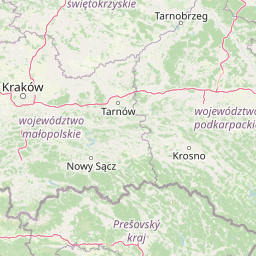
Map view of Modrzyna Nature Reserve

Use this park location map to pinpoint Modrzyna Nature Reserve in Poland, understand its exact geographic position, and read its mapped placement within the surrounding landscape more clearly.

Pigeon | © OpenStreetMap contributors

Location context for Modrzyna Nature Reserve

Podkarpackie Voivodeship
Park atlas

Compare adjacent forest reserves and mountain protected landscapes across the regional terrain

Other Parks Near Rezerwat przyrody Modrzyna and Surrounding Carpathian Protected Areas

Browse protected areas near Rezerwat przyrody Modrzyna to compare similar forest habitats and mountain terrain across the surrounding Carpathian region. Connecting individual reserves provides broader context for regional forest ecology and adjacent landscape protection.
Protected areaPodkarpackie Voivodeship
Mapped location lies within the park boundary#1 closest

East

Ostoja Jaśliska Protected Area: Carpathian Forest Landscapes and Ecological Geography

Exploring Natura 2000 boundaries in Podkarpackie Voivodeship

The Ostoja Jaśliska protected area sits within the Beskid Niski range, offering a deep look into Carpathian beech forest communities and rare peatland habitats. The region holds nine distinct nature reserves and provides essential connectivity for apex predator populations. This geographic profile details the terrain and environmental importance of this expansive protected polygon in southeastern Poland.

Area
292.521 km²
Established
2009
Relief
Mountain
Climate
Temperate
Protected areaPodkarpackie Voivodeship
About 3.6 km away#2 closest

North

Trzciana Protected Area: A Geographic Atlas of the Low Beskids Forest Terrain

Ecological mapping of Carpathian ridge habitats in Podkarpackie.

Trzciana functions as an essential forest corridor within the Beskid Dukielski, offering a detailed look at Annex I habitat types including beech forests and undisturbed cave systems. The site provides a concentrated view of the natural mountain geography found in southern Poland, emphasizing the importance of protected woodland matrices and the specific ridge formations of the broader Low Beskids mesoregion.

Area
22.855 km²
Established
2009
Relief
Mountain
Climate
Temperate
A horizontal watercolor painting depicting a soft, rolling landscape with green fields, patches of trees, and distant lavender-toned mountains under a pale sky.
National parkPodkarpackie Voivodeship
About 3.7 km away#3 closest

West

Magurski Park Narodowy: Geographic Overview and Protected Carpathian Forest Atlas

Transitional mountain landscapes in Podkarpackie Voivodeship

Magurski Park Narodowy encompasses a distinct Carpathian forest landscape within the Beskid Niski range. The terrain is defined by rounded mountain ridges, the upper Wisłoka river basin, and strict forest reserves that maintain the ecological integrity of this transitional zone. As a major protected area in Poland, the park provides an essential look at biodiversity-rich beech woodlands, rocky outcrops, and traditional cultural landscapes.

Area
194.39 km²
Established
1995
Visitors
40K annual
Relief
Mountain
Watercolor illustration showing a landscape with rolling hills, green trees, and distant mountains under a light sky
National parkSubcarpathian Voivodeship
About 3.7 km away#4 closest

Northwest

Magura National Park: Mapped Protected Landscape & Carpathian Geography Atlas

Explore unique sandstone formations and mapped natural terrain.

Magura National Park, located in the Subcarpathian Voivodeship of Poland, offers a rich focus for protected-area exploration and geographic discovery. This national park is distinguished by its dramatic sandstone rock formations, forested Carpathian ridges, and its ecological importance as a transitional zone. Users engaging with Magura National Park can examine its mapped boundaries, understand its specific landscape context, and appreciate its role within the broader regional geography.

Area
194.39 km²
Established
1995
IUCN
II
Visitors
40K annual
Protected areaPodkarpackie Voivodeship
About 8.2 km away#5 closest

Northwest

Łysa Góra Protected Area: Mapping Carpathian Mountain Landscapes in Podkarpackie Voivodeship

Forested ridgeline terrain within the Low Beskids range

Spanning a series of summits including Grzywacka Góra and Dania, Łysa Góra encompasses vital Carpathian beech forest and protected mountain habitats. This Natura 2000 site functions as a key element of the Low Beskids mountain geography, featuring dense woodland cover that supports large carnivore populations and rare forest species across its protected ridge terrain.

Area
27.438 km²
Established
2009
Relief
Mountain
Climate
Temperate
Protected areaPodkarpackie Voivodeship
About 13 km away#6 closest

Northwest

Wisłoka z dopływami Protected Area: River Valley Landscape and Carpathian Foothills Atlas

Freshwater habitat mapping in southern Poland

Wisłoka z dopływami covers a long, ecologically rich segment of the Wisłoka river valley in the Carpathian foothills. This protected area connects diverse riparian, floodplain, and alluvial forests, serving as a critical habitat for six Annex II fish species and sixteen distinct riparian woodland types.

Area
26.51 km²
Established
2011
Relief
Mixed relief
Scope
Terrestrial
Protected areaPodkarpackie Voivodeship
About 14 km away#7 closest

Northeast

Rymanów Protected Area: Map and Landscape Overview in Podkarpackie Voivodeship

Forested foothill geography and Natura 2000 site boundaries

Located in the Podkarpackie Voivodeship, Rymanów is a 52-square-kilometer protected area defined by its rolling Bukowskie Foothills terrain. This site highlights the intersection of traditional architecture and subcarpathian forest, providing critical habitat within the larger Beskid Niski Protected Landscape Area. Examine the spatial relationship between its protected roosts and surrounding foraging zones.

Area
52.41 km²
Established
2009
Relief
Upland
Scope
Terrestrial
Protected areaPoland
About 21 km away#8 closest

West

Źródliska Wisłoki Protected Area: Geography and Landscape Mapping in the Polish Carpathians

A detailed atlas exploration of spring mires and mountain meadows

Located in the Low Beskids of southern Poland, Źródliska Wisłoki preserves a rare ecological mosaic of spring-fed mires and semi-natural hay meadows. This protected area serves as a vital site for the headwaters of the Wisłoka river, offering deep insights into the structure and distribution of Carpathian mountain wetland habitats within the Sękowa commune.

Area
1.818 km²
Established
2011
Relief
Mountain
Scope
Terrestrial

Common questions about visiting, size, designation, and location context for Modrzyna Nature Reserve

Modrzyna Nature Reserve FAQs for park facts, access, geography, and protected area context

Find quick answers about Modrzyna Nature Reserve, including protected-area facts, park geography, trail and visitor context, and how the park fits into its surrounding country and regional landscape.
MoriAtlas Explorer

Continue Your Protected Areas Search Across the Global Atlas

Deepen your exploration by continuing the structured search for national parks and protected areas worldwide. Utilize the comprehensive filtering capabilities to compare different conservation landscapes and refine your understanding of global park geography. Discover more about the distribution and characteristics of protected natural areas.

Global natural geography