
Why Magura National Park stands out
Magura National Park is best known for its distinctive sandstone rock formations, particularly the mysterious Devil's Rock (Diabli Kamień) and the Kornuty nature reserve with its fantastically eroded sandstone constellations. The park is also renowned for its significant population of large predators including brown bears, wolves, lynx, and wildcats that roam freely between Poland and Slovakia. Its position as a biogeographical transition zone between Eastern and Western Carpathians gives it exceptional ecological importance, with one of Poland's highest densities of breeding birds of prey including the common buzzard and the critically important eagle species.
Magura National Park history and protected-area timeline
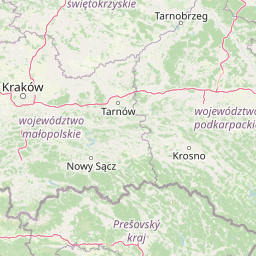
Magura National Park was established by government decree on November 24, 1994, and officially began functioning on January 1, 1995. The park was originally designated with an area of 199.62 km² but was subsequently reduced to 194.39 km² due to ongoing complications with private land ownership within the proposed boundaries. The park's founding followed decades of advocacy, with initial concepts for protected area status emerging as early as the mid-1970s. The park's headquarters are located in the village of Krempna, which has served as a center for human settlement in this region for centuries. The park's establishment was part of Poland's broader expansion of national park coverage in the 1990s, reflecting growing recognition of the Carpathian forests' ecological importance. The boundary configuration remains complex due to the pattern of private lands, municipal forests, and agricultural parcels that create enclaves and irregular boundary extensions throughout the park area.
Magura National Park landscape and geographic character
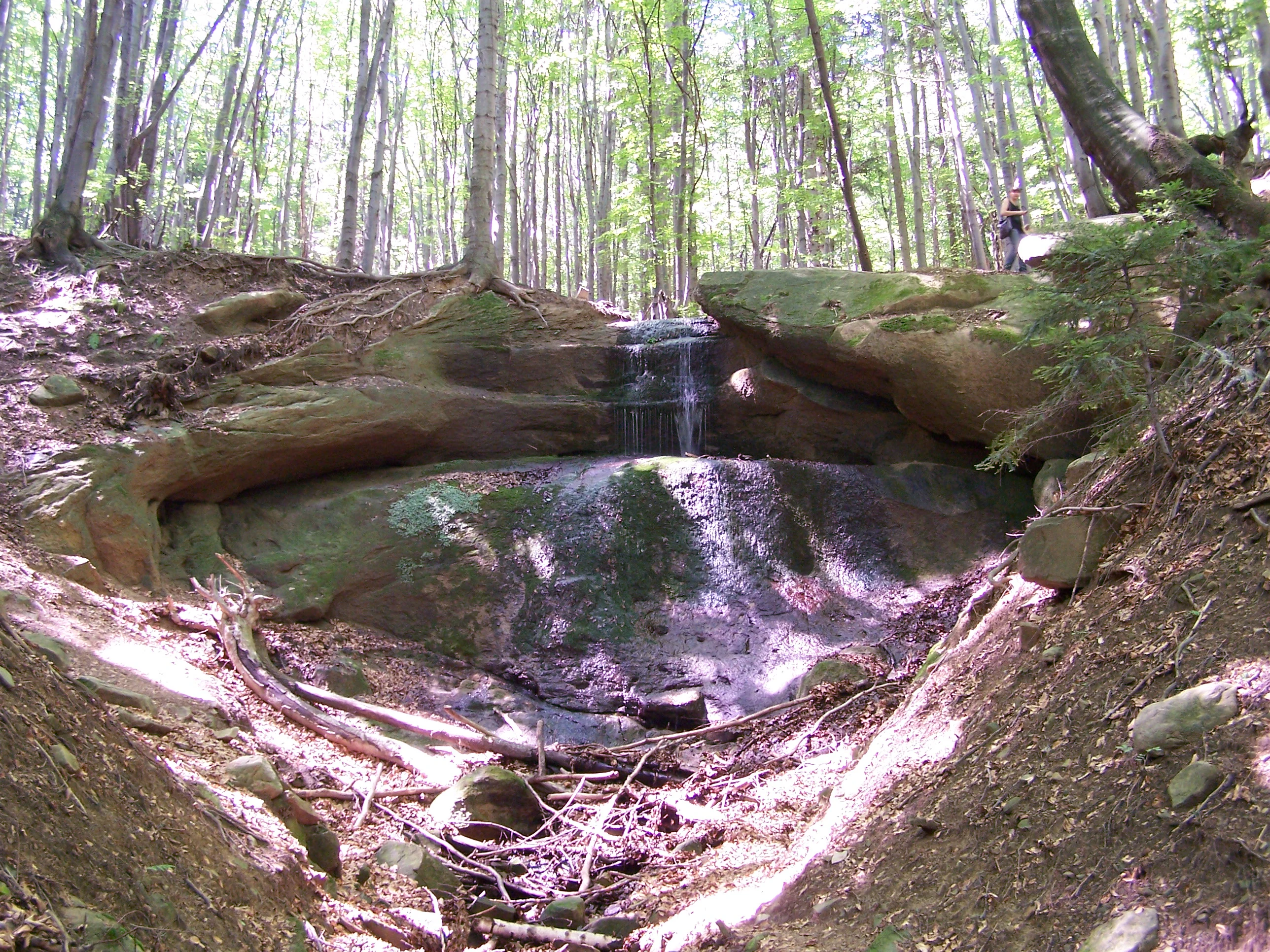
The landscape of Magura National Park is characteristic of the Beskid Niski, a Carpathian mountain range known for its relatively gentle, forested ridges rather than dramatic alpine peaks. The terrain consists primarily of heavily forested low and medium-height mountains with rounded profiles. The park's centerpiece is the Magura Wątkowska massif, containing the park's highest point at Wątkowa (847m), with other significant peaks including Magura (842m), Wielka Góra (719m), and Nad Tysowym (713m). The Wisłoka River and its tributaries form the hydrological backbone of the park, creating typical mountain river characteristics including picturesque ravines and frequently shifting courses. One of the park's most distinctive features is the Kornuty nature reserve, which protects remarkable clusters of fantastically sculpted sandstone formations. These unusual rock shapes result from differential erosion of sandstone bedrock, creating pillars, caves, and dramatic formations that attract both scientists and visitors. The most famous of these is Devil's Rock (Diabli Kamień), a prominent sandstone formation wrapped in local legend and mystery. The park also contains the Mroczna Cave, whose corridors extend approximately 200 meters, one of the more significant cave systems in the region.

Magura National Park ecosystems, habitats, and plant life
Magura National Park occupies a critically important biogeographical position at the intersection of Western and Eastern Carpathian ecosystems. This transitional character is reflected in both the park's flora and fauna, making it a unique ecological laboratory. Over 90% of the park's surface is covered by forest, representing one of the most extensive forest complexes in the Polish Carpathians. The vegetation divides into two distinct altitudinal zones: the foothills zone (pogórze) up to approximately 530 meters, characterized by artificial pine-dominated stands, meadows, pastures, and peat bogs; and the lower forest zone (regiel dolny) extending from 530 meters upward, where natural beech forests dominate with fir additions and rare Carpathian maple groves. The park supports nearly 800 plant species, with 59 under strict protection and 11 under partial protection. Notable species include spring flower (Cebulica dwulistna), bear's garlic, various orchids including the fragrant orchid and early spider orchid, golden lily, and the Carpathian saxifrage. The fungal diversity is equally remarkable with 463 species documented, 17 of which are strictly protected including the giant puffball and larch mushroom.
Magura National Park wildlife and species highlights
The wildlife population of Magura National Park is exceptionally rich for a Carpathian forest park, with approximately 200 endangered animal species estimated within its boundaries. The park supports significant populations of large carnivores that move freely across the Polish-Slovak border, including brown bears, wolves, lynx, and European wildcats. The mammalian fauna includes 57 species total, with 10 bat species representing an important component of the nocturnal fauna. Other notable mammals include the European elk, European beaver, Eurasian otter, and the racoon dog. The avian community is particularly significant, with 137 bird species documented including several endangered raptors. The park supports one of the highest breeding densities of common buzzard in Poland, while the scops owl population reaches record levels nationally and ranks among the highest in Europe. Other notable bird species include the golden eagle, eagle owl, black stork, Ural owl, and the honey buzzard. The park also hosts 6 reptile species, 10 amphibian species, 12 fish species, and numerous insect species, making it one of the most biodiverse protected areas in the Polish Carpathians.
Magura National Park conservation status and protection priorities
Magura National Park plays a fundamental role in the conservation network of the Polish Carpathians by serving as an ecological corridor connecting Western and Eastern Carpathian protected areas. The park contains three strict nature reserves (Magura Wątkowska at 1,189 ha, Kamień at 378 ha, and Zimna Woda at 841 ha) that provide complete protection for representative ecosystems. The park is designated as a Special Area of Conservation (Ostoja Magurska) under the European Union's Natura 2000 network, recognizing its importance for preserving European wildlife habitats. The protection regime includes strict protection covering 2,408 hectares, active management on 16,940 hectares, and landscape protection on 52 hectares, with an additional buffer zone (otulina) of 229.69 hectares surrounding the core area. The park's conservation significance is amplified by its position at the western edge of the Eastern Carpathians, preserving forest communities and species that reach their western range limits in this area. Large predator populations, particularly brown bears and wolves, maintain viable populations partly because the park provides connected habitat extending across the border into Slovakia.
Magura National Park cultural meaning and human context
The region surrounding Magura National Park carries rich human heritage dating back to the early medieval period. The oldest evidence of human settlement within the park area is a 9th-century stronghold at Brzezowa on Walik mountain, part of a system of defensive fortifications built by the Vistulans tribal group to protect their southern frontier. The area was historically inhabited by the Lemkos, an Eastern Slavic ethnic group who built numerous small wooden Orthodox churches throughout the region. Several of these historic wooden churches survive in villages surrounding the park, including examples in Bartne, Chyrowa, Kwiaton, and Krempna, representing important elements of traditional Carpathian wooden architecture. One farmer's house in Kolonia Olchowiec contains a small private museum of Lemko culture, preserving artifacts of this displaced community. The landscape also bears witness to more recent turbulent history, with numerous World War I cemeteries dotting the area as this region was long contested between Russian and Austro-German armies. A poignant reminder of World War II is the cemetery at Halbów pass containing the remains of 1,250 Jews murdered by Nazis in 1942.
Top sights and standout views in Magura National Park
Magura National Park offers visitors a distinctive Carpathian experience centered on forest-covered ridges, dramatic sandstone formations, and exceptional wildlife watching opportunities. The park's network of marked trails includes sections of the main Beskid trail and European long-distance hiking path E3, providing access to viewpoints, rock formations, and the Wisłoka valley. The Kornuty nature reserve showcases the park's most impressive sandstone sculpting, while the Devil's Rock formation near Folusz is one of the most photographed sites. The educational center in Krempna provides visitor orientation and hosts a museum. The numerous wooden Orthodox churches in surrounding villages represent a unique cultural heritage. The park's position as a cross-border wilderness for brown bears, wolves, and lynx makes it a destination for wildlife enthusiasts, though sighting these elusive animals requires patience and luck. The spring and summer months bring wildflower displays in the forest clearings and meadows, while autumn offers mushroom foraging opportunities in the beech forests.
Best time to visit Magura National Park
The best time to visit Magura National Park depends on interests, though late spring through early autumn offers the most comfortable conditions for outdoor exploration. May and June bring forest wildflowers, bird activity peaks, and comfortable temperatures for hiking. July and August are the warmest months but also see the highest visitor numbers. September and October offer pleasant hiking weather, autumn foliage colors, and fewer crowds, making this an excellent time for those seeking a quieter experience. Winter visits are possible but the park's lower elevation means snow conditions can be variable and some trails may be difficult. The park experiences moderate precipitation year-round, with annual rainfall averaging 800-900mm, and visitors should be prepared for changeable mountain weather in any season. Spring and early summer provide the best conditions for viewing waterfalls and river features, while late summer and early autumn offer the most reliable weather for longer backcountry hikes.