Why Mokry Las Nature Reserve stands out
Mokry Las is best known for preserving a fragment of oak-hornbeam forest enriched with silver fir. Silver fir is a species that has largely disappeared from large parts of the Polish lowlands due to historical land use and air pollution pressures, making mixed stands like the one here of particular botanical interest. The reserve therefore acts as a small but ecologically valuable reference site for what lowland Central European forest could once look like across a wider region.
Mokry Las Nature Reserve history and protected-area timeline
Mokry Las was established on 24 November 1983 by an order of the Minister of Forestry and Wood Industry. The primary purpose of designation was to protect a representative fragment of oak-hornbeam forest that retained a natural component of silver fir, a tree that has become ecologically significant in Poland because of its retreat from many lowland areas.
The founding legal instrument described the reserve's area as 14.42 hectares, while current documentation places the size at 14.59 hectares, reflecting small boundary adjustments over time. For nearly three decades the reserve operated under its original designation, until a formal conservation plan was introduced in 2011, with later amendments. This plan shifted the reserve's management regime toward active protection, allowing specific forestry and habitat measures to maintain or restore the character of the protected forest community.
Mokry Las Nature Reserve landscape and geographic character
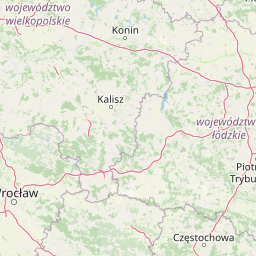
The landscape setting of Mokry Las is defined by the Kotlina Szczercowska, a broad lowland basin that forms part of the larger Central Polish lowlands. The terrain is generally flat to gently undulating, typical of glacial and post-glacial plains shaped by Quaternary processes, and the reserve sits within this subdued topography without dramatic relief.
Within this wider setting, the reserve itself is a compact forested patch surrounded by the agricultural and forest mosaic that characterizes the Pajęczno County area. The local name Mokry Las suggests moist or damp ground conditions, which is consistent with the fertile, fresh-to-moist soils that grąd forests typically occupy. Rather than offering striking landforms, the reserve's landscape value lies in the integrity of its continuous forest cover and the way it persists as a green island amid the surrounding land use.
Mokry Las Nature Reserve ecosystems, habitats, and plant life
The nature of Mokry Las is centered on a single, ecologically coherent forest community. The protected type is a grąd, the classical Central European oak-hornbeam woodland that grows on fertile, fresh soils. Typical species in such forests include sessile oak, pedunculate oak, hornbeam, and a rich understory of shrubs and herbs adapted to semi-shaded conditions.
What makes the community here distinctive is the admixture of silver fir (Abies alba). Silver fir belongs to the natural mixed-deciduous-coniferous forests of Central Europe, but in much of the Polish lowlands it has been reduced to scattered specimens or has disappeared entirely from many sites. Its persistence in Mokry Las suggests that local edaphic and microclimatic conditions have remained favorable enough to support a mixed stand rather than a purely deciduous one.
The reserve is therefore not a site of dramatic landscape diversity but of community-level ecological value: a small, well-preserved example of a forest type that has been heavily modified across much of its former range.
Mokry Las Nature Reserve conservation status and protection priorities
From a conservation perspective, Mokry Las matters because it preserves a complete, relatively undisturbed example of a forest community type that has become rare in the Polish lowlands. Oak-hornbeam forests with silver fir represent one of the ecological reference points for what natural Central European woodland can resemble, and protecting even small fragments of such communities contributes to long-term habitat conservation.
The reserve's status under active protection, formalized through the 2011 conservation plan, allows management interventions aimed at maintaining the structural and species composition of the forest. Conservation efforts therefore focus less on visitor management and more on ensuring that the silver fir component and the associated oak-hornbeam community persist in good condition, with measures that can include selective tending, regeneration support, and protection against external pressures. The reserve's location within the Wieluń Forest Inspectorate also embeds it within a broader managed forest landscape, providing some buffer against abrupt land-use change around the site.
Top sights and standout views in Mokry Las Nature Reserve
Mokry Las is a compact reserve with a clearly defined conservation mission: the protection of oak-hornbeam forest that still includes silver fir as a natural component. Its position in the Kotlina Szczercowska links it to a specific and well-defined regional landscape unit of central Poland, and its status as a phytocoenotic forest-community reserve places it within Poland's broader system of vegetation-based nature reserves.
Among its most notable qualities are the legal clarity of its designation, with a defined founding act from 1983 and a structured conservation framework from 2011, as well as its role within the Wieluń Forest Inspectorate, which gives it institutional continuity. For visitors interested in Polish forest ecology rather than dramatic scenery, Mokry Las offers a focused window into a forest type shaped by centuries of interaction between climate, soils, and land-use history in the Polish lowlands.
Best time to visit Mokry Las Nature Reserve
The most rewarding time to experience Mokry Las is during the late spring and early summer, when the deciduous canopy of the oak-hornbeam forest is fully leafed out and the forest floor vegetation of the grąd community is most active and visible. Early autumn can also be attractive, as mixed broadleaf-conifer stands gain color contrast and the fir component remains evergreen.
Winter visits offer a quieter atmosphere and a chance to see the structure of the forest, including the fir trees, without dense foliage, though ground conditions may be wet or soft, consistent with the moist character implied by the reserve's name. As with many small forest reserves, visits are best approached as low-impact walks along any public roads or forest paths around the area rather than as in-depth interior exploration, since the core of the reserve is managed primarily for ecological rather than recreational use.