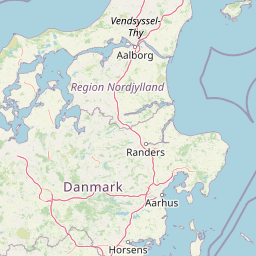
Why Mønsted and Daugbjerg Chalk Mines and Mønsted Ådal stands out
The site is best known for the abandoned Mønsted and Daugbjerg chalk mines, which together form one of the most important bat hibernation sites in northern Europe, harboring species such as the pond bat. Beyond the mines, the area is also recognized for exceptionally well-developed spring-fed mires in the river valleys and for Birkesø, a former lobelia lake with extremely clear water.
Mønsted and Daugbjerg Chalk Mines and Mønsted Ådal history and protected-area timeline
The chalk mines at Mønsted and Daugbjerg have shaped the human history of the area for centuries. Lime extracted from these underground quarries was originally used to build Danish churches and later supplied construction across a wider region; mining at Mønsted continued until 1978, after which the underground workings gradually transformed into a cultural heritage landmark known especially for their bat populations.
Protection of the landscape above has a more recent and layered history. Dybdal Skov and the Daugbjerg Kalkminer area were placed under conservation status in 1951, and additional conservation measures followed in 2003. In 2011, the Natura 2000 plan for Area No. 39 was formally adopted, after which municipal councils and the Danish Nature Agency (Naturstyrelsen) drew up binding action plans to implement it. The plan was coordinated with Water Plan 1.2 for the Limfjorden catchment and continues through subsequent Natura 2000 planning periods. In 2018, a 14-hectare forest area near Mønsted Kalkgruber was designated as "other biodiversity forest" to safeguard threatened dry-grassland and other rare species.
Mønsted and Daugbjerg Chalk Mines and Mønsted Ådal landscape and geographic character
The terrain of this Natura 2000 area blends underground and surface worlds in a striking way. Beneath the surface, the chalk mines at Mønsted and Daugbjerg form vast, cool, and stable subterranean galleries cut into limestone, while above ground the landscape is dominated by the deeply incised valleys of the Mønsted Å and Jordbro Å, whose slopes can be locally steep.
Between and around these valleys lie sandy uplands that carry heath vegetation and plantation forest, including the Liebes and Dalgas plantages near Stoholm and Mønsted Plantage in the southeast. The northern end of the area holds Birkesø, a small clear-water lake set within a varied heath landscape, while the Daugbjerg side includes forested slopes and oak scrub on drier, more calcareous soils. The combination of steep valley sides, heath plateaus, plantation woodland, and tight clusters of historic mining features gives the entire area a notably varied topography within a relatively small footprint.
Mønsted and Daugbjerg Chalk Mines and Mønsted Ådal ecosystems, habitats, and plant life
Ecologically, the area stands out because it brings together three uncommon habitat complexes in one place: lime-rich spring mires along stream valleys, dry and acidic grasslands and heaths above them, and the subterranean chalk-mine environment used by hibernating bats. These habitats respond to slightly different conditions and management histories, which is why they coexist here in an unusually rich mosaic.
Along the Mønsted Å and Jordbro Å valleys, calcareous groundwater surfaces in places to form well-developed spring mires, which support spring-fed vegetation and a moss flora notable for species such as Blank Seglmos (Hamatocaulis vernicosus). Where livestock grazing has receded, the gentler valley margins are transitioning toward denser vegetation, while the steeper edges retain species-rich dry meadows and heaths. Birkesø represents a classic lobelia-lake environment, historically valued for its unusually clean water and clear shorelines, and the surrounding heath and plantation mosaic adds to the area's biodiversity interest.
Mønsted and Daugbjerg Chalk Mines and Mønsted Ådal wildlife and species highlights
The most internationally significant wildlife feature of the area is its bat population. The Mønsted and Daugbjerg chalk mines form a hibernation site of major importance, supporting species including the pond bat (Myotis dasycneme), a species for which these mines are especially valuable as a winter refuge.
In the river valleys, stream-dependent fauna is also unusual for Danish conditions. Water quality in both Jordbro Å and Mønsted Å is generally good, providing habitat for brook lampreys, green club-tailed dragonflies, and otters, while the amphibians of the area include the great crested newt. Among plants, the area is notable for red-listed species such as hart's tongue fern and cup fern, which occur in well-known populations on suitable substrates, complementing the area's broader botanical value both inside and outside the mines.
Mønsted and Daugbjerg Chalk Mines and Mønsted Ådal conservation status and protection priorities
The conservation significance of Area No. 39 rests on the rare combination of subterranean bat habitats, calcareous spring mires, and the lobelia lake Birkesø, supported by the broader heath and dry-grassland mosaic. As a Natura 2000 habitat area, it is recognized at European level for these features, and Danish authorities are obliged to maintain or restore favorable conservation status for the qualifying habitats and species.
On-the-ground protection is implemented through Natura 2000 binding action plans drawn up by the municipalities and Naturstyrelsen following the 2011 plan, and the area's plan is coordinated with Water Plan 1.2 for the Limfjorden catchment. The Dybdal Skov and Daugbjerg Kalkminer area has been under conservation status since 1951, with a renewed designation in 2003, and a 14-hectare block near Mønsted Kalkgruber was designated as biodiversity forest in 2018 to protect threatened grassland and forest species.
Mønsted and Daugbjerg Chalk Mines and Mønsted Ådal cultural meaning and human context
The cultural layer of the area is closely tied to its chalk. For centuries, both Mønsted and Daugbjerg supplied lime for Danish church construction and later for general building, embedding these underground spaces into the long history of Danish masonry and architecture; Mønsted continued limestone extraction until 1978, after which the mines took on a new role as a heritage and visitor landmark. The surrounding planted forests, including Mønsted, Daugbjerg, Liebes, and Dalgas plantations, reflect a Danish tradition of planting conifers on sandy heathlands in the 19th and early 20th centuries to stabilize soils, create timber resources, and reclaim land shaped by earlier grazing and exploitation.
Top sights and standout views in Mønsted and Daugbjerg Chalk Mines and Mønsted Ådal
Key points of distinction include the two chalk mines that together form an internationally important bat hibernation complex, the calcareous spring mires of the Mønsted Å and Jordbro Å valleys with their rare moss flora, and the clear-water lobelia lake Birkesø at the northern end of the area. These features are set within a wider mosaic of dry and acidic heaths, oak and beech woodlands, and plantation forests, all held within a Natura 2000 habitat area under Danish nature law.
Best time to visit Mønsted and Daugbjerg Chalk Mines and Mønsted Ådal
The Danish climate gives the area a relatively mild seasonal cycle, and vegetation in the river valleys, heaths, and woodlands is most visible in late spring and summer, when grassland and mire plants are flowering and the bat colonies have left the underground mines for the surrounding landscape. Winter is the season in which the chalk mines reach their greatest biological significance: this is when large numbers of hibernating bats, including the pond bat, occupy the stable underground galleries of Mønsted and Daugbjerg, and early hibernation gradually shifts toward occupancy deeper inside the tunnels as temperatures change through the season. Visitors interested in birds, dragonflies, and heritage as well as those drawn to the underground landscape will find different experiences across the year, shaped largely by bat activity, ground conditions, and flowering cycles in the heaths and valley mires.