Why Moose Mountain Creek National Wildlife Area stands out
The reserve is best known for its compact but ecologically diverse mosaic of prairie habitats, where marshes, native mixed-grass prairie, and aspen groves exist side by side within a single small protected landscape. It is also notable as one of the surviving core units of the former Prairie National Wildlife Area, a network that once attempted to represent native prairie habitat across southern Saskatchewan. In particular, the reserve supports typical prairie wetland bird species such as American Bittern, Sora, Red-winged Blackbird, and Western Meadowlark, alongside grassland plants like needle-and-thread grass and prairie crocus.
Moose Mountain Creek National Wildlife Area history and protected-area timeline
The protected history of Moose Mountain Creek National Wildlife Area is intimately tied to the evolution of Canada's prairie conservation strategy. In 1978, the Prairie National Wildlife Area was established as a large, distributed network of 26 separate units spread across southern Saskatchewan, intended to protect representative samples of the province's native prairie ecosystems. The parcel that would eventually become Moose Mountain Creek National Wildlife Area was part of this system as Unit 27.
By the early 2020s, it had become clear that not all 26 units of the original Prairie National Wildlife Area still met modern scientific criteria for protected habitat value. In October 2020, a rigorous scientific review applied the 2005 criteria for the creation of national wildlife areas and found that only seven of the 26 units qualified. As a result, the federal government decided to replace the single large Prairie National Wildlife Area with five smaller, more focused reserves and to delist 19 of the units as protected lands.
Moose Mountain Creek, corresponding to the original Unit 27, was selected as part of this reorganization. On 12 May 2025, the Prairie National Wildlife Area was formally abolished and the Moose Mountain Creek National Wildlife Area was concurrently established as a standalone federal reserve, administered by the Canadian Wildlife Service. Its creation marked the completion of a long process of refining Canada's prairie protected-area system around the most ecologically meaningful sites.
Moose Mountain Creek National Wildlife Area landscape and geographic character
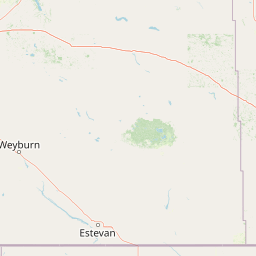
The landscape of Moose Mountain Creek National Wildlife Area is shaped by Moose Mountain Creek and its valley in southeastern Saskatchewan. The reserve lies roughly 38 kilometers north of the town of Stoughton and occupies a relatively compact footprint of about 163 hectares. The surrounding region is dominated by cultivated farmland, which makes the reserve's combination of natural habitats visually and ecologically distinctive.
Within the reserve, four main landscape elements alternate. There are freshwater marshes associated with the creek's drainage, areas of cultivated prairie where agricultural management is part of the matrix, patches of native mixed-grass prairie that retain their original plant composition, and trembling aspen bluffs that grow as small groves. The transition between these habitats is gradual in some places and abrupt in others, depending on local soil moisture and topography.
The aspen bluffs are a particularly characteristic feature of this part of the Canadian Prairies, marking slightly moister pockets of land. Combined with the marshes, they give the reserve a layered appearance, where wetland openings are framed by grassland and edged with light woodland. Although there are no dramatic landforms, the reserve's landscape value lies in its intact representation of a prairie wetland and aspen complex within a working agricultural landscape.
Moose Mountain Creek National Wildlife Area ecosystems, habitats, and plant life
Moose Mountain Creek National Wildlife Area supports a notable mix of wetland, grassland, and woodland habitats within a small area. The marshes are the most biologically productive zones, with standing water and emergent vegetation creating habitat for amphibians and waterbirds. The native mixed-grass prairie patches provide dryland conditions that support native forbs and grasses typical of the southern Canadian Prairies, while trembling aspen stands introduce a forest-edge component unusual in this landscape.
Native flora documented at the site includes needle-and-thread grass, plains muhly, Richardson's alumroot, prairie crocus, prairie violet, hoary puccoon, yellow lady's slipper orchid, and white beardtongue. These species together indicate that the reserve retains a healthy proportion of original prairie plant diversity. Yellow lady's slipper in particular signals that moist habitats and undisturbed conditions still coexist here.
The site's nature value is closely tied to its small-scale diversity. Because wetlands, native prairie, and aspen bluffs all occur on a single small property, ecological processes such as wetland drying cycles, grassland encroachment, and shrub expansion can all be observed in close proximity. This makes the reserve a useful site for studying how prairie ecosystems function across environmental gradients.
Moose Mountain Creek National Wildlife Area wildlife and species highlights
Moose Mountain Creek National Wildlife Area is best appreciated through its birdlife, which combines wetland species, grassland songbirds, and wetland-edge specialists. Documented breeding and visiting birds include American Bittern, Northern Shoveler, Blue-winged Teal, Grasshopper Sparrow, Common Yellowthroat, Marsh Wren, Red-winged Blackbird, Short-billed Marsh Wren, Sora, and Western Meadowlark. Together these species indicate that the reserve supports both marsh-nesting and ground-nesting grassland birds in close proximity.
Mammals recorded at the reserve reflect the mix of wetland and woodland habitats. Moose, white-tailed deer, North American beaver, and muskrat are all present, taking advantage of the marshes, willow-edged waterways, and aspen bluffs. Beaver and muskrat in particular signal that the wetland system remains dynamic and that the creeks still support active aquatic life.
The reserve also hosts a small but characteristic prairie herpetofauna. Amphibians and reptiles documented here include boreal chorus frog, wood frog, northern leopard frog, and plains gartersnake. The presence of both frogs and a snake indicates that the reserve offers functioning amphibian breeding habitat in its marshes and suitable cover and basking sites in the surrounding dryland and bluffs.
Moose Mountain Creek National Wildlife Area conservation status and protection priorities
The conservation significance of Moose Mountain Creek National Wildlife Area lies in its role as a representative fragment of native prairie and prairie wetland habitat within an otherwise heavily cultivated landscape. The surrounding region of southeastern Saskatchewan has experienced extensive conversion of native mixed-grass prairie to cropland, which makes any surviving mosaic of marsh, native prairie, and aspen bluffs exceptionally valuable. The reserve protects an unusually complete sample of these habitats in a compact footprint.
Its designation also reflects a broader shift in Canadian wildlife-area policy toward more focused, scientifically justified protected lands. The 2020 review of the original Prairie National Wildlife Area found that only seven of its 26 units met the criteria for national wildlife area status, and the reserve's establishment as a standalone site illustrates this more selective approach. By preserving Unit 27 of the older network, the federal government confirmed that this particular site remains ecologically meaningful under modern standards.
The area is administered by the Canadian Wildlife Service as an IUCN Category IV habitat and species management area, which means its primary management focus is active maintenance of habitat conditions rather than strict wilderness preservation. This conservation framing allows for habitat-targeted interventions that can support native prairie flora and the bird species most tightly linked to prairie wetlands.
Moose Mountain Creek National Wildlife Area cultural meaning and human context
Moose Mountain Creek National Wildlife Area lies in a region of southern Saskatchewan shaped by long histories of agricultural settlement, where most native prairie was turned into cropland during the 20th century. The reserve itself sits in the Rural Municipality of Golden West No. 95, and its name reflects the local geography, anchored by Moose Mountain Creek.
Although the reserve is a natural-area designation rather than a cultural site, its landscape carries traces of this settlement history. The presence of cultivated prairie patches within the protected area shows that human land use and wildlife conservation are layered here, rather than opposites. The reserve can be read as a contemporary expression of how prairie communities have chosen to retain small but meaningful pieces of native habitat amid a working agricultural landscape.
Top sights and standout views in Moose Mountain Creek National Wildlife Area
A representative habitat mosaic combining marshes, native mixed-grass prairie, cultivated prairie, and trembling aspen bluffs on a compact 163-hectare site in southeastern Saskatchewan.
Strong birdlife for its size, including prairie wetland specialists such as American Bittern, Sora, Red-winged Blackbird, and Western Meadowlark, alongside grassland songbirds like Grasshopper Sparrow and Common Yellowthroat.
Notable native prairie flora such as needle-and-thread grass, plains muhly, Richardson's alumroot, prairie crocus, and yellow lady's slipper orchid, signaling intact remnant plant communities.
A meaningful institutional role as one of the surviving core units of the former Prairie National Wildlife Area, re-established in 2025 under modern Canadian Wildlife Service criteria.
Best time to visit Moose Mountain Creek National Wildlife Area
Late spring through early summer is generally the most rewarding time to experience the reserve, when native prairie wildflowers such as prairie crocus and prairie violet are in bloom and grassland and wetland birds are most active around their breeding territories. Early summer mornings and evenings tend to bring the highest bird activity, particularly in marshes and along aspen edges.
Late summer and early autumn also have their own character, with mature grasses, harvested surrounding cropland, and active preparation by waterfowl and muskrats around the marshes. Because the reserve sits in a continental prairie climate with cold winters, deep snow and frozen marshes limit accessibility in winter, when most wildlife observation becomes difficult and vegetation is dormant.