

Mori Atlas logo
Nature reserveMszar Płociczno

Examining the ecological zonation, post-glacial basin, and mire complex of this protected Polish lowland territory.

Mszar Płociczno Nature Reserve: A Detailed Geographic Atlas of Protected Peatland Landscapes in Poland

(Rezerwat przyrody Mszar Płociczno)

Mszar Płociczno stands as a vital transitional peatland complex within the Kuyavian-Pomeranian Voivodeship, safeguarding rare bog habitats and the remnant basin of Lake Płociczno. This protected area showcases a complete vegetative transition from open-water relics through Sphagnum mats into surrounding swamp woodlands and pine-dominated forests. Its landscape structure provides essential insight into the lowland hydrology and conservation geography of north-central Poland.

peatlandtransitional bognature reservepost-glacial lake basinprotected floraSphagnum mire
A flat vector illustration depicting a waterfall cascading down a mountain slope behind a coniferous forest with tall grasses in the foreground under a setting sun.

Mszar Płociczno

Nature reserve

Park overview

Structured park overview, official facts, and landscape profile for Mszar Płociczno Nature Reserve

Mszar Płociczno Nature Reserve park facts, protected area profile, and essential visitor context

Review the core facts for Mszar Płociczno Nature Reserve, including designation, size, terrain, visitor scale, habitats, and operating context in one park-focused overview.

About Mszar Płociczno Nature Reserve

Mszar Płociczno is a small but ecologically significant nature reserve on the Równina Urszulewska plain, in the Brodnica region of north-central Poland. It lies within the Górznieńsko-Lidzbarski Park Krajobrazowy and falls under the administration of the Skrwilno Forest District. The reserve's defining feature is a transitional peatland system that developed as a former post-glacial lake basin filled with organic deposits over many centuries.

The reserve is composed of two clearly distinguishable landscape zones. The core is the open transitional bog, which still contains a small, eutrophic remnant lake, Lake Płociczno, now occupying roughly one hectare. This wetland holds the greatest conservation interest, supporting a wide range of protected and regionally rare plant species typical of acidic, nutrient-poor mire habitats. The bog itself covers approximately 27 hectares, while the full protected surface area, including surrounding forest, reaches about 182 hectares.

Around the open peatland, the terrain transitions into pine-dominated boreal forest and mixed forest stands, with ash and alder swamp woodland episodes appearing in the wettest hollows. This mosaic creates a clear ecological gradient from open water, through floating and grounded bog, to mineral-soil forest. The result is a compact but representative example of how a lowland lake ecosystem is replaced, over geological time, by a mire and eventually by dry forest, all preserved within a single protected area.

Quick facts and research context for Mszar Płociczno Nature Reserve

Located in Świedziebnia commune, Kuyavian-Pomeranian Voivodeship, within the Górznieńsko-Lidzbarski Park Krajobrazowy. Established 25 July 1997 by ordinance of the Minister of Environmental Protection, Natural Resources, and Forestry. Total area approximately 182.39 hectares. Designed to protect transitional peatland, currently about 27 hectares, surrounded by pine and mixed forests. Managed by the Skrwilno Forest District. Subject to strict, active, and landscape-level protection simultaneously.

Protection and recognition

Documented terrestrial protection scope and Natura 2000 recognition details

Mszar Płociczno Protection Status and International Recognition

Terrestrial protection records for Mszar Płociczno outline official conservation frameworks and Natura 2000 recognition sources. Documented administrative classifications detail the governing scope and international designations assigned to the area.

International recognition

Protection details

Protection scope
Terrestrial
Transboundary protection
No
Park context

Deeper park guide and search-rich context for Mszar Płociczno Nature Reserve

Mszar Płociczno Nature Reserve history, landscape, wildlife, and travel context

Explore Mszar Płociczno Nature Reserve through its history, landscape character, ecosystems, wildlife, conservation priorities, cultural context, and seasonal travel timing in a structured park guide built for atlas discovery and search intent.

Why Mszar Płociczno Nature Reserve stands out

Mszar Płociczno is best known for harboring the largest transitional peatland complex in the Górznieńsko-Lidzbarski region, including the receding eutrophic Lake Płociczno nearly fully overgrown by Sphagnum moss communities. The reserve is valued for its concentration of protected and rare bog plants, the intact zonation of bog vegetation around a relict lake basin, and the surrounding mosaic of boreal pine forests and ash-alder swamp woodland that frames the open mire.
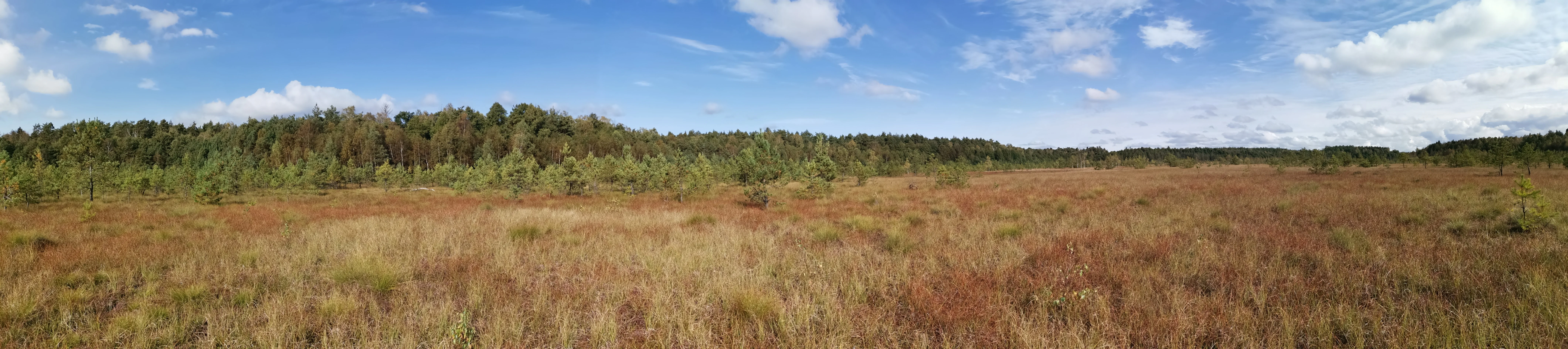
Wide panoramic landscape of a flat, grassy, and bushy peat bog with a forest line in the background under a blue sky with scattered clouds.
A panoramic view of the transitional peat bog at Mszar Płociczno nature reserve in autumn.

Mszar Płociczno Nature Reserve history and protected-area timeline

The reserve was formally created on 25 July 1997, by ordinance of the Minister of Environmental Protection, Natural Resources, and Forestry. Its creation was a direct response to the ecological importance of the transitional peatland occupying the former bed of Lake Płociczno and to the rarity of undisturbed bog habitats across the broader Polish lowlands.

Before protection, the area formed part of the productive forest estate administered by what is now the Skrwilno Forest District, which remains responsible for its stewardship. In the years following designation, planners laid out a multi-year program, covering 2005 to 2024, focused on refining conservation management of the reserve, including monitoring of hydrology, vegetation, and the populations of protected species dependent on the peatland. Although small, the reserve has since become a recognized reference site for transitional bog conservation in the Kuyavian-Pomeranian region.

Mszar Płociczno Nature Reserve landscape and geographic character

The reserve sits on the flat terrain of the Równina Urszulewska, a lowland mesoregion in the Brodnica area, where subtle changes in elevation control the distribution of water and therefore the pattern of habitats. The basin that once held Lake Płociczno forms a shallow depression that has filled with peat, producing the gently undulating surface of the transitional bog.

Around the mire margin, the landscape rises very slightly into better-drained ground. Here the terrain is covered by pine-dominated boreal forest on the driest sites, mixed deciduous-coniferous forest on intermediate ground, and ash-alder swamp woodland in the wettest glacial hollows. The contrast between the open, brightly lit peatland surface and the dense, shadowy forest rim gives the area a strong landscape identity despite the limited topographic relief.

The small, open-water remnant of the original lake lies as a dark mirror at the center of the system, framed by floating Sphagnum mats and hummocks. Viewed as a whole, the reserve demonstrates a textbook transition from open water through floating mat, grounded peatland, swamp forest, and dry coniferous forest, compressed into a compact, easily readable landscape.

Mszar Płociczno Nature Reserve ecosystems, habitats, and plant life

The ecological heart of Mszar Płociczno is its transitional peatland, a habitat type intermediate between raised bogs and fens, fed by a mix of rainwater and groundwater. The actively forming peat surface supports a characteristic set of bog plant communities, while the wetter margins support marsh and swamp vegetation. Outside the mire, the reserve is dominated by pine and mixed forest that frames and isolates the open habitat, helping to maintain its microclimate.

The transition between bog and forest is unusually well preserved. In the wettest zones, ash-alder swamp woodland (łęg jesionowo-olszowy) develops on waterlogged organic soils, whereas the slightly higher terrain carries fresh pine forest and mixed coniferous-deciduous stands. This zonation is ecologically important because it creates a range of moisture and light conditions that sustain high plant diversity within a small area.

Because transitional peatlands are particularly sensitive to hydrological disturbance and nutrient enrichment, the reserve functions as both a refuge for bog flora and a reference site for understanding how Polish lowland peatlands evolve from lakes to forested mires over long timescales.

Mszar Płociczno Nature Reserve wildlife and species highlights

The reserve is recognized primarily for its botanical richness rather than its conspicuous fauna, but the peatland supports important populations of amphibians and invertebrates associated with acidic, nutrient-poor wetlands. Protected insects are documented in the bog and surrounding marsh, alongside amphibian communities that use both the open peatland pools and the wet forest margins as breeding and foraging habitat.

The surrounding forests provide additional habitat for typical lowland forest fauna, with the swamp woodland acting as a particularly valuable refuge for moisture-dependent species. Although no large mammal populations are specifically tied to the reserve, the forest-mire mosaic supports the regional ecological network for species that depend on both open wetland and closed-canopy forest during their life cycle.

From a conservation standpoint, the presence of viable amphibian and insect populations on a relatively small, well-buffered peatland site is one of the indicators used to justify the reserve's strict protection regime.

Mszar Płociczno Nature Reserve conservation status and protection priorities

Mszar Płociczno was established specifically to preserve transitional peatland habitats that had become scarce in the Polish lowlands, especially following widespread drainage of similar mires in earlier decades. The reserve's designation reflects the recognition that these transitional systems, which combine features of raised bogs and fens, support a disproportionately high number of rare and protected species relative to their area.

Protection at the reserve operates on three levels simultaneously: strict protection of the core peatland, active conservation management of defined zones, and broader landscape protection addressing the surrounding forest. A formal conservation program covering 2005 to 2024 was designed to refine these measures, with particular attention to hydrological stability and to monitoring protected species populations.

The reserve also plays a strategic role as part of the broader protected landscape of the Górznieńsko-Lidzbarski Park Krajobrazowy, contributing to connectivity between bog patches that would otherwise be isolated by surrounding forest and agricultural land. This makes Mszar Płociczno an important reference site for peatland conservation planning in north-central Poland.

Top sights and standout views in Mszar Płociczno Nature Reserve

The reserve's most distinctive features are its transitional peatland mosaic and the surviving fragment of the original eutrophic lake, now reduced to a small open-water relic within a much larger bog. A wide range of legally protected plant species, including bog-violet, sundew, and several rare clubmosses, marks the site as a regional center of botanical diversity. The combination of strict, active, and landscape protection regimes, plus a multi-decade conservation program, underscores the site's importance for long-term mire conservation rather than short-term tourism.

Best time to visit Mszar Płociczno Nature Reserve

Because transitional peatlands are visually subtle and most of the reserve is closed to intensive access under strict protection, the site has limited recreational use and the seasonal aspect of a visit is less about dramatic scenery and more about ground conditions. Late spring and early summer typically bring the freshest green tones to the open bog and active amphibian breeding in the wetter margins, while late summer and early autumn offer drier footing and are often considered the most comfortable period for serious botanical observation. Winter visits are possible but bog surfaces can be waterlogged or frozen, and access conditions vary with weather.

Monthly climate preview

Long term representative point climatology from NASA POWER spanning 1991 through 2020

Mszar Płociczno Climate Normals and Measured Annual Temperature Patterns

Historical records for Mszar Płociczno reveal a measured annual temperature range from sub-zero winter minimums to warm summer maximums alongside steady daily precipitation averages. Detailed monthly breakdowns provide complete climatological context for analyzing long term weather patterns across the protected landscape.
Annual mean8 °C
-4 °C20 °C
Jan-4°
Feb-2°
Mar
Apr
May13°
Jun17°
Jul20°
Aug19°
Sep14°
Oct
Nov
Dec-2°
Warmest month
July

19.6 °C

Coolest month
January

-3.5 °C

Wettest month
July

2.6 mm/day

Driest month
April

1.3 mm/day

Park location guide

Geography guide, regional context, and park location map for Mszar Płociczno Nature Reserve

Mszar Płociczno Nature Reserve park geography, regions, and map view in Poland

Understand where Mszar Płociczno Nature Reserve sits in Poland through a broader geographic reading of the surrounding landscape, nearby location context, and its mapped position within the national park landscape.

How Mszar Płociczno Nature Reserve fits into Poland

Poland, officially the Republic of Poland, is a Central European country spanning from the Baltic Sea in the north to the Carpathian Mountains in the south. It borders Germany, Czech Republic, Slovakia, Ukraine, Belarus, Lithuania, and Kaliningrad Oblast. The country has a temperate climate, diverse landscapes, and is known for its rich history, cultural heritage, and strong economic position within the EU.

Wider geography shaping Mszar Płociczno Nature Reserve in Poland

Poland occupies 312,696 km2 in Central Europe, extending from the Baltic Sea coast in the north to the Sudetes and Carpathian Mountains in the south. It borders Germany to the west, Czech Republic and Slovakia to the south, Ukraine and Belarus to the east, and Lithuania and Kaliningrad Oblast to the northeast. The landscape includes lowland plains, uplands, and mountain ranges.

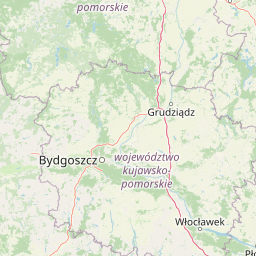
Map view of Mszar Płociczno Nature Reserve

Use this park location map to pinpoint Mszar Płociczno Nature Reserve in Poland, understand its exact geographic position, and read its mapped placement within the surrounding landscape more clearly.

Pigeon | © OpenStreetMap contributors

Location context for Mszar Płociczno Nature Reserve

Kuyavian-Pomeranian Voivodeship

Explore detailed imagery of rare bog habitats, relict lake waters, and surrounding forest boundaries.

Mszar Płociczno Landscape and Scenery Photos: Visualizing the Transitional Peatland Reserve

Visual documentation captures the complex transition from open Sphagnum mires to dense pine forests across the reserve terrain. Observing these protected habitats provides clear insight into lowland peatland ecology and regional conservation zones.

Wide panoramic landscape of a flat, grassy, and bushy peat bog with a forest line in the background under a blue sky with scattered clouds.

Park atlas

Discover adjacent nature reserves and regional park geography in north-central Poland.

Other Protected Areas and Parks Near Mszar Płociczno for Regional Comparison

Browsing other protected areas near Mszar Płociczno reveals the broader lowland peatland network and surrounding forest ecosystems. Comparing adjacent reserves deepens regional landscape analysis and provides wider context for post-glacial terrain.
A wide watercolor illustration showing a calm lake with a forested shoreline and distant hills under a pale sky, with reeds in the foreground.
Protected landscapeKuyavian-Pomeranian Voivodeship
16 km away#1 closest

Northwest

Brodnicki Park Krajobrazowy: Protected Landscape and Post-Glacial Terrain in Northern Poland

Mapped lake districts and glacial tunnel valleys

Brodnicki Park Krajobrazowy preserves a textbook young-glacial landscape in the Kuyavian-Pomeranian Voivodeship. The terrain features rolling moraine hills and dense chains of lakes linked by slow streams, creating a significant ecological corridor. This protected area offers deep insights into the region's complex hydrological and forest history, spanning across classic lowland meadows, peat bogs, and mature oak-pine woodlands.

Area
166.85 km²
Established
1985
Relief
Lowland
Climate
Temperate
Protected landscapeWarmian-Masurian Voivodeship
About 24 km away#2 closest

Northeast

Welski Park Krajobrazowy: Regional Protected Landscape in the Warmian-Masurian Voivodeship

Mapping glacial landforms and river valley ecosystems

The landscape of Welski Park Krajobrazowy is a study in Pleistocene glacial history, defined by the interplay between sandy outwash plains and morainic uplands. This protected area in the Warmian-Masurian Voivodeship shelters a series of thirteen significant post-glacial lakes and the Wel river valley, creating a dense network of wetlands, forest habitats, and geologic features perfect for atlas-based geographic study.

Area
200.233 km²
Established
1995
Relief
Lowland
Access
Easy access
Nature reserveWarmian-Masurian Voivodeship
About 32 km away#3 closest

Northeast

Jezioro Neliwa Nature Reserve: Mapping Protected Landscapes and Glacial Lake Geography

An important eutrophic water reserve in the Warmian-Masurian Voivodeship.

Located within the Welski Landscape Park, this nature reserve protects a vanishing eutrophic lake ecosystem and its unique slope oak-lime forest. The area provides essential habitat for breeding bird populations and rare aquatic plant species, serving as a vital point of study for lowland glacial geography in northeastern Poland.

Area
0.165 km²
Established
2006
Water
Water-dominated
Nature reserveWarmian-Masurian Voivodeship
About 33 km away#4 closest

Northwest

Rezerwat przyrody Jezioro Mścin: Protected Wetland Landscapes and Regional Geography

Nature reserve habitat in the Brodnica Lake District

Rezerwat przyrody Jezioro Mścin serves as a primary example of successful wetland restoration for biodiversity conservation. Situated in the Warmian-Masurian Voivodeship, this faunistic reserve integrates open water, marsh, and forest edges to support waterfowl and migratory bird populations within a broader regional network of protected Polish landscapes.

Area
0.499 km²
Established
2024
Relief
Lowland
Climate
Temperate
Nature reserveMazovia Voivodeship
About 33 km away#5 closest

East

Rezerwat przyrody Dolina Mławki: Protected Wetland and Forest Geography

Nature reserve terrain and river valley mapping

Deeply explore the physical geography and conservation profile of Rezerwat przyrody Dolina Mławki. This protected area preserves a complex of alder swamp forests, wet riparian corridors, and vital breeding habitats. The site functions as a key reference for lowland Polish wetland ecosystems, offering insights into the natural hydrological and floristic patterns within the Mławka River valley.

Area
1.474 km²
Established
1994
Relief
Lowland
Scope
Terrestrial
Nature reserveKuyavian-Pomeranian Voivodeship
About 38 km away#6 closest

Northwest

Rezerwat przyrody Mieliwo Nature Reserve: Protected Forest and Glacial Valley Geography

A scientific forest study site within the Brodnica Lake District landscape

This protected forest reserve in the Kuyavian-Pomeranian Voivodeship is defined by its position on a high glacial slope above Lake Mieliwo. It remains a key reference point for studying beech forest stands at the northern edge of their range, contributing to the regional conservation of the Brodnica Lake District and its post-glacial valley network.

Area
0.117 km²
Established
1958
Relief
Upland
Scope
Terrestrial
Protected landscapeWarmian-Masurian Voivodeship
42 km away#7 closest

North

Park Krajobrazowy Wzgórz Dylewskich: Protected Moraine Terrain and Regional Geography

A study of glacial landforms and hydrological patterns in the Warmian-Masurian Voivodeship

Explore the unique geomorphology of Park Krajobrazowy Wzgórz Dylewskich, where Pleistocene glaciation has carved steep slopes, deep valleys, and expansive hill summits. This protected landscape serves as a central hub for regional biodiversity and acts as a primary source for radiating water networks in northern Poland, offering a high-relief counterpoint to the surrounding lakeland.

Area
71.7 km²
Established
1994
Relief
Mountain
Scope
Terrestrial
Nature reserveWarmian-Masurian Voivodeship
About 50 km away#8 closest

Northeast

Dylewo Nature Reserve: Protected Beech Woodland in the Warmian-Masurian Voivodeship

A study of glacial topography and rare fern habitats

Located within the Wzgórza Dylewskie landscape park, Dylewo Nature Reserve protects a stable, closed-canopy beech woodland on elevated morainic terrain. Gain deeper insights into the forest composition and the ecological importance of this site as a sheltered habitat for rare flora within the larger northern Polish lakeland region.

Area
0.101 km²
Established
1970
Relief
Mountain
Scope
Terrestrial

Common questions about visiting, size, designation, and location context for Mszar Płociczno Nature Reserve

Mszar Płociczno Nature Reserve FAQs for park facts, access, geography, and protected area context

Find quick answers about Mszar Płociczno Nature Reserve, including protected-area facts, park geography, trail and visitor context, and how the park fits into its surrounding country and regional landscape.
MoriAtlas Explorer

Continue Your Protected Areas Search Across the Global Atlas

Deepen your exploration by continuing the structured search for national parks and protected areas worldwide. Utilize the comprehensive filtering capabilities to compare different conservation landscapes and refine your understanding of global park geography. Discover more about the distribution and characteristics of protected natural areas.

Global natural geography