Why Naturpark Hessische Rhön stands out
The park is especially known for the mosaic of habitats typical of the Rhön: extensive mixed forests interwoven with open grassland, small streams, lakes such as the Guckaisee, and sensitive peatland and dry biotope complexes. Its landscapes reflect a long coexistence of traditional rural land use and protected natural areas, giving the park both a strong ecological character and a strong sense of cultural landscape. The integration of most of its territory into the UNESCO-recognized Biosphere Reserve Rhön further underlines its value as a model region for sustainable development and habitat conservation in a central German upland environment.
Naturpark Hessische Rhön history and protected-area timeline
The Naturpark Hessische Rhön was formally designated in 1962, placing the Hessian portion of the Rhön among the early generation of nature parks in Germany. Between 1962 and 1975 the park was extended on several occasions, gradually refining its boundaries and expanding the range of landscapes and habitats that fell under its protection framework.
This period of establishment and expansion coincided with the broader German movement to formally recognize representative landscapes as nature parks, combining the goals of nature conservation, recreation, and regional development. The later inclusion of large parts of the park within the cross-border Biosphere Reserve Rhön reflects how the original nature park designation became the foundation for a more ambitious and internationally recognized framework, linking the park's identity with a larger cooperative effort to safeguard the cultural and natural landscape of the entire Rhön region.
Naturpark Hessische Rhön landscape and geographic character
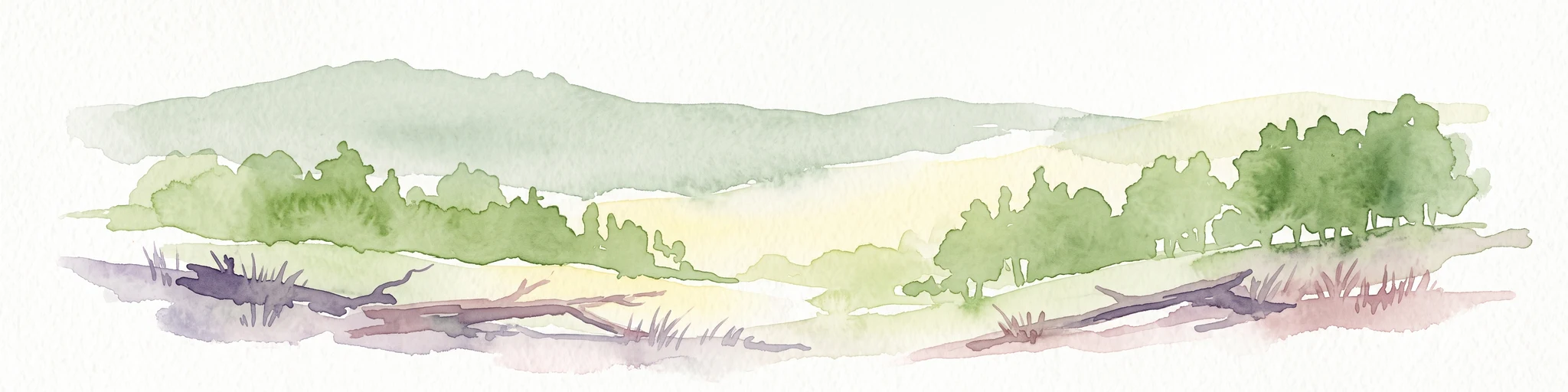
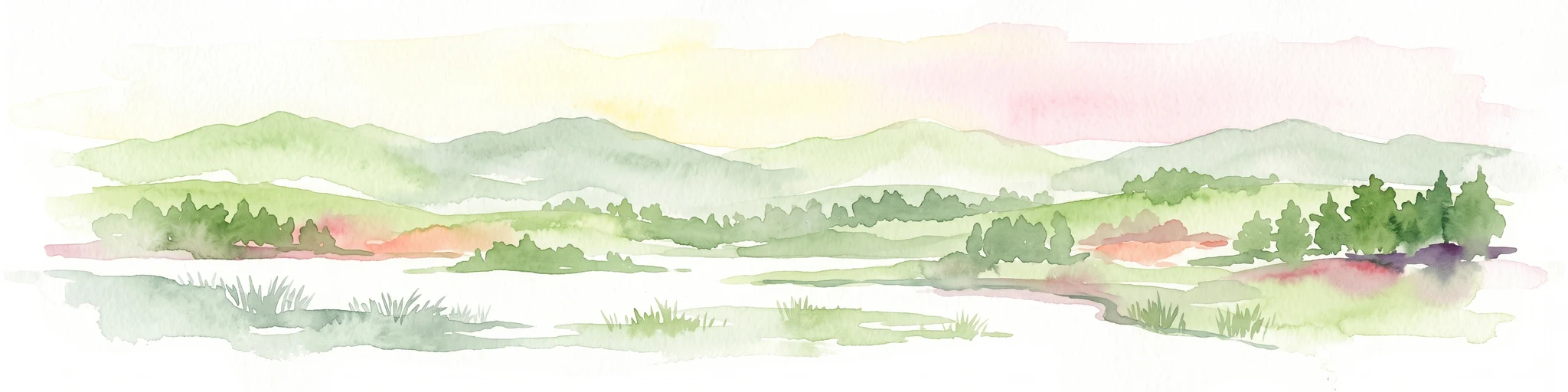
The landscape of the Naturpark Hessische Rhön is shaped by the gentle, rolling character of the Rhön low mountains. Forested hills and ridges alternate with broader valleys and open uplands, producing a continuously varied scenery rather than a single dominant landform. Streams and small rivers wind through the terrain, feeding lakes such as the Guckaisee and feeding more slowly the wetter depressions where moors and mires have developed.
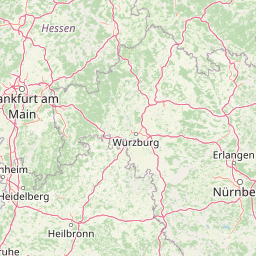
Amid the forests and waters, the park also contains substantial areas of open grassland and cultivated landscape, as well as scattered dry biotopes on south-facing slopes and other warmer sites. This combination of woodland, water, peatland, and dry open land is a defining feature of the park's scenery and gives the Rhön its characteristic patchwork appearance. From elevated ridges, long views open over the surrounding low mountains, and the broader context of the Naturpark Hessische Rhön includes the neighboring Bavarian Rhön to the east and south, the Spessart to the southwest, and the Vogelsberg to the west, all of which together form a ring of protected landscapes around the heart of the region.
Naturpark Hessische Rhön ecosystems, habitats, and plant life
Ecologically, the Naturpark Hessische Rhön is defined by the interplay of multiple habitat types within a single protected area. Mixed forests cover much of the terrain, providing habitat for woodland species and structuring the green backdrop of the park. Streams and smaller standing waters create linear and pool-based habitats that support aquatic and riparian life, while lakes like the Guckaisee add open water habitat to the mix.
The presence of moors and mires gives the park a particular ecological importance. These wet habitats are relatively rare in central Germany and support specialized plant communities, while also serving as reservoirs of biodiversity and natural water storage. Dry biotopes, where open and often warm conditions favor unusual flora and insect life, complement the wet habitats and underscore the habitat diversity of the park. Between the forests, the waters, and the open areas, traditionally used grassland completes the mosaic, ensuring that the park is not only a natural refuge but also a working cultural landscape shaped by long-standing rural land use.
Naturpark Hessische Rhön wildlife and species highlights
The mix of forest, water, grassland, peatland, and dry open habitats in the Naturpark Hessische Rhön supports a correspondingly diverse fauna. Woodland species thrive in the extensive mixed forests, while the streams, lakes, and mires provide habitat for amphibians, aquatic insects, and birds associated with wet environments and bog margins. The grassland areas and dry biotopes, in turn, are especially important for insects and bird species that depend on open, warm, and sometimes structurally varied terrain.
Because most of the park's area also falls within the cross-state Biosphere Reserve Rhön, the wildlife of the Naturpark Hessische Rhön is seen in the broader context of a larger protection zone that spans Hesse, Bavaria, and Thuringia. This larger framework allows species associated with the Rhön to move and maintain populations across political boundaries, increasing the long-term conservation value of the habitats the park protects. The result is a park whose wildlife interest lies less in a single flagship species than in the richness and interconnection of its habitat mosaic.
Naturpark Hessische Rhön conservation status and protection priorities
The Naturpark Hessische Rhön is significant from a conservation perspective both as a nature park and as a major component of the Biosphere Reserve Rhön. As a nature park, it helps preserve a representative central German low mountain landscape and the habitat mosaic that depends on forestry, traditional agriculture, and careful land management. The inclusion of moors, dry biotopes, and a network of flowing waters within the park means that relatively sensitive habitats receive formal protection alongside the more extensive mixed forests.
Its integration into the cross-border biosphere reserve gives the park additional weight. The biosphere reserve framework links nature conservation with regional sustainable development and cultural landscape preservation, and it recognizes the Rhön as a model landscape of international standing. For the Naturpark Hessische Rhön, this means that the area is not only a regional protected area but also part of a coordinated effort to maintain biodiversity, traditional land use, and ecological functions across one of Germany's most characteristic upland regions.
Naturpark Hessische Rhön cultural meaning and human context
The Rhön is widely known in Germany as a cultural landscape shaped by centuries of small-scale farming, meadow use, and forestry, rather than by industrial-scale land use. The Naturpark Hessische Rhön carries this tradition forward by including actively used grassland, villages, and farmland within its protected framework. The cultural identity of the region is closely tied to its open landscapes, its traditional hamlets, and the seasonal rhythms of upland farming, all of which remain visible within the park today.
The cross-border character of the biosphere reserve adds a further cultural dimension: the Hessische Rhön is part of a shared regional identity that extends across state borders into Bavaria and Thuringia. This shared identity, expressed through landscape, language, customs, and food traditions, is one of the reasons the Rhön has been treated as a single, integrated protection zone rather than a collection of separate nature parks.
Top sights and standout views in Naturpark Hessische Rhön
Among the park's strongest points of distinction is the combination, within a single protected area, of mixed woodland, streams, lakes like the Guckaisee, moors, grassland, and dry biotopes; this mosaic captures the ecological range that makes the Rhön nationally and internationally recognizable. Equally important is the park's role as the Hessian anchor of the UNESCO-aligned Biosphere Reserve Rhön, which places local conservation within a much larger cooperative framework.
The exploration experience is shaped by a network of forests, open ridges, and quiet valleys, with long views over the surrounding low mountains and easy access from Fulda. Whether visitors come for walking, for nature observation, or simply to experience the Rhön as a landscape, the Naturpark Hessische Rhön offers a representative cross-section of one of central Germany's most characteristic upland regions.
Best time to visit Naturpark Hessische Rhön
The Naturpark Hessische Rhön rewards visitors in any season, but the character of the landscape changes considerably through the year. Late spring and early summer bring fresh green forests, flowering meadows, and active birdlife, while high summer highlights the warmth of the dry biotopes and the full leaf canopy of the mixed woodlands.
Autumn turns the forests into a display of color and is a particularly atmospheric time to experience the park's wooded hills, while winter can bring snow to the higher ridges and a quieter, more austere beauty across the open landscape. For visitors interested in wildlife and habitat diversity, spring and early summer offer the richest combination of visible flora and active fauna, while winter tends to favor landscape experience and quiet exploration.