Why Naturschutzgebiet Osterntal stands out
Osterntal is best known for its small but species-rich mosaic valley landscape: hedgerow-framed meadows, patches of wet and nutrient-poor (mager) grassland, and forest sections that together harbor a documented list of endangered plant species compiled by the North Rhine-Westphalian state agency for nature, environment, and consumer protection. Its embedding in the larger Medebacher Bucht European Bird Protection Area gives the site a significance beyond its modest size, situating it within a broader network of ornithological and ecological protection in the eastern Sauerland.
Naturschutzgebiet Osterntal history and protected-area timeline
Osterntal was formally designated as a Naturschutzgebiet in 2003. The designation was made by the Hochsauerlandkreis as part of the Landschaftsplan Medebach, a statutory landscape plan that governs the protection and development of natural areas across Medebach municipal territory.
The 2003 plan, published by the Untere Landschaftsbehörde of the Hochsauerlandkreis, treats Osterntal among a network of nature reserves in the Medebach area, all of which share the characteristic Sauerland pattern of small valley and hillside protection. Earlier historical context for the area is not independently documented in the source material, and the reserve's establishment is best understood as part of the modern wave of small-scale landscape protection initiatives common across North Rhine-Westphalia in the early 2000s.
Naturschutzgebiet Osterntal landscape and geographic character
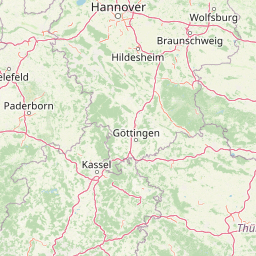
The Osterntal is a modest valley landscape near Düdinghausen, shaped by the gentle topography typical of the Rothaargebirge foothills in the eastern Sauerland. The reserve occupies a narrow band of valley terrain, within which open land, hedgerows, and woodland alternate.
Open land in the reserve takes the form of grassland, with some sections classified as wet grassland (Nassgrünland) and nutrient-poor meadow (Magergrünland), the latter characteristic of traditionally managed meadows of low fertility. Other sections of the valley have been left to lie fallow, producing scrubby transitions and a varied structural profile. Hedgerows frame and subdivide the meadows, while patches of broadleaf and mixed forest occupy the slopes and higher ground along the valley, creating a classic small-scale German Mittelgebirge landscape.
Naturschutzgebiet Osterntal ecosystems, habitats, and plant life
Ecologically, the Osterntal reserve is defined by the combination of valley grassland, hedgerow, and forest that supports a notable botanical inventory. The wet and nutrient-poor grasslands in particular are biotopes of high conservation value in the German context, hosting plant communities that have contracted sharply under modern agricultural intensification.
Hedgerows form a connective ecological layer between the open meadows and the wooded slopes, acting as refuges for woodland-edge plants, pollinators, and small fauna. The forest patches contribute additional habitat diversity, with their shade and leaf-litter microclimates supporting ferns, woodland herbs, and other species typical of the region. Together, these habitats create a small but ecologically coherent mosaic valley ecosystem.
Naturschutzgebiet Osterntal wildlife and species highlights
The source material does not provide detailed wildlife inventories for the Osterntal reserve. However, the reserve's inclusion in the Europäisches Vogelschutzgebiet Medebacher Bucht indicates that the area is recognized as a component of habitat for protected bird species at the European level, with the surrounding Medebacher Bucht landscape providing relevant conditions for breeding, resting, or foraging birds associated with open countryside and hedgerow habitats.
Botanical diversity is comparatively well documented, while detailed mammal, insect, or herpetofaunal information is not present in the source. On that basis, any broader wildlife characterization for this reserve rests primarily on habitat inference rather than explicitly recorded species.
Naturschutzgebiet Osterntal conservation status and protection priorities
Osterntal carries both national and European-scale conservation significance. At the German state level it is protected as a Naturschutzgebiet under North Rhine-Westphalia law, with the designation citing rarity, particular character, and scenic quality as justification for protection. The site's specific conservation goal is the protection of a grassland valley with its associated forest area and the species inventory they support.
At the European level, Osterntal forms part of the Europäisches Vogelschutzgebiet Medebacher Bucht, a special protection area established under the European Birds Directive. This integration places the small reserve within the Natura 2000 network, the EU-wide system of protected areas aimed at ensuring the long-term survival of Europe's most threatened bird species and the habitats on which they depend. The combination of small-scale local protection and inclusion in a larger European protection framework is characteristic of how conservation is implemented across densely cultivated landscapes in western Germany.
Top sights and standout views in Naturschutzgebiet Osterntal
Osterntal's standout feature is its compact valley mosaic of grassland, hedgerows, and forest that supports a documented inventory of endangered plant species, despite covering only a few hectares. The presence of wet grassland and nutrient-poor meadow, increasingly rare in the region, gives the site particular botanical value.
The reserve's integration into the European Bird Protection Area Medebacher Bucht elevates it from a purely local protection designation to part of a continent-scale conservation network, exemplifying the layered nature of nature protection in modern Germany.