Why Ostoja Złotopotocka stands out
Ostoja Złotopotocka is best known for its dense mosaic of European-protected forest habitats on the Częstochowa Upland, including acid, fertile, and orchid-rich beechwoods, as well as the regionally distinctive Abietetum polonicum fir-mixed forest community. The site is equally notable for its limestone cave systems, which are protected under the Habitats Directive's 'inaccessible caves' category and serve as roosting habitat for several rare bat species. Beyond forests and karst, the area protects inland dunes with sand-grass vegetation, alkaline fens of various developmental stages, and calcareous rock cliffs with Potentilletalia caulescentis vegetation. This combination of cliff, cave, dune, fen, and diverse woodland habitats in a relatively compact area gives the site a distinctive ecological identity within Poland's Natura 2000 network.
Ostoja Złotopotocka history and protected-area timeline
Ostoja Złotopotocka was established as a Site of Community Importance within the Natura 2000 network under the European Union's Habitats Directive framework, with its formal identifier PLH240020. The site's designation reflects Poland's participation in the pan-European effort to build a coherent ecological network of protected habitats.
The core motivation behind its establishment was the long-term safeguarding of natural habitats and populations of endangered animal species, excluding birds, that depend on the Częstochowa Upland's forest, karst, and wetland environments. Its two-enclave configuration was chosen to capture the ecological connectivity between the area's forest and karst habitats and adjacent open or semi-natural habitat types.
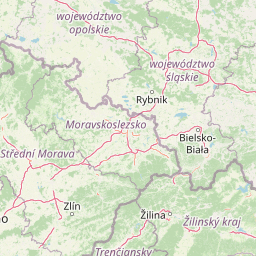
Within the Polish system of protected areas, Ostoja Złotopotocka belongs to the Silesian Voivodeship and is administered as part of the country's broader Natura 2000 infrastructure, complementing national parks, landscape parks, and nature reserves by providing habitat-level protection rather than full landscape-scale protection.
Ostoja Złotopotocka landscape and geographic character
Ostoja Złotopotocka occupies a portion of the Częstochowa Upland, a mesoregion characterized by elevated terrain underlain with Jurassic limestone. The landscape is shaped by the interplay of soluble rock geology and Pleistocene sediment cover, producing a varied relief that combines rocky ridges and cliff exposures with sand-covered plateaus and low-lying wetland basins.
Calcareous cliffs and rock faces are among the most distinctive landscape elements. These outcrops support specialized Potentilletalia caulescentis plant communities adapted to thin, base-rich soils. Below the surface, the limestone bedrock gives rise to a network of caves and karst features, including protected cave systems that remain undeveloped for tourism, allowing them to retain their natural ecological character.
Inland dunes, locally formed on sandy Pleistocene deposits, add further topographic variety. These dunes support open sand-grass vegetation with Corynephorus and Agrostis species, creating habitat islands within the larger forested matrix. In the low-lying areas, alkaline fens developed as młaki, sedge fens, and brown-moss fens form flat, wet fens with distinct vegetation regimes. Together, the rocky uplands, karst depressions, dune fields, and fen basins create the structural backbone of the site's landscape diversity.
Ostoja Złotopotocka ecosystems, habitats, and plant life
The ecological value of Ostoja Złotopotocka is defined by an exceptionally dense mosaic of European-protected habitats. Forest vegetation dominates, with beechwoods of several ecological types, oak-hornbeam groves, and the regionally important Polish fir mixed forest (Abietetum polonicum) forming a continuous forest cover across much of the area.
Among the beech communities, acid beeches of the Luzulo-Fagetum type occupy the more acidic soils, while fertile beeches of the Dentario-Fagenion and Galio-Fagenion groups thrive on richer substrates. Thermophilic orchid beeches belonging to the Cephalanthero-Fagenion alliance are particularly notable for their rich understory flora. Central European and subcontinental oak-hornbeam forests (Galio-Carpinetum, Tilio-Carpinetum) contribute additional structural and floristic diversity.
Non-forest habitats complement the woodland matrix. Inland dunes host pioneer sand-grass communities with Corynephorus and Agrostis, while extensively managed lowland and mountain hay meadows (Arrhenatherion elatioris) maintain semi-natural grassland communities. Alkaline fens occur in several forms, from spring-fed młaki to sedge-dominated turzycowiska and brown-moss mechowiska. Calcareous cliffs and rock walls host Potentilletalia caulescentis vegetation, and the area's caves remain in an undisturbed, ecologically intact state.
Ostoja Złotopotocka wildlife and species highlights
The site's wildlife value is centered on a set of non-avian species that have driven its Natura 2000 designation. Among fish, the site protects Cottus gobio, the European bullhead, a small benthic fish of clean, well-oxygenated streams, as well as Lampetra planeri, the European brook lamprey, a jawless fish whose larval stage depends on fine, sandy stream substrates.
Amphibians are represented by Bombina bombina, the fire-bellied toad, a lowland species closely associated with shallow, sun-exposed still waters and floodplain environments. The presence of suitable wetland and stream habitats within the area supports populations of these species.
The area's cave systems and mature forests provide essential roosting and foraging habitat for several rare and threatened bat species. Barbastella barbastellus, the western barbastelle, is associated with old-growth forest structure and tree roosts. Myotis bechsteinii, Bechstein's bat, depends heavily on deciduous forest habitat with veteran trees. Myotis myotis, the greater mouse-eared bat, and Myotis emarginatus, the notch-eared bat, also find suitable conditions here, along with Myotis dasycneme, the pond bat, which forages over water bodies and wetlands. Rhinolophus hipposideros, the lesser horseshoe bat, completes the recorded bat assemblage.
In addition to these vertebrates, the area supports Osmoderma eremita (also referred to as Osmoderma barnabita), the hermit beetle, a saproxylic species that breeds in decaying wood of old deciduous trees, particularly oaks and other broadleaves. Its presence indicates the persistence of mature, veteran-tree-rich woodland within the site, an ecological condition that sustains a broader community of cavity-using invertebrates.
Ostoja Złotopotocka conservation status and protection priorities
Ostoja Złotopotocka is a key component of Poland's Natura 2000 network, with its formal role as a Special Area of Conservation for habitat types explicitly anchoring its conservation purpose in European biodiversity policy. The site contributes to the long-term preservation of habitat types listed under Annex I of the EU Habitats Directive, including dune grasslands, hay meadows, alkaline fens, calcareous cliff vegetation, caves, acid and fertile beech forests, orchid beechwoods, oak-hornbeam forests, and the upland fir-mixed forest Abietetum polonicum.
From a species perspective, the site safeguards populations of Annex II non-avian fauna, including the bullhead, brook lamprey, fire-bellied toad, and a noteworthy assemblage of bat species such as the barbastelle, Bechstein's bat, greater mouse-eared bat, notch-eared bat, pond bat, and lesser horseshoe bat. The presence of the hermit beetle reinforces the value of the site's veteran trees and decaying wood resources.
The mosaic of habitats on a relatively compact area enhances conservation efficiency, because forest, karst, dune, and fen communities interact across ecological gradients. This configuration supports ecological connectivity, refugia for cave-dwelling and forest-dwelling species, and the maintenance of hydrological conditions in the fen systems. By protecting habitat diversity at a meaningful regional scale on the Częstochowa Upland, Ostoja Złotopotocka contributes significantly to the coherence of the broader Natura 2000 ecological network in southern Poland.
Top sights and standout views in Ostoja Złotopotocka
Ostoja Złotopotocka's most distinctive features include its dense concentration of European-protected forest habitats on the Częstochowa Upland, ranging from acid beechwoods and fertile beech forests to thermophilic orchid beeches and the Polish fir-mixed forest Abietetum polonicum. The site is also notable for its inaccessible limestone caves, which preserve a natural karst environment and provide roosting habitat for several rare bat species.
Equally important are the open and semi-open habitats that diversify the ecological matrix: inland dunes with Corynephorus-Agrostis grasslands, extensive hay meadows of the Arrhenatherion type, alkaline fens in several developmental stages, and calcareous cliff faces with Potentilletalia caulescentis vegetation. The combination of these habitats within a single Natura 2000 site gives Ostoja Złotopotocka a particularly strong ecological role within the Silesian Voivodeship.
Best time to visit Ostoja Złotopotocka
Because Ostoja Złotopotocka is primarily a conservation-focused Natura 2000 site rather than a developed visitor destination, the appropriate time to experience the area depends on whether the aim is to observe its forest, fen, or cave-associated biodiversity.
Late spring and early summer tend to bring the richest display of herb-layer vegetation in the beechwoods and orchid beech communities, while active management of extensively used hay meadows is most visible in early to mid-summer. Inland dune grasslands are most accessible during drier periods in late spring through early autumn, when sandy substrates are firm underfoot. For observers of bats and amphibians, the warmer months offer the best chance of encountering active populations around roost sites, streams, and breeding ponds.
Cave sites within the area are protected as 'inaccessible' features and are not open to public visitation, so any experience of them is necessarily indirect, through landscape context rather than direct entry.