Why Patria nad Odrzechową stands out
Patria nad Odrzechową is best known for its concentration of fertile Carpathian beech forest and grąd oak-hornbeam woodland, two priority deciduous forest habitat types listed under Annex I of the EU Habitats Directive. The site embodies the transitional forest character of the Bukowskie Foothills, where Carpathian beechwoods meet more fertile mixed broadleaf woodland on richer soils. It is also recognized for supporting Annex II species associated with wet woodland pools and old-growth deciduous forest, including the yellow-bellied toad, the slender ground beetle Carabus variolosus, and the flat bark beetle Cucujus cinnaberinus, a saproxylic beetle tied to decaying broadleaf wood.
Patria nad Odrzechową history and protected-area timeline
Patria nad Odrzechową was formally proposed as a Natura 2000 Special Area of Conservation in 2011, giving the site its place within the European Union's Habitats Directive network under the code PLH180028. Since then it has carried the status of an obszar mający znaczenie dla Wspólnoty, a Site of Community Importance, a step in the process toward full designation as a Special Area of Conservation.
The site's modern protection context is reinforced by its location entirely within the Beskid Niski Protected Landscape Area, a national-level landscape protection designation that predates the Natura 2000 listing and provides the broader regional framework within which the site operates. Together, these two layers of protection reflect Poland's broader integration of EU habitat policy with its national system of protected landscapes in the Carpathian foothills.
Patria nad Odrzechową landscape and geographic character
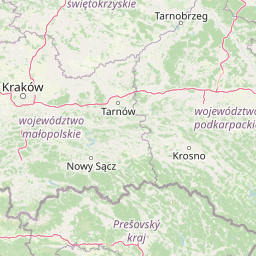
The landscape of Patria nad Odrzechową is shaped by the gentle, rolling topography of the Pogórze Bukowskie, the foothills that form a transition between the lowlands of the Subcarpathian region and the higher ranges of the Low Beskids. Elevations are modest, and the terrain is characterized by wooded ridges, shallow valleys, and small watercourses typical of the western Carpathian foreland.
Forest is the dominant land cover, with the patchwork of Carpathian beech forest on slopes and grąd woodland in more sheltered, fertile locations giving the area a continuous deciduous canopy. Outside the forest boundaries, the surrounding region retains a rural, agricultural character, with the small villages and farmland of Gmina Zarszyn forming the typical human context of the Bukowskie Foothills.
Patria nad Odrzechową ecosystems, habitats, and plant life
Ecologically, Patria nad Odrzechową represents the deciduous forest character of the western Carpathian foothills. The site's two main Annex I habitats, fertile Carpathian beech forest and grąd, are both classic Central European broadleaf woodland types. The beech forest prevails on the more acidic, sloping terrain, while grąd woodland develops where soils are deeper and richer, supporting a more diverse mix of oak, hornbeam, and lime.
This habitat mosaic supports the small-scale but characteristic biodiversity of Carpathian upland forests, including amphibians that depend on temporary woodland pools, ground beetles associated with damp broadleaf woodland floors, and saproxylic invertebrates tied to decaying wood. The overall ecological picture is one of continuity with the broader forest systems of the Low Beskids rather than a site defined by dramatic or unusual habitats.
Patria nad Odrzechową wildlife and species highlights
Wildlife at Patria nad Odrzechową is shaped primarily by the deciduous forest habitats that cover most of the site. Amphibians are represented by the yellow-bellied toad (Bombina variegata), an Annex II species associated with small, sunlit pools and wet depressions within forest landscapes. The species is often used as an indicator of well-preserved small-scale wetland features in Carpathian foothills.
Among invertebrates, the ground beetle Carabus variolosus is an Annex II species linked to moist broadleaf woodland, while the flat bark beetle Cucujus cinnaberinus is a saproxylic species that lives under the bark of decaying broadleaf trees and is generally associated with older forest stands. Together, these three species point to a site that, despite its modest size, plays a role in maintaining the broader invertebrate and amphibian diversity of the Bukowskie Foothills.
Patria nad Odrzechową conservation status and protection priorities
From a conservation perspective, Patria nad Odrzechową matters primarily as a contribution to the network of protected deciduous forest habitats in the western Carpathians. By safeguarding a continuous block of fertile Carpathian beech forest and grąd woodland, the site helps maintain the habitat connectivity that many Carpathian forest species require across the foothills.
The site's significance is amplified by its full inclusion within the Beskid Niski Protected Landscape Area, which restricts harmful land-use changes across the broader region. This overlap gives the area a layered conservation regime in which both EU-level habitat protection and national-level landscape protection reinforce one another.
The presence of Annex II species such as Bombina variegata, Carabus variolosus, and Cucujus cinnaberinus also adds a species-conservation dimension to the site, even though its core value rests on its forest habitats rather than on any single flagship species.
Patria nad Odrzechową cultural meaning and human context
The cultural context of Patria nad Odrzechową is that of the rural Bukowskie Foothills, a region historically characterized by small Carpathian villages, mixed forestry, and traditional agricultural land use. The area lies within Gmina Zarszyn, a local administrative unit that, like much of the Subcarpathian foothills, blends long-standing woodland management with village-based farming communities.
Top sights and standout views in Patria nad Odrzechową
The most distinctive feature of Patria nad Odrzechową is its concentration of two priority deciduous forest habitats: fertile Carpathian beech forest and grąd oak-hornbeam-lime woodland, both listed under the EU Habitats Directive. The site provides a compact but representative example of the forest mosaic of the Pogórze Bukowskie.
Equally notable is the site's overlap with the Beskid Niski Protected Landscape Area, which places Natura 2000 habitat protection within a broader national landscape protection framework. The presence of yellow-bellied toad, Carabus variolosus, and Cucujus cinnaberinus further underlines the area's role in supporting the small-scale but characteristic wildlife of Carpathian foothill forests.
Best time to visit Patria nad Odrzechową
Because Patria nad Odrzechową is a habitat-focused Natura 2000 site rather than a developed visitor destination, the most relevant seasonal considerations relate to the condition of its deciduous forests and the activity patterns of its wildlife. Late spring and early summer bring full canopy cover and active amphibian and invertebrate periods, including the calling season for the yellow-bellied toad around shallow forest pools. Autumn highlights the broadleaf forest character with changing foliage and increased activity of saproxylic invertebrates in decaying wood.
Winter offers a quieter view of the forest structure itself, with bare deciduous trees revealing the beech and oak-hornbeam composition of the woodland. Any visit should respect the protected status of the area and the role it plays within the wider Beskid Niski Protected Landscape Area.