

Mori Atlas logo
Nature reservePeriochi Mitserou - Agrokipias

Examining the ecological terrain, mosaic habitats, and protected biodiversity of this inland Mediterranean nature reserve.

Periochi Mitserou - Agrokipias: A Crucial Protected Natural Landscape in Inland Cyprus

Periochi Mitserou - Agrokipias represents a significant 613-hectare protected area within central Cyprus, defined by its diverse Mediterranean inland terrain and overlapping Natura 2000 designations. The landscape features a complex mosaic of drought-adapted phrygana, traditional olive and carob woodlands, pine forest patches, and narrow riparian galleries. This site provides essential shelter for European bird species, diverse flora, and various bat populations, standing as a vital link in the regional conservation network.

Natura 2000Special Protection AreaSpecial Area of ConservationInland Mediterranean habitatsMediterranean shrublandPhrygana

Periochi Mitserou - Agrokipias

Nature reserve

Park overview

Structured park overview, official facts, and landscape profile for Periochi Mitserou - Agrokipias

Periochi Mitserou - Agrokipias park facts, protected area profile, and essential visitor context

Review the core facts for Periochi Mitserou - Agrokipias, including designation, size, terrain, visitor scale, habitats, and operating context in one park-focused overview.

About Periochi Mitserou - Agrokipias

Periochi Mitserou - Agrokipias is a fully terrestrial Natura 2000 protected area situated in inland Cyprus. The site reflects the broader environmental identity of the island's Mediterranean interior, where elevations, soils, and seasonal aridity interact to produce characteristic dryland vegetation patterns. Its location, away from the coast, places it within a transitional Mediterranean landscape shaped by traditional rural land use, scattered woodland fragments, and patches of natural shrubland that have persisted alongside agricultural activity.

The site's Natura 2000 profile is unusually comprehensive for its size. Classified as a Special Protection Area for birds, a Site of Community Importance, and a Special Area of Conservation, it benefits from overlapping layers of European and national protection. Each designation reflects a different conservation angle: the SPA status targets bird populations and their habitats, the SCI designation recognizes the broader ecological value of the site for habitats and species, and the SAC status confirms that the area meets the highest standards of European habitat conservation once its management has matured through the Natura 2000 lifecycle.

Ecologically, Periochi Mitserou - Agrokipias serves as a small but representative example of the Mediterranean ecoregion in central Cyprus. The site packages together an unusually wide range of habitat types within a compact area, including arborescent matorral with jujube, thermo-Mediterranean and pre-desert shrub formations, Sarcopoterium-dominated phryganas, pseudosteppe vegetation, southern riparian galleries, olea and Ceratonia forests, and Mediterranean pine forests with endemic mesogean pines. Together these habitats create a mosaic that supports a high species diversity and offers refuge for taxa that depend on the structural variety typical of pre-intensive Cypriot landscapes.

As a protected area, Periochi Mitserou - Agrokipias also illustrates the importance of small, locally anchored sites within larger European conservation networks. Its name, drawn from local Greek toponyms, reflects the rural and traditional landscape character of inland Cyprus, where conservation efforts frequently hinge on preserving the ecological fabric of villages, valley systems, and hill-country woodlands that have long supported Mediterranean wildlife.

Quick facts and research context for Periochi Mitserou - Agrokipias

Periochi Mitserou - Agrokipias is a Natura 2000 protected area in Cyprus. It carries the site code CY2000003. The site is located inland at approximately 35.05° N, 33.14° E and spans roughly 613 hectares entirely on land. It was designated as a Special Protection Area for birds in December 2002, was declared a Site of Community Importance in May 2004, and was officially upgraded to a Special Area of Conservation in September 2015. The protected area belongs to the Mediterranean ecoregion and contains a network of Mediterranean habitats supporting protected plants, birds, and mammals, as well as locally documented amphibians, reptiles, and invertebrates.

Protection and recognition

Documented terrestrial protection history and designation records

Periochi Mitserou - Agrokipias Protection Status and Recognition Data

Periochi Mitserou - Agrokipias maintains a documented terrestrial protection status established in the year 2015. Structured conservation records provide clear insight into the protected area designation and management history.

Protection details

Protection scope
Terrestrial
Designated year
2015
Transboundary protection
No
Park context

Deeper park guide and search-rich context for Periochi Mitserou - Agrokipias

Periochi Mitserou - Agrokipias history, landscape, wildlife, and travel context

Explore Periochi Mitserou - Agrokipias through its history, landscape character, ecosystems, wildlife, conservation priorities, cultural context, and seasonal travel timing in a structured park guide built for atlas discovery and search intent.

Why Periochi Mitserou - Agrokipias stands out

Periochi Mitserou - Agrokipias is best known for being a multipurpose Natura 2000 site that combines bird protection status with community-level habitat and species conservation. The site is recognized for the diversity of its Mediterranean habitats, especially traditional olive, carob, and pine woodland alongside southern riparian galleries and several low, sclerophyllous shrubland types characteristic of Cyprus's dry landscapes. It is also notable for the role it plays within the Cypriot Natura 2000 network as a refuge for species of European conservation interest, including migratory and breeding birds, threatened plant species such as mandrake and an endemic orchid, and cave-dwelling bats. The convergence of three distinct Natura 2000 designations on a relatively compact inland area gives the site an outsized conservation profile relative to its size.

Periochi Mitserou - Agrokipias history and protected-area timeline

The site was first formally recognized under European conservation law in December 2002, when Periochi Mitserou - Agrokipias was designated as a Special Protection Area for birds within the Natura 2000 framework. This initial recognition was tied specifically to the site's value for bird populations, including breeding, wintering, and migratory species of European conservation concern.

In May 2004, the site's role expanded when it was declared a Site of Community Importance, a step that acknowledged its broader ecological significance beyond birds, encompassing the habitat mosaic and the wider set of protected plant and animal species found within its boundaries. This SCI status was the foundation for a stronger conservation mandate, aligning the site's protection with the European Union's Habitats Directive.

The site's status evolved further in September 2015, when it was formally designated as a Special Area of Conservation. The SAC designation marked the final stage in the Natura 2000 process, confirming that the area met the standards required for long-term conservation of its natural habitats and species. The progression through these three overlapping designations over more than a decade reflects a gradual building of legal and institutional protection that mirrors the broader development of Natura 2000 implementation across Cyprus.

Periochi Mitserou - Agrokipias landscape and geographic character

The landscape of Periochi Mitserou - Agrokipias is shaped entirely by inland Mediterranean terrain. The site lies within the central part of Cyprus, away from coastal influences, and reflects the typical topography of the island's interior: a mosaic of low hills, valley systems, and gently undulating ground. The area's character is strongly influenced by the Mediterranean climate, with long, hot, dry summers and mild, comparatively wet winters that shape both the vegetation cover and the seasonal rhythms of the landscape.

Vegetation on the site is dominated by drought-adapted Mediterranean formations. Matorral of Zyziphus gives the area its arborescent shrubland character, while thermo-Mediterranean and pre-desert shrub formations highlight the proximity of the site to the climatic margins of more arid zones. Sarcopoterium phryganas spread across open ground, and pseudo-steppe communities rich in annual grasses and Thero-Brachypodietea herbs occupy sun-exposed slopes and clearings, contributing to the patchy, mosaic feel of the terrain.

In the lower and more sheltered parts of the site, southern riparian galleries and tamarisk-dominated tufa formations line watercourses, creating narrow but ecologically important corridors of denser vegetation. Above these, traditional Mediterranean woodlands dominated by wild olive and carob colonize rocky ground, while enclaves of Mediterranean pine forest containing endemic mesogean pine elements occupy the upper tracts. The result is a layered landscape in which cultivated-rural surroundings, scrubland, riparian corridors, and pine woodland fragments combine into a single, integrated Mediterranean terrain.

Periochi Mitserou - Agrokipias ecosystems, habitats, and plant life

Ecologically, Periochi Mitserou - Agrokipias occupies the Mediterranean ecoregion and is built around a notable diversity of natural habitat types. Seven distinct habitat types are documented within the site, an impressive figure for an area of roughly 613 hectares. These range from low, sclerophyllous shrub formations to taller Mediterranean pine forests, providing a wide structural and ecological gradient that supports correspondingly diverse communities of plants and animals.

The vegetation mosaic reflects classic Mediterranean layering. Lower formations include Zyziphus arborescent matorral, thermo-Mediterranean and pre-desert shrublands, and Sarcopoterium-dominated phryganas, all of which host specialized plant communities adapted to summer drought and high light intensities. Mid-successional stages are represented by olea and Ceratonia forests, which combine to recreate the traditional agro-sylvan vegetation of inland Cyprus and provide important structural complexity for birdlife and bats. At the upper end of the ecological gradient, Mediterranean pine forests with endemic mesogean pines add canopy cover and a distinct microclimate.

Water influence is subtle but ecologically significant. Southern riparian galleries and tamarisk-Securinega formations follow seasonal watercourses and add a humid contrast to the otherwise dry-dominated landscape. These linear habitats are disproportionately important for biodiversity, supporting richer plant communities and serving as movement corridors and feeding grounds for birds, bats, and invertebrates. Together, the array of habitats gives Periochi Mitserou - Agrokipias a clearly layered ecological character, where small changes in topography and exposure produce strongly different vegetation patterns.

Periochi Mitserou - Agrokipias wildlife and species highlights

The wildlife value of Periochi Mitserou - Agrokipias is anchored by its importance for birds. As a designated Special Protection Area, the site supports more than fifty bird species of European conservation interest, including raptors such as the Eurasian sparrowhawk, hen harrier, pallid harrier, Montagu's harrier, and European honey buzzard. Ground-nesting or open-country species such as the common quail, wood lark, tawny pipit, and red-throated pipit also feature prominently, as do migrant songbirds that use the site during passage seasons.

Charismatic Mediterranean breeding birds are well represented. The European roller, Eurasian hoopoe, common cuckoo, European bee-eater, European nightjar, golden oriole, and the endemic Cyprus wheatear all appear in the site's protected species list. Mediterranean scrub specialists such as the spectacled warbler, Sardinian warbler, and Ruppell's warbler reinforce the site's value for species closely tied to phrygana and low maquis. Wintering and passage species including the fieldfare, mistle thrush, redwing, and various Oenanthe wheatears add seasonal diversity.

Mammal diversity includes three bat species of conservation interest: the greater horseshoe bat, the lesser horseshoe bat, and the Egyptian fruit bat. These species use caves, rock fissures, mature trees, and riparian corridors as roosting and foraging habitat, and they underline the importance of the site's structural variety. Beyond the formally protected taxa, additional species have been documented within the site, including further plants, birds, amphibians, reptiles, invertebrates, and at least one additional mammal species, indicating that the site's true fauna extends beyond the strictly protected list.

Periochi Mitserou - Agrokipias conservation status and protection priorities

The conservation significance of Periochi Mitserou - Agrokipias lies in its layered Natura 2000 designations, which collectively protect both habitats and species. Its status as a Special Protection Area anchors the site within Europe's network of important bird areas, while its Site of Community Importance and Special Area of Conservation designations extend protection to habitats and non-avian species. The combination of all three categories marks the site as one of the more strongly protected natural areas in inland Cyprus.

The protection framework targets a specific set of conservation priorities. Two plant species, including the mandrake and the orchid Ophrys kotschyi, are formally protected, while fifty-six bird species receive targeted conservation attention, encompassing breeding birds of Mediterranean scrub and woodland, migratory raptors, and wintering passerines. Three bat species further extend the conservation scope to mammals, reinforcing the site's role in protecting cave-dwelling and forest-roosting species.

Beyond the explicit protected species list, the site's seven documented habitat types each carry their own conservation value, contributing to the maintenance of Mediterranean ecological processes at the local and regional level. The site's contribution to ecological connectivity in central Cyprus, alongside its importance as a refuge for species sensitive to agricultural intensification and climate change, gives Periochi Mitserou - Agrokipias a meaningful conservation role that extends well beyond its modest size.

Periochi Mitserou - Agrokipias cultural meaning and human context

The name Periochi Mitserou - Agrokipias reflects the traditional rural and micro-regional naming conventions used across Cyprus. In Greek, periochi means area or district, and the site likely takes its name from local place names or topographic features associated with the surrounding villages and agricultural lands. Agrokipias, in particular, evokes associations with cultivated landscape, suggesting a site embedded within or adjacent to traditionally farmed Mediterranean countryside.

This naming pattern mirrors the broader cultural character of inland Cyprus, where small protected areas are frequently named after villages, valleys, or local landmarks rather than abstract geographic coordinates. As a result, sites such as Periochi Mitserou - Agrokipias carry cultural weight that connects ecological conservation with local identity, even when specific cultural landmarks within the site itself are not separately documented.

Top sights and standout views in Periochi Mitserou - Agrokipias

Periochi Mitserou - Agrokipias stands out for combining three overlapping Natura 2000 designations within a single, compact inland site, giving it strong legal protection relative to its roughly 613-hectare footprint. Its habitat richness, with seven distinct Mediterranean habitat types including Zyziphus matorral, phrygana, pseudo-steppe, southern riparian galleries, olea and Ceratonia forests, and Mediterranean pine forests with endemic mesogean pines, is exceptionally high for such a small area.

The site is equally notable for its biological richness. It supports a formally protected flora that includes the mandrake and an endemic orchid, a bird list that spans European rollers, honey buzzards, pallid harriers, and the endemic Cyprus wheatear, and a bat assemblage that includes greater and lesser horseshoe bats and the Egyptian fruit bat. Together these qualities make Periochi Mitserou - Agrokipias a representative and ecologically dense illustration of Natura 2000 conservation in Mediterranean Cyprus.

Best time to visit Periochi Mitserou - Agrokipias

The character of Periochi Mitserou - Agrokipias shifts with the strong seasonality typical of inland Mediterranean Cyprus. Spring, from roughly March to May, is generally the most rewarding period for natural-area interest, when cooler temperatures and residual soil moisture bring flowering peaks, fresh leaf cover in woodlands, and the highest bird activity, including many migrants and active breeding birds. Wildlife observations during this period often capture the full diversity of the site's bird and plant life.

Autumn, from September to November, can also be productive, particularly for migratory and wintering birds, when species that breed further north pass through or settle in the site for the winter. Summer, by contrast, is the most demanding time to experience Mediterranean dryland habitats: heat is intense, vegetation is at its driest, and bird activity contracts to early morning and evening hours. Winter in inland Cyprus is mild but cooler and wetter, with greener ground cover but reduced flowering and lower bird song, though it can still support observation of wintering species.
Monthly climate preview

Long-term monthly temperature and precipitation patterns recorded at representative coordinates

Periochi Mitserou - Agrokipias Climate Normals and Annual Temperature Rhythm

Representative coordinates record mean monthly temperatures spanning from 10.45 degrees Celsius to 29.81 degrees Celsius alongside shifting precipitation rates. Examining the full twelve-month profile provides complete historical averages for temperature ranges and moisture distribution.
Annual mean20 °C
10 °C30 °C
Jan10°
Feb11°
Mar13°
Apr17°
May22°
Jun27°
Jul30°
Aug30°
Sep27°
Oct22°
Nov17°
Dec12°
Warmest month
July

29.8 °C

Coolest month
January

10.5 °C

Wettest month
December

2.7 mm/day

Driest month
July

0 mm/day

Park location guide

Geography guide, regional context, and park location map for Periochi Mitserou - Agrokipias

Periochi Mitserou - Agrokipias park geography, regions, and map view in Cyprus

Understand where Periochi Mitserou - Agrokipias sits in Cyprus through a broader geographic reading of the surrounding landscape, nearby location context, and its mapped position within the national park landscape.

How Periochi Mitserou - Agrokipias fits into Cyprus

Cyprus is an island nation in the eastern Mediterranean Sea, positioned at the crossroads of Europe, Africa, and Asia. The Republic of Cyprus governs the southern portion of the island, with Nicosia as its capital and largest city. The island has a complex political situation due to the Turkish occupation in the north and contains British military bases in the south. Cyprus gained independence from Britain in 1960 and is a member of the European Union.

Wider geography shaping Periochi Mitserou - Agrokipias in Cyprus

Cyprus is an island located in the eastern Mediterranean Sea, off the coast of the Levant in West Asia. The island lies approximately 75 km south of Turkey, 105 km west of Syria, and 380 km north of Egypt. The terrain varies from mountainous regions in the north and interior to plains and coastal areas. The Troodos Mountains dominate the central and southwestern part of the island. The island has no land borders as it is entirely surrounded by sea.

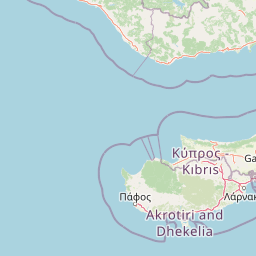
Map view of Periochi Mitserou - Agrokipias

Use this park location map to pinpoint Periochi Mitserou - Agrokipias in Cyprus, understand its exact geographic position, and read its mapped placement within the surrounding landscape more clearly.

Pigeon | © OpenStreetMap contributors
Park atlas

Compare adjacent Mediterranean habitats and regional park geography across central Cyprus

Explore Parks Near Periochi Mitserou - Agrokipias and Surrounding Protected Areas

Browsing other protected areas near Periochi Mitserou - Agrokipias reveals a wider network of dryland shrublands, pine forests, and riparian corridors across the interior. Extending the comparison helps map how individual Natura 2000 sites fit into the broader ecological landscape of the region.
Protected areaCyprus
About 3.6 km away#1 closest

Southeast

Koilada Potamou Maroullenas Protected Area: Geography and Landscape of a Mediterranean Valley

Exploring natural terrain and riverine habitats in Cyprus

Koilada Potamou Maroullenas is a protected area in Cyprus characterized by its Mediterranean river valley, intermittent watercourses, and rich mosaic of vegetation. The landscape spans from riparian galleries to phrygana and pine forests, making it a vital unit for regional biodiversity and habitat preservation within the island nation.

Area
0.722 km²
Established
2002
Relief
Mixed relief
Climate
Mediterranean
Nature reserveCyprus
About 8.3 km away#2 closest

Southwest

Madari - Papoutsa Nature Reserve: Protected Highland Landscapes and Geography of Central Cyprus

An ecological cornerstone of the Cyprus mountain backbone.

Madari - Papoutsa represents a significant protected territory within the Cyprus highlands, characterized by a complex mosaic of Mediterranean pine forests, juniper woodlands, and rocky scree slopes. Recognized for its role in biodiversity conservation, the area preserves endemic plant species and varied bird populations within its expansive mountain terrain. This site acts as a major ecological node, illustrating the structural diversity and natural heritage of the eastern Mediterranean environment.

Area
45.782 km²
Established
2004
Relief
Mountain
Climate
Mediterranean
Protected areaCyprus
About 8.4 km away#3 closest

West

Merras-Petromoudkia Protected Area: Mapping the Mediterranean Landscapes of Central Cyprus

An Essential Protected Habitat for Birds and Mediterranean Matorral

Merras-Petromoudkia functions as a terrestrial protected landscape in the heart of Cyprus, featuring a complex interplay of phrygana vegetation, arborescent matorral, and riparian galleries. This site provides critical refuge for numerous bird species within the Mediterranean ecoregion, maintaining a low-intensity mosaic of open steppe and woody cover that remains essential for regional avian flyways.

Area
12.378 km²
Established
2022
Relief
Upland
Scope
Terrestrial
Nature reserveCyprus
About 11 km away#4 closest

Southeast

Dasos Machaira Nature Reserve: Geographic Overview and Protected Landscape Mapping

A diverse Natura 2000 protected area in central Cyprus

Spanning an inland expanse in central Cyprus, Dasos Machaira serves as a prime example of Mediterranean ecological diversity. The nature reserve encompasses a varied terrain of river valleys, golden oak woodland, and steep rocky slopes, documented through its status as both a Site of Community Importance and a Special Protection Area. The site remains a critical hub for endemic plant life and migratory bird populations, showcasing a dense convergence of distinct habitat types.

Area
44.28 km²
Established
2002
Relief
Upland
Climate
Mediterranean
Nature reserveCyprus
About 11 km away#5 closest

South

Periochi Tzionia: Protected Landscape Mapping and Geographic Context in Cyprus

A Natura 2000 designated nature reserve in the Cyprus interior.

Periochi Tzionia serves as a significant terrestrial protected area, defined by its function within the Mediterranean ecoregion. This nature reserve provides essential structural support for diverse bird communities, serving as a pillar of regional conservation efforts in Cyprus through its role in the EU Birds Directive framework.

Area
68.428 km²
Established
2008
Climate
Mediterranean
Scope
Terrestrial
Nature reserveCyprus
About 13 km away#6 closest

West

Periochi Atsa - Agios Theodoros Nature Reserve: Inland Cyprus Protected Area and Mapping

Essential Mediterranean habitat for breeding and migratory birds

Located in the heart of Cyprus, this nature reserve protects nearly 3,000 hectares of Mediterranean terrain. Its primary function is maintaining ecological stability for 45 species of birds, including raptors and Mediterranean specialists. This site represents a key component of the inland protected area network, essential for understanding the environmental geography of the eastern Mediterranean basin.

Area
29.242 km²
Established
2008
Climate
Mediterranean
Scope
Terrestrial
Nature reserveNicosia District
About 13 km away#7 closest

Southwest

Fountoukodasi Pitsilias Nature Reserve: Geographic Overview and Protected Mountain Terrain

A dense Mediterranean ecological mosaic in the Troodos range

Located within the Pitsilia region, Fountoukodasi Pitsilias encompasses a vital protected area where traditional agricultural terraces meet mature pine and oak forests. The site mapping reveals a network of stream valleys that support high levels of endemic biodiversity and unique riparian vegetation. This area serves as a primary reference for understanding the intersection of human-shaped cultural landscapes and preserved natural habitats in the Cypriot mountains.

Area
50.04 km²
Established
2006
Relief
Mountain
Climate
Mediterranean
Nature reserveCyprus
About 15 km away#8 closest

North

Mammari - Kokkinotrimithia - Deneia Nature Reserve and Regional Geographic Landscape Context

Protected Mediterranean habitat mosaic in central Cyprus.

This protected area in the interior of Cyprus features a unique combination of phrygana shrublands, pseudo-steppe, and limestone slopes. The site is characterized by its high ecological density, hosting diverse bird communities and bat habitats within a compact, seasonally changing Mediterranean landscape defined by calcareous geology.

Area
1.083 km²
Established
2002
Relief
Upland
Climate
Mediterranean

Common questions about visiting, size, designation, and location context for Periochi Mitserou - Agrokipias

Periochi Mitserou - Agrokipias FAQs for park facts, access, geography, and protected area context

Find quick answers about Periochi Mitserou - Agrokipias, including protected-area facts, park geography, trail and visitor context, and how the park fits into its surrounding country and regional landscape.
MoriAtlas Explorer

Continue Your Protected Areas Search Across the Global Atlas

Deepen your exploration by continuing the structured search for national parks and protected areas worldwide. Utilize the comprehensive filtering capabilities to compare different conservation landscapes and refine your understanding of global park geography. Discover more about the distribution and characteristics of protected natural areas.

Global natural geography