
Why Rač Nature Reserve stands out
Rač is best known for its exceptionally rich thermophilic flora and insect fauna thriving on sunny volcanic slopes. The reserve combines exposed trachyte rock outcrops, including frost-riven cliff-like formations, with a mosaic of steppe-like plant communities. Within a small area it shelters rare species such as the Bohemian pasqueflower, white dittany, and several feather-grass species, alongside an unusually high insect diversity for a site of its size, including hundreds of beetle and butterfly species. The site is also valued as a textbook example of succession on abandoned agricultural land, showing how former fields gradually return to natural vegetation when grazing and cultivation cease. This combination of geological distinctiveness, botanical rarity, and entomological richness gives Rač a profile that is unusually concentrated for such a compact reserve.
Rač Nature Reserve history and protected-area timeline
Rač Nature Reserve was established on 9 July 1953 by decree of the Ministry of Education and Enlightenment, one of the central authorities responsible for nature protection in Czechoslovakia at that time. Its creation reflected mid-twentieth-century efforts to formally safeguard biologically valuable sites, particularly those supporting warm-loving communities at the edge of their ecological range.
The rationale for protection predates formal designation: the southern slope of Hradiště u Habří had long been recognized for its unusual concentration of thermophilic plants and insects, and the abandonment of surrounding agricultural land had begun to set the stage for natural succession. By enclosing both the rocky slope and a portion of recovering farmland, the original decree aimed to conserve existing biological communities while also preserving the site as a living example of vegetation recovery.
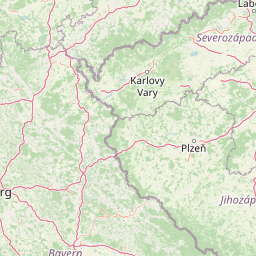
Since its establishment, the reserve has remained under the administration of regional authorities, currently the Regional Authority of the Ústecký Region. Its boundaries and core purpose have remained broadly stable, with the protected territory falling within the cadastral area of the former village of Lochočice. As with many small Czech reserves, its modern significance rests both on the species it shelters and on its long-standing role as a reference site for studying steppic vegetation, volcanic-substrate ecology, and ecological succession in central Europe.
Rač Nature Reserve landscape and geographic character
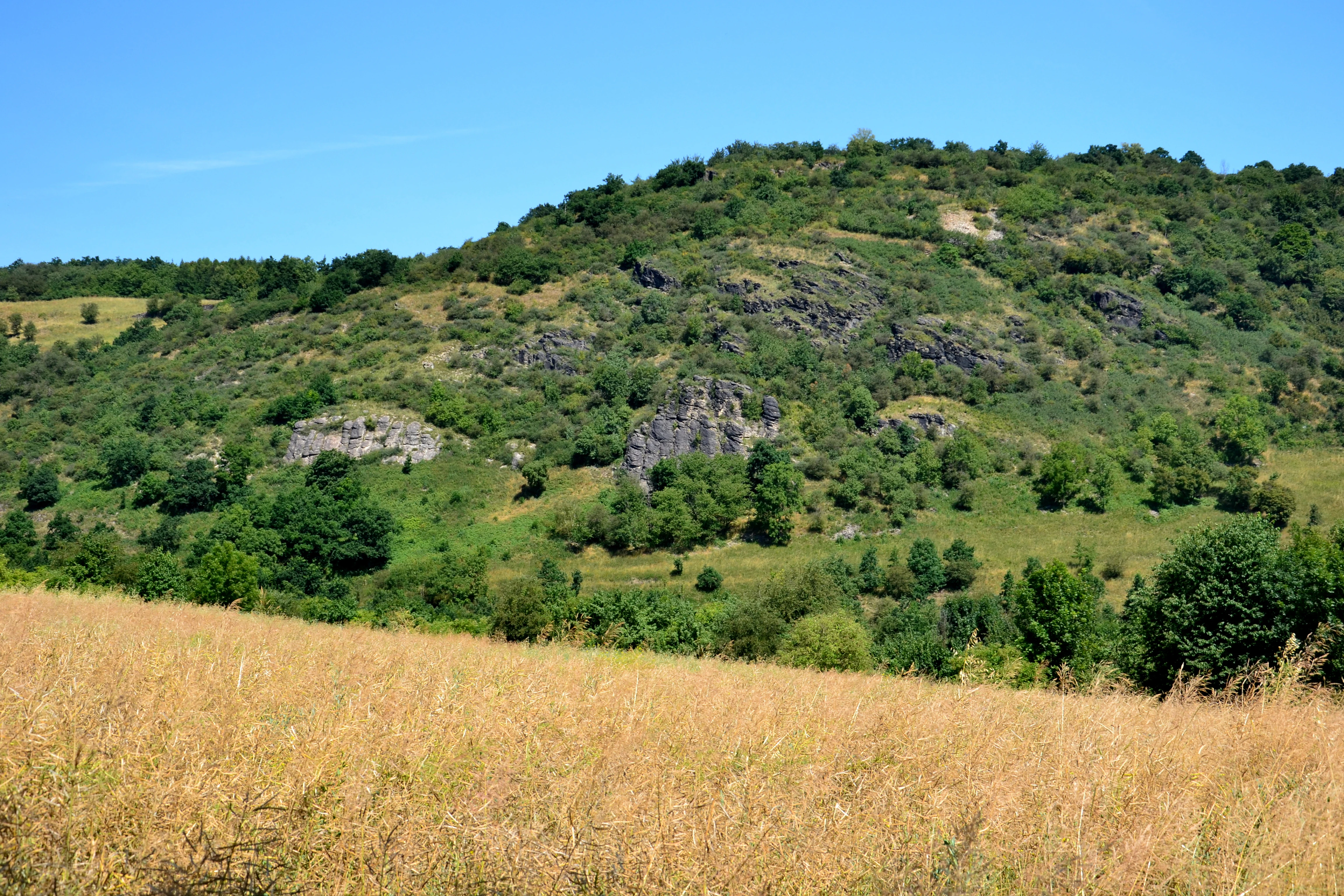
The landscape of Rač Nature Reserve is shaped by a single dominant landform: the southern slope of the trachyte hill Hradiště u Habří. This hill belongs to the České středohoří, a highland region in northern Bohemia defined by Tertiary volcanic activity that left behind a chain of dome-shaped hills and ridges rising above the surrounding lowlands. The geology gives the reserve a distinctive mineral character: the bedrock is sodalitic trachyt of Miocene age, a light-colored volcanic rock with prominent jointing patterns.
Within the reserve, the terrain is steep and rocky, with elevations ranging from roughly 200 meters at the base of the slope to about 317 meters at higher points. The rock face shows both platy jointing, which produces layered slabs, and columnar jointing, which forms upright prismatic columns. Combined with long exposure to freeze-thaw cycles, these structural features have produced prominent frost-riven cliff faces that give the rocky outcrops a rugged, blocky appearance.
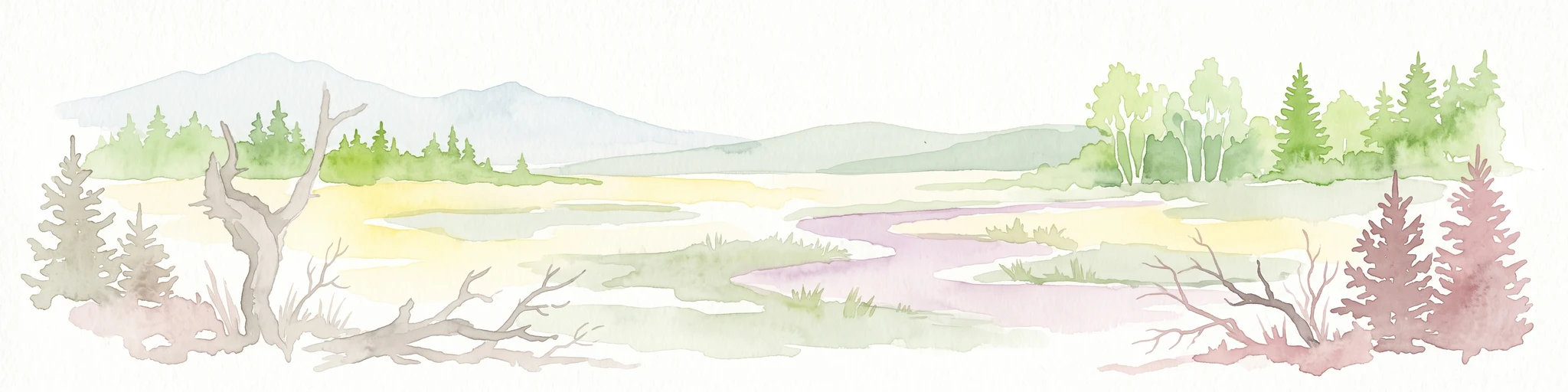
Below and around the exposed rock, shallow soils support a mosaic of open grassland, scrubby vegetation, and recovering farmland. The south-facing orientation of the slope ensures strong solar exposure, which dries the substrates and reinforces the warm, steppe-like character of the site. This combination of steep volcanic terrain, open rocky exposures, and recovering low vegetation defines the visual and ecological identity of the reserve, making it a compact but visually striking example of volcanic-slope scenery within the broader České středohoří landscape.
Rač Nature Reserve ecosystems, habitats, and plant life
Rač protects a thermophilic ecosystem of a kind that is rare in the Czech Republic. The combination of volcanic substrate, sunny southern exposure, and shallow, well-drained soils creates conditions more typical of southeastern European steppes than of central European woodlands. As a result, the reserve harbors plant communities dominated by drought- and heat-adapted species rather than the forest cover that surrounds much of the region.
The vegetation includes several layers. On the exposed trachyte outcrops, specialized rock-dwelling plants root in cracks and thin soils. Across the slope, low-growing grasses and herbs form a steppe-like sward, while areas of former cultivation support a mosaic of scrub, tall herbs, and regenerating grassland moving through different stages of succession. This ecological mosaic is what the reserve's conservation strategy aims to maintain.
Faunistically, the thermophilic character of the site supports a similarly distinctive community. Insect diversity is particularly notable, with hundreds of beetle and butterfly species recorded, including groups strongly associated with warm, dry habitats. Vertebrate presence is shaped by the open, rocky nature of the terrain, which favors birds and small mammals adapted to steppe-like conditions rather than dense forest species. The interaction between slope, soil, vegetation, and microclimate gives the reserve a tightly defined ecological identity that is closely tied to its volcanic landscape setting.
Rač Nature Reserve wildlife and species highlights
The wildlife profile of Rač is shaped by its warm, dry, open habitat, which favors species typical of steppe and rocky-slope environments rather than typical central European forest fauna. The reserve is most notable for its invertebrate richness: approximately 450 beetle species have been documented, including the dung beetle Sisyphus schaefferi, and roughly 150 butterfly species, an unusually high count for a site of this size. These insect communities thrive on the mosaic of flowering herbs, grasses, and exposed rock that the reserve protects.
Among arachnids, the reserve hosts the black-backed red velvet spider, a striking and ecologically distinctive species of warm, dry habitats. Its presence further underscores the steppic character of the site. Spiders and insects together form the backbone of the reserve's food web, supporting resident and visiting birds and small mammals.
Vertebrate interest is led by birds such as the Eurasian eagle-owl, which uses rocky outcrops for nesting, and the European nightjar, a ground-nesting species of open landscapes. The ortolan bunting adds a further open-country songbird component. On the ground, the European souslik, a colonial ground squirrel of steppe-like grasslands, is among the most characteristic mammals, indicating that the reserve continues to offer the open, herb-rich conditions this species requires.
Taken together, the wildlife of Rač reflects a tightly integrated warm-habitat community. Its significance lies less in large charismatic species and more in the coherent assembly of thermophilic plants, insects, spiders, birds, and small mammals that finds refuge on this single volcanic slope.
Rač Nature Reserve conservation status and protection priorities
Rač's conservation significance lies in its role as a small but exceptionally well-defined refuge for thermophilic biodiversity within a predominantly temperate landscape region. By protecting rocky volcanic slopes, open steppe-like vegetation, and areas of recovering agricultural land, the reserve maintains a habitat mosaic that is increasingly rare in central Europe, where such warm, dry communities have been lost to intensification of land use, reforestation, or development.
At the international level, the reserve is classified as an IUCN Category IV area, a designation reserved for sites whose primary management objective is the conservation of particular species or habitats. This formal recognition underscores the importance of the reserve's warm-loving flora and fauna, including several species of conservation concern such as the Bohemian pasqueflower and white dittany.
Beyond species-level protection, the reserve is also valuable for monitoring ecological processes. The abandonment of former cultivated land within its boundaries provides a natural laboratory for studying secondary succession on dry, calcareous-to-volcanic substrates. Combined with the site's geological interest, including exposed trachyte outcrops and frost-riven cliff features, this gives Rač a layered conservation value that combines habitat protection, species conservation, and long-term ecological research.
Rač Nature Reserve cultural meaning and human context
The cultural context of Rač is closely tied to the historical settlement patterns of the České středohoří. The reserve lies within the cadastral area of Lochočice, a former village whose decline and eventual disappearance left a landscape where human land use faded, allowing nature to reclaim agricultural terraces and fields. This transition shaped the ecological character of the reserve, since many of the areas now undergoing succession were once worked by hand.
The broader České středohoří region carries a long human history, with volcanic hills such as Hradiště u Habří often used as sites of fortified settlements and lookouts in earlier centuries. While the reserve itself is valued for natural rather than built heritage, its name and setting are interwoven with this regional identity of hills, villages, and traditional land use. The reserve thus stands at the intersection of geological history, agricultural heritage, and the modern conservation efforts that began to formally protect such sites in the mid-twentieth century.
Top sights and standout views in Rač Nature Reserve
Rač Nature Reserve's highlights center on the convergence of volcanic geology, warm-loving ecology, and a compact, easily appreciated site. The exposed trachyte outcrops, shaped by both platy and columnar jointing and weathered into frost-riven cliffs, form an immediate visual anchor. Around them, steppe-like plant communities host rare species such as the Bohemian pasqueflower, white dittany, and feather-grasses, while thermophilic insects, including hundreds of beetle and butterfly species, complement the botanical rarity.
At a broader scale, the reserve stands out as an IUCN Category IV site protecting both species and habitat. Its altitude range of roughly 200 to 317 meters and its area of about 15 hectares make it small, but the density of notable species and the clarity of its volcanic-slope ecology reinforce its significance within the České středohoří and the Czech system of nature reserves.
Best time to visit Rač Nature Reserve
Late spring and early summer are the most rewarding seasons to experience Rač, when thermophilic plants such as the Bohemian pasqueflower, white dittany, rock-jasmine, and feather-grasses come into bloom across the open rocky slope. Warm, dry weather during this period reveals the reserve's steppe-like character at its strongest, with active insect communities and clear views of the trachyte outcrops.
Early autumn also offers good conditions, with lower temperatures and softer light highlighting both the vegetation mosaic and the succession on formerly cultivated land. Winter visits can also reveal the geological structure of the slope clearly, as frost-riven cliff faces and trachyte jointing patterns become more visible without dense plant cover. Throughout the year, calm and dry days tend to provide the best experience of the reserve's warm, exposed character.