
Mori Atlas logo
Natural monumentRameno Moravy

Discover the unique oxbow river basin and wetland habitats within the Zlínský kraj region.

Rameno Moravy Natural Monument: Mapped Geography and Protected Floodplain Landscapes

(Přírodní památka Rameno Moravy)

Rameno Moravy serves as a vital protected natural monument, preserving a rare remnant oxbow of the Morava River within the Zlínský kraj region of the Czech Republic. This lowland floodplain landscape features soft alluvial sediments and distinct aquatic plant communities, including the notable yellow water-lily. The preserved still-water habitats contrast with the regulated river channels, providing a critical window into the natural geomorphology of the Morava basin.

oxbowwetlandfloodplainriver habitataquatic plantsmarshland
A flat-style digital illustration depicting a mountain valley with a river, coniferous trees, and a waterfall.

Rameno Moravy

Natural monument

Park overview

Structured park overview, official facts, and landscape profile for Rameno Moravy

Rameno Moravy park facts, protected area profile, and essential visitor context

Review the core facts for Rameno Moravy, including designation, size, terrain, visitor scale, habitats, and operating context in one park-focused overview.

About Rameno Moravy

Rameno Moravy sits in the lowland stretch of the Morava River in eastern Czechia, on the outskirts of Kroměříž. The area belongs to the wider floodplain system of the river, which historically supported a rich mosaic of channels, oxbows, marshes, and seasonally flooded meadows. Over the course of the twentieth century, much of this dynamic floodplain landscape was lost to river straightening, embankment construction, drainage, and conversion to farmland. Small surviving fragments such as Rameno Moravy are therefore disproportionately important for understanding what the original Morava floodplain once looked like and for preserving what remains of its characteristic wetland species.

The natural monument is centered on a cut-off branch, or oxbow, of the Morava, where water movement has slowed enough for aquatic and wetland vegetation to take hold. The still-water conditions support floating-leaved and emergent plant communities typical of lowland river floodplains, including the only naturally occurring population of the yellow water-lily known in the Kroměříž district. This single botanical detail gives the reserve its main scientific and conservation justification, since the species has retreated from most other sites in the region due to changes in water regime, water quality, and habitat loss.

Although the protected area itself is very small, its value extends beyond its borders because it is embedded in a larger landscape mosaic that includes the active channel of the Morava, the hydroelectric power station at Strž, and the Miňůvky bridge area. The combination of natural riverbank, regulated channel, and protected side water body illustrates the current state of many Czech lowland rivers, where a heavily modified main channel runs alongside a few preserved fragments of the original floodplain ecosystem. The site therefore serves both as a refuge for sensitive wetland species and as a small but tangible record of the region's hydrological history.

Quick facts and research context for Rameno Moravy

Rameno Moravy is a Czech přírodní památka, the country's natural monument designation, located near Kroměříž in the Zlín Region. It was established on 1 May 1995 by the District Office in Kroměříž and is administered by the Regional Authority of the Zlín Region. The site covers only about 2 hectares and sits at roughly 190 meters above sea level along the floodplain of the Morava River. It is classified under IUCN Category IV as a habitat and species management area, reflecting its role in protecting a specific wetland community rather than a broad landscape.

Protection and recognition

Examine the official terrestrial protection framework and designation records for Rameno Moravy

Rameno Moravy Protection Status and Documented Conservation Scope

Rameno Moravy maintains a documented terrestrial protection scope without imported international recognition sources. Review the official conservation status and management parameters associated with this protected natural area.

Protection details

Protection scope
Terrestrial
Transboundary protection
No
Park context

Deeper park guide and search-rich context for Rameno Moravy

Rameno Moravy history, landscape, wildlife, and travel context

Explore Rameno Moravy through its history, landscape character, ecosystems, wildlife, conservation priorities, cultural context, and seasonal travel timing in a structured park guide built for atlas discovery and search intent.

Why Rameno Moravy stands out

Rameno Moravy is best known for protecting a remnant oxbow of the Morava River and the wetland communities that depend on it. Its defining feature is the presence of the yellow water-lily, for which the site is the only natural occurrence in the Kroměříž district. The preserve's importance lies less in its size than in the rarity of the still-water and marsh habitat it preserves within the heavily modified Morava floodplain.
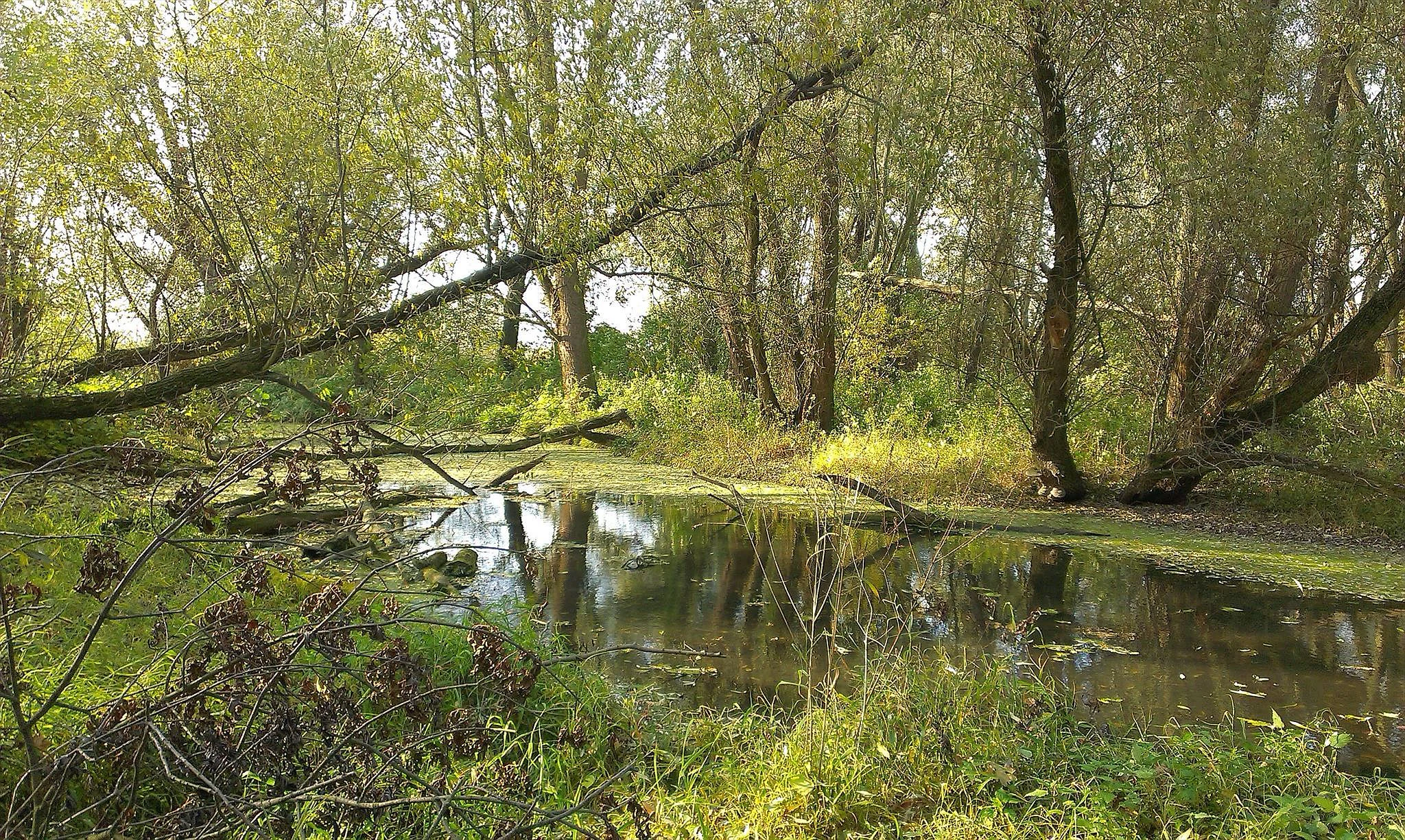
A calm, shallow oxbow lake surrounded by a dense forest with trees leaning over the water, captured in natural lighting.
An oxbow lake of the Morava River, characterized by dense riparian vegetation and fallen trees.

Rameno Moravy history and protected-area timeline

Rameno Moravy was officially declared a protected site on 1 May 1995 by the District Office in Kroměříž, under the Czech system of přírodní památka, or natural monument. The designation was driven by the recognition that the oxbow and its associated wetland communities were ecologically valuable but vulnerable, and that without formal protection the site could easily be lost to further river regulation, drainage works, or land-use changes in the surrounding floodplain.

Management responsibility for the site later passed to the Regional Authority of the Zlín Region, which oversees smaller protected natural monuments within its jurisdiction. The establishment of the monument reflects a broader Czech conservation effort during the 1990s to formally recognize small but ecologically significant sites, especially in lowland agricultural regions where natural habitats had been heavily reduced. Over the following decades, the site has continued to function primarily as a species and habitat refuge rather than a tourism-focused reserve, and it remains a quiet example of how very small protected areas can play an important role in regional biodiversity conservation.

Rameno Moravy landscape and geographic character

The landscape of Rameno Moravy is defined by the floodplain of the Morava River, a lowland watercourse that flows along the eastern side of the Czech Republic. The protected area itself occupies a former side branch of the river, now a slow-moving or still-water oxbow separated from the main current by sediment deposition and natural channel shift. The surrounding terrain is flat to gently undulating, with the site lying at roughly 190 meters above sea level, and the wider floodplain is characterized by alluvial soils, soft sediments, and patches of riparian vegetation.

Rather than dramatic scenery, the landscape here is subtle but ecologically rich. Quiet stretches of standing or barely moving water are fringed by marsh vegetation, reedbeds, and soft floodplain forest elements that together form a small but coherent wetland mosaic. The presence of the active Morava channel nearby, along with engineered structures such as the Strž hydroelectric station, contrasts sharply with the preserved still-water habitat of the oxbow, highlighting the contrast between regulated and natural elements of the modern river landscape.

Rameno Moravy ecosystems, habitats, and plant life

The ecology of Rameno Moravy is shaped by its character as a lowland river oxbow with stable hydrological conditions. The still-water segments support aquatic plant communities typical of floodplain pools, including submerged, floating-leaved, and emergent species. Marshy transitions along the banks extend the habitat into wet meadow and reed communities, which together create a small but ecologically coherent gradient from open water to seasonally moist vegetation.

The site's botanical importance is anchored by the presence of the yellow water-lily, a characteristic species of nutrient-rich, slow-moving or standing water, which here has its only known natural locality in the entire Kroměříž district. Beyond this flagship species, the protected area contributes to broader floodplain biodiversity by maintaining conditions suitable for amphibians, aquatic invertebrates, marsh birds, and the dispersal of wetland plants along the river corridor. Even though the site is small, its habitat structure makes it a meaningful component of the ecological network of the Morava floodplain.

Rameno Moravy wildlife and species highlights

Wildlife at Rameno Moravy is closely tied to the wetland and aquatic character of the oxbow. The still-water habitat, combined with surrounding marshy vegetation, provides breeding and feeding conditions for amphibians such as frogs, and for a range of aquatic invertebrates that depend on calm, vegetated freshwater. Reed and marsh edges offer cover and foraging opportunities for wetland-associated birds, while the broader riparian zone connects the site to habitats used by more mobile species moving along the Morava corridor.

Because of its small size, the monument is not a large mammal area, but its ecological role for smaller, wetland-dependent species is significant at the local scale. The combination of open water, marsh vegetation, and proximity to the active river channel makes it a useful refuge for species that have largely disappeared from the intensively used farmland around Kroměříž.

Rameno Moravy conservation status and protection priorities

Rameno Moravy holds protected status as a přírodní památka, placing it within the Czech system of smaller, site-focused natural monuments. It is also classified under IUCN Category IV, which is reserved for areas managed primarily for the conservation of particular habitats or species. The site's conservation value rests on the protection of an oxbow habitat that is otherwise extremely rare in the heavily modified lowland Morava floodplain, and on the safeguarding of the only natural population of the yellow water-lily known in the Kroměříž district.

By preserving even a tiny fragment of the historical floodplain ecosystem, the site contributes to the broader regional effort to maintain aquatic and wetland biodiversity in eastern Moravia. Its protected buffer around the water body also helps guard water quality and sediment conditions, both of which are critical for the survival of sensitive aquatic species. Within the network of Czech small-scale nature monuments, Rameno Moravy is a representative example of how minor floodplain remnants can carry disproportionate ecological importance.

Rameno Moravy cultural meaning and human context

Although the protected area is fundamentally an ecological site, it also carries a small cultural element. A memorial plaque dedicated to Ladislav Zlatuška stands within the boundaries of the natural monument, linking the site to local commemorative tradition. In addition, the area lies along a blue-marked tourist trail that follows the bank of the Morava from the Kroměříž railway station, past the Strž hydroelectric station, across the Miňůvky bridge, and onward to Chropyně, making the preserve part of a wider recreational and historical landscape connected to the city of Kroměříž and the Morava valley.

Top sights and standout views in Rameno Moravy

Among the defining features of Rameno Moravy, the most distinctive is its preserved oxbow of the Morava River, which retains still-water conditions rare in the region. The site's only natural population of the yellow water-lily gives it a clear botanical identity, while the surrounding marsh communities and proximity to the active river channel extend its ecological influence beyond its small footprint. Its integration into the local trail network, alongside the memorial to Ladislav Zlatuška, gives the site an additional, gently human dimension.

Best time to visit Rameno Moravy

The character of Rameno Moravy changes subtly with the seasons in a typical Central European lowland setting. Late spring and early summer bring the most active display of wetland vegetation, including flowering aquatic plants along the oxbow and lush growth in the surrounding marsh zone, which is also when amphibian activity is most pronounced. Autumn offers a quieter, more reflective atmosphere with softer light over the water and reduced crowds along the trail. Winter visits are possible but contribute less to the ecological impression of the site, since much of the marsh vegetation dies back and water surfaces may be partially obscured. A walking visit along the marked blue trail past the site can be combined with broader exploration of the Kroměříž area in any frost-free season.

Monthly climate preview

Long-term monthly temperature averages and precipitation patterns for Rameno Moravy

Rameno Moravy Climate Normals, Annual Temperature and Precipitation Rhythm

Historical climate data from 1991 to 2020 outlines the measured annual temperature and precipitation rhythm across Rameno Moravy at a representative coordinate. Reviewing the complete monthly profile provides deeper context on long-term thermal variations and precipitation patterns.
Annual mean8 °C
-4 °C19 °C
Jan-4°
Feb-2°
Mar
Apr
May13°
Jun17°
Jul19°
Aug19°
Sep14°
Oct
Nov
Dec-2°
Warmest month
July

19.3 °C

Coolest month
January

-3.8 °C

Wettest month
July

2.9 mm/day

Driest month
January

1.3 mm/day

Park location guide

Geography guide, regional context, and park location map for Rameno Moravy

Rameno Moravy park geography, regions, and map view in Czechia

Understand where Rameno Moravy sits in Czechia through a broader geographic reading of the surrounding landscape, nearby location context, and its mapped position within the national park landscape.

How Rameno Moravy fits into Czechia

Czech Republic is a landlocked Central European country with a population of approximately 10.9 million people. The nation was established as an independent state on January 1, 1993, following the dissolution of Czechoslovakia. Its capital and largest city is Prague, with other major urban centers including Brno, Ostrava, Plzeň, and Liberec.

Wider geography shaping Rameno Moravy in Czechia

The Czech Republic is a landlocked country in Central Europe. It is bordered by Germany to the west, Austria to the south, Poland to the northeast, and Slovakia to the southeast. The landscape is predominantly hilly, with the territory covering 78,871 square kilometers.

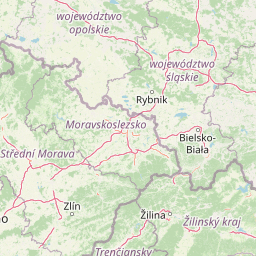
Map view of Rameno Moravy

Use this park location map to pinpoint Rameno Moravy in Czechia, understand its exact geographic position, and read its mapped placement within the surrounding landscape more clearly.

Pigeon | © OpenStreetMap contributors

Location context for Rameno Moravy

Zlínský kraj

Examine the rare oxbow wetland habitats, river scenery, and botanical features of Rameno Moravy

Visual Exploration of Rameno Moravy Photos and Protected Floodplain Landscapes

Visual documentation captures the quiet oxbow waters, marsh plant communities, and alluvial terrain defining the Rameno Moravy protected area. Photographic records illustrate the wetland mosaic along the regulated Morava River floodplain, providing direct insight into regional conservation habitats.

A calm, shallow oxbow lake surrounded by a dense forest with trees leaning over the water, captured in natural lighting.

Park atlas

Discover related wetland reserves and regional lowland river habitats.

Other Parks Near Rameno Moravy and Protected Landscapes to Compare

Compare Rameno Moravy with other protected areas across the surrounding lowland river region. Explore adjacent wetland habitats and floodplain ecosystems to understand regional conservation patterns.
Natural monumentOlomouc Region
About 8.5 km away#1 closest

Northeast

Vlkoš - statek Natural Monument: Geography and Protected Area Context in the Olomouc Region

Small-scale conservation in the Morava river floodplain

Vlkoš - statek is a significant natural monument comprising a single farmhouse attic that serves as a vital summer refuge for protected bat species. Situated within the flat alluvial terrain of the Olomouc Region, this site highlights the role of anthropogenic structures as key ecological components of the surrounding lowland landscape.

Established
2013
IUCN
III
Relief
Lowland
Climate
Temperate
Watercolor illustration of a lush, green landscape featuring rolling hills and grassy meadows under a pale sky.
Nature reserveZlín District
About 18 km away#2 closest

Southeast

Na letišti Nature Reserve: Mapped Floodplain Landscapes in the Zlín District

A rare oxbow wetland refuge in Eastern Czechia

Located in the Zlín District, Na letišti is a protected natural monument formed from a regulated meander of the Morava River. This site functions as an isolated aquatic refuge, featuring a rich community of beetles and wetland flora that define the character of this lowland floodplain landscape within the Czech Republic.

Area
0.027 km²
Established
1956
IUCN
IV
Relief
Lowland
A watercolor painting showing a panoramic landscape with green rolling hills, light green meadows, and soft purple distant mountain ridges under a pale sky.
Natural monumentJihomoravský kraj
About 21 km away#3 closest

West

Roznitál Natural Monument: Protected Steppe Biodiversity and Regional Landscape Context

A rare habitat island within the South Moravian agricultural mosaic

Located in the Vyškov district, Roznitál is a formally protected natural monument defined by its open, dry grassland and thermophilic flora. This site provides a vital refuge for relict plant communities that have largely vanished from the surrounding farmed countryside, offering a clear example of small-scale landscape conservation in the heart of Moravia.

Area
0.01 km²
Established
1990
IUCN
IV
Relief
Lowland
Natural monumentOlomouc Region
About 25 km away#4 closest

Northeast

Veselíčko Natural Monument: Geographic Profile of a Czech Protected Area

Concentrated conservation and habitat mapping in the Olomouc Region

Located in the Olomouc District, Veselíčko is a compact natural monument dedicated to specialized habitat protection. This site acts as a key component of the regional conservation network, offering insight into the intersection of cultural heritage and wildlife refuge management in the Czech Republic.

Area
0.001 km²
Established
2013
IUCN
III
Relief
Lowland
A soft watercolor painting depicting a gentle, hazy landscape with rolling hills, scattered patches of trees, and a winding path, rendered in light green, yellow, and peach tones against a white background.
Protected landscapeCzechia
About 28 km away#5 closest

East

Hostýnské vrchy Nature Park: Protected Landscape and Carpathian Foothill Geography

Forested ridge terrain across Zlín and Kroměříž districts

Hostýnské vrchy Nature Park represents a significant protected unit in the eastern Czech Republic, characterized by its deep forested ridges and open meadow clearings. As part of the outer Western Carpathians, the area supports diverse habitats including ancient beech and mixed forest stands alongside rare orchid populations. The landscape provides a clear window into the natural geography of central Moravia, with its intricate network of small watercourses and slopes.

Area
204 km²
Established
1989
Water
Minor water
Season
Year-round
Natural monumentZlín Region
About 29 km away#6 closest

Southeast

Uhliska Natural Monument: Protected Stream Valley Geography and Moravian Habitats

A diverse protected wetland and meadow mosaic in the Zlín Region.

The Uhliska natural monument protects a narrow, meandering valley corridor along the Černý potok stream in eastern Moravia. This high-value habitat mosaic features wet Cirsium meadows, broad-leaved dry grasslands, and ash alder gallery forests. The site provides a critical refuge for protected butterflies of European importance, serving as an exemplary model of small-scale landscape conservation in the Zlín Region.

Area
0.143 km²
Established
1991
IUCN
IV
Relief
Upland
A watercolor painting depicting a wide, soft-toned landscape with rolling green hills, a cluster of trees on a small rise, and forested areas in the background.
Natural monumentZlínský kraj
About 30 km away#7 closest

Southeast

Na želechovických pasekách Natural Monument: Geographic Context and Botanical Protected Area

Located in Zlínský kraj, eastern Moravia, Czech Republic.

Na želechovických pasekách represents a significant protected area within the Czech Republic. This small natural monument safeguards light-rich deciduous woodland slopes and serves as the sole known site for specific local flora. Explore the mapped terrain and environmental boundaries of this unique botanical site nested within the broader Vizovické vrchy natural park landscape.

Area
0.011 km²
Established
1949
IUCN
IV
Relief
Upland
Protected landscapeZlín District
About 30 km away#8 closest

Southeast

Želechovické paseky Protected Landscape: Map and Regional Geography in Zlín District

Carpathian foothill terrain and mosaic meadow landscapes

An extensive protected area near Zlín, Želechovické paseky features a blend of traditional forest clearing, hillside meadows, and stream valleys. This mapped landscape demonstrates the continuity of the Moravian Carpathian foothills, providing a distinct look at historical land use patterns and natural ecological corridors.

Area
10.479 km²
Relief
Upland
Climate
Temperate
Scope
Terrestrial

Common questions about visiting, size, designation, and location context for Rameno Moravy

Rameno Moravy FAQs for park facts, access, geography, and protected area context

Find quick answers about Rameno Moravy, including protected-area facts, park geography, trail and visitor context, and how the park fits into its surrounding country and regional landscape.
MoriAtlas Explorer

Continue Your Protected Areas Search Across the Global Atlas

Deepen your exploration by continuing the structured search for national parks and protected areas worldwide. Utilize the comprehensive filtering capabilities to compare different conservation landscapes and refine your understanding of global park geography. Discover more about the distribution and characteristics of protected natural areas.

Global natural geography