
Mori Atlas logo
Nature reserveRezerwat przyrody Debrza

Discover the veteran oak woodland ecology and unique terrain of this nature reserve in southern Poland

Rezerwat przyrody Debrza Nature Reserve: Protected Forest Geography and Map Boundaries

Rezerwat przyrody Debrza is a significant nature reserve located on the outskirts of Tarnów within the Lesser Poland Voivodeship. This protected area preserves a rare fragment of fertile subcontinental oak-linden-hornbeam forest, characterized by veteran oak specimens aged between 250 and 300 years. Spanning 9.5 hectares, the reserve serves as a vital ecological island of mature deciduous woodland within the gently rolling landscape of the Tarnów Plateau.

forest reserveoak-linden forestold-growth oaksurban-edge forestdeciduous woodlandgrad forest
A graphic illustration showing a winding stream flowing through a dense forest with tall trees, soft sunlight, and a pink sky.

Rezerwat przyrody Debrza

Nature reserve

Park overview

Structured park overview, official facts, and landscape profile for Rezerwat Przyrody Debrza

Rezerwat Przyrody Debrza park facts, protected area profile, and essential visitor context

Review the core facts for Rezerwat Przyrody Debrza, including designation, size, terrain, visitor scale, habitats, and operating context in one park-focused overview.

About Rezerwat Przyrody Debrza

Rezerwat Przyrody Debrza is a compact yet ecologically meaningful forest reserve in southern Poland. Sitting essentially on the edge of the city of Tarnów in the Małopolskie Voivodeship, it represents one of the small but valuable pockets of old deciduous woodland that still survive near major Polish urban centers. The reserve occupies land belonging to the State Treasury and is overseen by the Gromnik Forest District through its Skrzyszów forestry unit.

Ecologically, the reserve preserves an example of the grad forest, a Central European mixed deciduous woodland community dominated by oak and small-leaved linden. These are fertile subcontinental forests that historically covered much of the Polish lowlands but have been heavily reduced by centuries of agriculture and forestry. At Debrza, the woodland has been allowed to retain its old-growth character, and the most impressive individual trees are the oaks in the northwestern corner, which are estimated to be between 250 and 300 years old.

The protected flora includes several legally protected species, illustrating the rich herb and shrub layer typical of mature grad forests. Common ivy, mezereon, wild ginger, alder buckthorn, and lily of the valley all occur within the boundaries. The reserve's fauna is similarly characteristic of broadleaf lowland forests, ranging from common toads and frogs to forest birds and small mammals such as hedgehogs, weasels, and red squirrels.

Although it is small in absolute terms, Rezerwat Przyrody Debrza functions as an accessible example of pre-industrial deciduous forest ecology, offering visitors a chance to observe, in a very limited area, the structure and species composition of a habitat that has largely disappeared from the intensively farmed Polish lowlands.

Quick facts and research context for Rezerwat Przyrody Debrza

Rezerwat Przyrody Debrza is a Polish leśny (forest) nature reserve on the outskirts of Tarnów in the Małopolskie Voivodeship, with an area of 9.50 hectares. It is managed by the Nadleśnictwo Gromnik (Gromnik Forest District) on behalf of the State Treasury, and its protected habitat is classified as a phytocoenotic reserve of forest communities.

The reserve was created by order of the Minister of Environmental Protection, Natural Resources, and Forestry on January 25, 1995, and is documented in the official Polish legal register. Its ecological value centers on an old-growth oak and linden grad forest, including oaks between roughly 250 and 300 years old in the northwest portion of the area.

Protection and recognition

Examine the terrestrial protection scope and documented designation framework.

Rezerwat przyrody Debrza Protection Status and Conservation Record

Documented protection records outline the terrestrial status and management framework established for Rezerwat przyrody Debrza. Structured conservation data details official recognition parameters and administrative territory parameters.

Protection details

Protection scope
Terrestrial
Park context

Deeper park guide and search-rich context for Rezerwat Przyrody Debrza

Rezerwat Przyrody Debrza history, landscape, wildlife, and travel context

Explore Rezerwat Przyrody Debrza through its history, landscape character, ecosystems, wildlife, conservation priorities, cultural context, and seasonal travel timing in a structured park guide built for atlas discovery and search intent.

Why Rezerwat Przyrody Debrza stands out

Debrza is best known for protecting a remnant of fertile subcontinental oak-linden-hornbeam forest, including veteran oaks that are estimated to be 250 to 300 years old. Within this very compact 9.5 hectare site, the reserve preserves a complete picture of the grad forest community, from its multi-layered canopy to its protected herb-layer plants.
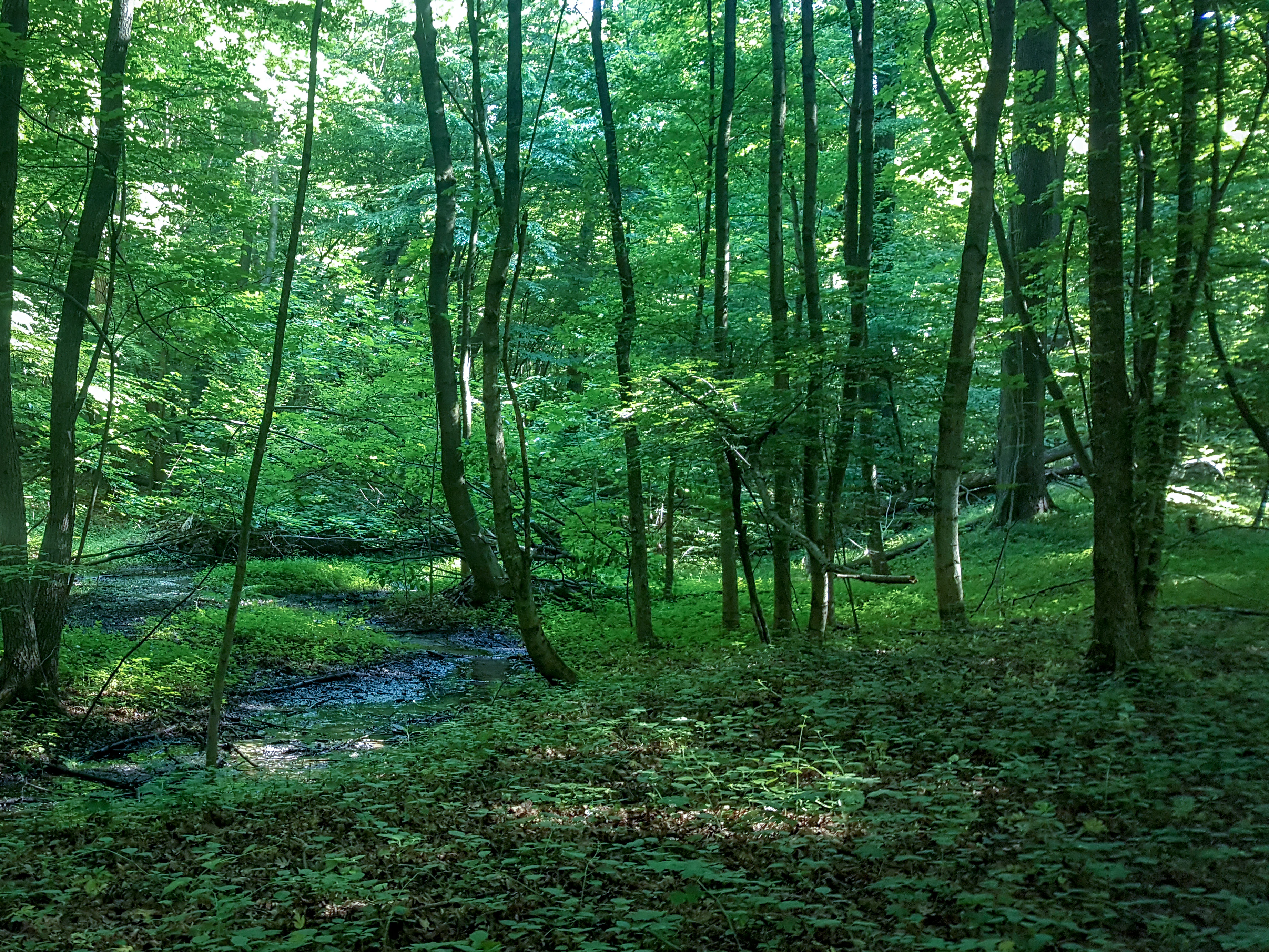
A dense green deciduous forest featuring a small, narrow stream flowing through the trees, with fallen logs on the forest floor.
A shaded stream winding through the old-growth deciduous forest of Debrza Nature Reserve.

Rezerwat Przyrody Debrza history and protected-area timeline

The landscape around Debrza has a long human footprint. For many years, water from the reserve area was used for distilling spirits at a nearby distillery belonging to the Sanguszko princely family, which lay west of the woodland. The water was piped from the forest through a system of wooden conduits, an unusual industrial use of the catchment that is itself a small part of the region's broader noble-era economic history.

Modern legal protection came much later. Rezerwat Przyrody Debrza was formally established on January 25, 1995, by order of the Polish Minister of Environmental Protection, Natural Resources, and Forestry. The protection order was published in the official Polish legal gazette, anchoring the site's status in national environmental law.

In the years after designation, the reserve faced an infrastructure challenge: a planned alignment for the Kraków to Rzeszów motorway would have removed up to 31 ares of the reserve, including the felling of some of its trees. Following a revision of the route plan, the motorway was rerouted around the woodland, and the reserve was preserved intact.

Rezerwat Przyrody Debrza landscape and geographic character

The reserve lies in the Płaskowyż Tarnowski (Tarnów Plateau) mezoregion, a gently rolling landscape in the transitional zone between the Carpathian foothills and the broader Polish lowlands. This setting produces a subdued, low-relief terrain rather than dramatic topography, with broad inter-valley ridges and shallow valleys typical of the area.

At ground level, the landscape reads as a uniform, mature broadleaf forest. The closed canopy is dominated by oak and small-leaved linden, with the veteran oaks of the northwestern section giving the canopy a distinctly uneven, time-worn texture. Below the trees, the understory and herb layers form a continuous green cover through much of the year, fed by the moisture-retaining soils typical of fertile grad habitats.

Because the site is so compact, the entire forest feels like a single continuous habitat rather than a mosaic of distinct landscape zones. The reserve feels like an island of old forest embedded in a much more heavily human-shaped regional landscape.

Rezerwat Przyrody Debrza ecosystems, habitats, and plant life

Ecologically, Rezerwat Przyrody Debrza protects a representative example of the fertile subcontinental grad forest, a community characterized by oak, small-leaved linden, and hornbeam on nutrient-rich, fresh soils. This forest type is one of the defining woodlands of the Central European lowlands but has become increasingly fragmented across Poland.

The forest is botanically diverse at the ground layer even within the reserve's small footprint. Common ivy carpets tree trunks and the forest floor, mezereon and alder buckthorn add early-spring interest in the shrub layer, and wild ginger and lily of the valley appear in the herb layer. The presence of these protected plants is a key indicator of habitat continuity and the relative absence of recent intensive forestry.

Structurally, the woodland shows the classic vertical layering of mature grad forest: a tall canopy of oaks and lindens, an understory layer, a shrub layer, and a rich herb layer. The continuity and quality of this layering are what make the small reserve ecologically significant.

Rezerwat Przyrody Debrza wildlife and species highlights

The fauna of Debrza reflects the typical species mix of mature deciduous lowland forest in Poland. Amphibians are present and include common frogs and the common toad, which depend on the moist conditions and leaf litter of the grad habitat.

The bird community is rich in typical woodland species. Both green woodpecker and great spotted woodpecker occur, as do small woodland owls such as the tawny owl and the little owl. Passerines include Eurasian nuthatch, wood warbler, chiffchaff, wood warbler relatives like the willow warbler and the wood warbler group, chaffinch, common blackbird, and song thrush, creating the layered soundscape typical of temperate broadleaf forest in spring and early summer.

Among mammals, the reserve supports eastern hedgehog, weasel, and red squirrel. While none of these species are rare in absolute terms, their continued presence in an urban-edge forest indicates that the woodland maintains functional habitat structure for small mammal communities as well as larger woodland species.

Rezerwat Przyrody Debrza conservation status and protection priorities

Rezerwat Przyrody Debrza is a formally protected nature reserve under Polish law, classified as a phytocoenotic forest reserve. The primary conservation goal is the preservation of an intact example of the fertile subcontinental oak-linden grad forest, a habitat type that has been significantly reduced across the Polish lowlands.

The presence of 250 to 300 year old oaks, combined with multiple legally protected plant species, makes the reserve disproportionately important for conservation relative to its size. Old oaks are keystone structures for many insects, lichens, fungi, and cavity-nesting birds, and their retention in an urban-edge forest is rare.

The reserve also serves a demonstrative function. By protecting a complete grad forest community so close to the city of Tarnów, it provides a reference site for understanding what lowland deciduous forest looked like before centuries of agricultural and forestry transformation. The successful rerouting of the Kraków to Rzeszów motorway around the site also illustrates the legal and planning mechanisms that protect Polish nature reserves from major infrastructure impacts.

Rezerwat Przyrody Debrza cultural meaning and human context

The reserve carries a quiet layer of regional cultural history rooted in the economic activities of the surrounding countryside. Its water was once used by the distillery of the Sanguszko princely family, a branch of the Polish princely houses, whose estates lay west of the woodland. The use of wooden piping to move water from a forest to a noble family's distillery reflects the kind of small-scale industrial use of natural resources typical of the Polish countryside before the modern era.

Today, the cultural context of Debrza is more contemporary. As a protected reserve on the edge of Tarnów, it serves as a local site for nature walks, education, and informal recreation for the city's residents. Its proximity to major infrastructure such as the nearby motorway also places it within modern discussions about how Polish cities balance conservation with transport development.

Top sights and standout views in Rezerwat Przyrody Debrza

A 9.5 hectare forest reserve on the edge of Tarnów protecting a prime example of fertile subcontinental oak-linden grad forest.

The reserve's most distinctive feature is its stand of 250 to 300 year old oaks in the northwestern part of the woodland, which give the canopy a veteran character rarely seen so close to a major Polish city.

The combination of legally protected plants, typical lowland forest birdlife, and old-growth structure makes Debrza an unusually concentrated example of pre-industrial deciduous forest in southern Poland.

Best time to visit Rezerwat Przyrody Debrza

Spring is the most rewarding season to experience Rezerwat Przyrody Debrza, when the canopy is just leafing out and the woodland floor begins to fill with the flowering of protected species such as mezereon and lily of the valley, while resident and migrant woodland birds are most active and vocal.

Early summer brings the full density of the grad forest understory, with ivy, wild ginger, and other ground-layer species at their most visible. Autumn is the best time to observe the veteran oaks in a wider cultural-historian context, with rich foliage and profuse mast, while winter offers a clearer view of the structure of the oaks and lindens against the bare landscape of the Tarnów Plateau.
Monthly climate preview

Long-term representative monthly temperature and precipitation data for Rezerwat przyrody Debrza

Rezerwat przyrody Debrza Climate Normals and Annual Temperature Patterns

Rezerwat przyrody Debrza exhibits a measured annual rhythm ranging from sub-zero winter minimums to warm summer maximums alongside stable precipitation averages. Reviewing the complete twelve-month climatology dataset clarifies long-term thermal variations across this protected area.
Annual mean9 °C
-3 °C20 °C
Jan-3°
Feb-2°
Mar
Apr
May14°
Jun18°
Jul20°
Aug20°
Sep15°
Oct
Nov
Dec-2°
Warmest month
July

20.1 °C

Coolest month
January

-3.4 °C

Wettest month
July

3.3 mm/day

Driest month
December

1.3 mm/day

Park location guide

Geography guide, regional context, and park location map for Rezerwat Przyrody Debrza

Rezerwat Przyrody Debrza park geography, regions, and map view in Poland

Understand where Rezerwat Przyrody Debrza sits in Poland through a broader geographic reading of the surrounding landscape, nearby location context, and its mapped position within the national park landscape.

How Rezerwat Przyrody Debrza fits into Poland

Poland, officially the Republic of Poland, is a Central European country spanning from the Baltic Sea in the north to the Carpathian Mountains in the south. It borders Germany, Czech Republic, Slovakia, Ukraine, Belarus, Lithuania, and Kaliningrad Oblast. The country has a temperate climate, diverse landscapes, and is known for its rich history, cultural heritage, and strong economic position within the EU.

Wider geography shaping Rezerwat Przyrody Debrza in Poland

Poland occupies 312,696 km2 in Central Europe, extending from the Baltic Sea coast in the north to the Sudetes and Carpathian Mountains in the south. It borders Germany to the west, Czech Republic and Slovakia to the south, Ukraine and Belarus to the east, and Lithuania and Kaliningrad Oblast to the northeast. The landscape includes lowland plains, uplands, and mountain ranges.

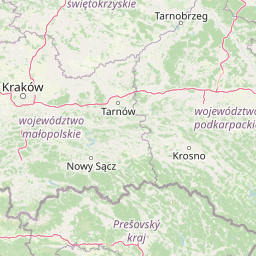
Map view of Rezerwat Przyrody Debrza

Use this park location map to pinpoint Rezerwat Przyrody Debrza in Poland, understand its exact geographic position, and read its mapped placement within the surrounding landscape more clearly.

Pigeon | © OpenStreetMap contributors

Location context for Rezerwat Przyrody Debrza

Lesser Poland Voivodeship

Visualizing old-growth oak forests, woodland canopies, and protected lowland habitats

Rezerwat przyrody Debrza Photos and Landscape Scenery Exploration

Photographic records reveal the closed canopy and veteran oak structures that define the protected landscape of Rezerwat przyrody Debrza. Visual reference materials help observers examine the terrain, mature deciduous flora, and overall environment of southern Poland.

A dense green deciduous forest featuring a small, narrow stream flowing through the trees, with fallen logs on the forest floor.

Park atlas

Compare nearby regional reserves and surrounding forest ecosystems

Explore Other Parks Near Rezerwat przyrody Debrza and Protected Landscapes

Browse protected areas surrounding Rezerwat przyrody Debrza to discover related woodland reserves across the Tarnów Plateau. Continuing the geographic comparison reveals broader patterns of lowland forest conservation in southern Poland.
Nature reserveLesser Poland Voivodeship
About 23 km away#1 closest

South

Ostoja w Paśmie Brzanki: Protected Beech Forest and Foothill Geography in Lesser Poland

A Natura 2000 nature reserve in the Polish Carpathian foothills

Located within the Lesser Poland Voivodeship, Ostoja w Paśmie Brzanki consists of dense, continuous beech woodlands draped over the rounded ridges of the Brzanka Range. This nature reserve serves as an essential ecological refuge, combining rare sycamore communities and riparian strips that support diverse amphibian populations across its forested ravine landscapes.

Area
7.889 km²
Established
2011
Relief
Upland
Water
Minor water
Protected areaPodkarpackie Voivodeship
About 28 km away#2 closest

Southeast

Wisłoka z dopływami Protected Area: River Valley Landscape and Carpathian Foothills Atlas

Freshwater habitat mapping in southern Poland

Wisłoka z dopływami covers a long, ecologically rich segment of the Wisłoka river valley in the Carpathian foothills. This protected area connects diverse riparian, floodplain, and alluvial forests, serving as a critical habitat for six Annex II fish species and sixteen distinct riparian woodland types.

Area
26.51 km²
Established
2011
Relief
Mixed relief
Scope
Terrestrial
A watercolor painting of a panoramic landscape featuring green forests, a rocky outcrop on the right, and soft rolling hills in the background against a white background.
Protected landscapeLesser Poland Voivodeship
About 30 km away#3 closest

South

Ciężkowicko-Rożnowski Park Krajobrazowy: Geological Features and Protected Foothill Terrain

An Essential Protected Landscape in Lesser Poland Voivodeship

Ciężkowicko-Rożnowski Park Krajobrazowy spans the rolling hills of the Pogórze Rożnowskie and Pogórze Ciężkowickie. This protected area showcases a complex geography of sandstone crags, xerothermic grasslands, and old-growth forest remnants. Its map highlights a dense network of geological monuments, mineral water springs, and deep stream valleys that define this distinctive Małopolska landscape.

Area
182.472 km²
Established
1995
Relief
Upland
Climate
Temperate
Protected areaLesser Poland Voivodeship
About 32 km away#4 closest

South

Ostoje Nietoperzy okolic Bukowca: Geography and Protected Area Overview

A forest and cave sanctuary in the Lesser Poland Voivodeship.

This protected area represents an ecologically coherent network of forest habitats and hibernation sites across the Pogórze Rożnowskie. It preserves Carpathian woodland remnants and essential roosting environments, offering a detailed look at micro-scale landscape conservation and geological formations like Diabla Dziura in the Polish countryside.

Area
5.863 km²
Established
2008
Relief
Upland
Climate
Temperate
A horizontal watercolor painting showing a stylized landscape with rolling green hills, a forest of trees, and distant purple-hued mountains under a soft light.
Nature reservePodkarpackie Voivodeship
About 34 km away#5 closest

Northeast

Rezerwat przyrody Bagno Przecławskie: Mapped Peatland and Protected Forest Geography

Protected wetland landscapes in Podkarpackie Voivodeship

Examine the geographic profile of Rezerwat przyrody Bagno Przecławskie, a significant nature reserve in the Sandomierz Basin. This protected area features open peatland, floating bog mats, and forest transition zones, providing a clear window into the ecological history and lowland wetland terrain of this unique Polish region.

Area
0.256 km²
Established
1979
Relief
Lowland
Climate
Temperate
A pale, minimalist watercolor painting featuring soft green hills, grassy foreground, and faint pink mountains in the distance against a white background.
Nature reserveLesser Poland Voivodeship
About 36 km away#6 closest

South

Diable Skały Nature Reserve: Geological Formations in Lesser Poland Voivodeship

Sandstone rock city and protected tectonic cave system

Situated in the Carpathian foothills, Diable Skały Nature Reserve features a striking assembly of coarse-grained Ciężkowice sandstone. The area serves as a vital protected habitat, marked by isolated rock towers and the significant Diabla Dziura cave, offering a concentrated look at the unique geological and ecological character of the Lesser Poland region.

Area
0.161 km²
Established
1953
Relief
Upland
Climate
Temperate
Protected landscapeŚwiętokrzyskie Voivodeship
About 39 km away#7 closest

North

Szaniecki Park Krajobrazowy: Protected Landscape Atlas and Regional Map Context

Exploring xerothermic habitats across the Ponidzie plateau

Szaniecki Park Krajobrazowy anchors conservation efforts across the Płaskowyż Szaniecki and the Garb Pińczowski ridge. This detailed profile tracks the regional geography, calcareous soil influence, and the protection of rare steppe flora within the broader Świętokrzyskie Voivodeship landscape framework.

Area
112.896 km²
Established
1986
Relief
Upland
Climate
Temperate
Nature reserveŚwiętokrzyskie Voivodeship
About 40 km away#8 closest

Northwest

Ostoja Kozubowska Nature Reserve: Geographic Atlas and Protected Habitat Overview

Mapping the ecological landscape of the Świętokrzyskie region

Ostoja Kozubowska stands as a critical protected landscape in Poland, home to seven distinct European habitat types including peri-Pannonic scrub and xerothermic grasslands. Centered on the Chroberskie Forest, this area showcases the intersection of dry, sun-exposed slopes and rich riparian vegetation within the Nida basin. Access this detailed geographic profile to trace the boundaries and habitat distribution defining this essential nature reserve.

Area
41.815 km²
Scope
Terrestrial

Common questions about visiting, size, designation, and location context for Rezerwat Przyrody Debrza

Rezerwat Przyrody Debrza FAQs for park facts, access, geography, and protected area context

Find quick answers about Rezerwat Przyrody Debrza, including protected-area facts, park geography, trail and visitor context, and how the park fits into its surrounding country and regional landscape.
MoriAtlas Explorer

Continue Your Protected Areas Search Across the Global Atlas

Deepen your exploration by continuing the structured search for national parks and protected areas worldwide. Utilize the comprehensive filtering capabilities to compare different conservation landscapes and refine your understanding of global park geography. Discover more about the distribution and characteristics of protected natural areas.

Global natural geography