Why Rezerwat przyrody Dęby w Meszczach stands out
The reserve is best known for its old, naturally originated pedunculate oaks, more than one hundred of which exceed 2.5 meters in trunk circumference and reach canopy heights comparable to mature forest giants. The oaks are between roughly 150 and 260 years old, making the stand one of the most distinctive old oak remnants in the Piotrków region. Equally distinctive is the reserve's mixed forest character: a rare combination of natural oak-dominated deciduous communities (grąd) and mixed coniferous forest (bór mieszany), enriched with rare and protected understory plants such as Lilium martagon, Neottia ovata, Daphne mezereum, Epipactis helleborine, and Lycopodium annotinum.
Rezerwat przyrody Dęby w Meszczach history and protected-area timeline
The reserve's official history began on 11 May 1989, when it was established under a Polish legal notice published in the official journal Monitor Polski. The designation was made under section 5 of that notice, providing the legal and administrative foundation for long-term protection of the site.
The founding purpose was specifically to protect a stand of naturally originated, old pedunculate oaks growing in forest communities combining grąd and mixed coniferous forest types. This objective reflects a broader Polish conservation effort of the late twentieth century aimed at preserving rare old-growth elements within lowland forests that had otherwise been heavily modified by agriculture and forestry.
The reserve was named in honor of Jeremi Kozłowski, a forester who, during the German occupation of Poland in World War II, risked his own life to prevent the felling of the oak stand. His actions preserved the trees that would later become the core reason for the reserve's establishment. This wartime story remains a defining element of the reserve's identity and connects the site's ecological protection to a strongly human, historical narrative of forest defense.
Rezerwat przyrody Dęby w Meszczach landscape and geographic character
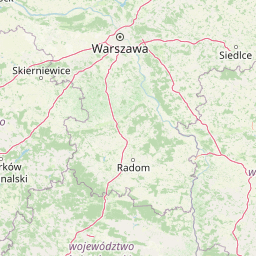
The reserve sits within the Równina Piotrkowska, a lowland mesoregion in central Poland characterized by gently rolling terrain rather than dramatic relief. The landscape is typical of central Polish plains: agricultural fields interspersed with patches of woodland, small villages, and quiet rural roads. Within this setting, the reserve itself represents a notable concentration of mature, mixed forest.
The woodland profile is dominated by an upper canopy of monumental pedunculate oaks, with pines and other species forming a secondary canopy layer. The forest forms a closed, shaded interior with a relatively open understory in many areas. Small clearings, transitional edges, and gentle variations in tree composition give the reserve its internal texture, while the surrounding agricultural plain provides a stark visual contrast with the dense forest interior. There are no major water features, cliffs, or distinctive topographic landforms; instead, the landscape character of the reserve is defined by its old forest structure, its canopy height, and the presence of veteran oaks rising above the surrounding matrix of lowland farmland.
Rezerwat przyrody Dęby w Meszczach ecosystems, habitats, and plant life
Ecologically, the reserve represents an unusually well-preserved mixed woodland community on central Polish lowlands. It combines two distinct forest types within a single small area: the deciduous oak-hornbeam woodland known as grąd, which favors richer soils and supports broadleaf trees, and the bór mieszany, or mixed coniferous forest, which tends toward drier, sandier substrates with pines and other conifers. The coexistence of these communities within roughly 39 hectares is ecologically interesting and gives the reserve a layered character uncommon in intensively used lowland landscapes.
The vegetation reflects this mixed character. The dominant canopy consists of pedunculate oaks, with a supporting layer of pines aged over a century, along with birch, hornbeam, fir, aspen, and spruce. Scattered wild apple, wild pear, and rowan contribute to the diversity of the woody flora. The understory includes common species typical of central Polish deciduous and mixed forests, as well as rarer plants such as Stellaria longifolia, Astrantia major, Calamagrostis villosa, Carex umbrosa, and forest vetch.
Several protected species also occur in the reserve, contributing to its conservation value. Notable examples include Lilium martagon (the Turk's cap lily), Neottia ovata (the common twayblade), Daphne mezereum, Epipactis helleborine, and Lycopodium annotinum. The presence of these species alongside both deciduous and coniferous elements illustrates how the reserve supports a woodland flora shaped by long continuity and minimal recent disturbance.
Rezerwat przyrody Dęby w Meszczach wildlife and species highlights
The source material for Rezerwat przyrody Dęby w Meszczach emphasizes its botanical and forest-structure values rather than detailed vertebrate fauna. As an old mixed woodland surrounded by agricultural lowlands, the reserve offers habitat typical of central Polish forests, including mature trees with cavities, deadwood, and a shaded interior that supports woodland birds, small mammals, and forest-floor invertebrates.
The presence of large, veteran oaks reaching ages of 150 to 260 years produces microhabitats (hollow trunks, rough bark, large limbs) commonly used by hole-nesting birds, bats, and saproxylic insects. The combination of broadleaf and coniferous trees, along with protected understory plants such as orchids and Daphne mezereum, also indicates a habitat capable of supporting specialist woodland species associated with old-growth conditions. Although the source does not provide a specific species list for animals, the forest's ecological structure suggests strong value for forest-dependent wildlife typical of Polish mixed lowland woodlands.
Rezerwat przyrody Dęby w Meszczach conservation status and protection priorities
Rezerwat przyrody Dęby w Meszczach holds clear conservation significance. Its founding designation in 1989 reflects a deliberate legal effort to protect a stand of naturally regenerated old pedunculate oaks, a category of woodland that has become increasingly rare in intensively managed Polish lowlands. The reserve falls under partial protection, a category that allows regulated protective use while maintaining the integrity of the protected features.
The conservation importance of the site rests on several pillars: the old age and natural origin of the oaks, the presence of mixed forest communities (grąd and bór mieszany) within a single small area, the survival of protected plant species typical of long-undisturbed forest, and the historical act of preservation during World War II that kept the stand intact into the protection era. Collectively, these elements make the reserve a compact but meaningful node within the network of forest nature reserves in central Poland, preserving a forest composition that has largely disappeared from surrounding agricultural landscapes.
Rezerwat przyrody Dęby w Meszczach cultural meaning and human context
Beyond its ecological identity, the reserve has a strong human and historical dimension. It is named after Jeremi Kozłowski, a local forester who during the German occupation in World War II refused to allow the oak stand to be cut down, ultimately risking his own life to protect it. This wartime act of preservation is the reason the stand survived in a form large and intact enough to justify formal nature reserve status decades later.
The reserve also reflects the broader rural and forest-management culture of central Poland, where forestry has long been a respected local profession and where individual foresters have often played decisive roles in shaping the landscape that survives today. The naming of a small nature reserve after a forester rather than a geographic feature is itself reflective of this tradition, in which the protection of forest heritage is closely tied to the people who defended it. Within the wider Piotrków region, the reserve is part of local identity, and references to it appear on the municipal pages of Gmina Wolbórz as a point of natural and cultural pride.
Top sights and standout views in Rezerwat przyrody Dęby w Meszczach
The reserve's strongest highlight is its old, naturally regenerated pedunculate oak stand, with more than a hundred oaks exceeding 2.5 meters in trunk circumference and reaching heights of 25 to 35 meters. Few places in central Poland preserve such a substantial grouping of veteran oaks within an otherwise heavily cultivated lowland region.
Equally notable is the reserve's combination of two forest communities in a single small area: the deciduous oak-hornbeam woodland (grąd) and the mixed coniferous forest (bór mieszany). This structural duality, combined with the presence of protected understory plants including Lilium martagon, Neottia ovata, Daphne mezereum, Epipactis helleborine, and Lycopodium annotinum, gives the site an ecological profile well beyond its modest size. Finally, the reserve's wartime origin story, tied to a forester who refused to allow the oaks to be felled, provides the site with a distinctive cultural memory that distinguishes it from purely ecological reserves.
Best time to visit Rezerwat przyrody Dęby w Meszczach
As a lowland forest reserve in central Poland, Dęby w Meszczach can be appreciated throughout much of the year, but the character of the experience shifts with the seasons. Late spring and early summer bring the understory flora into focus, when protected species such as Lilium martagon and orchid species like Neottia ovata and Epipactis helleborine are most visible. The shaded forest interior is also at its most attractive in this period, with fresh deciduous foliage contrasting against the older coniferous component.
In autumn, the oaks and hornbeams give the reserve a distinctive russet and ochre character, while the surrounding agricultural landscape offers a wide rural backdrop. Winter, with leaf fall exposing the monumental structure of the old oaks, provides the clearest sense of the trees' age and scale, as their massive trunks and broad crowns stand out against the bare forest floor. Across all seasons, the site is best approached as a quiet lowland forest walk rather than a destination for dramatic vistas, with the old oaks and mixed forest composition providing its principal interest.