Mori Atlas logo
Nature reserveRezerwat przyrody Jezioro Mścin

A restored faunistic nature reserve supporting rich wetland bird habitats in the Brodnica Lake District.

Rezerwat przyrody Jezioro Mścin: Geographic Overview and Protected Wetland Landscape Boundaries

Rezerwat przyrody Jezioro Mścin is a significant faunistic nature reserve situated within the Brodnica Lake District of the Warmian-Masurian Voivodeship. This protected area centers on an artificially restored shallow wetland that provides critical habitat for breeding and migratory waterbirds. The landscape features a complex mosaic of open water, expansive reed beds, and willow scrub that serves as a vital hydrological retention zone within the post-glacial terrain of northern Poland.

wetland reservefaunistic reservewaterbirdsmigratory birdsmarsh habitatreed beds

Rezerwat przyrody Jezioro Mścin

Nature reserve

Park overview

Structured park overview, official facts, and landscape profile for Jezioro Mścin Nature Reserve

Jezioro Mścin Nature Reserve park facts, protected area profile, and essential visitor context

Review the core facts for Jezioro Mścin Nature Reserve, including designation, size, terrain, visitor scale, habitats, and operating context in one park-focused overview.

About Jezioro Mścin Nature Reserve

Jezioro Mścin Nature Reserve represents an unusual and instructive example of deliberate wetland restoration in the Polish lowlands. The reserve sits in the northern part of the Brodnica Lake District, a post-glacial landscape shaped by small lakes, moraines, and forest, where many former waterbodies were consciously drained during the late 19th and early 20th centuries to expand agricultural land. The original Lake Mścin was among these lost lakes, drained and converted into meadows laced with drainage ditches.

The transformation that led to the reserve began in autumn 2010, when water from the nearby Czerwonka stream was diverted back into the old lake basin. Over the following years the site evolved into a roughly 50-hectare shallow reservoir with a varied shoreline, extensive emergent vegetation, and small patches of willow and alder scrub. Its restoration was a deliberate ecological intervention, designed to improve water retention in the surrounding forested landscape, enhance the local microclimate, and create habitat for waterbirds.

The ecological response was swift. Within a few years the wetland had become a major site for breeding and migratory waterbirds, attracting species typical of much larger and older lake and marsh systems. The formal recognition of this value came in 2024, when the site was designated a faunistic nature reserve focused specifically on birds. The reserve now stands at the intersection of forest, wetland, and meadow habitats, and is closely linked to a small constellation of other protected sites in the region, including Żurawie Bagno and the island reserve on Lake Partęczyny Wielkie.

Quick facts and research context for Jezioro Mścin Nature Reserve

Jezioro Mścin is a faunistic nature reserve of about 49.88 hectares, supplemented by a buffer zone of 26.46 hectares, situated in the administrative district of Kurzętnik, Nowe Miasto County, Warmian-Masurian Voivodeship. It lies in the Brodnica Lake District mesoregion and falls within the Brodnica Forest District (Nadleśnictwo Brodnica).

The reserve was officially designated on 5 April 2024 by order of the Regional Director of Environmental Protection in Olsztyn, following a request from the Brodnica Forest District. It covers most of the earlier ecological use area known as Tereszyńskie Łąki and protects a shallow, human-made wetland created after water was reintroduced to the dry bed of the former Lake Mścin.

Protection and recognition

Terrestrial conservation framing and documented protected area parameters

Rezerwat przyrody Jezioro Mścin Protection Status and Designated Area Record

Rezerwat przyrody Jezioro Mścin maintains documented terrestrial protection status within the regional protected area inventory. Structured conservation parameters capture official designation history and management scope without external attribution.

Protection details

Protection scope
Terrestrial
Transboundary protection
No
Buffer area
0.27 km²
Park context

Deeper park guide and search-rich context for Jezioro Mścin Nature Reserve

Jezioro Mścin Nature Reserve history, landscape, wildlife, and travel context

Explore Jezioro Mścin Nature Reserve through its history, landscape character, ecosystems, wildlife, conservation priorities, cultural context, and seasonal travel timing in a structured park guide built for atlas discovery and search intent.

Why Jezioro Mścin Nature Reserve stands out

Jezioro Mścin is best known for being an unusually productive wetland bird reserve, established around an artificially restored lake. Within just a few years of reflooding, the shallow reservoir attracted a remarkable diversity of waterbirds, including 149 recorded bird species, 30 of which are listed in Annex I of the EU Birds Directive, and 38 that appear on the Polish Red List of Birds. The site is especially valued for its breeding population of secretive marsh birds such as crakes, rails, and grebes, and as a stopover for migratory waders, ducks, terns, herons, and swans. The reserve also functions as a small retention reservoir, contributing to local hydrology, microclimate, and the ecological character of the surrounding forests.

Jezioro Mścin Nature Reserve history and protected-area timeline

The site now known as Jezioro Mścin Nature Reserve has a layered history that reflects broader changes in the Polish landscape. Its natural starting point was a glacial lake in the Brodnica Lake District that, like many small waterbodies in this region, was drained at the turn of the 19th and 20th centuries. The drained basin was turned into farmland, with the former lakebed crossed by an artificial network of drainage ditches that kept the area usable for hay meadows and pasture.

For more than a century the site existed as ordinary agricultural land, until the ecological logic of regional land use began to shift. In autumn 2010 the old lake basin was deliberately reflooded using water diverted from the Czerwonka stream, an operation that transformed the former meadows into a shallow wetland of about 50 hectares. The move was driven by the Brodnica Forest District and motivated by small water retention goals, microclimate improvements for surrounding forests, and the desire to recreate habitat for waterbirds.

Within just a few years, the new wetland had developed enough ecological value to justify formal protection. On 5 April 2024, by order of the Regional Director of Environmental Protection in Olsztyn, issued on 20 March 2024, the area was designated as the faunistic nature reserve Jezioro Mścin, formalizing the conservation of the restored lake and its rapidly developed bird community. As of April 2024, the reserve had not yet been assigned a formal protection plan or set of conservation tasks, reflecting its very recent designation.

Jezioro Mścin Nature Reserve landscape and geographic character

The landscape of Jezioro Mścin is defined by its shallow, open water body set within a gently undulating post-glacial terrain typical of the Brodnica Lake District. The reserve surrounds what is essentially a young, restored wetland rather than a deep, mature lake. Depths are shallow across most of the basin, and a large portion of the basin seasonally transitions between open water, saturated soil, and emergent vegetation. This variability is a defining feature of the site and a primary reason it functions as such effective bird habitat.

The shoreline of the reservoir is notably irregular and richly structured. Reed beds and bulrush stands dominate the shallow margins, while small patches of willow and alder scrub punctuate the transition between water and land. Around the wetland lies a mosaic of forest, meadow, and former agricultural land managed by the Brodnica Forest District. The reserve sits within forest district compartments historically known as the Tereszewo cadastral area and the Ostrówki forest unit.

On a regional scale, the reserve is closely tied to neighboring protected landscapes. A few hundred meters to the west lie the Żurawie Bagno reserve and the Wyspa na Jeziorze Partęczyny Wielkie reserve, and the border between the Warmian-Masurian and Kuyavian-Pomeranian voivodeships passes through this same area. Together, these features create a tightly clustered network of wetland and lakeside protected sites embedded in a predominantly forested and agricultural countryside.

Jezioro Mścin Nature Reserve ecosystems, habitats, and plant life

Ecologically, Jezioro Mścin is best understood as a young, dynamic wetland ecosystem whose character is constantly being shaped by the interaction between reflooded land, emergent vegetation, and surrounding forests. The core habitat is a shallow freshwater reservoir, but the more ecologically interesting zones are its margins, where extensive reed and bulrush communities, sedge stands, and scattered willow and alder thickets create a mosaic of cover types. This structural diversity is what allows the site to support such a varied bird community, including species that specialize in open water, dense emergent vegetation, scrub edges, and saturated meadows.

Because the wetland was created through deliberate reflooding rather than through natural evolution over centuries, the vegetation is still developing. Open water, developing reedbeds, wet meadows, and damp forest edges all coexist in a transitional state. The hydrological regime is also relatively young, relying on inflow from the Czerwonka stream and managed as a small retention basin, so changes in water levels can have visible effects on habitat structure across the year.

Surrounding terrestrial habitats contribute to the reserve's ecological context. Forest patches managed within the Brodnica Forest District provide nesting and roosting sites for woodland birds, while damp meadows around the basin support additional invertebrates and small fauna that in turn feed the wetland food web. The combination of aquatic, marsh, scrub, meadow, and forest habitats within a compact area gives the reserve a disproportionately rich ecological profile for its size.

Jezioro Mścin Nature Reserve wildlife and species highlights

Jezioro Mścin's wildlife significance is overwhelmingly focused on birds, which is consistent with its designation as a faunistic reserve specifically for the protection of birdlife. Surveys of the area have recorded 149 bird species, including 30 listed in Annex I of the European Union Birds Directive and 38 species appearing on the Polish Red List of Birds. The site's value lies not just in species counts but in the habitat roles it supports, from breeding to migration to wintering and feeding.

The reserve is a major stopover for migratory waterbirds. Waders such as lapwings, wood sandpipers, ruff, and spotted redshanks pass through in significant numbers, accompanied by whooper swans and both white and grey herons. Ducks are represented by 13 species with flocks often exceeding 200 individuals, and four species of terns regularly use the wetland. The reservoir also supplies feeding habitat for birds of prey, including white-tailed eagles, black kites, and red kites, which hunt over the shallow water.

The breeding bird community is equally important. The reserve supports nesting populations of water rail, corncrake, spotted crake, little crake, moorhen, coot, red-necked grebe, great crested grebe, black-necked grebe, little grebe, greylag goose, common crane, and marsh harrier, among others. The presence of multiple secretive marsh-nesting species together with large concentrations of more visible waterbirds gives the site an unusually high bird density and species richness for a reserve of its size.

Jezioro Mścin Nature Reserve conservation status and protection priorities

The conservation importance of Jezioro Mścin lies in how successfully a deliberately restored wetland has evolved into a high-value habitat for rare and protected birds in a very short period. The reserve was created explicitly to preserve a concentration of rare and protected breeding and migratory waterbirds and their habitat, a large shallow reservoir with an irregular shoreline and well-developed reed, bulrush, and scrub communities. This framing places the site within the broader European framework of wetland protection, particularly under the Birds Directive, where Annex I species carry specific protection obligations.

At a national and regional level, the reserve strengthens a network of wetland sites along the Warmian-Masurian and Kuyavian-Pomeranian border, building on the nearby Żurawie Bagno reserve and the Wyspa na Jeziorze Partęczyny Wielkie reserve. It also complements small retention objectives aimed at improving hydrology and microclimate for surrounding forests, linking wetland conservation to broader landscape management goals.

As a young reserve, Jezioro Mścin is still in an early phase of formal conservation management. As of April 2024, no detailed protection plan or set of conservation tasks had been adopted, which means that the day-to-day stewardship of the site is still being shaped. This transitional status makes the reserve an interesting case study in how quickly ecological value can emerge on restored land and how formal protection can follow ecological reality rather than precede it.

Jezioro Mścin Nature Reserve cultural meaning and human context

Jezioro Mścin does not have a strongly documented cultural or historical narrative of its own beyond its origin as a drained lake that was later restored. The wider cultural context of the reserve is shaped by the long-standing land-use traditions of the region, in which small lakes in the Brodnica Lake District were progressively drained over the late 19th and 20th centuries to expand agriculture, and by the more recent shift in regional land management toward small retention, habitat restoration, and ecological forestry under the Brodnica Forest District.

The reserve is today embedded in a working forest landscape managed by the Brodnica Forest District, with the surrounding area combining active forestry, meadows, and protected wetlands. This blend of productive forestry and wetland conservation is characteristic of contemporary land management in this part of northern Poland.

Top sights and standout views in Jezioro Mścin Nature Reserve

Jezioro Mścin stands out for the speed with which a restored wetland has become ecologically significant, for its exceptional diversity of breeding and migratory waterbirds within a compact area, and for its position within a small network of nearby wetland reserves in the Brodnica Lake District. The combination of open water, reedbeds, scrub, meadows, and adjacent forest gives the reserve an unusually rich habitat structure for a young site.

Best time to visit Jezioro Mścin Nature Reserve

The character of Jezioro Mścin changes meaningfully across the year in ways that mirror broader wetland seasonality in northern Poland. Spring is the most biologically intense period, when water levels are rising, reedbeds are greening, and many species return to breed, making it the prime season for observing nesting marsh birds, grebes, and early-arriving waders.

Late summer and early autumn bring large concentrations of ducks, terns, and migratory waders that use the shallow reservoir as a feeding and resting site. Late autumn can bring cold-weather visitors such as whooper swans and other waterfowl. Winter conditions at the site depend strongly on how shallow the water remains and on ice cover in the basin, and can make the wetland less accessible. For visitors primarily interested in birds and wetland landscapes, the spring and autumn transition periods offer the richest character of experience.

Monthly climate preview

Long-term temperature ranges and monthly precipitation patterns at a representative coordinate

Rezerwat przyrody Jezioro Mścin Climate Normals and Annual Weather by Month

Representative coordinate measurements reveal the long-term annual temperature cycle and monthly precipitation rhythm recorded for Rezerwat przyrody Jezioro Mścin. Examining the full twelve-month profile provides complete historical averages for evaluating regional climate characteristics.
Annual mean8 °C
-4 °C19 °C
Jan-4°
Feb-2°
Mar
Apr
May13°
Jun17°
Jul19°
Aug19°
Sep14°
Oct
Nov
Dec-2°
Warmest month
July

19.1 °C

Coolest month
January

-3.6 °C

Wettest month
July

2.6 mm/day

Driest month
April

1.4 mm/day

Park location guide

Geography guide, regional context, and park location map for Jezioro Mścin Nature Reserve

Jezioro Mścin Nature Reserve park geography, regions, and map view in Poland

Understand where Jezioro Mścin Nature Reserve sits in Poland through a broader geographic reading of the surrounding landscape, nearby location context, and its mapped position within the national park landscape.

How Jezioro Mścin Nature Reserve fits into Poland

Poland, officially the Republic of Poland, is a Central European country spanning from the Baltic Sea in the north to the Carpathian Mountains in the south. It borders Germany, Czech Republic, Slovakia, Ukraine, Belarus, Lithuania, and Kaliningrad Oblast. The country has a temperate climate, diverse landscapes, and is known for its rich history, cultural heritage, and strong economic position within the EU.

Wider geography shaping Jezioro Mścin Nature Reserve in Poland

Poland occupies 312,696 km2 in Central Europe, extending from the Baltic Sea coast in the north to the Sudetes and Carpathian Mountains in the south. It borders Germany to the west, Czech Republic and Slovakia to the south, Ukraine and Belarus to the east, and Lithuania and Kaliningrad Oblast to the northeast. The landscape includes lowland plains, uplands, and mountain ranges.

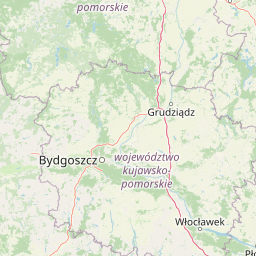
Map view of Jezioro Mścin Nature Reserve

Use this park location map to pinpoint Jezioro Mścin Nature Reserve in Poland, understand its exact geographic position, and read its mapped placement within the surrounding landscape more clearly.

Pigeon | © OpenStreetMap contributors

Location context for Jezioro Mścin Nature Reserve

Warmian-Masurian Voivodeship
Park atlas

Compare adjacent protected landscapes and regional wetland reserves across the Brodnica Lake District.

Exploring Parks Near Rezerwat Przyrody Jezioro Mścin and Surrounding Wetlands

Browse neighboring protected areas and regional wetland reserves located close to Rezerwat przyrody Jezioro Mścin. Geographic comparison reveals connected post glacial habitats and broader conservation patterns across the surrounding voivodeships.
A wide watercolor illustration showing a calm lake with a forested shoreline and distant hills under a pale sky, with reeds in the foreground.
Protected landscapeKuyavian-Pomeranian Voivodeship
About 0.6 km away#1 closest

West

Brodnicki Park Krajobrazowy: Protected Landscape and Post-Glacial Terrain in Northern Poland

Mapped lake districts and glacial tunnel valleys

Brodnicki Park Krajobrazowy preserves a textbook young-glacial landscape in the Kuyavian-Pomeranian Voivodeship. The terrain features rolling moraine hills and dense chains of lakes linked by slow streams, creating a significant ecological corridor. This protected area offers deep insights into the region's complex hydrological and forest history, spanning across classic lowland meadows, peat bogs, and mature oak-pine woodlands.

Area
166.85 km²
Established
1985
Relief
Lowland
Climate
Temperate
Nature reserveKuyavian-Pomeranian Voivodeship
About 8.8 km away#2 closest

West

Rezerwat przyrody Mieliwo Nature Reserve: Protected Forest and Glacial Valley Geography

A scientific forest study site within the Brodnica Lake District landscape

This protected forest reserve in the Kuyavian-Pomeranian Voivodeship is defined by its position on a high glacial slope above Lake Mieliwo. It remains a key reference point for studying beech forest stands at the northern edge of their range, contributing to the regional conservation of the Brodnica Lake District and its post-glacial valley network.

Area
0.117 km²
Established
1958
Relief
Upland
Scope
Terrestrial
Protected landscapeWarmian-Masurian Voivodeship
About 30 km away#3 closest

East

Welski Park Krajobrazowy: Regional Protected Landscape in the Warmian-Masurian Voivodeship

Mapping glacial landforms and river valley ecosystems

The landscape of Welski Park Krajobrazowy is a study in Pleistocene glacial history, defined by the interplay between sandy outwash plains and morainic uplands. This protected area in the Warmian-Masurian Voivodeship shelters a series of thirteen significant post-glacial lakes and the Wel river valley, creating a dense network of wetlands, forest habitats, and geologic features perfect for atlas-based geographic study.

Area
200.233 km²
Established
1995
Relief
Lowland
Access
Easy access
Protected landscapeWarmian-Masurian Voivodeship
About 30 km away#4 closest

Northeast

Park Krajobrazowy Wzgórz Dylewskich: Protected Moraine Terrain and Regional Geography

A study of glacial landforms and hydrological patterns in the Warmian-Masurian Voivodeship

Explore the unique geomorphology of Park Krajobrazowy Wzgórz Dylewskich, where Pleistocene glaciation has carved steep slopes, deep valleys, and expansive hill summits. This protected landscape serves as a central hub for regional biodiversity and acts as a primary source for radiating water networks in northern Poland, offering a high-relief counterpoint to the surrounding lakeland.

Area
71.7 km²
Established
1994
Relief
Mountain
Scope
Terrestrial
Nature reserveWarmian-Masurian Voivodeship
About 32 km away#5 closest

East

Jezioro Neliwa Nature Reserve: Mapping Protected Landscapes and Glacial Lake Geography

An important eutrophic water reserve in the Warmian-Masurian Voivodeship.

Located within the Welski Landscape Park, this nature reserve protects a vanishing eutrophic lake ecosystem and its unique slope oak-lime forest. The area provides essential habitat for breeding bird populations and rare aquatic plant species, serving as a vital point of study for lowland glacial geography in northeastern Poland.

Area
0.165 km²
Established
2006
Water
Water-dominated
Nature reserveKuyavian-Pomeranian Voivodeship
About 33 km away#6 closest

West

Rezerwat przyrody Dolina Osy: Geographic Atlas of an Osa River Valley Protected Area

Riverine landscapes in the Kuyavian-Pomeranian Voivodeship

This nature reserve serves as a prime example of post-glacial river valley preservation in the Chełmińskie Lakeland. The protected area features a diverse mosaic of lowland valley terrain, including river channels, wet bottomlands, and woodland corridors, illustrating the complex geography of north-central Poland.

Area
6.679 km²
Established
1994
Relief
Upland
Climate
Temperate
A horizontal watercolor illustration depicting a soft, pale green and reddish wetland environment with scattered trees and marsh vegetation.
Nature reserveKuyavian-Pomeranian Voivodeship
About 33 km away#7 closest

Southeast

Mszar Płociczno Nature Reserve: Protected Peatland Geography and Landscape Boundaries in Poland

Regional protected area analysis for Kuyavian-Pomeranian landscape maps.

The Mszar Płociczno nature reserve acts as a critical refuge for transitional peatland, harboring a mosaic of Sphagnum mires, swamp forests, and coniferous woodland. This area functions as a key component of the Brodnica peatland ecological network, demonstrating long-term conservation success within the flat terrain of the Równina Urszulewska mesoregion.

Area
1.824 km²
Established
1997
Relief
Lowland
Scope
Terrestrial
Nature reserveWarmian-Masurian Voivodeship
About 39 km away#8 closest

Northeast

Dylewo Nature Reserve: Protected Beech Woodland in the Warmian-Masurian Voivodeship

A study of glacial topography and rare fern habitats

Located within the Wzgórza Dylewskie landscape park, Dylewo Nature Reserve protects a stable, closed-canopy beech woodland on elevated morainic terrain. Gain deeper insights into the forest composition and the ecological importance of this site as a sheltered habitat for rare flora within the larger northern Polish lakeland region.

Area
0.101 km²
Established
1970
Relief
Mountain
Scope
Terrestrial

Common questions about visiting, size, designation, and location context for Jezioro Mścin Nature Reserve

Jezioro Mścin Nature Reserve FAQs for park facts, access, geography, and protected area context

Find quick answers about Jezioro Mścin Nature Reserve, including protected-area facts, park geography, trail and visitor context, and how the park fits into its surrounding country and regional landscape.
MoriAtlas Explorer

Continue Your Protected Areas Search Across the Global Atlas

Deepen your exploration by continuing the structured search for national parks and protected areas worldwide. Utilize the comprehensive filtering capabilities to compare different conservation landscapes and refine your understanding of global park geography. Discover more about the distribution and characteristics of protected natural areas.

Global natural geography