Why Jezioro Smołowe Nature Reserve stands out
Jezioro Smołowe is best known as a protected lobelia lake, a category of lowland Polish lakes characterised by very clear, acidic, nutrient-poor water that supports a special submerged flora. The species most associated with this ecological type, including lake lobelia (Lobelia dortmanna) and related aquatic plants, are the central reason the lake was given reserve status. The reserve also stands out as part of a trio of protected lobelia-style lakes; Kamień, Orle, and Smołowe, that together guard the spring area of the Brda river. This concentration of ecologically similar softwater lakes in one headwater catchment is unusually well represented in the Polish nature reserve system and gives Smołowe its broader identity as a reference site for this rare lake type.
Jezioro Smołowe Nature Reserve history and protected-area timeline
The reserve was created in 1976 through an order of the Minister of Forestry and the Wood Industry, issued on 10 November of that year. Its founding purpose was the preservation of a lobelia lake together with its characteristic aquatic vegetation, a clear early recognition that the lake's value lay primarily in its unusual water quality and submerged plant communities rather than in any terrestrial features.
In 2015, the Regional Director for Environmental Protection in Gdańsk revised the reserve's official boundaries, adjusting its core area to 37.08 hectares and, for the first time, defining a 46.62-hectare buffer zone around the lake. The conservation objective was also expanded at that time to include not only the lobelia lake and its characteristic vegetation but also the populations of valuable plant and animal species living in and around it. In 2016, a formal protection plan was put in place, introducing active conservation management for the area.
Today the reserve is supervised by the Regional Director for Environmental Protection in Gdańsk. Its upland forest portions are managed by the Dretyń Forest District, while the water body itself sits on state land under the management of the Regional Water Management Authority in Gdańsk, reflecting the dual land and water ownership typical of protected lake reserves in Poland.
Jezioro Smołowe Nature Reserve landscape and geographic character
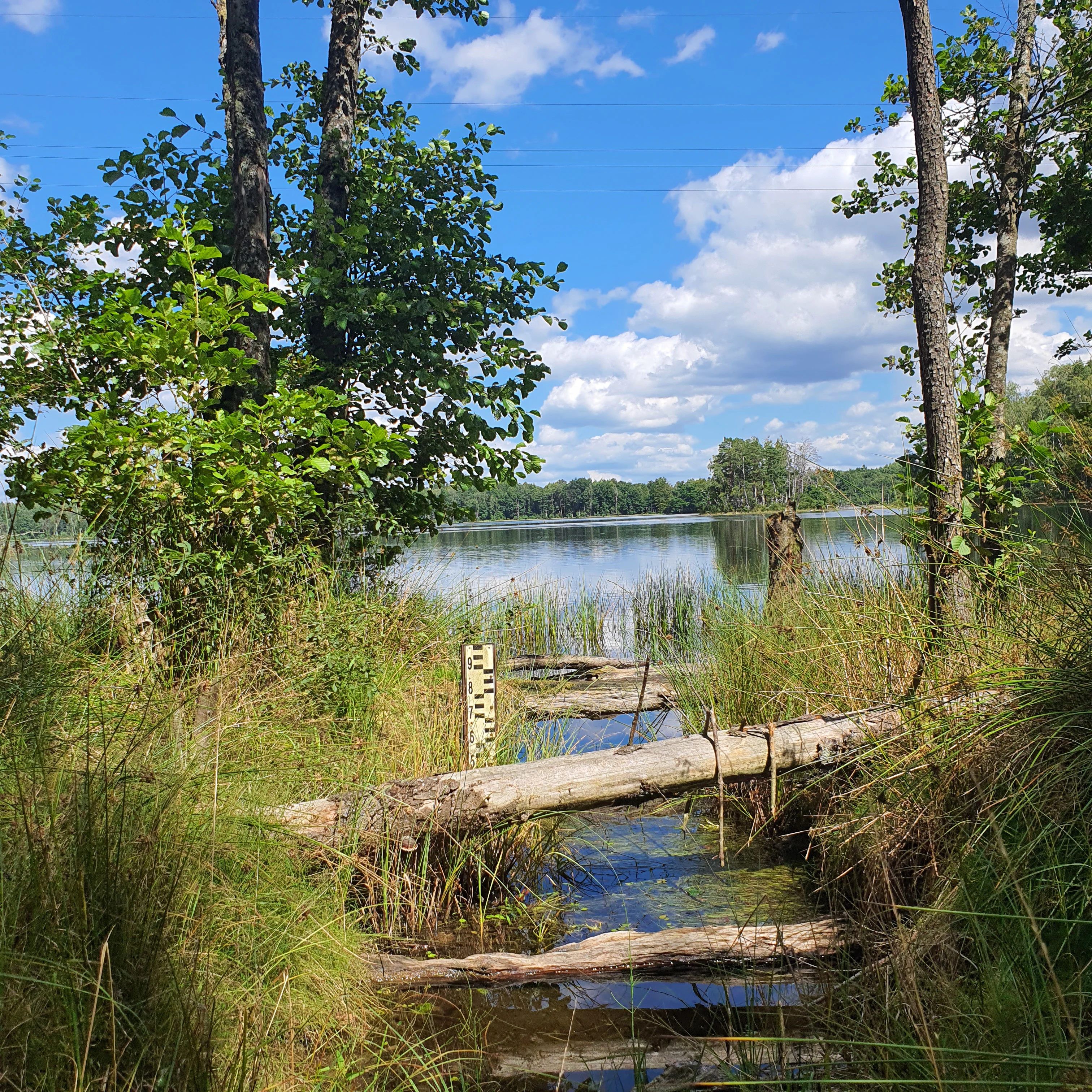
The reserve sits within the Bytów Lakeland, a mesoregion marked by gently rolling post-glacial terrain and numerous small lakes set among forests and farmlands. The lake itself is a relatively small, ovoid flow-through body covering roughly 37 hectares, set at an elevation of about 181 metres above sea level. Maximum depths reach just over 12 metres, giving it a clearly stratified but still relatively shallow profile shaped by glacial origin.
The shoreline is bordered by a mix of forest and agricultural buffer land, with the formal 46.62-hectare buffer zone enveloping the lake in a protective ring of forest stands and private farmland. Although the reserve is small, its catchment is heavily influenced by surrounding land use, and the buffer is intended to shield the lake from nutrient runoff, shoreline modification, and other pressures that would degrade its clear-water character.
Within the wider landscape, Smołowe is one of a string of small lakes that mark the Brda's headwater region. The river Brda flows out of the lake, linking it hydrologically and ecologically to the downstream catchments and giving the reserve a role that extends well beyond its own shoreline.
Jezioro Smołowe Nature Reserve ecosystems, habitats, and plant life
Ecologically, Smołowe belongs to the rare class of Polish lobelia lakes, defined by clear, slightly acidic, nutrient-poor water. This unusual chemistry is what allows the lake to host a specialised flora that cannot survive in richer, more eutrophic waters. The lake's water quality is therefore not just a background detail but the very feature the reserve was established to protect.
Around the lake, the vegetation pattern is typical of the transition between water and forest in this part of the Pomeranian Lakeland. The submerged and shoreline plant communities are ecologically the most distinctive layer, while surrounding forest stands, mostly within the Dretyń Forest District area, provide a near-natural terrestrial buffer. Agricultural land within the buffer zone introduces a managed edge to the otherwise natural setting.
On a wider scale, the lake is ecologically embedded in the Miasteckie Jeziora Lobeliowe Natura 2000 habitat site, which groups it with neighbouring lobelia-type lakes Kamień and Orle. Together they form a network of similar softwater habitats in the Brda headwaters, each reinforcing the conservation value of the others.
Jezioro Smołowe Nature Reserve wildlife and species highlights
The lake supports a characteristic aquatic flora associated with lowland softwater lake habitats. Among the documented submerged and shoreline plant species are lake lobelia (Lobelia dortmanna), the rare shoreweed-like poryblin jeziorny (Isoëtes lacustris), brzeżyca jednokwiatowa, and elisma wodna, together with other plants adapted to clear, nutrient-poor conditions.
While the reserve's formal focus is on its aquatic vegetation, the lake and its shoreline habitats also provide living conditions for valued animal populations associated with this kind of clean-water environment. The 2015 revision of the reserve's protection objective explicitly extended coverage to notable plant and animal species, signalling that wildlife and flora are considered together as parts of one integrated lake ecosystem rather than separate conservation targets.
Jezioro Smołowe Nature Reserve conservation status and protection priorities
Smołowe is, at its core, a water conservation reserve. Its existence is justified by the need to preserve a relatively undisturbed lobelia-type lake in a region where such lakes have become increasingly threatened by nutrient enrichment, shoreline development, and land-use change. By formally protecting the water body itself rather than just the surrounding forest, the reserve recognises that the lake's conservation value depends on maintaining specific water chemistry and submerged vegetation.
The reserve sits at the intersection of several overlapping protection frameworks. It is part of the Miasteckie Jeziora Lobeliowe Natura 2000 habitat site, giving it recognition under the European Union's nature protection network. It lies within a Protected Landscape Area tied to the source regions of the Brda and Wieprza rivers, embedding it in a larger landscape conservation strategy. The introduction of a buffer zone in 2015 and a formal protection plan in 2016 shifted the management approach toward structured active conservation, including control of influences from the surrounding catchment.
The dual ownership of the area (forest around the lake managed by the Dretyń Forest District, water body under the Regional Water Management Authority in Gdańsk) also reflects an integrated approach in which both terrestrial and aquatic management decisions matter for the lake's long-term ecological condition.
Jezioro Smołowe Nature Reserve cultural meaning and human context
The lake and its reserve are part of the broader regional identity of the Miastko area, where the Brda river begins its course. The Kashubian rendering of the lake's name, Jezoro Smòłowé, reflects the region's Kashubian cultural heritage, the only recognised regional language in Poland. While the reserve itself is a nature conservation designation, the local-language name gives the lake a recognised place in the cultural landscape of Kashubia.
The broader Brda-Wieprza headwaters region east of Miastko, in which the reserve sits, is itself recognised as a Protected Landscape Area, an indication that the surrounding countryside is valued not only for biodiversity but also as a characteristic rural and natural landscape. Small protected lakes like Smołowe are therefore part of a regional identity in which water, forest, and traditional land use together define the local sense of place.
Top sights and standout views in Jezioro Smołowe Nature Reserve
A small but ecologically precise reserve protecting one of Poland's remaining lobelia lakes, a category defined by unusually clear, low-nutrient water.
Sits within the Brda headwater complex and is grouped with reserves on neighbouring lakes Kamień and Orle, forming a small network of similar softwater lake habitats.
Recognised at multiple scales: as a national nature reserve, as part of a Natura 2000 habitat site, and within a Protected Landscape Area focused on river source regions.
Uses active conservation management together with a defined buffer zone to protect both the lake itself and the surrounding catchment from nutrient enrichment and other pressures.
Best time to visit Jezioro Smołowe Nature Reserve
The best period to experience the lake and its surroundings is during the warmer months, when vegetation in and around the water is most visible and the forest buffer is fully leafed out. Spring and early summer highlight the active growth phase of the aquatic flora that defines the reserve, while late summer and early autumn bring stable water levels and calmer conditions for observing the lake's surface and shoreline character.
Because the reserve is focused on water quality and aquatic habitats, visits are most rewarding when the lake's clear, reflective character is most apparent. Cooler, overcast days can also be suitable, as they tend to emphasise the transparency of the water rather than surface glare. Visits should always respect the reserve's active protection rules, which are designed to keep disturbance around the lake to a minimum.