Mori Atlas logo
Nearby park discovery

Explore the geographic distribution of protected natural areas in the Pomeranian Voivodeship

Protected Landscapes and Nature Reserves Near Rezerwat przyrody Jezioro Smołowe in Poland

Analyze the spatial relationships and regional map context of protected areas surrounding Rezerwat przyrody Jezioro Smołowe. This geographic overview highlights neighboring nature reserves and protected lake ecosystems within the Pomeranian Voivodeship, providing insights into the distribution of softwater lake habitats and the Brda headwaters region.

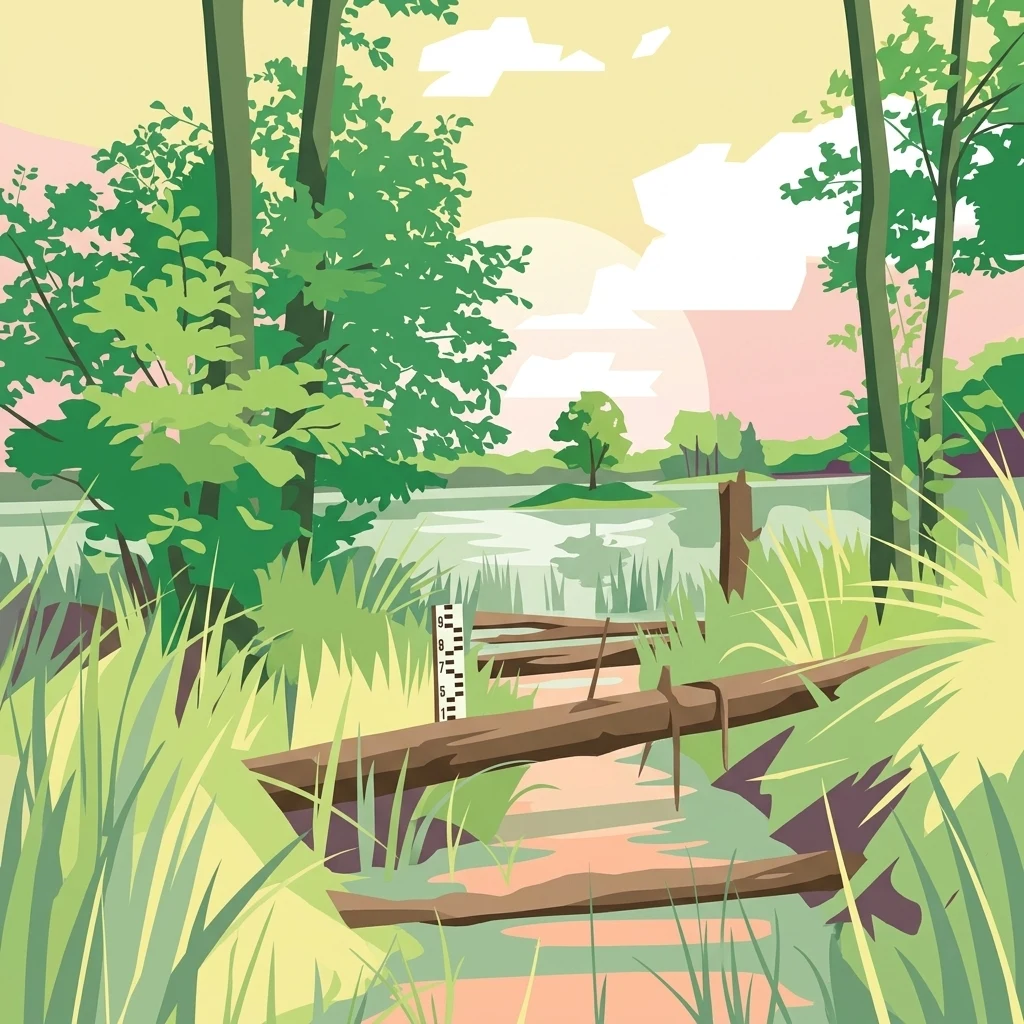
An illustration of a lake landscape with trees, grasses, and a small island, featuring a water level gauge in the foreground.

A protected Polish lobelia lake at the headwaters of the Brda river.

Jezioro Smołowe Nature Reserve

Jezioro Smołowe Nature Reserve is a small water-focused nature reserve in northern Poland, located in the gmina Miastko within Pomeranian Voivodeship. The reserve protects a single, ecologically distinctive lake, known regionally as Jezioro Smołowe, which is one of the classic lobelia lakes of the Pomeranian Lakeland. Its defining value lies in the very clear, nutrient-poor water that supports a characteristic community of rare aquatic plants typically found only in lowland lakes of exceptionally high purity. The reserve sits within the broader headwater region of the Brda river, which actually flows out of the lake itself. Together with nearby protected lakes Kamień and Orle, it forms part of a small cluster of water reserves that anchor the Brda's source area. The surrounding mosaic of forest and agricultural land, partly included as a buffer zone, helps shield the lake from nutrient enrichment and other human pressures. Beyond its local importance, the lake is part of the Natura 2000 site Miasteckie Jeziora Lobeliowe and the Protected Landscape Area of the Brda and Wieprza headwaters east of Miastko, giving it recognition well beyond its modest size. Its combination of a protected hydrological system, rare aquatic flora, and integration into wider ecological networks makes it a meaningful reference point for conservation of softwater lake ecosystems in Poland.

Location
Poland
Park type
Nature reserve
Established
1976
Area
0.4 km²
Explore Rezerwat przyrody Jezioro Smołowe
Regional park map

See the ranked park cluster in its geographic setting

Nearby parks around Jezioro Smołowe Nature Reserve

This regional map shows the same 20 nearby parks ranked below around Jezioro Smołowe Nature Reserve. Select a ranked marker to highlight that park’s boundary where boundary data is available.
Reference park: Jezioro Smołowe Nature ReserveRanked nearby park20 nearby parks shown
20 nearby parks

Geographic separation, direction, and recorded environmental context for surrounding conservation lands

Ranked Protected Areas Near Rezerwat Przyrody Jezioro Smołowe in Regional Park Geography

Explore ranked protected areas near Rezerwat przyrody Jezioro Smołowe based on direct geographic proximity and spatial separation measurements. Structured comparison signals across country context and recorded characteristics reveal broader regional landscape patterns without implying shared local habitats or travel routes.
A soft watercolor painting of gentle, rolling hills and scattered trees under a light sky.
Protected areaPomeranian Voivodeship
About 9.6 km away#1 closest

Northeast
Ostoja Masłowiczki: Protected Landscape and Post-Glacial Terrain in Pomeranian Voivodeship

Exploring the glacial basins, bogs, and forests of northern Poland.

Ostoja Masłowiczki is a protected area in the Bytów Lake District defined by its glacial heritage. The site provides a unique look at how moraine landscapes support a varied mosaic of habitats, ranging from acidic dystrophic lakes and active raised bogs to lush oak-hornbeam and beech forests within the Pomeranian region.

Area
16.8 km²
Established
2011
Relief
Lowland
Climate
Temperate
Nature reserveZachodniopomorskie
About 25 km away#2 closest

West

Rezerwat przyrody Dolina Pustynki: Geography and Protected River Valley Landscapes in Zachodniopomorskie

Mapped riverine corridors and ancient deciduous forest ecosystems

Explore the detailed ecological landscape of Rezerwat przyrody Dolina Pustynki in the West Pomeranian region. This nature reserve serves as an essential example of submontane river habitats and well-preserved oak-hornbeam forests within the Polanów High Plain, maintaining vital connections between regional water catchments and protected woodlands.

Area
0.392 km²
Established
2024
Relief
Upland
Climate
Temperate
Nature reserveWest Pomeranian Voivodeship
About 27 km away#3 closest

West

Jezioro Szare Nature Reserve: Regional Geography and Protected Freshwater Landscape Analysis

Analyzing the forest-fringed lobelia lake basin in West Pomeranian Voivodeship

Situated in the West Pomeranian Voivodeship, Jezioro Szare Nature Reserve protects a distinct lobelia-type lake ecosystem. The reserve is characterized by its steep, forested basin rim and clear, low-nutrient water, functioning as a significant reference site for rare freshwater habitats within the Pomeranian lake district landscape.

Area
0.087 km²
Established
1974
Relief
Upland
Scope
Terrestrial
A soft watercolor illustration depicting a flat wetland landscape with low hills in the background and clusters of green trees and shrubs in the foreground.
Nature reservePomeranian Voivodeship
About 28 km away#4 closest

East

Mechowisko Radość Nature Reserve: Atlas of Protected Alkaline Fen Landscapes in Pomeranian Voivodeship

A rare calcareous mire ecosystem within the Bory Tucholskie post-glacial terrain

Mechowisko Radość Nature Reserve protects a specialized alkaline peatland ecosystem that developed in a formerly mesotrophic lakeside bay. This site highlights the complex hydrological and ecological processes of the Bory Tucholskie region, where flat, post-glacial landscapes sustain rare orchid and bryophyte assemblages through dedicated active conservation management.

Area
0.096 km²
Established
2013
Relief
Lowland
Scope
Terrestrial
Protected landscapePomeranian Voivodeship
About 29 km away#5 closest

Southeast

Zaborski Park Krajobrazowy: Geographic Profile of a Polish Protected Landscape Area

Tuchola Forest region, Pomeranian Voivodeship

Investigate the unique terrain of Zaborski Park Krajobrazowy, a protected landscape defined by its dense network of glacial lakes and sandy outwash plains. This territory provides a comprehensive view of northern Polish lowland geography, highlighting the ecological significance of its river valleys and relic forest habitats within the broader Tuchola Forest ecosystem.

Area
340.3 km²
Established
1990
Relief
Lowland
Climate
Temperate
Protected areaPomeranian Voivodeship
About 30 km away#6 closest

Southeast

Sandr Brdy: Protected Glacial Landscapes and Hydrological Networks in Pomeranian Voivodeship

A vital reference site for lowland habitat conservation and post-glacial terrain.

Sandr Brdy spans 7,492 hectares of outwash plains in northern Poland. Its terrain hosts a complex mosaic of calcareous fens, acid oak forests, and lobelia lakes, established to preserve fragile aquatic and terrestrial species like the gray wolf and lady's slipper orchid within a unique glacial framework.

Area
74.926 km²
Scope
Terrestrial
Water
Major water bodies
Watercolor painting of a soft, hazy wetland landscape with green foliage, pink marsh vegetation, and distant hills in pale tones.
Nature reservePomeranian Voivodeship
About 31 km away#7 closest

East

Rezerwat przyrody Dolina Kulawy: Mapping Peatlands and Wetlands in Pomeranian Voivodeship

A protected landscape featuring soligenous mires and glacial lakes.

Discover the intricate geography of Rezerwat przyrody Dolina Kulawy, a nature reserve centered on the Kulawa River valley in northern Poland. This protected area offers a unique look at soligenous peatlands, floodplain forests, and mesotrophic lake systems, providing essential context for the post-glacial landscape of the Bory Tucholskie region.

Area
1.546 km²
Established
2009
Relief
Lowland
Climate
Temperate
Nature reservePomeranian Voivodeship
About 32 km away#8 closest

East

Studzienickie Torfowiska Nature Reserve: Geographic Atlas and Wetland Habitat Context

Protected peatland terrain in Pomeranian Voivodeship

Studzienickie Torfowiska represents a vital protected peatland system characterized by its mosaic of transitional mires, dystrophic lakes, and regenerating bog forests. The landscape focus lies on the interplay between saturated ground and peat accumulation, offering a clear regional perspective on wetland conservation within northern Poland's lowland geography.

Area
1.75 km²
Relief
Lowland
Climate
Temperate
Access
Access unknown
A pale, soft-toned watercolor painting of a calm lake shore with marshy grasses in the foreground and a line of green trees and rolling hills in the background.
National parkPomeranian Voivodeship
About 33 km away#9 closest

Southeast

Park Narodowy „Bory Tucholskie”: Geography of a Polish National Park and Protected Forest

Lowland pine ecosystems and glacial water networks

Located in the Pomeranian Voivodeship, Park Narodowy „Bory Tucholskie” protects a significant remnant of the Tuchola Forest. The terrain, characterized by postglacial sandy plains, inland dunes, and acidic lobelia lakes, provides a critical reference site for studying forest ecology and glacial geomorphology within the Polish national park system.

Area
46.13 km²
Established
1996
Visitors
33K annual
Relief
Lowland
Watercolor painting of a river flowing through a forested area with colorful fields
National parkPomeranian Voivodeship
About 33 km away#10 closest

South

Tuchola Forest National Park: Explore Poland's Largest Protected Woodland and Glacial Lakes

Detailed maps and geographic context of unique forest ecosystems and terrain.

MoriAtlas offers a comprehensive geographic overview of Tuchola Forest National Park, a vital protected area in Pomeranian Voivodeship, Poland. This page delves into the park's identity as Poland's largest contiguous forest, distinguished by its post-glacial landscape. Users can explore the mapped boundaries of its extensive coniferous forests, numerous interconnected glacial lakes, dynamic dunes, and ecologically rich peatlands. It serves as a key entry point for understanding the park's unique terrain and its significant place within the broader regional geography and protected lands atlas.

Area
46.13 km²
Established
1996
IUCN
II
Visitors
33K annual
Nature reservePomeranian Voivodeship
About 36 km away#11 closest

Southeast

Rezerwat przyrody Jezioro Małe Łowne: Protected Bog and Lake Landscape in Poland

A nature reserve in Pomeranian Voivodeship's wetland geography.

Located in the heart of the Bory Tucholskie forest region, this nature reserve protects a shallow post-glacial lake and its surrounding mire habitats. The protected area features a dynamic floating bog mat, boggy pine forests, and transitional peatlands, offering a clear look at the lowland hydrology and glacial topography that characterizes this specific part of northern Poland.

Area
0.378 km²
Established
1993
Relief
Lowland
Climate
Temperate
Nature reservePomeranian Voivodeship
About 37 km away#12 closest

Southeast

Jezioro Sporackie Nature Reserve: Mapped Geography and Protected Area Context

Exploring the lobelia lake and peatland mosaic in Pomeranian Voivodeship

Jezioro Sporackie Nature Reserve protects a vital ecological gradient ranging from nutrient-poor aquatic habitats to wooded terrestrial margins. The site preserves Sporacz, a glacial lake recognized for its specialized flora, alongside the surrounding transitional mire and forest compartments that form its primary buffer zone in Northern Poland.

Area
0.176 km²
Established
1965
Relief
Lowland
Climate
Temperate
Nature reserveZachodniopomorskie
About 37 km away#13 closest

West

Dolina Zgniłej Strugi Nature Reserve: Geographic Overview of Protected Mires and River Valleys

A diverse wetland corridor in the West Pomeranian region.

Dolina Zgniłej Strugi Nature Reserve protects a mosaic of spring-mire, peatland, and riparian forest habitats along the Zgniła Struga river. This landscape offers a rare example of naturally occurring lowland river dynamics and diverse mire communities within the Wysoczyzna Polanowska, anchoring an important ecological network in north-western Poland.

Area
1.523 km²
Established
2024
Relief
Lowland
Climate
Temperate
Nature reservePomeranian Voivodeship
About 44 km away#14 closest

Southeast

Rezerwat przyrody Moczadło: Protected Nature Reserve and Lobelia Lake in Pomeranian Voivodeship

Mapped ecological zone within the Bory Tucholskie lake region

Gain insight into the protected landscape of Rezerwat przyrody Moczadło, a nature reserve in Pomeranian Voivodeship defined by its exceptionally clear oligotrophic waters. This site offers valuable data for those studying post-glacial lake ecosystems, rare aquatic flora, and the sensitive transition zones between open water and peat-forming pine forest landscapes.

Area
0.262 km²
Established
2011
Water
Major water bodies
Nature reservePomeranian Voivodeship
About 49 km away#15 closest

South

Rezerwat przyrody Dolina Gwdy: Exploring Protected River Meanders and Forested Geography

Nature reserve in Pomeranian Voivodeship

This nature reserve serves as a critical protected landscape, encompassing 425 hectares of riverine corridors along the Gwda and Czernica rivers. The area is defined by its pronounced meanders, floodplain terraces, and extensive alder swamp forests, providing a documented look at the natural terrain and hydrological evolution within the Pomeranian lake district of northern Poland.

Area
4.246 km²
Established
1998
Relief
Upland
Scope
Terrestrial
Nature reservePomeranian Voivodeship
About 51 km away#16 closest

Northeast

Rezerwat przyrody Mechowiska Sulęczyńskie: Geography and Protected Area Landscape Analysis

Alkaline fen and peatland habitat in Pomeranian Voivodeship

Study the geographic distribution and protected status of Rezerwat przyrody Mechowiska Sulęczyńskie, an essential alkaline fen ecosystem in northern Poland. This reserve highlights the role of groundwater-fed landscapes in maintaining orchid populations and bryophyte-rich mires within a post-glacial region. The site serves as a reference point for peatland conservation and structural landscape integrity.

Area
0.252 km²
Established
2014
Relief
Lowland
Climate
Temperate
Nature reserveWest Pomeranian Voivodeship
About 51 km away#17 closest

West

Mechowisko Manowo Nature Reserve: Protected Fen and Wetland Landscapes in West Pomerania

Geographic atlas of rare peatland and spring mire habitats

Mechowisko Manowo Nature Reserve protects a distinct assemblage of alkaline fens, sedge dominated turzycowiska, and swamp forests in the post glacial landscape of northern Poland. This reserve provides a rare look at the basin-like peatland terrain and calcareous groundwater systems that characterize the Dzierżęcinka river valley within the West Pomeranian region.

Area
0.555 km²
Established
2018
Scope
Terrestrial
Water
Major water bodies
Nature reserveZachodniopomorskie
About 52 km away#18 closest

Northwest

Rezerwat przyrody Jodły Karnieszewickie: Mapped Geography and Protected Forest Landscapes

A rare botanical refuge for mature silver fir stands in Zachodniopomorskie.

Rezerwat przyrody Jodły Karnieszewickie is a specialized nature reserve in northern Poland that serves as a living laboratory for forest conservation. The site maintains a dense, closed canopy of silver fir trees that deviate from the region's typical woodland patterns, fostering a microclimate suitable for rare epiphytes. This protected area offers deep insight into postglacial lowland forest composition and the survival of relict plant populations.

Area
0.368 km²
Established
1978
Relief
Lowland
Climate
Temperate
Nature reservePomeranian Voivodeship
About 53 km away#19 closest

Southeast

Rezerwat przyrody Mętne: An Atlas View of Peatlands in the Pomeranian Voivodeship, Poland

A preserved mosaic of mires, bog ecosystems, and forest lake habitats.

Rezerwat przyrody Mętne is a specialized protected area in northern Poland, centered on the intricate peat-building processes of the Tuchola Forest. The reserve features rare dwarf birch populations and sensitive bog communities, functioning as a critical natural site for hydrological stability. Gain insights into the mapped extent of these mire habitats and their ecological integration within the wider Bory Tucholskie landscape.

Area
1.034 km²
Established
1963
Relief
Lowland
Scope
Terrestrial
Protected landscapeKuyavian-Pomeranian Voivodeship
About 53 km away#20 closest

Southeast

Tuchola Landscape Park: Mapped Protected Area and Riverine Geography in Poland

Pine-covered outwash plains and the meandering Brda River corridor

Covering a significant portion of northern Poland, Tuchola Landscape Park protects a distinctive postglacial landscape of sandy plains and dense pine forests. The park geography is anchored by the Brda River, which flows through a series of rapids and breakthroughs before reaching deep into the surrounding pine-clad outwash plain. Detailed map data provides insight into the park's eight nature reserves, which preserve critical wetland, bog, and riverine habitats.

Area
369.83 km²
Established
1985
Relief
Lowland
Climate
Temperate
Distance methodology

Geographic measurements, not driving distances

How nearby park distances are calculated

Distances use park boundaries whenever the available geometry allows it. When one or both boundaries are missing, the mapped park locations provide a clearly labelled estimate. Every value represents straight-line geographic separation and does not use roads or routing.

Boundary distance

Calculated between the nearest points of both park boundaries.

Location-to-boundary estimate

Estimated from one mapped park location to the nearest boundary of the other park.

Mapped-location estimate

Estimated between the mapped locations of both parks.

MoriAtlas Explorer

Discover the Mapped Geography of Rezerwat przyrody Jezioro Smołowe

Deepen your understanding of Rezerwat przyrody Jezioro Smołowe and its role within the wider network of Pomeranian lobelia lakes. MoriAtlas provides a clear view of the protected landscape, hydrological connections, and regional context for this essential Polish nature reserve.