Why Markowiec-Gródek Nature Reserve stands out
The reserve is best known for protecting a fragment of Carpathian fertile beech forest that retains a near-natural structure on difficult terrain such as rocky debris, steep slopes, stream valleys, and ridges. Its high amounts of coarse deadwood create habitat for primeval-forest relic species among beetles, lichens, and fungi, giving the small reserve significant scientific and conservation value within the Beskid Niski mountains.
Markowiec-Gródek Nature Reserve history and protected-area timeline
The Markowiec-Gródek reserve is one of the youngest formal nature reserves in Poland. It was created by order of the Regional Director of Environmental Protection in Kraków dated 4 December 2024, which entered into force on 24 December 2024.
Its establishment was part of the larger programme to designate one hundred nature reserves for the centenary of Poland's State Forests, which linked the creation of new protected forest sites directly into the institutional identity of the national forest management system. The proposal to create the reserve was put forward by the Ogólnopolskie Towarzystwo Ochrony Ptaków, the nationwide Polish society for the protection of birds, reflecting the ornithological and broader biodiversity interest that the forested slopes of the Beskid Niski hold for conservation organizations.
Following the legal designation, the area came under active protection status, managed through the Łosie Forest District. In addition to the two reserve sections, a buffer zone of 13.64 hectares was created in the area between them, entirely within Hańczowa, to help shield the core forest from surrounding land use pressures.
Markowiec-Gródek Nature Reserve landscape and geographic character
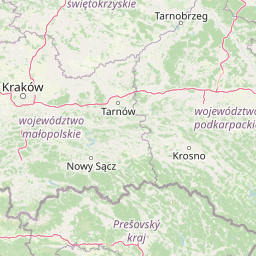
The reserve lies within the Beskid Niski range, specifically in the Góry Hańczowskie sub-range, a landscape of rounded, forested Carpathian foothills typical of the Polish-Slovak border region. The terrain is shaped by two summits, Markowiec at 640 meters and Gródek at 706 meters, separated by a saddle of land between the two village settlements of Hańczowa and Wysowa-Zdrój.
On the upper slopes and ridges, the land rises into spurs and crests flanked by steep, sometimes rocky terrain. The northern section covers the northeastern flanks of Markowiec, while the southern section stretches across slopes south of Gródek. Boulder fields and rock debris slopes, along with stream-cut valleys and narrow ravines, break up the otherwise continuous forested slopes, creating physically sheltered places where the forest can develop with minimal direct human influence.
A distinctive feature of the local geography is the proximity of the southern forest edge to the spa architecture of Wysowa-Zdrój, whose hotel buildings effectively border the reserve. Lower down, stream valleys such as the Markowa Woda corridor that runs along the Markowiec ridge carry meltwater and rainfall down toward the broader lowland valleys of the region, giving the reserve a topographic link between high ridge, steep flank, valley floor, and human settlement that defines its overall physical character.
Markowiec-Gródek Nature Reserve ecosystems, habitats, and plant life
Ecologically, the reserve protects a representative fragment of fertile Carpathian beech forest, one of the most characteristic natural forest communities of the western Carpathians. Although the wider Beskid Niski region has a long history of forestry use, the patches around Markowiec and Gródek, especially on the rocky debris slopes, steep flanks, along stream valleys, and on the ridge tops, are described in the founding document as having retained a structure close to natural.
These near-natural forest stands harbour large amounts of coarse deadwood, including fallen trunks and standing dead trees in various stages of decay. In the Polish forest-ecological tradition, such deadwood is treated as a keystone habitat feature. It supports species that depend exclusively on decaying wood and on the very specific microclimates that develop around it, making it a major indicator of the forest's ecological continuity.
The reserve formally belongs to the biocenotic and physiocoenotic protection category, with emphasis on natural and semi-natural biocenoses of mountain and submontane forests. Its designation is explicitly framed around the conservation value of relict species, highlighting that the forest here is not only a typical Carpathian beech forest but also a refuge for organisms that once characterized the vast primeval woodlands of the region.
Markowiec-Gródek Nature Reserve wildlife and species highlights
Wildlife interest in the reserve centres on the small, often overlooked forest organisms that depend on old-growth conditions rather than on larger mammals or birds. Because of its large deadwood resources, the area is particularly significant for saproxylic beetles, fungi, and lichens.
Among beetles, the reserve hosts the wynurt, a saproxylic longhorn beetle associated with decaying broadleaf wood, and the fire-coloured zęboszyjka, a beetle linked to veteran trees and deadwood habitats. Among lichens, notable species include the gelatinous koralóweczka, a rare epiphytic lichen sensitive to forest continuity, and the bright-barked złociszek jaskrawy, another indicator of old-forest conditions. Fungi recorded in the reserve include branching and multi-shaped species such as the świecznik rozgałęziony and the korzak różnokształtny, both fungi characteristic of undisturbed deciduous woodland.
Several of these species are described in the founding documents of the reserve as relic organisms of the primeval forest, an ecological category used in Central European forest science for species that survived in restricted forest refugia through centuries of landscape change and that depend on the structural complexity of ancient woodland.
Markowiec-Gródek Nature Reserve conservation status and protection priorities
From a conservation perspective, Markowiec-Gródek is an example of small-scale, targeted habitat protection. Its designation classifies it as a biocenotic and physiocoenotic reserve, meaning its value lies not just in individual species but in the integrity of an entire forest ecosystem. Protection is described as active, allowing management interventions aimed at maintaining or restoring the near-natural forest character rather than strict non-intervention.
The defining conservation argument for the reserve is the combination of Carpathian beech forest habitat and abundant deadwood. Together, these create the conditions for relict primeval-forest species across several taxonomic groups, giving the reserve an outsized scientific and educational value relative to its modest size.
Its creation is also institutionally significant. The reserve is one of the projects conceived as part of the centenary programme for Poland's State Forests, and it was proposed by the Polish Society for the Protection of Birds, signalling a deliberate effort to align formal protection with the priorities of established Polish conservation organizations.
Markowiec-Gródek Nature Reserve cultural meaning and human context
The reserve lies within a region of southern Poland shaped by layered ethnic and religious history, including a strong presence of Lemko and other Carpathian Ruthenian communities whose wooden Orthodox churches and chapels remain significant heritage features. The nearby villages of Hańczowa and Wysowa-Zdrój host several of these historic cerkwie, alongside other architectural landmarks tied to the area's rural and spa traditions.
Wysowa-Zdrój itself is a recognized Polish spa town, and the contrast between the dense spa hotel development along the reserve's southern boundary and the protected forest above it gives the area a distinctive cultural geography. Lower down the slopes, just outside the reserve, the Łopaciński Valley preserves the ruins of an interwar model agricultural farm, a relic of pre-war rural planning in the region that remains an important local attractor for visitors interested in cultural landscape heritage.
Top sights and standout views in Markowiec-Gródek Nature Reserve
Near-natural Carpathian beech forest with substantial deadwood. Two-part reserve covering the slopes of Markowiec and Gródek. Primeval-forest relic species among beetles, lichens, and fungi. Adjacent to the spa town of Wysowa-Zdrój. Created in 2024 as part of the State Forests centenary programme, with strong NGO involvement through the Polish Society for the Protection of Birds.
Best time to visit Markowiec-Gródek Nature Reserve
Because the reserve protects a temperate Carpathian beech forest rather than an open alpine or marine ecosystem, its character varies mainly with the seasons of central European mountain woodlands. Late spring and early summer are usually the most appealing times for general walking in the Beskid Niski, when the forest is fully leafed out, the long-distance trails are at their most pleasant, and invertebrates and fungi associated with the reserve are active.
Autumn is also rewarding, when the beech canopy turns and the mountain ridges above Wysowa-Zdrój and Hańczowa offer strong views. Winter brings snow cover that highlights the relief of the Markowiec and Gródek ridges, though conditions higher up can be demanding, and visitors rely on the regional long-distance footpaths.