Why Meszcze Nature Reserve stands out
Meszcze is best known for its striking generational story of small-leaved lime (lipa drobnolistna). The entire current population in the reserve descends from a small number of old lime clusters that survived a historical logging cut; once pine was planted on that clearing, new lime seedlings emerged naturally beneath the pines from those remaining seed trees, and over more than a century they grew into the dominant component of the upper tree canopy alongside pine, oak, and birch. Equally notable is the reserve's role as a protected fragment of fresh mixed forest (las mieszany świeży), a habitat type well represented across the surrounding landscape park system but rare in such a compact, documented, and actively managed form within an urban administrative area.
Meszcze Nature Reserve history and protected-area timeline
The reserve was established on 25 November 1959 by a decree of the Minister of Forestry and the Wood Industry, originally covering only 2.11 hectares. Its creation responded to the scientific, educational, and landscape value of a natural fragment of fresh mixed forest where small-leaved lime had, over the prior century, regenerated extensively from old seed trees left on a former clear-cut.
On 10 May 1989, by a decree of the Minister of Environmental Protection and Natural Resources, the reserve's area was significantly expanded to its current footprint, reflecting growing recognition of its ecological value and its position within the developing landscape park system around the Pilica.
In 2011, a formal protection plan was adopted for the reserve, with an amendment in 2014, formalizing an active conservation approach and integrating the site more clearly into the management framework of both Nadleśnictwo Piotrków and the surrounding Sulejów Landscape Park.
Meszcze Nature Reserve landscape and geographic character
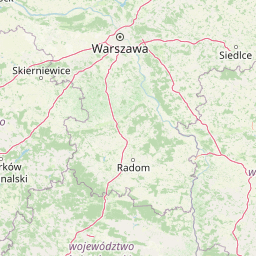
The reserve occupies a gently undulating section of the Równina Piotrkowska (Piotrków Plain), a lowland mesoregion in central Poland characterized by broad glacial and post-glacial landforms rather than dramatic relief. The protected forest is a compact, contiguous block of woodland typical of the central Polish lowlands, set within a wider landscape shaped by the Pilica river basin and the protected corridors of the Nadpiliczne Landscape Parks.
Topographically, the reserve is flat to gently rolling, with no notable relief features, but its landscape character is defined by forest structure rather than terrain: a multi-layered canopy, the visual evidence of historical forestry interventions, and the transitional edges where the protected forest meets the surrounding managed forests of Nadleśnictwo Piotrków and the broader Sulejów Landscape Park matrix.
Meszcze Nature Reserve ecosystems, habitats, and plant life
Meszcze protects a representative fragment of fresh mixed forest (las mieszany świeży), one of the characteristic lowland forest community types of central Poland. The upper tree layer is unusual in its composition: small-leaved lime dominates, accompanied by Scots pine, oak, and birch, reflecting a forest in which a single broadleaf species has reclaimed a canopy position historically occupied by conifers.
Across the reserve, botanists have documented around 170 vascular plant species and 10 bryophyte species, alongside 26 species of trees and shrubs, indicating a notably diverse understory for a lowland forest fragment. Characteristic species include lilia złotogłów (Lilium martagon), pajęcznica gałęzista (Anthericum ramosum), czyścica storzyszek (Clinopodium vulgare), miodownik melisowaty (Melittis melissophyllum), orlik pospolity (Aquilegia vulgaris), groszek czerniejący (Lathyrus niger), przytulia okrągłolistna (Galium rotundifolium), naparstnica zwyczajna (Digitalis grandiflora), and zerwa kłosowa (Phyteuma spicatum), giving the forest a rich spring and early-summer herb layer typical of high-quality mixed woodland habitats.
Meszcze Nature Reserve wildlife and species highlights
The available source material does not provide detailed information on the fauna of Meszcze Nature Reserve, and the most thoroughly documented dimension of the site is its flora and forest community structure rather than its animal life. As a compact, structurally diverse lowland mixed forest embedded in a network of protected landscape parks, it would be expected to support typical central European woodland fauna, but specific species lists, breeding bird records, or mammal inventories are not substantiated by the provided sources.
Meszcze Nature Reserve conservation status and protection priorities
Meszcze is a phytocenotic forest reserve dedicated to preserving a natural fragment of fresh mixed forest for its scientific, educational, and landscape value. Its conservation importance is enhanced by the documented history of its small-leaved lime population, which makes the site a reference example of natural regeneration dynamics in Polish lowland forests.
The reserve has been under active conservation (ochrona czynna) since the adoption of a protection plan in 2011, later amended in 2014, and is integrated into the broader conservation framework of the Sulejów Landscape Park and the Nadpiliczne Landscape Parks complex. Its location within the administrative territory of Piotrków Trybunalski also gives it added value as a protected natural area embedded directly within an urban context, contributing to regional biodiversity conservation at the interface of city and countryside.
Meszcze Nature Reserve cultural meaning and human context
The reserve's most compelling cultural dimension is its deep relationship with the history of forestry practice in the region. The lime trees that today dominate the canopy descend from a small group of old seed trees deliberately left standing on a former clear-cut more than a century ago; this act of retention, followed by pine planting and then natural lime regeneration, is itself part of the cultural and practical heritage of Polish forestry.
The reserve is also connected to local environmental education through the nature and forestry trail 'From Koło to the Meszcze Reserve and Monument Trees', which begins at an educational farm in the village of Koło and links protected forest with notable memorial trees. The site is referenced in the regional publication 'Rezerwaty Ziemi Piotrkowskiej' (Moszczenica, 1998), reflecting its place in the documented natural heritage of the Piotrków region.
Top sights and standout views in Meszcze Nature Reserve
A compact forest reserve holding more than 170 vascular plant species and a remarkable century-long natural regeneration story of small-leaved lime from a handful of surviving seed trees. Its location inside Piotrków Trybunalski and within the Sulejów Landscape Park makes it an accessible, scientifically meaningful green refuge, anchored by an active conservation plan and connected to a regional educational trail.
Best time to visit Meszcze Nature Reserve
The reserve is a lowland mixed forest with a rich herb layer that includes characteristic spring and early-summer flowering species such as Lilium martagon and Melittis melissophyllum. Late spring through early summer is generally the most rewarding period for observing the diverse understory, while the mixed canopy of lime, pine, oak, and birch is visually striking in any season. Because the site is small, embedded in an urban area, and part of a planned nature and forestry trail, typical central Polish seasonal conditions apply: mild shoulder seasons offer quieter and more comfortable conditions for following the educational path from Koło into the reserve.