
Why Sandgrube am Weilersberg stands out
Sandgrube am Weilersberg is best known for concentrating an unusually rich mix of habitat types on a very small area: calcareous windblown sand slopes with threatened steppe and sand grasses, juxtaposed against spring-fed wet meadows, reedbeds, and willow thickets developed on the marl that lies beneath the extracted sand. This dry-wet habitat mosaic, combined with its position within the larger Kalkflugsandgebiet zwischen Mainz und Ingelheim Natura 2000 site, gives the reserve its ecological significance. The reserve is also recognized for its distinctive flora, including rare sand and steppe grasses such as Poa badensis, Stipa pennata, Stipa capillata, and Corynephorus canescens, along with sand-specialist flowering plants like Helichrysum arenarium, Silene conica, Silene otites, and Alyssum montanum ssp. gmelinii. A moss inventory recorded 74 bryophyte species, and surveys have documented over 200 fungi, around 50 ground beetle species, and characteristic breeding birds such as red-backed shrike, Eurasian wryneck (note: wryneck is not listed; Wiedehopf is hoopoe), green woodpecker, turtle dove, and common nightingale.
Sandgrube am Weilersberg history and protected-area timeline
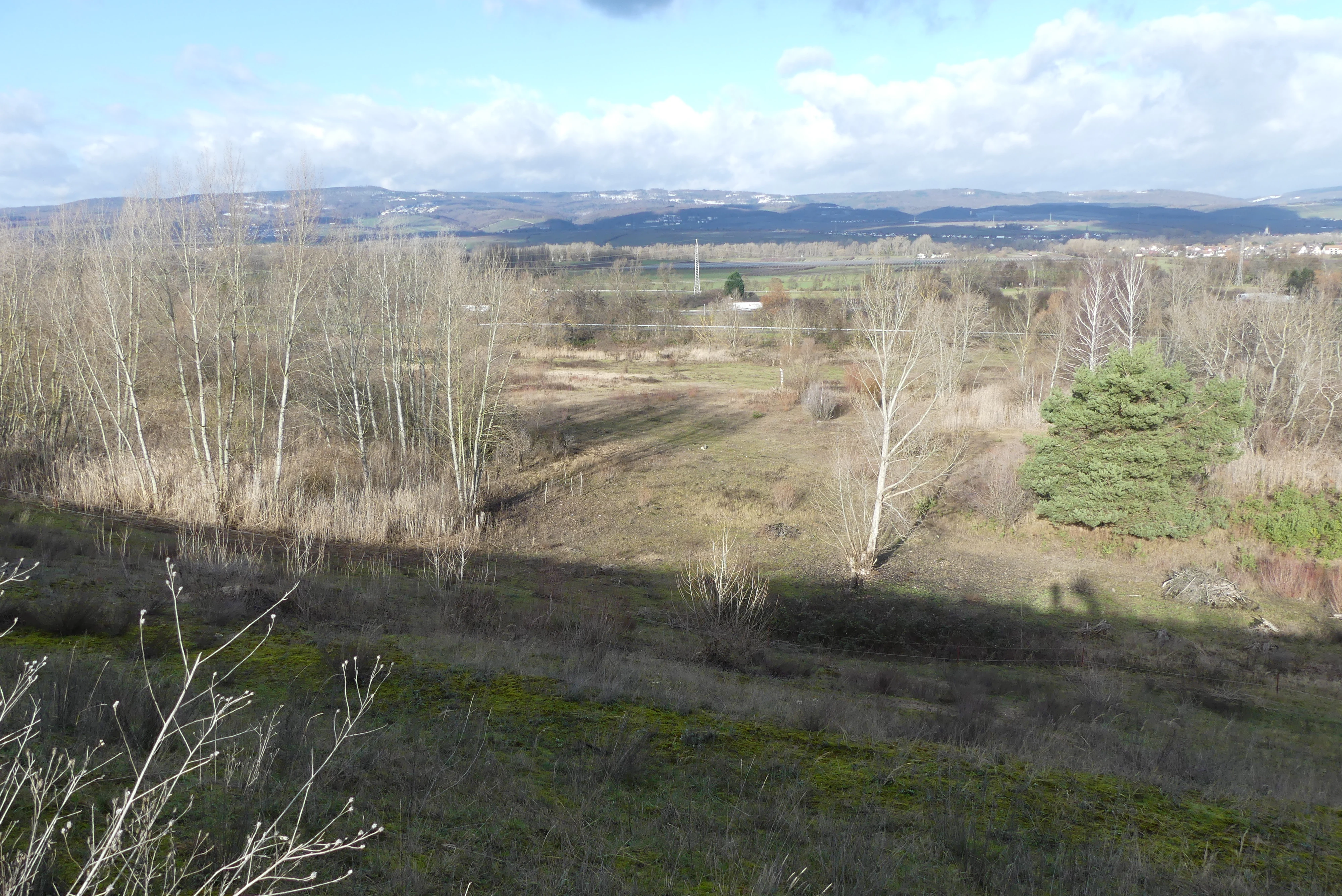
The Sandgrube am Weilersberg site has a relatively short but distinct modern history. In the 1970s, calcareous windblown sand was quarried here as raw material for the construction of the nearby A 60 autobahn, with extraction continuing down to the underlying marl. The removal of sand transformed the topography into a quarry-like depression, but the disturbance and the newly exposed marl substrate set the stage for a unique ecological development.
In 1986, the area was formally placed under nature protection as the Naturschutzgebiet Sandgrube am Weilersberg by legal ordinance of the Mainz-Bingen district, securing its status as a protected area. Its significance grew further when it became part of the larger Kalkflugsandgebiet zwischen Mainz und Ingelheim FFH site, embedding it in the European Natura 2000 framework and tying its management to broader conservation goals.
From 2008 onward, the reserve has been the subject of several systematic biological inventories, including a moss study covering 74 species, a 2017 ground beetle survey, and a 2016 to 2019 fungi study that documented 206 species. Alongside the introduction of seasonal grazing with Exmoor ponies, sheep, and donkeys, these surveys have shaped the reserve's modern identity as both a protected site and an active research location for sand habitat ecology.
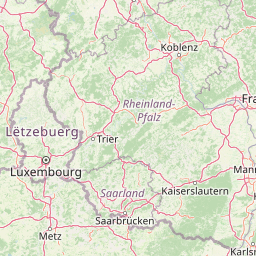
Sandgrube am Weilersberg landscape and geographic character
The landscape of Sandgrube am Weilersberg is shaped by two contrasting geological elements that lie directly next to each other. The first is a relict of calcareous windblown sand that forms a dry, sun-exposed slope on the southern edge of the quarry area. The second is the underlying marl, which after sand removal now forms the lower portion of the site and which, because of its low permeability, retains groundwater and supports wet zones with springs and pools.
The resulting terrain is shallow and compact, but visually distinctive: pale, fine sand slopes stand immediately beside darker, damp depressions holding reedbeds and willow scrub. The contrast is enhanced by the surrounding context, with the wooded ridges of the Rheingau range visible to the north as a backdrop. Although the reserve itself is small and does not contain dramatic relief, its landscape is unusually expressive for such a modest area because of the close juxtaposition of dry, semi-steppe, and wetland features.
Sandgrube am Weilersberg ecosystems, habitats, and plant life
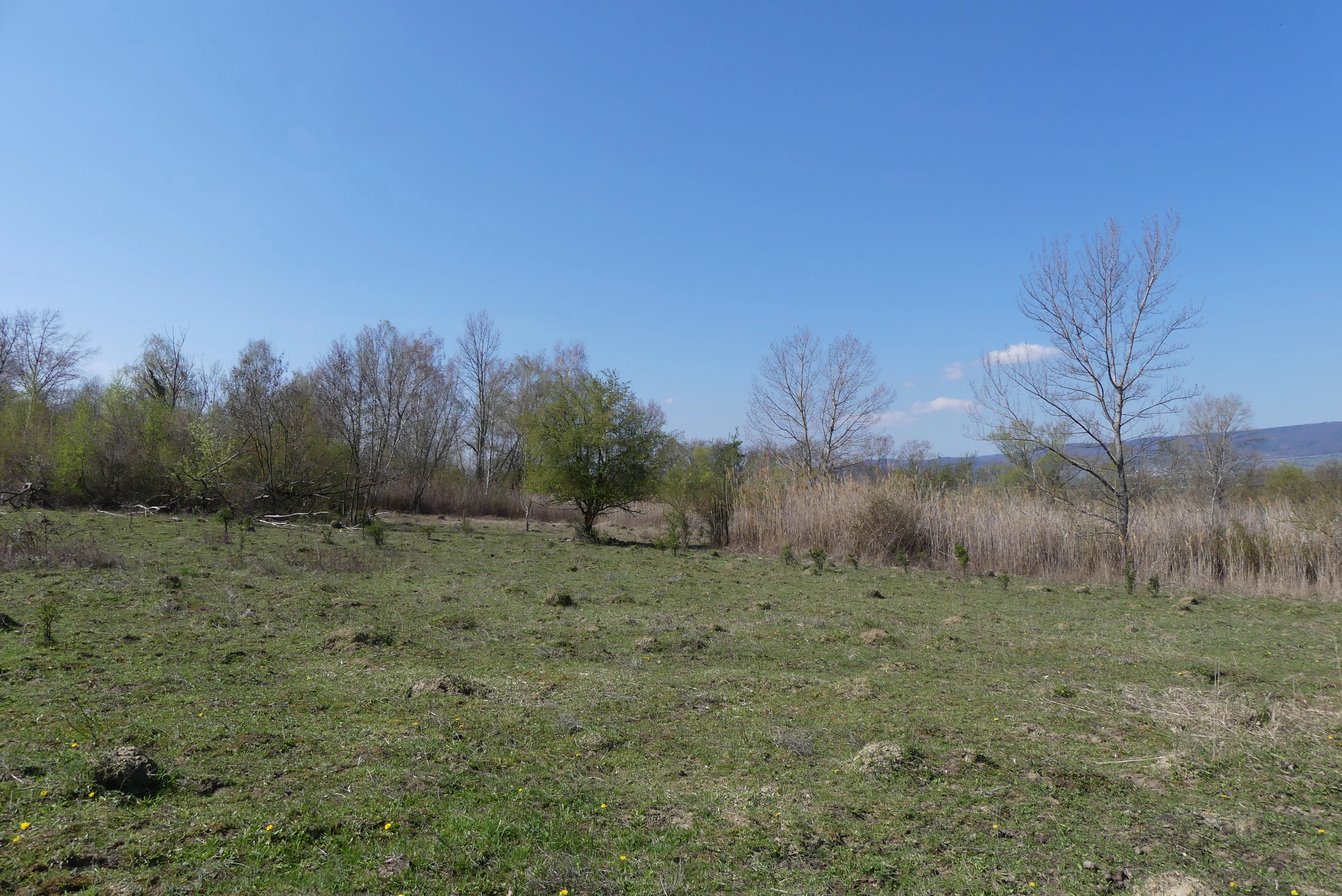
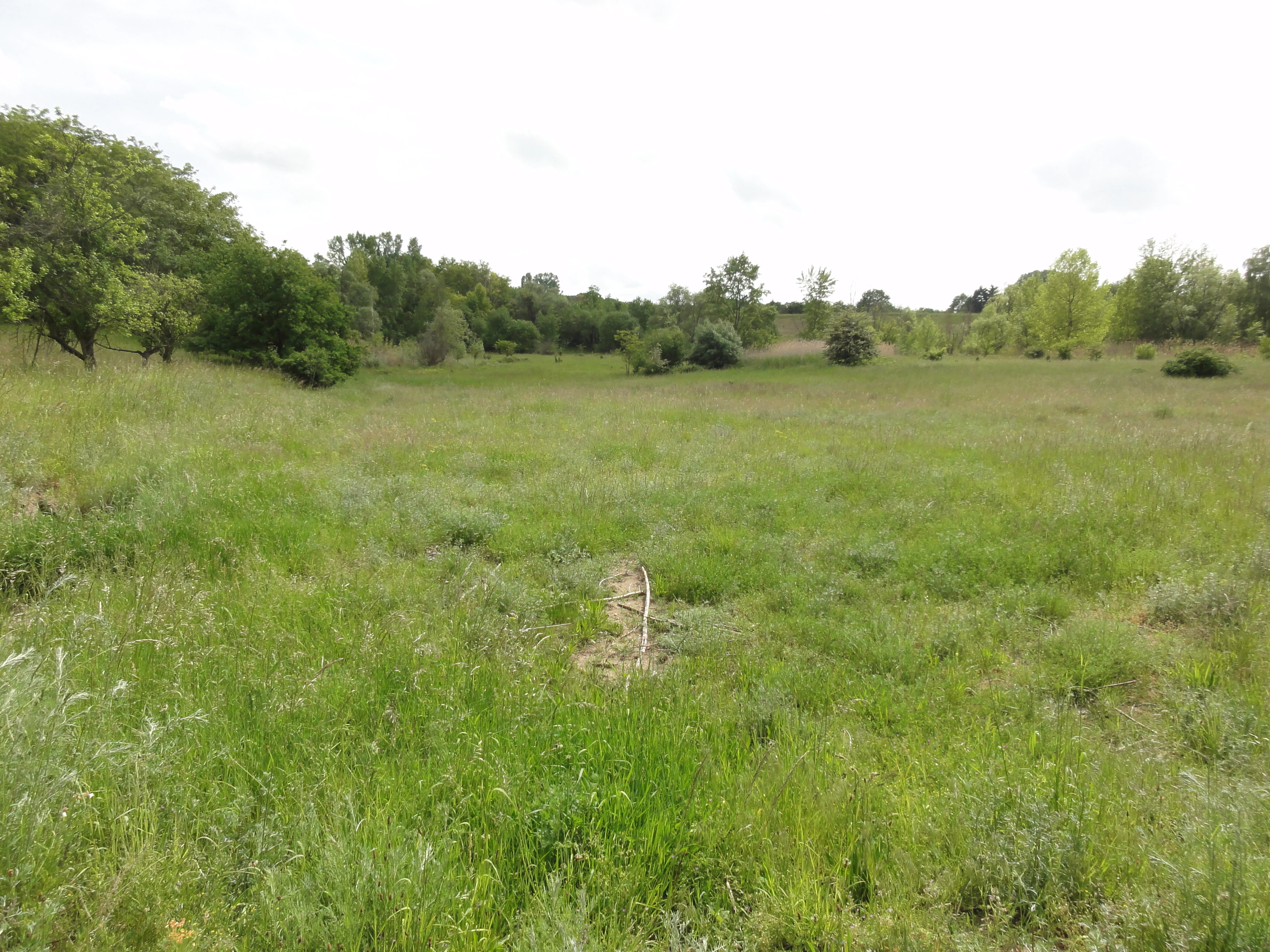
Sandgrube am Weilersberg protects a concentration of habitats that would normally be found in widely separated landscapes. On the sand slope, open sand and steppe grasslands host sparse, drought-adapted vegetation dominated by specialized grasses and forbs. In the wetter lower areas fed by seepage and springs, reedbeds and willow-dominated wet scrub have established themselves, while intermediate zones support fluctuating-moisture communities that shift between dry and wet conditions depending on the season.
Ecologically, the reserve is a textbook example of how a single substrate change, here the removal of sand and the exposure of marl, can create a habitat mosaic of high conservation value. The dry-wet gradient supports specialist species in three categories at once: those requiring permanently dry sand, those requiring constant moisture, and those adapted to alternating conditions. This compressed ecological complexity, combined with the calcareous nature of the sand, is what makes the site noteworthy both regionally and within the Natura 2000 network.
The reserve belongs to the broader Kalkflugsandgebiet zwischen Mainz und Ingelheim FFH complex, an important cluster of calcareous aeolian sand habitats between Mainz and Ingelheim. This wider context magnifies the site's ecological importance, as the broader FFH area is considered a refuge for sand and steppe species that have become rare elsewhere in central Europe due to the loss of traditional open land use.
Sandgrube am Weilersberg wildlife and species highlights
The wildlife profile of Sandgrube am Weilersberg reflects the unusual combination of dry steppe-like sand habitats and wet reedbed habitats. In the bird community, the red-backed shrike breeds regularly, and other valued species recorded include the European green woodpecker, the European turtle dove, the common nightingale, and the Eurasian hoopoe. The mix of open scrub, bushes, and reed margins provides nesting habitat and feeding grounds for these species within a very compact area.
Invertebrate surveys have shown similarly rich patterns. A 2017 ground beetle study recorded 51 species, of which 17 appear on the Red Lists of Germany or of Rhineland-Palatinate, indicating that the site supports beetle communities typical of relict sand and steppe habitats, alongside wetland-associated species. Additional dung beetle records have added further specialist species to the reserve's documented fauna, highlighting the role of grazing animals in maintaining these communities.
The reserve's fauna is supported by grazing with Exmoor ponies, sheep, and donkeys, which help maintain the open structure of the sand slopes and provide dung-based microhabitats that support specialist invertebrates. This combination of habitat diversity and active management is what allows such a small area to support a disproportionately rich animal community.
Sandgrube am Weilersberg conservation status and protection priorities
Sandgrube am Weilersberg is a protected area of more than local significance. After being placed under formal protection in 1986, it was integrated into the Kalkflugsandgebiet zwischen Mainz und Ingelheim Habitats Directive (FFH) site, and through this designation it is part of the European Natura 2000 network. This places it within a coordinated continental framework for conserving calcareous sand and steppe habitats, which have become increasingly rare across central Europe.
The conservation priority at the site is to maintain the open state of both the dry sand slopes and the wet areas. Without active management, natural succession would convert these open habitats into scrub and eventually woodland, eliminating the conditions on which the rare flora and fauna depend. Management therefore focuses on keeping the landscape open through targeted grazing with Exmoor ponies, sheep, and donkeys, supplemented by manual maintenance work each winter.
A further conservation priority is the control of invasive species, which is addressed alongside shrub removal and the preservation of sand grassland communities. The combination of legal protection, Natura 2000 integration, active land management, and repeated biological surveys has turned the reserve into both a practical conservation site and a reference point for understanding calcareous sand ecosystems in the Rhine valley.
Top sights and standout views in Sandgrube am Weilersberg
Sandgrube am Weilersberg stands out for compressing an extraordinary range of habitats into a small area, from dry calcareous sand slopes and steppe-like grasslands to spring-fed wet meadows, reedbeds, and willow scrub. It is a protected nature reserve since 1986 and a component of the Kalkflugsandgebiet zwischen Mainz und Ingelheim Natura 2000 site, and it has been the subject of detailed surveys covering mosses, ground beetles, and fungi.
Another distinctive feature is the visible link between the reserve's modern character and the infrastructure that surrounds it: the sand was originally quarried for the A 60 autobahn, and the very relief of the reserve, the exposed marl and the remaining sand slope, is the result of that mid-1970s extraction. Today, seasonal grazing with Exmoor ponies, sheep, and donkeys is what keeps the reserve open and functional, making the site an example of how post-industrial land can become a conservation asset.