Why Thula Thula Private Game Reserve stands out
Thula Thula is best known for being the setting of Lawrence Anthony's internationally recognized book The Elephant Whisperer, which documented the rehabilitation of a herd of 'rogue' elephants brought to the reserve in 1999. The reserve is strongly associated with that rescue story, as well as with its broader rhino and elephant conservation work. The reserve is also notable for its association with early Zulu history, including its supposed role as the private hunting grounds of King Shaka and the location of the first historic meeting between Shaka and his father Senzangakhona at the Nseleni River. These layers of cultural and conservation storytelling give Thula Thula a distinctive identity among South African private game reserves.
Thula Thula Private Game Reserve history and protected-area timeline
Thula Thula's history stretches back long before its official designation as a protected area. The land is traditionally associated with King Shaka, founder of the Zulu Kingdom, who is believed to have used it as his personal hunting grounds. The first historic meeting between Shaka and his father Senzangakhona is said to have occurred at the Nseleni River within what is now the reserve, an event regarded as a formative moment in the creation of the Zulu Nation.
In 1911, the land was formally declared a game reserve, making it one of the earliest privately protected wildlife areas in KwaZulu-Natal. Throughout the twentieth century, Thula Thula developed into a private conservation property, eventually becoming internationally recognized under the stewardship of Lawrence Anthony and Francoise Malby-Anthony.
A pivotal chapter in the reserve's modern history began in 1999, when Anthony agreed to take in a herd of 'rogue' elephants from Mpumalanga that faced being shot if no alternative home could be found. After an escape from their initial enclosure, the elephants were recovered and returned to Thula Thula, where they grew into one of the reserve's most important animal groups. Anthony documented this story in his 2009 book The Elephant Whisperer, which brought global attention to the reserve. After Anthony's death in 2012, his wife Francoise Malby-Anthony continued the reserve's operation, founding the South African Conservation Fund and later publishing her own book, An Elephant in my Kitchen, in 2018.
Thula Thula Private Game Reserve landscape and geographic character
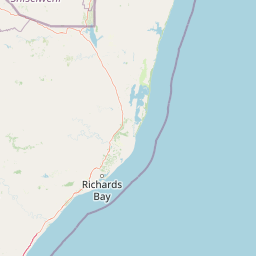
Thula Thula lies in the Zululand region of northeastern KwaZulu-Natal, an area characterized by a mix of bushveld, riverine vegetation, and open woodland typical of the eastern South African interior. The reserve is traversed by the Nseleni River, a feature of both ecological and historical importance, as it marks the site of the traditional first meeting between Shaka and Senzangakhona.
The terrain supports the kind of mixed woodland and bush habitat favored by a wide range of African mammals, providing both grazing space for antelope and buffalo and denser cover for predators and browsing species. Although less than 50 square kilometers in size, the reserve's varied vegetation, river systems, and topography create a compact but ecologically diverse environment that supports elephants, rhinos, and an extensive bird community.
Thula Thula Private Game Reserve ecosystems, habitats, and plant life
The reserve's ecological identity is built around Zululand bushveld ecosystems, which combine grasslands, woodlands, and riverine forest patches. These varied habitats allow the reserve to sustain a wide range of mammal species, from large herbivores such as elephants, giraffe, and buffalo to smaller and more elusive antelope such as nyala and kudu.
Riverine corridors and water features play an important ecological role within the reserve, supporting Nile crocodiles and contributing to the diversity of bird habitats. The combination of broad mammal species and an exceptionally rich avifauna makes the reserve ecologically distinctive despite its relatively compact footprint.
Thula Thula Private Game Reserve wildlife and species highlights
Thula Thula is home to an unusually broad spectrum of African mammals for a reserve of its size. Its animal population includes African bush elephants, southern white rhinoceros, Cape buffalo, African leopard, South African giraffe, zebra, nyala, hyena, kudu, and wildebeest, along with Nile crocodiles inhabiting its water systems.
Birdlife is one of the reserve's standout features, with more than 350 species recorded. Among these is a breeding population of white-backed vultures, a species of conservation concern. The reserve's wildlife mix, anchored by elephants and rhinos, gives it strong conservation visibility and a reputation as a refuge for several of South Africa's most emblematic species.
Thula Thula Private Game Reserve conservation status and protection priorities
Conservation is at the heart of Thula Thula's identity. The reserve was established as a protected area in 1911 and continues to play a meaningful role in safeguarding important Zululand species, including elephants and southern white rhinoceros.
Following Lawrence Anthony's death in 2012, his wife Francoise Malby-Anthony expanded the reserve's conservation activities by establishing a Wildlife Rehabilitation Center and a Conservation Volunteer Camp. She also founded the South African Conservation Fund to support broader conservation work. In recognition of her work, she received the French Abroad Award at the Ministry of Europe and Foreign Affairs in Paris in March 2019.
Thula Thula Private Game Reserve cultural meaning and human context
Thula Thula's identity is as much cultural as it is ecological. The land is traditionally tied to the early history of the Zulu Kingdom, particularly to King Shaka and the foundational meeting between Shaka and his father Senzangakhona at the Nseleni River. This heritage gives the landscape a deeply rooted local significance that complements its national and international conservation profile.
The Zulu name itself, meaning 'peace and tranquility', also shapes the reserve's public identity, framing it as a place of calm and recovery for both wildlife and visitors.
Top sights and standout views in Thula Thula Private Game Reserve
Thula Thula's strongest distinguishing features include its long-standing protected-area history (dating to 1911), its cultural ties to early Zulu history, and its internationally recognized elephant rehabilitation story popularized by The Elephant Whisperer. The reserve also stands out for housing a diverse mammal community on a relatively modest area, including southern white rhinoceros and more than 350 recorded bird species.
Taken together, these elements make Thula Thula a reserve where wildlife conservation, cultural heritage, and contemporary conservation leadership intersect.
Best time to visit Thula Thula Private Game Reserve
Like much of KwaZulu-Natal's Zululand region, Thula Thula experiences a subtropical climate with warm, wetter summers and milder, drier winters. The dry winter months tend to offer more comfortable conditions for game viewing, as vegetation thins and animals concentrate around water sources, while the wetter summer months can bring lush scenery and active birdlife. The reserve's appeal is largely evergreen, however, and the choice of season depends on whether visitors prioritize cooler dry-season game viewing or lusher summer landscapes and bird activity.