

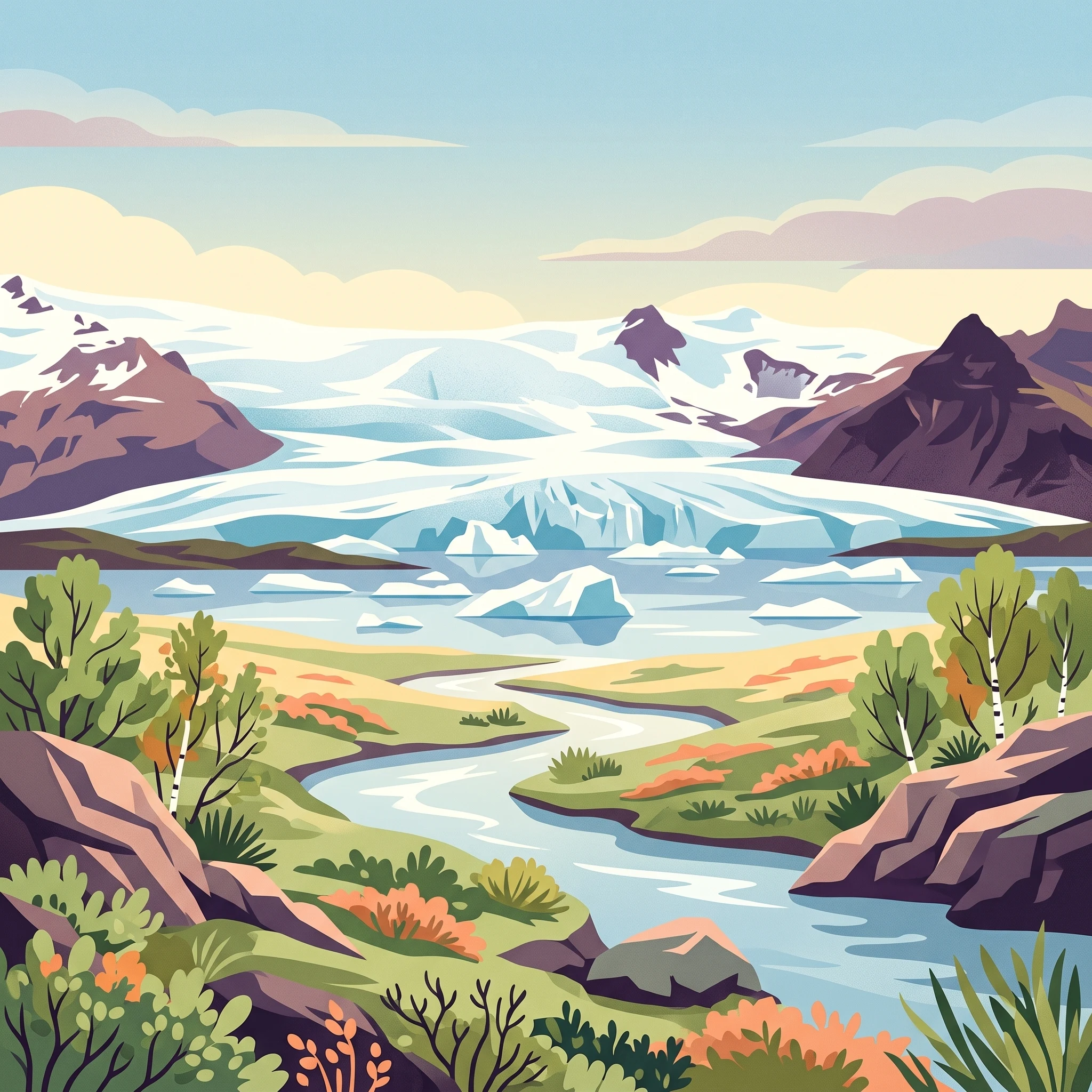
When to Visit Vatnajökull National Park: Seasonal Guide for Iceland Explorers
Determine your travel timing by balancing the stark seasonal contrast between daylight availability, high-latitude climate conditions, and park accessibility.
Planning a trip to Vatnajökull National Park requires understanding the profound impact of Iceland's high-latitude climate on park accessibility. This guide uses 30-year climate normals to help travelers compare the long, light-filled days of the brief summer against the dark, freezing winters that characterize this massive, glacier-dominated landscape. By focusing on the interplay between monthly precipitation, wind speeds, and temperature averages, visitors can align their personal priorities with the park's distinct environmental phases. Because the park covers 14 percent of Iceland's land area, including volatile volcanic zones and the vast Vatnajökull ice cap, timing your visit influences more than just the weather. The following sections interpret meteorological trends to highlight when specific experiences, such as glacier lagoon tours or highland trekking, are most viable. Travelers must always verify current road closures, permit requirements, and safety alerts through official park authorities, as historical averages cannot account for active geological events or extreme weather shifts that frequently impact remote regions.