Mori Atlas logo
Nature reserveVelká Klajdovka

Analyzing the steppe habitats, limestone slopes, and diverse forest-steppe mosaic of this Brno-adjacent natural monument.

Velká Klajdovka Nature Reserve: Mapped Protected Landscapes and Geological Geography in Jihomoravský Kraj

(Velká Klajdovka (přírodní památka))

Velká Klajdovka represents a scientifically significant nature reserve situated on the sun-drenched southeastern slopes of Hády hill within the Czech Republic. This protected area showcases a remarkable convergence of Devonian limestone and acidic granodiorite substrates, which support an unusually dense concentration of thermophilic flora and fauna. The landscape functions as a vital ecological refuge, preserving rare orchids, diverse insect populations, and dry oak woodland communities within an urban-adjacent environment.

steppe habitatforest-steppethermophilic florawarm oak woodlandlimestone slopegranodiorite substrate
A digital illustration showing a mountain valley landscape with a winding river, evergreen forest, cliffs, and a small waterfall in the distance under a sunny sky.

Velká Klajdovka

Nature reserve

Park overview

Structured park overview, official facts, and landscape profile for Velká Klajdovka

Velká Klajdovka park facts, protected area profile, and essential visitor context

Review the core facts for Velká Klajdovka, including designation, size, terrain, visitor scale, habitats, and operating context in one park-focused overview.

About Velká Klajdovka

Velká Klajdovka is a compact but ecologically dense natural monument situated on the southern slope of Hády hill, one of the most prominent natural landmarks on the eastern edge of the city of Brno. Although it covers only a few hectares within the cadastral territories of Maloměřice and Židenice, the reserve carries considerable botanical, zoological, and historical significance, and it is considered one of the key protected sites within the wider Hády landscape.

The reserve's defining feature is its mosaic of steppe, forest-steppe, scrub, and warm-loving oak woodland. This patchwork reflects both natural ecological gradients and the long history of human activity on the slopes of Hády. Until the middle of the 20th century, much of the area was reportedly kept as open grassland, but in the decades that followed, shrubs and trees progressively encroached, leaving only smaller meadow openings within the protected area. Despite this change, the site has retained a remarkable concentration of thermophilic species, which makes it ecologically valuable well beyond its modest size.

Geologically, Velká Klajdovka straddles a contact zone between two very different substrates. The upper parts lie on Devonian limestone belonging to the Líšeň formation, while the lower slope is built on biotite granodiorite of the Brno massif. This dual substrate is visible in the soils, which include both rendzinas and cambisols, and it directly shapes the variety of plant communities found across the reserve. The western part rests on calcareous bedrock, while the eastern section is dominated by acidic rocks, creating distinct ecological microzones in close proximity.

From a conservation perspective, Velká Klajdovka is important because it safeguards an unusually complete representation of steppe and forest-steppe habitats on the urban periphery of Brno. Its protected status, dating from the late 1980s, ensures the continued survival of communities that have otherwise largely disappeared from the surrounding agricultural and built-up landscapes. The reserve therefore serves both as a refuge for rare species and as a living laboratory for studying the ecology of warm, dry habitats in central European cities.

Quick facts and research context for Velká Klajdovka

Velká Klajdovka is a Czech natural monument (přírodní památka) located in the Brno-město district of the South Moravian Region. It was officially designated in the late 1980s and is administered by the South Moravian Regional Authority.

The site protects warm steppe and forest-steppe slopes on the southern face of Hády hill, an ecologically significant limestone ridge on the outskirts of Brno. Its importance rests on the combination of calcareous and acidic substrates, which together support a uniquely diverse mix of thermophilic plant and insect communities.

Protection and recognition

Terrestrial protected area framework and designation records

Velká Klajdovka Protection Status and Documented Conservation Scope

Velká Klajdovka maintains a documented terrestrial protection scope within its regional landscape. Structured administrative records outline conservation status and management frameworks without external international designations.

Protection details

Protection scope
Terrestrial
Transboundary protection
No
Park context

Deeper park guide and search-rich context for Velká Klajdovka

Velká Klajdovka history, landscape, wildlife, and travel context

Explore Velká Klajdovka through its history, landscape character, ecosystems, wildlife, conservation priorities, cultural context, and seasonal travel timing in a structured park guide built for atlas discovery and search intent.

Why Velká Klajdovka stands out

Velká Klajdovka is best known for its exceptionally rich thermophilic flora and fauna concentrated on the warm southeastern slopes of Hády hill. The reserve is particularly notable for its steppe grasslands, dry oak woodland, and forest-steppe mosaics that harbor rare orchids, butterflies, spiders, reptiles, and songbirds typical of southern Moravian dry habitats. The site is also recognized for its entomological significance. Despite its very small size, it supports an unusually large number of rare insect species, especially moths, butterflies, and orthopterans, making it an important reference locality for studies of warm-loving fauna in urban-adjacent landscapes.
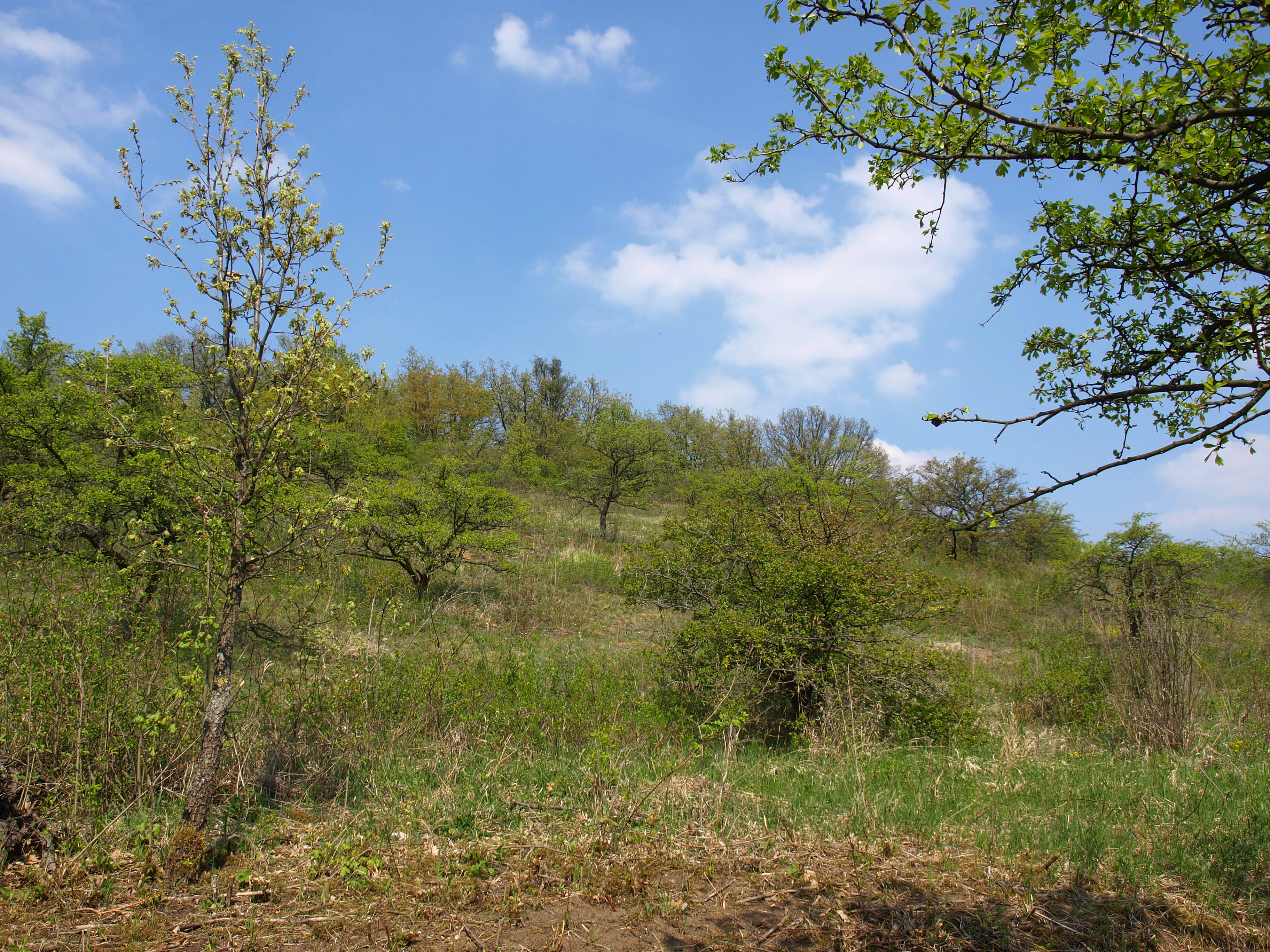
A sloped, open field with sparse trees, shrubs, and green vegetation under a blue sky with scattered clouds.
A view of the forest-steppe terrain in Velká Klajdovka nature reserve.

Velká Klajdovka history and protected-area timeline

The Hády slopes have been the focus of scientific attention since the 19th century, when they became one of the most important sites for the study of warm-loving flora and fauna in central Moravia. Velká Klajdovka, as part of the southern slope of Hády, has shared in this long tradition of botanical and zoological research, particularly regarding steppe and forest-steppe communities.

Until the mid-20th century, the area that today forms the protected site was largely open grassland, maintained by traditional land use that prevented woody species from dominating the slope. After this period, shrubs and trees rapidly colonized the terrain, dramatically reducing the extent of non-forest vegetation within what is now the reserve. This vegetation shift prompted conservation concerns and contributed to the decision to formalize the site's protection.

The area was officially declared a protected natural monument in 1988, by decision of the National Committee of the City of Brno. Since that designation, it has been managed as a small-scale conservation area focused on preserving its steppe, scrub, and warm-loving woodland communities, as well as the rare species that depend on them.

Velká Klajdovka landscape and geographic character

Velká Klajdovka occupies the southeastern slope of Hády hill, a steep, sun-exposed face that drops away from the limestone ridge above. The topography is characterized by inclined terrain, exposed rock outcrops in places, and a sharp thermal contrast between south-facing slopes, which are among the warmest in the Brno area, and adjacent cooler microclimates on shaded aspects.

The site's landscape is shaped less by dramatic relief than by the subtle interplay of geology, soil, and exposure. In the upper part of the reserve, Devonian limestone dominates, producing thin, skeletal rendzina soils that favor drought-adapted vegetation. Lower down, the bedrock shifts to granodiorite of the Brno massif, generating more acidic substrates. Although the geological boundary is not always obvious on the surface, it influences plant distribution and contributes to the unusual ecological complexity of the area.

Human influence is also visible in the landscape. Large quarry spoil heaps have been deposited in parts of the western section, partially reshaping the terrain. Nevertheless, the overall impression remains that of a dry, steppe-like hillside with a mosaic of open meadow patches, low shrubs, scattered trees, and woodland edges, all enclosed within an urban-adjacent setting.

Velká Klajdovka ecosystems, habitats, and plant life

The nature of Velká Klajdovka is defined by its concentration of thermophilic, or warmth-loving, plant and animal communities that are otherwise rare in the region. The reserve harbors a remarkable mixture of dry grasslands, low scrub, woodland-edge habitats, and warm oak woodland, all compressed into a very small area. This mosaic creates unusually sharp ecological transitions, where calcareous and acidic plant communities are found within meters of one another.

The woodland component is dominated by pubescent oak and sessile oak, accompanied by hornbeam, field maple, small-leaved lime, and wild service tree. Black locust, a non-native species, is also present. Beneath and between these trees, a dense shrub layer of Cornelian cherry, hazel, dogwood, blackthorn, spindle, hawthorn, and wild rose creates structural diversity typical of forest-steppe ecotones. The herb layer includes a striking array of steppe and dry-grassland specialists, among them several orchid species and other protected thermophilic flowering plants.

Overall, Velká Klajdovka functions as a small-scale ecological island within the urban matrix, where relict steppe species survive alongside woodland taxa. Its ecological value lies less in size than in the intact vertical and horizontal structure of vegetation types it maintains, and in the unusually high species richness per unit area that characterizes warm, south-facing Moravian hillsides.

Velká Klajdovka wildlife and species highlights

Wildlife at Velká Klajdovka reflects the open, steppe-like character of the site, with a strong emphasis on warm-loving invertebrates, reptiles, and small woodland birds. The reserve is especially noted for its entomological diversity, supporting an unusually rich assemblage of moths, butterflies, orthopterans, and spiders for its size.

Among reptiles, the smooth snake and the green lizard are considered notable returns to the Hády area, having been regarded as locally extinct in earlier decades. The slow worm and the sand lizard are also recorded. Reptiles are particularly associated with the warmer southern slopes, where bare ground and scrub create favorable basking and shelter conditions. A family of European badgers maintains several setts in the clay-rich sediments in the central part of the reserve.

The birdlife is typical of warm, semi-open habitats and the edges of deciduous woodland. Species documented at the site include the Eurasian wryneck, the European golden oriole, the spotted flycatcher, the red-backed shrike, and the Syrian woodpecker, the last being a regionally rare species. The combination of open steppe patches, shrubs, and oak woodland provides nesting and foraging opportunities for a broad mix of species within a very small area, reinforcing the reserve's importance for urban-edge biodiversity conservation.

Velká Klajdovka conservation status and protection priorities

The conservation value of Velká Klajdovka rests on its role as a refuge for thermophilic plant and insect communities that have largely disappeared from the agricultural and urban landscapes surrounding Brno. By securing a representative cross-section of steppe, forest-steppe, and warm oak woodland habitats, the reserve helps maintain genetic reservoirs and reference populations of species that are nationally rare or threatened.

The site's protection also carries scientific significance. The Hády slopes, including Velká Klajdovka, have been documented since the 19th century, and the reserve continues to serve as an outdoor laboratory for studying the dynamics of warm, dry habitats, vegetation succession, and the recolonization of previously open landscapes by shrubs and trees. Active management, including the maintenance of small open meadow patches within the dense scrub, is considered essential for preserving the character of the protected area.

At a broader scale, Velká Klajdovka is part of a network of small protected sites that together safeguard the natural heritage of the Hády massif. Its IUCN Category IV designation as a habitat/species management area reflects its primarily species- and habitat-oriented conservation purpose, and its proximity to the city of Brno underscores the importance of maintaining such refugia even within densely populated landscapes.

Top sights and standout views in Velká Klajdovka

Velká Klajdovka stands out as a compact but exceptionally species-rich steppe and forest-steppe reserve on the outskirts of Brno. Its strongest points of interest include the juxtaposition of calcareous and acidic substrates, the presence of rare orchids and steppe wildflowers, and an unusually rich entomological fauna for a site of its size.

The reserve also offers a distinctive combination of botanical, zoological, and geological interest. Visitors and researchers encounter thermophilic oak woodland, open steppe patches, woodland edges, reptile-rich sunny slopes, and a layered cultural history of land use stretching back to the 19th century, all within a few hectares on the southern flank of one of Brno's most iconic hills.

Best time to visit Velká Klajdovka

Late spring and early summer are the most rewarding periods to experience the steppe and dry-meadow communities of Velká Klajdovka, when thermophilic wildflowers and orchids are in bloom and insects are most active along the warm southern slopes. The exposed terrain becomes very hot in mid-summer, so visits in early morning or late afternoon are most pleasant.

Autumn brings crisp, clear views across the Brno landscape, while winter offers a more austere but structurally interesting perspective on the woodland and scrub mosaic. Because the reserve is small and located in an urban setting, everyday visits outside the peak tourist season tend to be quieter and more conducive to observation of birds and reptiles.
Monthly climate preview

Long term temperature and precipitation cycles recorded at representative coordinates

Velká Klajdovka Climate Normals and Monthly Weather Patterns

Velká Klajdovka experiences a measured annual temperature range from sub-zero winter minimums to warm summer maximums alongside consistent monthly precipitation values. Exploring the full monthly climatology profile provides deeper insight into long term weather behavior and regional averages.
Annual mean9 °C
-3 °C21 °C
Jan-3°
Feb-1°
Mar
Apr
May15°
Jun19°
Jul21°
Aug21°
Sep15°
Oct
Nov
Dec-2°
Warmest month
July

21 °C

Coolest month
January

-2.7 °C

Wettest month
June

2.4 mm/day

Driest month
February

1.1 mm/day

Park location guide

Geography guide, regional context, and park location map for Velká Klajdovka

Velká Klajdovka park geography, regions, and map view in Czechia

Understand where Velká Klajdovka sits in Czechia through a broader geographic reading of the surrounding landscape, nearby location context, and its mapped position within the national park landscape.

How Velká Klajdovka fits into Czechia

Czech Republic is a landlocked Central European country with a population of approximately 10.9 million people. The nation was established as an independent state on January 1, 1993, following the dissolution of Czechoslovakia. Its capital and largest city is Prague, with other major urban centers including Brno, Ostrava, Plzeň, and Liberec.

Wider geography shaping Velká Klajdovka in Czechia

The Czech Republic is a landlocked country in Central Europe. It is bordered by Germany to the west, Austria to the south, Poland to the northeast, and Slovakia to the southeast. The landscape is predominantly hilly, with the territory covering 78,871 square kilometers.

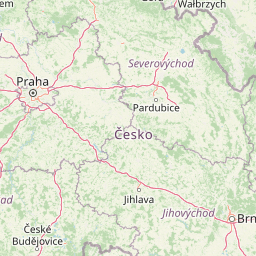
Map view of Velká Klajdovka

Use this park location map to pinpoint Velká Klajdovka in Czechia, understand its exact geographic position, and read its mapped placement within the surrounding landscape more clearly.

Pigeon | © OpenStreetMap contributors

Location context for Velká Klajdovka

Jihomoravský kraj

Explore photographic records of limestone slopes, steppe patches, and dry oak woodlands.

Velká Klajdovka Photos and Landscape Scenery: Visualizing Protected Habitats

Visual documentation reveals the distinct terrain, exposed rock outcrops, and varied vegetation mosaics defining the protected hillside. Photographic records illustrate warm oak woodlands and open habitats supporting specialized thermophilic flora and fauna.

A sloped, open field with sparse trees, shrubs, and green vegetation under a blue sky with scattered clouds.

A dirt trail entering a patch of trees at Velka Klajdovka, with a stone wall in the foreground and a concrete utility pole on the right.

Park atlas

Compare adjacent terrain and regional conservation areas across the Brno hills

Exploring Parks Near Velká Klajdovka and Surrounding Protected Landscapes

Continue geographic comparison by browsing other protected areas near Velká Klajdovka and the surrounding region. Reviewing adjacent reserves reveals broader patterns of regional park geography and local habitat distribution.
Natural monumentJihomoravský kraj
About 6.3 km away#1 closest

Southeast

Velatická slepencová stráň: A Protected Natural Monument in South Moravia, Czech Republic

Mapping the rare steppe vegetation and conglomerate geology of Jihomoravský kraj.

Velatická slepencová stráň serves as a critical refuge for thermophilous steppe communities within the Jihomoravský kraj region. The site features distinctive conglomerate outcrops and a rich assembly of dry-grassland plants. This mapping resource provides a comprehensive geographic overview of the protected landscape and its specific ecological configuration.

Area
0.017 km²
Established
1951
IUCN
IV
Relief
Upland
Natural monumentJihomoravský kraj
About 6.5 km away#2 closest

Northwest

Soběšické rybníčky Natural Monument: A Detailed Geographic Atlas of the Jihomoravský kraj Forest Ponds

Mapping the protected wetland terrain and amphibian breeding landscapes of central Moravia.

Explore the geographic and conservation profile of Soběšické rybníčky, a protected forest monument in the Czech Republic. The site represents a vital wetland network that maintains stable amphibian populations within a dense, shaded valley setting of the Soběšice Highlands, offering a focused look at small-scale protected landscape management.

Area
0.012 km²
Established
1987
IUCN
IV
Relief
Upland
Watercolor illustration of a karst landscape featuring hills, a lake, and cave-like rock formations with green vegetation
Protected landscapeSouth Moravian Region
About 8 km away#3 closest

Northeast

Moravian Karst Protected Landscape: Detailed Geographic and Cave System Atlas

Mapped protected boundaries and karst phenomena in the South Moravian Region.

Moravian Karst, designated a Protected Landscape Area, offers a profound look into complex karst geology within the South Moravian Region. This entry within MoriAtlas facilitates a structured discovery of its approximately 92 square kilometers, featuring an intricate network of over 1,100 caves and gorges. Users can explore the mapped extent of this geological treasure, understand its relationship with the surrounding regional geography, and appreciate the unique formations sculpted by underground water systems, including the iconic Macocha Abyss.

Area
92 km²
IUCN
V
Scope
Terrestrial
Water
Minor water
A horizontal watercolor painting showing rolling green hills with small patches of trees under a soft, pale sky.
Natural monumentJihomoravský kraj
About 8.1 km away#4 closest

West

Medlánecké kopce Natural Monument: Exploring Protected Steppe Habitats in Northern Brno

A rare mosaic of dry grasslands and rocky outcrops in Jihomoravský kraj

Medlánecké kopce preserves a critical landscape of thermophilic flora and insect communities on the edge of the Brno basin. The site is noted for its xerothermic vegetation, including the large-flowered pasqueflower, which thrives on its unique metabasite and loess soil composition. This protected area offers a look at how specialized steppe ecosystems persist within a heavily developed regional environment.

Area
0.118 km²
Established
1988
IUCN
IV
Relief
Upland
A soft watercolor painting showing a rolling landscape with hills, scattered trees, and rocky outcrops, rendered in pastel greens and pinks.
Natural monumentBrno
About 8.5 km away#5 closest

West

Medlánecká skalka Natural Monument: Mapped Protected Landscapes and Geography in Brno

A rare urban-adjacent steppe and rocky habitat site

Medlánecká skalka is a protected natural monument located in the Medlánky district of Brno, Czech Republic. Spanning a small but significant rocky slope, this site preserves thermophilous dry-grassland communities and essential habitats for rare flora like the Pulsatilla grandis. Its unique topography and skeletal soil composition make it an important geographic reference point for understanding steppe-like ecosystems in the South Moravian region.

Area
0.003 km²
Established
1999
IUCN
IV
Relief
Upland
A soft watercolor illustration depicting a panoramic view of rolling green hills, distant light purple mountain ridges, and a central valley stream.
Protected landscapeCzechia
About 10 km away#6 closest

Northeast

Přírodní park Říčky: Protected Landscape and Highland Geography in Czechia

Deep exploration of stream-carved valleys and karst-influenced terrain.

Přírodní park Říčky preserves a vital transitional environment within the Drahanská vrchovina highlands. This protected area integrates diverse ecosystems, including upland beech enclaves and orchid-rich wet meadows, tied together by a complex network of springs and streams that carve through the sedimentary and limestone geology of the region.

Area
30.05 km²
Established
1984
Relief
Upland
Climate
Temperate
A minimalist watercolor illustration showing rolling green hills and a few trees against a pale yellow and pink background.
Protected landscapeCzechia
About 11 km away#7 closest

Northwest

Přírodní park Baba: A Detailed Geographic Overview of this Czech Protected Landscape

Forested ridges and centuries-old oak woodland topography

Přírodní park Baba is a protected area in Czechia characterized by a continuous six-kilometer ridge rising above the surrounding urban landscape of Brno. This site is defined by its deep-rooted, century-old sessile oak stands and an intricate mosaic of meadows supporting rare orchid species and diverse avian life. Its geological foundation, composed of Paleozoic diorite, supports a resilient ecosystem that serves as a vital natural corridor between Brno and Kuřim.

Area
8.89 km²
Established
1990
Relief
Mountain
Climate
Temperate
Natural monumentJihomoravský kraj
About 12 km away#8 closest

West

Skalky u Přehrady: Protected Natural Monument and Mapped Landscape in Jihomoravský kraj

Ecologically significant forest steppe and river gorge terrain

Skalky u Přehrady is a protected natural monument characterized by its rugged diorite cliffs and diverse plant communities. The site serves as a compact example of forest steppe mosaic situated along the Svratka River, offering significant insight into the regional geography and conservation status of rocky slopes within the South Moravian territory.

Area
0.013 km²
Established
1989
IUCN
IV
Relief
Upland

Common questions about visiting, size, designation, and location context for Velká Klajdovka

Velká Klajdovka FAQs for park facts, access, geography, and protected area context

Find quick answers about Velká Klajdovka, including protected-area facts, park geography, trail and visitor context, and how the park fits into its surrounding country and regional landscape.
MoriAtlas Explorer

Continue Your Protected Areas Search Across the Global Atlas

Deepen your exploration by continuing the structured search for national parks and protected areas worldwide. Utilize the comprehensive filtering capabilities to compare different conservation landscapes and refine your understanding of global park geography. Discover more about the distribution and characteristics of protected natural areas.

Global natural geography