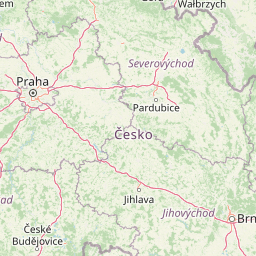
Why Velké Družďavy stands out
Velké Družďavy is best known for its thermophilic steppe plant communities, a relatively rare habitat type in the Czech landscape, growing on sandy and gravelly Miocene substrates along a south-facing slope. The site is especially recognized for its population of white broom, which thrives alongside other warm-loving species in this protected dry grassland. This combination of geology, slope orientation, and ecological character has produced a small but distinctive patch of xerothermic vegetation that contrasts sharply with the surrounding woodland and gives the reserve its specific identity within the broader South Moravian region.
Velké Družďavy history and protected-area timeline
The protected status of Velké Družďavy dates back to 1953, when the site was first declared a state nature reserve by decree of the Czech Ministry of Culture on 28 December of that year. This early designation reflected the period's growing recognition of the ecological value of the area's xerothermic vegetation and its thermophilic plant communities.
The reserve's status was confirmed in 1988 by a further order of the Ministry of Culture of the Czechoslovak Republic, issued on 29 November, reaffirming the site's protection in the closing years of the state nature reserve system. After the restructuring of Czech nature conservation categories in the early 1990s, the area was reclassified under later regulations as a natural monument, pursuant to the Ministry of the Environment's implementing decree.
The current legal foundation of the reserve is regional: in late 2018 and early 2019, the South Moravian Region formally re-designated the area as a natural monument through Regional Decree No. 5/2019, with effect from 1 March 2019. This modern designation continues the long-standing commitment to safeguarding the site and its characteristic steppe vegetation for future generations.
Velké Družďavy landscape and geographic character
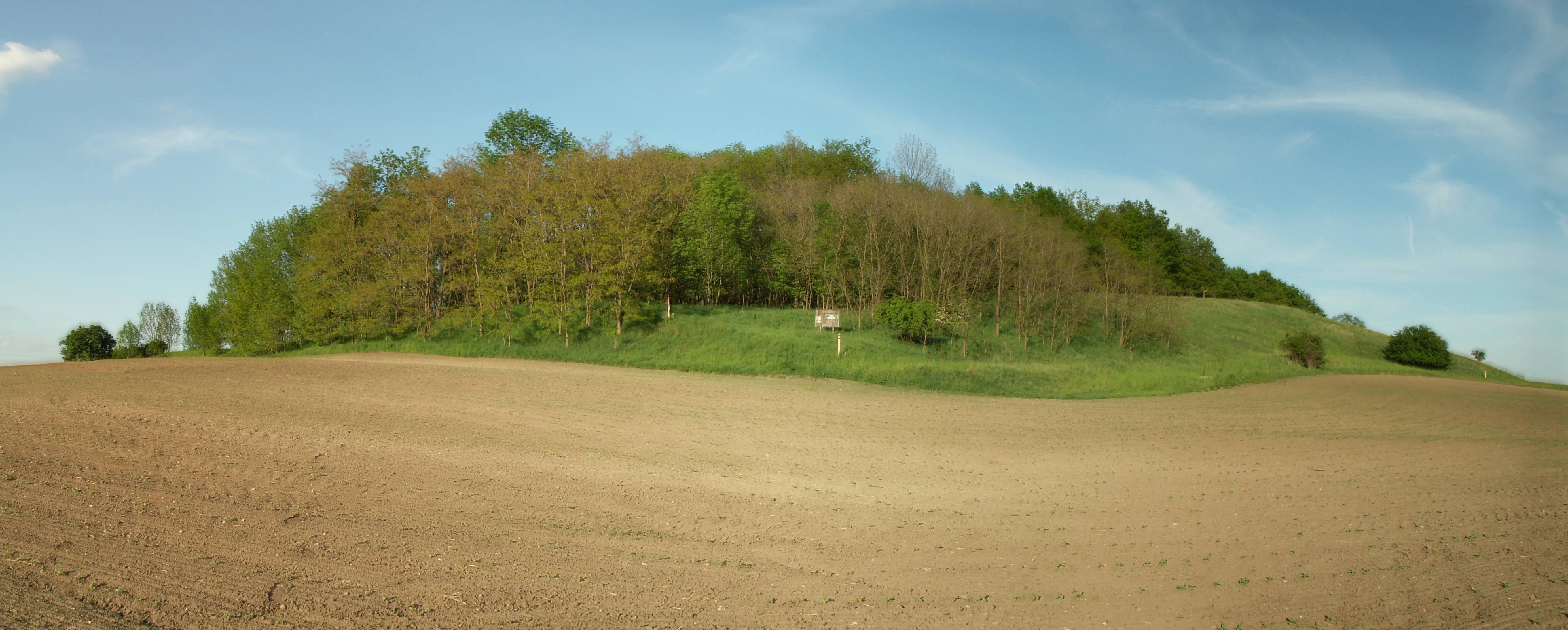
Velké Družďavy occupies a notably small but clearly defined piece of terrain: a south-facing slope whose substrate consists of Miocene sands and gravels. This geological base is central to the site's landscape identity, as it determines the dry, well-drained conditions that shape the vegetation growing upon it.
The slope faces south, maximizing solar exposure and contributing to a notably warm microclimate compared with the surrounding land. Above and around the protected area lies forest, creating a contrast between the open, sunlit slopes and the shaded woodland belt. This juxtaposition is visible in the landscape and ecologically significant, because the woodland edge serves as a source of invasive tree species that have begun to spread into the open steppe.
The overall topography is gentle rather than dramatic. There are no cliffs, peaks, or large rivers associated with the site; rather, Velké Družďavy is defined by subtle relief, sandy soils, and the ecological consequences of slope orientation. Its landscape value lies less in spectacular scenery and more in the rare combination of geology, exposure, and microclimate that supports its protected vegetation.
Velké Družďavy ecosystems, habitats, and plant life
The defining ecological character of Velké Družďavy is its xerothermic vegetation, an assemblage of warmth-loving plants adapted to dry, sunny, often nutrient-poor conditions. On the south-facing slope, these plants form open communities of steppe-like grassland and associated herbaceous species rather than closed forest cover.
The site's flora is closely tied to its sandy and gravelly Miocene substrate. Such loose, well-drained soils favor plants that cannot tolerate waterlogged or shaded environments, and they create the conditions in which thermophilic species can flourish at unusually high densities for the region. The result is a vegetation cover that resembles, in miniature, the dry grassland habitats more commonly associated with warmer parts of Europe.
The surrounding landscape contrasts sharply with the protected slope. Beyond the reserve's boundaries, woodland dominates, and within that woodland, black locust has become established. The presence of this invasive tree in the adjacent forest is ecologically significant because it represents an ongoing source of pressure on the open steppe vegetation within the protected area, threatening to alter the site's ecological character if left unmanaged.
Velké Družďavy wildlife and species highlights
Velké Družďavy is primarily recognized as a botanical site, and the Czech source material highlights the area's plant communities rather than its fauna. The reserve is valued for supporting thermophilic steppe flora, including a notable population of white broom that grows on the south-facing slope.
The same warm, dry microclimate that supports these plant communities also provides habitat for a range of warmth-loving invertebrate species typically associated with steppe environments, even though these are not enumerated in detail in the available sources. In ecological terms, the mixture of open dry grassland, sandy soils, and sun exposure is the kind of setting where specialized insects and other invertebrates can find refuge.
The surrounding woodland, by contrast, offers a different faunal profile, populated by species typical of Central European lowland forests. The full ecological value of Velké Družďavy for wildlife lies in the contact between these two contrasting habitats, which is precisely why the encroachment of woody species from the forest into the open steppe is treated as a conservation concern.
Velké Družďavy conservation status and protection priorities
Velké Družďavy has been a focal point of nature conservation in the Brno-venkov area for more than seven decades. Its original 1953 designation as a state nature reserve reflected early recognition of the rarity and ecological distinctiveness of its thermophilic steppe vegetation, and successive re-designations since then have maintained its protected status through changing legal frameworks.
The site's main conservation significance lies in the protection of xerothermic plant communities on sandy and gravelly Miocene slopes. Such steppe-like habitats are uncommon in the Czech Republic, and small reserves like Velké Družďavy serve as refuges for warmth-loving plant species that would otherwise face decline. The reserve operates within the broader framework of the country's network of small protected natural monuments, contributing to habitat diversity at the regional level.
A pressing conservation issue today is the spread of black locust from the adjacent forest into the open steppe vegetation. This invasive species alters light availability, soil chemistry, and habitat structure, threatening the very plant communities the reserve was created to protect. Combined with the absence of active habitat management, this invasion represents the principal long-term threat to the site's ecological integrity.
Top sights and standout views in Velké Družďavy
Velké Družďavy stands out as a rare example of protected thermophilic steppe vegetation in the Czech landscape, growing on the unusual combination of a south-facing slope and sandy, gravelly Miocene substrate. Its most distinctive feature is the population of white broom and other warmth-loving plant species concentrated on this small, dry incline.
The protected area's significance is enhanced by its long conservation history, dating back to the early 1950s, and by its continuing role within the modern system of regionally designated natural monuments. At the same time, the documented threat from invasive black locust and unmanaged succession gives the site a clearly defined contemporary conservation challenge, making it a small but instructive case within the regional network of South Moravian reserves.