Why Veselíčko Natural Monument stands out
Veselíčko is best known for protecting the summer roosting habitat of the greater mouse-eared bat (Myotis myotis) inside and around the buildings of Veselíčko Castle. The site combines two conservation values in one place: a nationally designated natural monument and a European Site of Community Importance within the Natura 2000 network. This makes it a notably compact but high-significance location for bat conservation in central Moravia, where the castle environment provides sheltered, temperature-stable roosting quarters that the species depends on during the breeding season.
Veselíčko Natural Monument history and protected-area timeline
The natural monument at Veselíčko is a relatively recent designation in conservation terms, having been formally declared on 31 December 2013 by the Regional Authority of the Olomouc Region. The decision followed the recognition that the castle grounds and buildings had long hosted a significant summer colony of the greater mouse-eared bat (Myotis myotis), a species whose European populations depend heavily on suitable roosting structures.
Inclusion of the site as a European Site of Community Importance added a transnational layer to its protection, aligning Veselíčko with the broader Natura 2000 ecological network of the European Union. The combination of national monument status and European designation reflects an evolving approach in Central European conservation, where small but ecologically critical sites near cultural landmarks are integrated into wider habitat and species protection frameworks.
Long-term management has focused on preserving the continuity of the bat colony across seasons and years, treating the castle's biological role as inseparable from its architectural and cultural identity.
Veselíčko Natural Monument ecosystems, habitats, and plant life
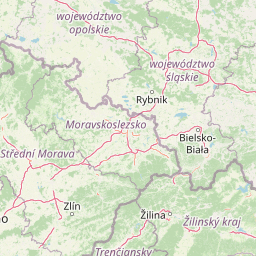
The ecological character of Veselíčko Natural Monument is defined by its built environment rather than by a wild landscape. The protected zone includes parts of the Veselíčko Castle complex and its immediate surroundings at the foot of Zámecký kopec, in the gently rolling terrain of central Moravia at roughly 286 to 288 meters above sea level.
Within this modest footprint, the habitat that matters most is the enclosed, sheltered interior and structural fabric of the castle buildings. These spaces provide the temperature stability, darkness, and protection from disturbance that greater mouse-eared bats require for forming summer maternity colonies. The surrounding gardens and castle grounds offer connected foraging space, while the broader Moravian countryside around Veselíčko supplies the woodland and meadow habitats where the bats hunt insects.
The site's dual recognition as both a natural monument and a European Site of Community Importance reflects how built heritage, when managed sensitively, can function as a critical surrogate for natural roosting habitats such as caves, which are scarce in the region.
Veselíčko Natural Monument wildlife and species highlights
The wildlife significance of Veselíčko centers almost entirely on one species: the greater mouse-eared bat (Myotis myotis). This medium-sized bat is widely distributed across parts of central and southern Europe, but its populations depend on a small network of suitable roosting sites, particularly warm attic spaces, church towers, and castle buildings.
At Veselíčko, a summer maternity colony of the species is estimated to include between roughly 210 and 420 individuals, representing a meaningful regional concentration of the species. During the breeding season, female greater mouse-eared bats gather in such sites to raise their single pups, and the persistence of the colony at Veselíčko directly relates to the undisturbed condition of the castle's roosting quarters.
Outside the roost, the species typically forages in deciduous woodland, parks, and meadows, capturing large insects close to the ground. Although the monument itself is tiny, its protection ripples outward by maintaining the colony that hunts across the surrounding Moravian countryside.
Veselíčko Natural Monument conservation status and protection priorities
Veselíčko is a conservation site whose significance far exceeds its physical size. Covering only 0.09 hectares, the monument is specifically designed to safeguard a single ecological resource: the summer roosting biotope of the greater mouse-eared bat (Myotis myotis), a species that across Europe has suffered from loss of suitable breeding structures.
The site simultaneously carries national protected-area status as a přírodní památka and European status as a Site of Community Importance within the Natura 2000 network. This layered recognition aligns Veselíčko with international bat conservation priorities and links it into broader continent-wide efforts to maintain viable populations of cave- and building-dwelling bat species.
Long-term conservation objectives are focused on preserving the bat colony across successive breeding seasons. This includes maintaining access to key roosting spaces within the castle complex, minimizing disturbance during sensitive periods, and coordinating any necessary maintenance of historic building fabric with the ecological requirements of the colony. The site's conservation success is measured less by landscape change and more by the continued presence and health of the bat population that justifies its protection.
Veselíčko Natural Monument cultural meaning and human context
The name Veselíčko refers both to the small village and to its most prominent landmark, the castle (zámek) that sits on and below Zámecký kopec. The protected natural monument is defined in direct relation to this building: its boundaries literally enclose parts of the castle grounds, where historic architecture and wildlife habitat converge.
This overlap between built heritage and natural protection is a recurring feature of the Czech conservation system, where castles, churches, and other aging structures regularly serve as irreplaceable roosts for bat species. At Veselíčko, the cultural value of the castle estate and the ecological value of its bat colony are managed together rather than separately, illustrating how regional authorities integrate stewardship of historical sites with biodiversity preservation in Moravia.
Top sights and standout views in Veselíčko Natural Monument
Veselíčko Natural Monument stands out as an exceptionally compact but targeted protected area, with its entire conservation mission oriented toward one species: the greater mouse-eared bat. The estimated 210 to 420 individuals making up the summer colony give the site a clear ecological anchor.
Its dual designation as both a Czech natural monument and a European Site of Community Importance adds significant interpretive weight to a location of less than a tenth of a hectare. Set against the backdrop of Veselíčko Castle and Zámecký kopec in the Olomouc District, the monument illustrates how cultural heritage and species protection can be managed as a single integrated conservation concern.