

Mori Atlas logo
Natural monumentVojenské cvičiště Bzenec

Explore the unique aeolian dune microtopography and rare steppe-associated insect habitats in this Czech protected area.

Vojenské cvičiště Bzenec Natural Monument: Mapping the Protected Sandy Landscapes of South Moravia

(Vojenské cvičiště Bzenec (přírodní památka))

Vojenské cvičiště Bzenec represents a significant natural monument in the South Moravian Region, protecting rare windblown sand deposits and open habitats that would otherwise disappear. This former military training site now functions as an essential refuge for thermophilic invertebrates and psammophilous plants, offering a rare glimpse of sandy steppe-like terrain within the Czech Republic. The area is defined by its exposed aeolian dunes, sparse pine stands, and a unique microclimate that fosters a high diversity of dry-grassland species.

sandy habitataeolian dunespsammophilous vegetationsteppe florathermophilic insectsinvertebrate refuge
An artistic vector illustration depicting a canyon, a flowing river, a waterfall, and evergreen trees in a warm color palette.

Vojenské cvičiště Bzenec

Natural monument

Park overview

Structured park overview, official facts, and landscape profile for Vojenské cvičiště Bzenec

Vojenské cvičiště Bzenec park facts, protected area profile, and essential visitor context

Review the core facts for Vojenské cvičiště Bzenec, including designation, size, terrain, visitor scale, habitats, and operating context in one park-focused overview.

About Vojenské cvičiště Bzenec

Vojenské cvičiště Bzenec sits in the lowlands of southeastern Moravia, along the road corridor between the towns of Bzenec and Strážnice. The site belongs to the Hodonín District of the South Moravian Region and lies at around 200 metres above sea level. Its modest area of approximately 36.8 hectares belies the ecological significance of what it contains: a surviving patch of windborne sand habitat that has been kept open by long-term human use.

The defining feature of the reserve is its history as a military training ground. Decades of trampling, vehicle movement, and controlled burning associated with military exercises suppressed natural forest succession and maintained an early successional, grassland-and-sand mosaic. When the active military use ended, the open character of the site, with exposed drifts of aeolian sand and scattered pioneer pines, was recognised as ecologically valuable in its own right, and the area was declared a natural monument in 1994.

Today the reserve is valued for several overlapping reasons. Ecologically, it functions as a refuge for sand-loving (psammophilous) plant communities that are otherwise rare in the Czech flora. Zoologically, it provides habitat for warmth-demanding invertebrates, including several nationally important insect and spider species. From a landscape perspective, it offers a glimpse of the open inland sand ecosystems that once extended across broader stretches of Central Europe but now survive only in fragments. Its protected status, under the Czech system of small protected areas, places it within a network of sites designed to conserve steppe-like and early successional habitats that depend on continued management to resist woodland encroachment.

Quick facts and research context for Vojenské cvičiště Bzenec

Vojenské cvičiště Bzenec is a Czech přírodní památka (natural monument) in the Jihomoravský kraj, South Moravia, near the town of Bzenec between Bzenec and Strážnice. It occupies a former military training ground at roughly 200 metres above sea level and covers about 36.81 hectares. The site was officially declared a protected area on 11 November 1994 and is classified under IUCN Category IV as a habitat or species management area.

Its protected status reflects the conservation value of its open aeolian sands, scattered pine stands, thermophilic insect assemblages, and steppe-like plant communities that depend on the disturbance regime historically maintained by military activity.

Protection and recognition

Examine the documented terrestrial protection scope and management history for Vojenské cvičiště Bzenec.

Vojenské cvičiště Bzenec Protection Status and Designated Area Record

Vojenské cvičiště Bzenec features a documented terrestrial protection scope detailing its official conservation framework and administrative history. Structured records outline the baseline protected area designation parameters without relying on unverified international recognition sources.

Protection details

Protection scope
Terrestrial
Park context

Deeper park guide and search-rich context for Vojenské cvičiště Bzenec

Vojenské cvičiště Bzenec history, landscape, wildlife, and travel context

Explore Vojenské cvičiště Bzenec through its history, landscape character, ecosystems, wildlife, conservation priorities, cultural context, and seasonal travel timing in a structured park guide built for atlas discovery and search intent.

Why Vojenské cvičiště Bzenec stands out

The reserve is best known for preserving a rare open sandy habitat in South Moravia that supports thermophilic, often steppe-associated invertebrates. It is particularly valued among entomologists and conservationists for its populations of rare insects such as the praying mantis and several dry-grassland butterflies, together with specialised sand-loving spiders. Its open aeolian sands and psammophilous vegetation are equally characteristic, giving the site a near-steppe appearance more typical of warmer lowlands further south or east in Europe. The combination of military-disturbance history and unusual substrate makes it a textbook example of how planned disturbance regimes can maintain biodiversity in Central Europe.
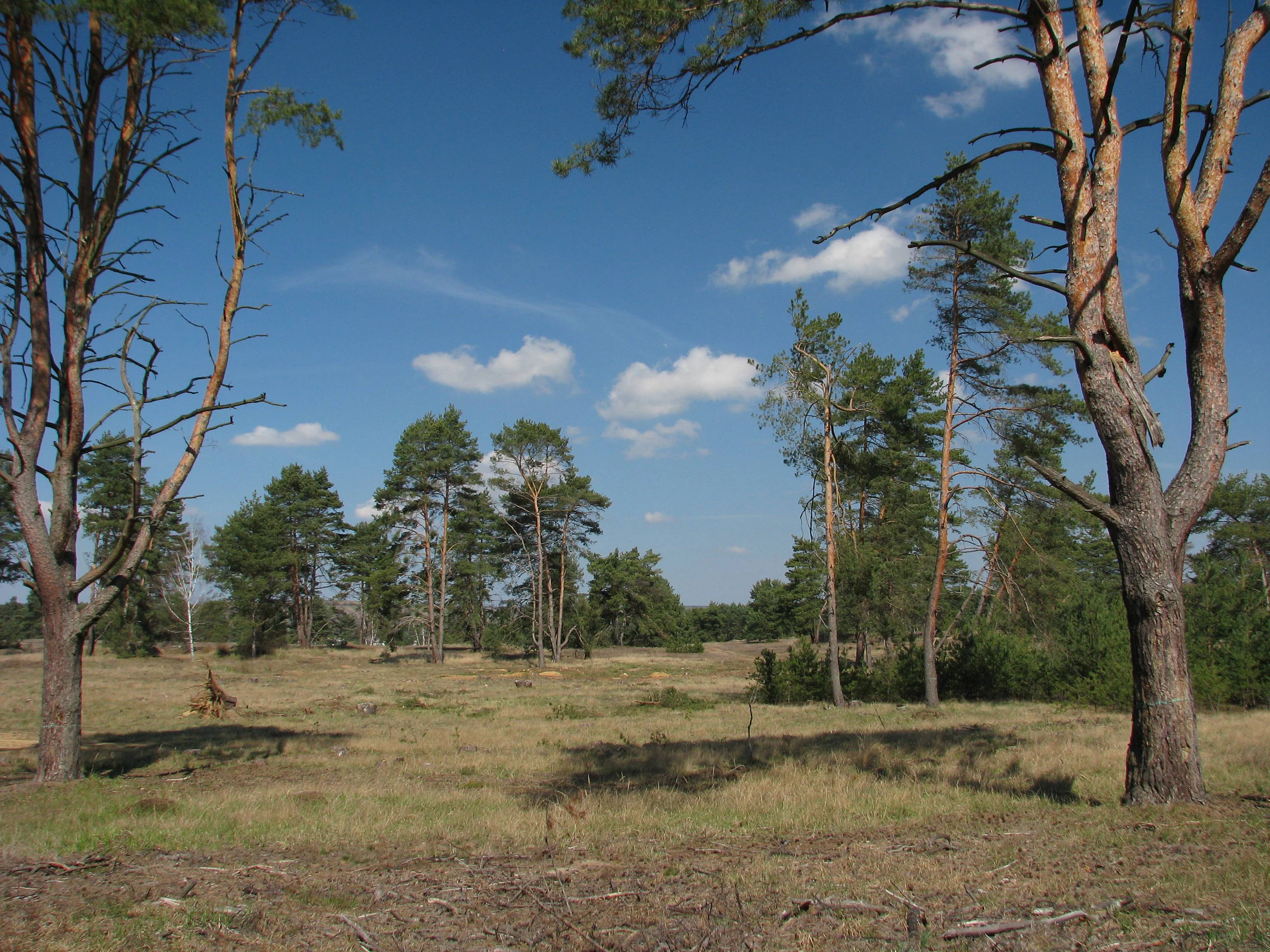
A sparse, sandy landscape with scattered pine trees under a clear blue sky with light clouds, characteristic of the Bzenec military training area.
A view of the sandy landscape and scattered pine trees at Vojenské cvičiště Bzenec.

Vojenské cvičiště Bzenec history and protected-area timeline

The site exists as a protected area because of its earlier non-ecological function as a military training ground. For many decades, regular military activity kept the terrain open by preventing tree establishment and continually disturbing the sandy substrate. As a result, when the land was eventually considered for conservation, it presented a rare ready-made example of inland open sand habitat rather than land that would first have to be cleared and restored.

The area was formally declared a přírodní památka, a Czech natural monument category reserved for smaller sites of specific geological, ecological, or biological importance, on 11 November 1994. Its designation falls under IUCN Category IV, recognising it as a habitat or species management area where active intervention is part of the conservation purpose.

Since protection, management has focused on maintaining the open character of the dunes and sand flats, controlling woody encroachment, and preserving the conditions needed by its specialised flora and fauna. The site's history illustrates how a former disturbance regime, whether from military training or from grazing, can sometimes be repurposed as the foundation for biodiversity conservation.

Vojenské cvičiště Bzenec landscape and geographic character

The landscape of Vojenské cvičiště Bzenec is dominated by open sand rather than forest or wetland. The substrate consists of wind-deposited, or aeolian, sands that were laid down during the post-glacial period and subsequently reworked by wind into low dunes and flat sandy stretches. Because vegetation cover was historically kept sparse, these landforms remain visible, giving the reserve an unusually steppe-like appearance for lowland Moravia.

Scattered pines, mostly self-sown pioneer conifers, grow across the sandy terrain in thin clusters and small groves, breaking up the otherwise continuous open sand. The combination of bare or sparsely vegetated sand, dry grassland patches, and isolated pine stands creates a varied microtopography of warm, sun-exposed hollows and slightly shaded areas.

At roughly 200 metres above sea level, the reserve lies within the relatively dry and warm lowlands of southeastern Moravia. This regional setting, together with the sandy substrate, produces a hot, well-drained microclimate that supports plant and animal communities more typical of open sandy habitats further south in the Pannonian Basin. The result is a small but visually distinctive landscape that contrasts sharply with the surrounding agricultural and forested countryside.

Vojenské cvičiště Bzenec ecosystems, habitats, and plant life

Ecologically, Vojenské cvičiště Bzenec is a psammophilous reserve, meaning that its biological character is defined by the presence of windblown sand and the specialised life it supports. The plant communities of the site belong to the group of dry, sand-loving, often steppe-like assemblages that rely on open substrate, low nutrient availability, and high summer temperatures.

These communities include grasses and other low-growing species adapted to drought and shifting sands, growing alongside scattered pioneer pines that maintain themselves without forming closed forest. Without continued disturbance or management, succession would gradually convert the open sand flats into woodland, and the specialised flora would be lost. The protected status of the site exists precisely to interrupt this successional trajectory.

In biodiversity terms, the reserve is most important for invertebrates and other small organisms that exploit warm, exposed sand and dry grassland mosaics. Its ecological value lies less in rare large mammals or birds than in the density and unusual composition of its thermophilic insect and spider fauna. In this sense, the site functions as an invertebrate refuge of regional significance within the broader Moravian landscape.

Vojenské cvičiště Bzenec wildlife and species highlights

The wildlife profile of Vojenské cvičiště Bzenec is dominated by thermophilic invertebrates, the group for which the reserve is most frequently highlighted in conservation literature. The insect fauna overlaps closely with that of the nearby Váté písky reserve and includes several nationally notable species of open sandy habitats.

Among insects, the site supports the European praying mantis, the southern mantidfly, several dry-grassland grasshoppers such as the small golden grasshopper, and characteristic butterflies of sandy and steppe-like terrain including the false grayling, the rock grayling, and the dryad. Owlet moths associated with dry vegetation, such as the Artemisia-feeding Narraga fasciolaria, also occur here. Spiders include sand-loving specialists such as the psammophilous Titanoeca spominima.

Reptiles present include the European green lizard and the grass snake, both of which favour warm, sun-exposed terrain. The bird community is shaped by the open habitat as well, with species typical of dry grasslands, heathland edges, and sparse woodland, including the northern wheatear, European stonechat, Eurasian hoopoe, European nightjar, woodlark, and red-backed shrike. The collective fauna reflects a southern, dry-loving character more typical of lowland steppe than of the surrounding Central European landscape.

Vojenské cvičiště Bzenec conservation status and protection priorities

From a conservation perspective, Vojenské cvičiště Bzenec illustrates the importance of small, habitat-specific protected areas in maintaining biodiversity at the landscape scale. Its IUCN Category IV designation as a habitat and species management area reflects the active role required to keep the site open and to sustain its specialised flora and fauna.

The reserve's principal conservation value is the protection of psammophilous plant communities and the assemblage of thermophilic invertebrates associated with them. Many of these species are rare or declining in the Czech Republic, partly because the open inland sand habitats they depend on have contracted dramatically through forestry, agriculture, and urbanisation. By safeguarding a relatively intact fragment of this habitat, the reserve acts as an insurance population for species that may otherwise have only one or two viable sites in the country.

Conservation management is focused on preventing woodland encroachment and on preserving the early successional, sandy character of the terrain, often through controlled disturbance regimes that mimic the historical military use. The site's existence also has a broader educational value, demonstrating how former military lands can be transformed into effective nature reserves when their open character and unusual substrates are recognised in time.

Top sights and standout views in Vojenské cvičiště Bzenec

The reserve's main highlights are its open windblown sand landscape, its scattered pioneer pine stands, and the unusually rich thermophilic insect fauna they support. Among its most notable species are the European praying mantis, characteristic dry-grassland butterflies such as the false grayling and rock grayling, and the rare psammophilous spider Titanoeca spominima.

Its compact size, linear location along the Bzenec-Strážnice corridor, and clearly visible dune microtopography make it one of the more accessible examples of inland sandy-steppe habitat in South Moravia.

Best time to visit Vojenské cvičiště Bzenec

The reserve is most rewarding to visit during the warmer months, when bare sand is exposed, dry-grassland plants are in flower, and thermophilic insects such as praying mantises, grasshoppers, and characteristic steppe butterflies are active. Late spring through high summer generally offers the best chance to see the open dune character and associated wildlife, while outside this period the sandy terrain still retains its distinctive appearance but supports much less visible faunal activity. As a small natural monument focused on fragile sandy habitats, any visit should aim to keep to marked paths to avoid trampling the psammophilous vegetation that the reserve exists to protect.
Monthly climate preview

Long term representative point measurements detailing annual temperature and monthly precipitation patterns

Vojenské cvičiště Bzenec Climate Normals and Average Temperature Profiles

Historical climatology data captures measured temperature variations and precipitation rhythms across twelve distinct intervals at a representative park coordinate. Examining the complete monthly profile provides deeper analytical context for long term regional climate conditions.
Annual mean9 °C
-3 °C20 °C
Jan-3°
Feb-1°
Mar
Apr
May14°
Jun18°
Jul20°
Aug20°
Sep15°
Oct
Nov
Dec-2°
Warmest month
July

20.3 °C

Coolest month
January

-3.4 °C

Wettest month
July

2.6 mm/day

Driest month
February

1.3 mm/day

Park location guide

Geography guide, regional context, and park location map for Vojenské cvičiště Bzenec

Vojenské cvičiště Bzenec park geography, regions, and map view in Czechia

Understand where Vojenské cvičiště Bzenec sits in Czechia through a broader geographic reading of the surrounding landscape, nearby location context, and its mapped position within the national park landscape.

How Vojenské cvičiště Bzenec fits into Czechia

Czech Republic is a landlocked Central European country with a population of approximately 10.9 million people. The nation was established as an independent state on January 1, 1993, following the dissolution of Czechoslovakia. Its capital and largest city is Prague, with other major urban centers including Brno, Ostrava, Plzeň, and Liberec.

Wider geography shaping Vojenské cvičiště Bzenec in Czechia

The Czech Republic is a landlocked country in Central Europe. It is bordered by Germany to the west, Austria to the south, Poland to the northeast, and Slovakia to the southeast. The landscape is predominantly hilly, with the territory covering 78,871 square kilometers.

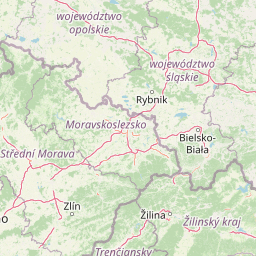
Map view of Vojenské cvičiště Bzenec

Use this park location map to pinpoint Vojenské cvičiště Bzenec in Czechia, understand its exact geographic position, and read its mapped placement within the surrounding landscape more clearly.

Pigeon | © OpenStreetMap contributors

Location context for Vojenské cvičiště Bzenec

Jihomoravský kraj

Visual reference guide to windblown sand dunes, pine stands, and rare steppe habitats

Vojenské cvičiště Bzenec Photos and Landscape Scenery

Visual documentation of Vojenské cvičiště Bzenec reveals the distinct topography of open aeolian sands and sparse pioneer pine stands across South Moravia. Examining these protected area photographs provides direct insight into the rare inland steppe habitats and specialized microclimate defining the reserve.

A sparse, sandy landscape with scattered pine trees under a clear blue sky with light clouds, characteristic of the Bzenec military training area.

Park atlas

Compare surrounding regional geography and connected sandy habitats across Moravia

Explore Parks Near Vojenské cvičiště Bzenec and Related Protected Landscapes

Continue browsing other protected areas and regional reserves connected to the unique sandy terrain surrounding Vojenské cvičiště Bzenec. Comparing adjacent natural monuments provides broader ecological context for understanding local aeolian landforms and rare invertebrate habitats.
A wide, panoramic watercolor illustration showing a calm wetland scene with green reeds in the foreground, a body of water, and a line of trees and hills in the background under a pale sky, with a faded grey area at the bottom.
Natural monumentJihomoravský kraj
About 2.7 km away#1 closest

Northeast

Vypálenky Natural Monument: Protected Wetland Geography and Regional Map Context

Lowland floodplain habitat in the South Moravian region

The Vypálenky Natural Monument protects sixty-five hectares of essential floodplain habitat within the Morava River valley. This wetland landscape, defined by its flat terrain and groundwater-fed pools, supports significant communities of rare invertebrates and amphibians, anchoring a larger ecological corridor within the Bzenecká Doubrava and Strážnické Pomoraví protected network.

Area
0.653 km²
Established
2014
IUCN
IV
Relief
Lowland
A watercolor painting showing a stylized, panoramic landscape of rolling green hills, trees, and distant soft mountains.
Natural monumentZlínský kraj
About 10 km away#2 closest

North

Medlovický lom Natural Monument: Geomorphological and Geological Atlas of Zlínský Kraj

Protected geological profile and amphibian habitat in eastern Moravia

Explore the geological heritage of Medlovický lom, a protected site defined by its extensive exposure of fired clay known as porcelanite. This former quarry offers a window into the geomorphological history of the Vážanská vrchovina, contrasting its artificial rock faces with the surrounding agricultural terrain and hills of the Moravian region. The site acts as both an educational geological record and a small-scale sanctuary for aquatic wildlife, maintaining its status as a landmark of local earth science.

Area
0.011 km²
Established
1997
IUCN
III
Relief
Upland
Natural monumentJihomoravský kraj
About 16 km away#3 closest

East

Miliovy louky Natural Monument: South Moravia Protected Grassland Geography

Mapping the xerothermic steppe and meadow landscape

Miliovy louky is a protected natural monument located in the Jihomoravský kraj region, noted for its surviving patch of semi-natural dry steppe vegetation. This compact reserve offers a distinct look at the region's historical open terrain, providing a critical haven for dryland flora and butterfly species amidst a backdrop of managed agricultural farmland.

Area
0.084 km²
Established
2014
IUCN
IV
Relief
Upland
Natural monumentJihomoravský kraj
About 20 km away#4 closest

Southeast

Velický hliník Natural Monument: A Case Study in Carpathian Landscape Restoration

Analyzing the geography of South Moravian protected clay habitats

Deep dive into the geomorphology and protected landscape of Velický hliník in the Czech Republic. This site of community importance demonstrates how former clay extraction zones transform into complex wetland mosaics, supporting specialized biodiversity within the Žalustín Highlands.

Area
0.053 km²
Established
2013
IUCN
IV
Relief
Upland
Watercolor illustration of a lush, green landscape featuring rolling hills and grassy meadows under a pale sky.
Nature reserveZlín District
About 31 km away#5 closest

Northeast

Na letišti Nature Reserve: Mapped Floodplain Landscapes in the Zlín District

A rare oxbow wetland refuge in Eastern Czechia

Located in the Zlín District, Na letišti is a protected natural monument formed from a regulated meander of the Morava River. This site functions as an isolated aquatic refuge, featuring a rich community of beetles and wetland flora that define the character of this lowland floodplain landscape within the Czech Republic.

Area
0.027 km²
Established
1956
IUCN
IV
Relief
Lowland
Protected landscapeCzechia
About 31 km away#6 closest

Northwest

Přírodní park Ždánický les: Exploring Protected Woodlands and Moravian Carpathian Landscapes

Regional woodland geography and floodplain meadow systems

Přírodní park Ždánický les spans nearly 182 square kilometers of rolling terrain across the Vyškov and Hodonín districts. This protected landscape preserves extensive broadleaf forests, including mature beech and oak stands, while maintaining unique floodplain meadows that serve as essential habitat corridors within the wider Moravian Carpathian region.

Area
181.89 km²
Established
1996
Relief
Upland
Scope
Terrestrial
Watercolor painting of green rolling hills and small groves of trees, with a minimalist, airy style.
Nature reserveZlín Region
About 31 km away#7 closest

East

Mechnáčky Nature Reserve: Protected Meadow Biodiversity in the Zlín Region of the Czech Republic

Orchid-rich grasslands and managed Carpathian meadow landscapes

Mechnáčky represents an important nature reserve defined by its remnant flower-rich meadows and diverse invertebrate habitats. Situated in the Zlín Region, this site provides a focused look at the conservation of traditional Carpathian landscapes, including calcareous grasslands and spring-fed slopes that define the unique botanical character of this Czech protected area.

Area
0.109 km²
Established
1982
IUCN
IV
Relief
Upland
Natural monumentZlín Region
About 35 km away#8 closest

Northeast

Uhliska Natural Monument: Protected Stream Valley Geography and Moravian Habitats

A diverse protected wetland and meadow mosaic in the Zlín Region.

The Uhliska natural monument protects a narrow, meandering valley corridor along the Černý potok stream in eastern Moravia. This high-value habitat mosaic features wet Cirsium meadows, broad-leaved dry grasslands, and ash alder gallery forests. The site provides a critical refuge for protected butterflies of European importance, serving as an exemplary model of small-scale landscape conservation in the Zlín Region.

Area
0.143 km²
Established
1991
IUCN
IV
Relief
Upland

Common questions about visiting, size, designation, and location context for Vojenské cvičiště Bzenec

Vojenské cvičiště Bzenec FAQs for park facts, access, geography, and protected area context

Find quick answers about Vojenské cvičiště Bzenec, including protected-area facts, park geography, trail and visitor context, and how the park fits into its surrounding country and regional landscape.
MoriAtlas Explorer

Continue Your Protected Areas Search Across the Global Atlas

Deepen your exploration by continuing the structured search for national parks and protected areas worldwide. Utilize the comprehensive filtering capabilities to compare different conservation landscapes and refine your understanding of global park geography. Discover more about the distribution and characteristics of protected natural areas.

Global natural geography