
Trip Timing Basics
When Is the Best Time to Visit Wood Buffalo National Park
Determining the best time to visit Wood Buffalo National Park requires weighing two distinct experiences: the accessible, high-latitude summer characterized by near-constant daylight and the extreme, dark-sky winters favored by those pursuing the aurora borealis. Because this vast wilderness spans over 44,000 square kilometers across the Alberta and Northwest Territories border, the climate is defined by drastic fluctuations that dictate how visitors can interact with the landscape. There is no single season that captures every dimension of the park, and travellers should orient their trip around the stark trade-off between thermal comfort and astronomical visibility.
The Summer Advantage for Accessibility and Wildlife
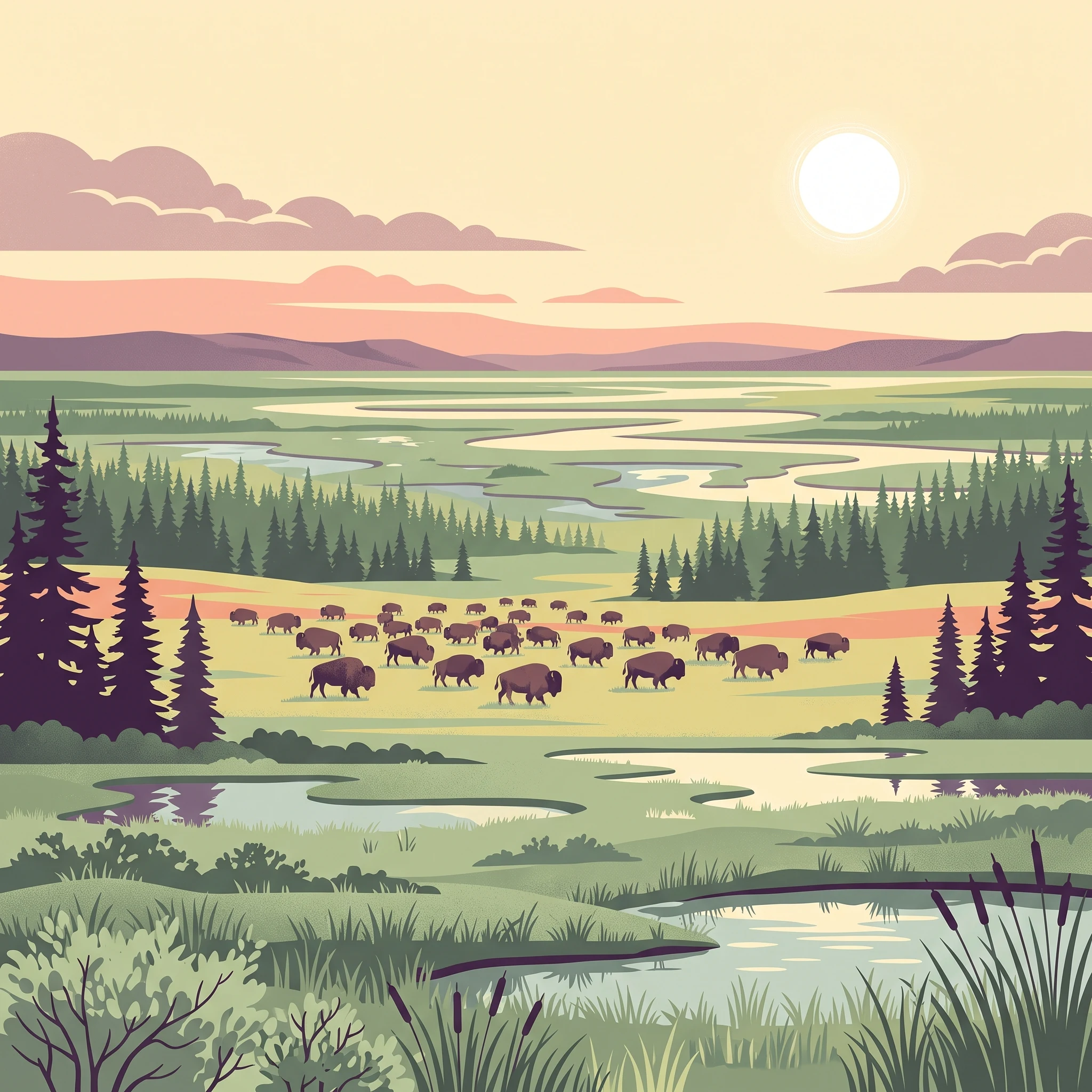
For visitors focused on the park's biological diversity, such as the wood bison populations or the Peace-Athabasca Delta, the period from June through August serves as the most practical window. During these months, temperatures often rise significantly, with mean daily temperatures peaking near 17 degrees Celsius in July. This season offers the highest level of ground access, as the thawing of the boreal forest and the lowering of water levels in certain regions allow for safer navigation. The long daylight hours, reaching over 18 hours in June, provide expansive time for viewing wildlife and exploring the expansive karst landscapes or the massive beaver dams that remain otherwise difficult to reach during the deep freeze.
The Winter Trade-off for Dark-Sky Observers
Conversely, those prioritizing the park's status as a premier dark-sky preserve will find the summer months entirely unsuitable. The northern lights require the profound darkness found only in the late autumn, winter, and early spring. Visitors seeking this spectacle must accept the logistical intensity of the subarctic winter, where temperatures frequently plummet well below -30 degrees Celsius. In January and December, daylight is restricted to roughly six hours, creating the necessary backdrop for aurora viewing but demanding specialized gear and high-level preparation for the extreme cold and the isolation of this northern latitude. The wind and humidity levels during these months further compound the chill, making the park a destination for those who are specifically equipped for severe cold-weather travel.
Transition Phases and Seasonal Planning
Spring and autumn act as volatile, short-lived transitions that demand flexibility. In May, the landscape shifts rapidly as the ground sheds its winter cover, while September provides a brief, milder window of cooling temperatures before the onset of the deep winter. These shoulder months are not characterized by a perfect balance of summer and winter traits, but rather by rapidly changing conditions that define the park's rhythmic, seasonal reset. Planning a visit involves recognizing that the park remains a rugged environment where weather patterns can shift regardless of the calendar month, necessitating that all visitors verify current conditions against long-term climate trends before finalizing travel dates.
Seasonal Planning
Best Months to Visit Wood Buffalo National Park for Diverse Experiences
Peak Wildlife and Hiking Months: June to August
The most accessible period for general exploration runs from June through August. During these months, the park experiences its highest temperatures, with daily maximums averaging between 27 and 29 degrees Celsius. This window offers the most daylight, peaking in June with over 18 hours, which allows for extended observation of the vast northern landscapes and the diverse ecosystems of the Peace-Athabasca Delta. Travellers looking to encounter the park's signature wood bison or witness the birdlife around its vital wetlands will find this timeframe most conducive to outdoor movement and tracking. The primary trade-off is the loss of dark-sky potential, as the near-constant daylight renders the northern lights invisible regardless of solar activity. Visitors should also be prepared for active insect populations and the reality that these months represent the peak of the park's biological activity, which necessitates careful planning to minimize impact on wildlife.
Transition Periods for Variable Conditions: May and September
May and September act as transitional bookends to the high season. In May, the landscape thaws rapidly, with mean temperatures shifting from sub-zero conditions to averages near 8 degrees Celsius. This month offers a unique opportunity to see the park as it reawakens, though trail conditions can be unpredictable due to melting. September provides a cooler alternative to mid-summer, with average highs around 22 degrees Celsius and a return to darkness that begins to hint at the coming winter aurora. These months are often favored by those looking to avoid the potential heat of July while still benefiting from relatively accessible terrain. The compromise here is the variability of weather, as both months can experience sharp drops in temperature that require high-quality, cold-weather gear even if the days appear mild.
The Dark Sky Season: October to April
The period from October to April is defined by the return of deep darkness, making it the essential window for aurora borealis seekers. As daylight hours shrink to as low as 6 hours in December, the conditions for viewing the northern lights become frequent. However, this comes at the expense of extreme cold, as mean temperatures throughout these months stay consistently below freezing, often dipping toward minus 40 degrees Celsius in the depth of winter. Access to many interior regions becomes limited, and the intensity of the cold mandates specialized preparation. This timeframe is not for casual sightseeing, but rather for visitors focused on specific nocturnal phenomena who are equipped to handle sub-arctic winter conditions.
Annual Climate Overview
Monthly Weather and Temperature Patterns in Wood Buffalo National Park
Interpreting Annual Temperature Extremes
Visitors should recognize that historical climate normals for this region demonstrate a binary, high-contrast environment. The transition between the extreme cold of deep winter and the temperate warmth of mid-summer is the defining feature of the local climate. While the deepest winter months of January and December show mean temperatures well below -20°C, the peak summer month of July offers a comfortable mean of approximately 17°C. It is critical to note that these values represent historical climate normals from 1991 to 2020 at an elevation of roughly 310 meters. They do not constitute a live weather forecast or a guarantee of conditions for any specific day of your trip. Given the vast size of the park, local microclimates in diverse terrain such as the Caribou Mountains or the Peace-Athabasca Delta may experience significant variations from these recorded averages.
The Shift in Daylight and Solar Exposure
Daylight duration serves as a primary marker for seasonal shifts in this high-latitude park. The annual cycle sees a swing from the short winter days of December, which average under six hours of daylight, to the near-constant light of June, which boasts over 18 hours. This extreme variation is perhaps the most predictable aspect of the climate. Travelers planning their trips should weigh this daylight discrepancy heavily, as it dictates the window for outdoor activities like hiking and wildlife spotting. While the extended hours of June and July facilitate long days of exploration, the darkness of the late autumn and winter months is a physical necessity for those arriving with the specific goal of viewing the northern lights.
Precipitation Patterns and Relative Humidity
The climate data reveals a relatively dry interior environment, with daily precipitation averages remaining low across the calendar year. Even in the peak of summer, precipitation generally stays within a modest range, averaging between two and two-and-a-half millimeters per day. This relative dryness, coupled with lower humidity during the summer months,often dipping toward the high 60-percent range,can make the warmth of July and August feel quite pleasant compared to more humid regions. Conversely, the winter months see humidity levels spike significantly, often exceeding 98 percent. While the absolute amount of moisture in the air remains low due to the extreme cold, this high relative humidity can amplify the perception of biting cold, making proper gear selection a functional necessity rather than a suggestion.
Wind and Atmospheric Stability
Wind speeds throughout the year remain relatively consistent, typically hovering between 1.6 and 2.4 meters per second. While these averages indicate generally stable conditions, travelers should remain aware that the flat, expansive landscapes of the Peace-Athabasca Delta and the open meadows surrounding the bison habitats offer little shelter from gusts. In an environment where temperatures can drop precipitously, even moderate wind speeds can lead to a significant wind-chill effect. Always treat climate normals as broad indicators of seasonal behavior; actual conditions during your specific travel dates will be dictated by transient weather systems that may move through the region regardless of long-term annual trends.
Seasonal Dynamics
Annual Weather Cycles and Seasonal Transitions in Wood Buffalo National Park
The Boreal Extremes and Transitional Rhythms
While calendar seasons are a common way to divide a year, Wood Buffalo National Park functions on a more dramatic, temperature-driven cycle. The park essentially exists in two primary states: a prolonged, deep winter that governs most of the year and a short, intense pulse of summer growth. Transitional windows are brief but profound, acting as the only times when the environment undergoes rapid shifts in daylight and temperature rather than settling into a stable state.
The Core Winter Phase: October to April
Spanning seven months, the winter phase is the defining climatic experience of the park. Beginning in October, when mean temperatures drop toward freezing and daylight hours plummet, the park enters a deep freeze that typically lasts until mid-April. This is not merely a season of snow but one of extreme cold, where monthly mean temperatures frequently stay well below zero. The defining characteristic here is the stability of the cold. From November through March, the environment is dominated by short days, peaking in December with less than six hours of light. During these months, the air is dry, but the cold is pervasive, creating the necessary conditions for the dark-sky spectacles for which the park is known. Visitors during this phase must expect conditions that remain consistently frozen, with little to no variation in the depth of winter until the late March arrival of more significant daylight.
The Rapid Summer Pulse: June to August
Summer in this northern latitude is defined by its brevity and intensity. As the snow melts and the delta ecosystems react to the influx of 17 to 18 hours of daily light, the park experiences a sudden, dramatic transition from winter to active life. June through August represent the only months where mean temperatures consistently remain well above freezing. This is not a long, languid season, but a concentrated period of peak biological activity. Daytime highs can reach into the mid-to-high 20s, providing a stark contrast to the winter months. Because the sunlight is nearly continuous, the landscape undergoes a rapid transformation, with local vegetation and wildlife activity surging to take advantage of the narrow window before the temperatures begin to decline again in early September.
Significant Transitional Windows
Transitions between these two dominant phases are not gradual; they are markers of sudden environmental change. May serves as the most critical spring bridge, where average maximums jump from approximately 14 degrees in April to nearly 24 degrees in May. This is the period of the spring thaw, where the landscape shifts from a dormant state to a rapidly warming ecosystem. Conversely, September acts as the autumn contraction. It is a truncated season, often mirroring the temperatures of May but with rapidly diminishing daylight. By late September, the transition toward the next winter phase is already underway, as mean temperatures fall back toward freezing and the cycle of deep cold begins to reassert itself. These months are characterized by volatility, as the weather is more susceptible to sudden shifts than during the stable peaks of mid-winter or mid-summer.
Seasonal Experiences
Experiencing Wood Buffalo National Park Throughout the Yearly Cycle
Peak Wildlife and Wetland Exploration During the Summer Window
The most accessible time to encounter the unique ecosystems of this park is during the short summer, specifically from mid-June through August. With daylight extending upwards of 18 hours, the landscape remains bright and active, supporting the park's primary biological features. This is the period when the Peace-Athabasca Delta, a vital wetland, reaches its most navigable state. The warmer mean temperatures, which often climb into the high teens Celsius, facilitate wildlife movement. Visitors interested in observing the free-roaming wood bison or spotting the elusive whooping crane often find this the most productive time, as animals are more active across the accessible grasslands and forest edges. The extended daylight allows for more deliberate wildlife observation and hiking, particularly around the Salt Plains, where the unique geology becomes more distinct without the cover of heavy snow or deep frost.
Navigating the Landscape for Karst and Water Features
Visiting during the peak summer months allows for activities that are simply not feasible or safe during the prolonged winter. Engaging with the park's karst sinkhole terrain or visiting the major springs requires the ground to be clear of snow and ice, which typically only occurs during the late spring and summer transition. Activities such as paddling in the Peace-Athabasca Delta or exploring local water features like Pine Lake are restricted to this narrow window of warmer weather. In contrast to the deep winter, these months provide the necessary ground stability to access trails, although visitors must always verify the status of specific routes, as seasonal flooding or maintenance can shift availability from year to year.
The Shift to Dark-Sky and Winter Aurora Spectacles
As the daylight hours wane toward winter, the park's experiential focus shifts from biological diversity to the preservation of its nocturnal environment. Beginning in late autumn and continuing through the depths of winter, the park transitions into a sanctuary for dark-sky viewing. Because the park is one of Canada's largest dark-sky preserves, the lack of light pollution provides an ideal setting for observing the aurora borealis. This experience is fundamentally different from summer wildlife viewing. It requires travellers to be prepared for the extreme cold and the significantly reduced daylight hours, which drop to under six hours by December. While this period is less about active movement through the landscape, it offers a stark, contemplative environment that attracts those specifically seeking the winter light displays. Experiencing the park during this time is less about hiking or paddling and more about observing the unique silence and atmospheric clarity of the northern boreal winter.
Visitor Priorities
Optimizing Your Wood Buffalo National Park Trip by Interest
Selecting for Extended Daylight and Hiking Conditions
For travellers whose primary objective is physical exploration, such as hiking the salt plains or cycling park trails, the period from June through August provides the most reliable window. This timeframe aligns with the peak of the park's daylight cycle, where sun exposure lasts between 15 and 18 hours per day. Beyond the convenience of extended daylight for longer excursions, these months offer the most stable thermal conditions, with mean temperatures ranging from 14.7°C to 17.1°C. The compromise for this accessibility is a higher level of precipitation compared to the winter months, although this remains relatively low, and a requirement to manage the active insect populations typical of the boreal summer. Visitors prioritizing trail access should note that late June into July offers the greatest likelihood of clearing trails, providing the most consistent access to terrain like the Karst landscapes.
Prioritizing Milder Temperatures and Moderate Weather
If you prefer to avoid the intensity of the mid-summer peak while still enjoying above-freezing conditions, the shoulder periods of late May and September represent the most practical choice. In late May, average daily maximums climb toward 23°C, yet the risk of significant snow or extreme cold remains present as the region thaws. Conversely, September provides a stable transition, with average maximums around 22°C early in the month before dipping toward freezing. The trade-off for these comfortable daytime temperatures is the volatility of the weather, as these months serve as the transition points between the short summer and the long winter. Nighttime temperatures in September often drop below freezing, requiring more robust gear than a standard summer trip would demand, even if the daylight remains sufficient for afternoon walks.
Seeking Dark-Sky Spectacles and Northern Lights
Visitors whose primary goal is witnessing the aurora borealis must look toward the dark-sky season, specifically the months from October through March. During this period, the park transitions into a true arctic climate, with daylight hours dropping to as low as 5.8 hours in December. The evidence for this preference is clear: the absence of solar interference and the extended nighttime duration create the necessary environment for viewing northern lights. The compromise here is severe, as these months are defined by extreme cold, with average daily minimums consistently plunging below -30°C. Success during this period is not dictated by the absence of rain, but by the ability to manage significant wind chill and extreme thermal regulation. Unlike the summer months where the park serves as an active landscape for movement, the dark-sky season requires a shift in priorities toward contemplative observation and stationary, cold-hardy preparation.
Visitor Access and Logistics
Seasonal Access Considerations and Planning for Wood Buffalo National Park
Navigating Seasonal Road Access
Access to the park is defined by its remote geography and the vast distances between entry points. The primary route into the park consists of a paved road extending from Hay River through the park boundary toward Fort Smith. While this road serves as the primary artery for most visitors, its status and serviceability can shift based on seasonal weather patterns, such as spring thaw or intense winter storms. Travellers should always verify the current road conditions and any active advisories with Parks Canada before departure, as remote northern routes are susceptible to temporary closures or maintenance-related restrictions that change from year to year.
Winter and Remote Transit Routes
During the colder months, the logistical landscape of the park changes significantly. A winter road is traditionally utilized to connect Fort Smith to Fort Chipewyan and onwards to Fort McMurray. This route is entirely dependent on sustained sub-zero temperatures, which allow for the safe freezing of wetland and river surfaces. Because these roads are contingent on specific climate conditions rather than permanent infrastructure, their opening and closing dates vary annually. Visitors attempting to travel between these communities in winter must prioritize obtaining local guidance and confirming that the ice bridges and seasonal routes have been officially opened for public travel.
Air and Water Transport Considerations
Regional air access remains a primary link for those traveling from major hubs like Edmonton. Flights to Fort Smith operate on a regular schedule, providing a reliable, year-round alternative to driving. However, travellers should confirm flight frequencies and cargo capacity with the carrier, as operational schedules can fluctuate based on season or demand.
Water-based transit serves as a historical and seasonal component of travel within the region. The Slave River is navigable during the summer months, facilitating movement between Fort Chipewyan and Fort Smith. This mode of transport is inherently limited by the seasonal open-water window and the river's physical character, including sections obstructed by rapids. Boaters must respect local navigation warnings and river conditions, as water levels fluctuate significantly throughout the open season.
Planning for Remote Operations
Because the park encompasses a massive, largely unserviced landscape, planning requires a clear understanding of what constitutes official, maintained infrastructure versus rugged wilderness. Most visitor services are concentrated near Fort Smith. Any travel beyond these hubs requires self-sufficiency, as there is no guarantee of cellular service or fuel availability along transit routes. Always consult official park bulletins for information on permit requirements, current facility hours, and any restrictions regarding wildlife safety or backcountry access before finalizing your itinerary.
Safety & Preparation
Seasonal Safety and Preparation for Wood Buffalo National Park
Navigating Extreme Winter Temperatures
Preparing for the colder months, particularly from November through March, requires recognizing that Wood Buffalo National Park experiences profound thermal extremes. With historical mean temperatures often dipping well below -20 degrees Celsius and average minimums reaching near -40 degrees Celsius, the primary safety priority is effective thermal management. The risk in this climate is not merely discomfort, but the rapid onset of cold-related stress if your gear or vehicle preparation fails. When travelling during the heart of winter, ensure your vehicle is equipped for sub-zero operation, which may include winter-grade fluids and a reliable battery check before entering remote areas. Because the park is exceptionally vast and cellular connectivity is sparse or non-existent in much of the wilderness, reliable self-sufficiency is the core of your safety strategy. Always monitor official park weather alerts and local forecasts, as high-wind conditions can significantly lower the effective temperature, making even short periods outdoors hazardous without proper insulation.
Preparing for the Dynamic Summer Environment
Summer in the park presents an entirely different set of environmental factors. While daytime temperatures are significantly warmer, reaching averages in the mid-20s, visitors must prepare for the realities of a wetland-heavy landscape. The presence of dense boreal forest and expansive marshes during the warm months coincides with high insect activity, which is a common and persistent feature of the northern summer. Preparation should account for long daylight hours, as the sun persists for over 18 hours in June, potentially disrupting sleep patterns and complicating navigation schedules. Furthermore, while the daytime heat is manageable, temperature fluctuations between day and night remain common. Sturdy, multi-layer clothing remains essential to adapt to these shifts, especially if your itinerary involves water-based activities or time spent in open meadows where wind exposure may occur. Always verify the current status of trails and local advisories, as changing precipitation patterns can affect trail stability in the delicate karst landscapes found in the park.
Essential Habits for Remote Wilderness Safety
Regardless of the season, the scale of this UNESCO World Heritage Site demands a cautious, informed approach to travel. Because the park covers such a vast area, help may be hours away. Visitors should verify all route information through official park channels before departure and keep a physical map of the area, as digital reliance is risky in remote northern regions. If you are planning to visit during transitional months like May or September, remain flexible, as shoulder-season weather can swing rapidly between late-winter chill and early-summer warmth. Always inform a trusted contact of your detailed travel plans and expected return time. Check current road conditions and official park bulletins regularly to ensure your specific destination remains accessible and safe for your planned duration.
Final Planning Decisions
How to Choose the Right Time to Visit Wood Buffalo National Park
Defining Your Priority: Access versus Atmosphere
Deciding when to travel to this vast wilderness depends on which environmental constraints you are willing to navigate. If your primary goal is to access the park's diverse interior, including the Peace-Athabasca Delta and extensive trail networks, your decision should align with the summer months. During June, July, and August, the park exhibits its highest mean temperatures and longest daylight hours, facilitating ground-based exploration and wildlife observation. Choosing this window means accepting the reality of peak insect activity and more frequent encounters with other visitors, yet it remains the only reliable time for unencumbered movement through the varied boreal and wetland landscapes.
Conversely, if your motivation is the pursuit of dark-sky spectacles and the aurora borealis, your visit must occur when the northern latitude experiences extended darkness. This shift requires trading the warmth and accessibility of summer for the extreme cold and limited daylight of the winter months. Visiting during the depths of the season, from November through March, requires significant investment in specialized gear and a high tolerance for sub-zero conditions. The reward is a profound, quiet landscape suitable for night-sky photography and solitude, provided you remain prepared for the thermal and logistical demands of a sub-arctic environment.
A Decision Framework for Your Visit
To finalize your travel dates, consider these two distinct paths. First, prioritize the summer season if you seek to document the park's biological diversity, such as the wood bison populations or the nesting habitat of the whooping crane. The infrastructure for these activities is most stable between late June and early August. Second, look toward the shoulder months of May or September if you hope to find a middle ground. These transitional periods offer shorter daylight windows and cooler temperatures, often providing a unique balance between the thaw of spring and the early onset of autumn frost, though they require careful monitoring of changing road and river conditions.
Regardless of your chosen season, remember that the provided climate normals serve as long-term historical context rather than daily weather guarantees. The scale of the park means that local conditions can shift rapidly across its diverse topography. Always verify current road status, operational alerts, and seasonal service availability through official park resources before confirming your travel arrangements. By aligning your expectations with the inherent trade-offs of this remote northern environment, you can select the window that best serves your specific travel goals.