Why Yookamurra Sanctuary stands out
Yookamurra is known as a privately managed refuge for threatened Australian arid-zone mammals and ground-nesting birds, situated in a transitional zone where southern semi-arid country meets mallee woodland. It is particularly associated with the conservation of species such as the southern hairy-nosed wombat, numbat, greater bilby, woylie, and malleefowl. The reserve is also notable as one of the Australian Wildlife Conservancy's flagship southern Australian sanctuaries, combining habitat protection with active reintroduction and feral predator control in a fragmented agricultural landscape.
Yookamurra Sanctuary history and protected-area timeline
Yookamurra Sanctuary was built up over more than a decade through the consolidation of several separate properties originally acquired by the conservation organisation Earth Sanctuaries during the late 1980s through 1998. These lands were purchased with the goal of creating a sizeable refuge for native wildlife in an otherwise heavily modified part of South Australia.
In 2002, the consolidated reserve was purchased by the Australian Wildlife Conservancy, which has since owned and managed the property as a private protected area. Under AWC management, the sanctuary has continued to operate as a conservation-focused landholding, with ongoing programs in reintroductions, feral animal control, and ecological monitoring. It is currently classified under the IUCN system as a Category IV habitat and species management area, reflecting its active role in managing species and habitat rather than being preserved as untouched wilderness.
Yookamurra Sanctuary landscape and geographic character
The landscape of Yookamurra Sanctuary is defined by gently undulating terrain at modest elevations of roughly 80 to 90 metres above sea level. Underfoot, the ground consists of shallow soils that overlie calcrete, a calcium-rich geological substrate that is widespread across much of southern South Australia and strongly influences the vegetation that can grow above it.
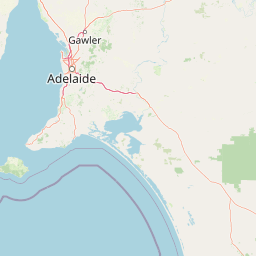
The reserve sits at the southern end of South Australia's semi-arid zone, a transitional region where the drier interior country begins to give way to the slightly more temperate landscapes further south. Rainfall is low, averaging around 270 millimetres annually, and is concentrated in the winter months, leaving the landscape parched for much of spring and summer. Winters are cool and summers are hot, and the combination of low rainfall and shallow calcareous soils produces a sparse, sun-exposed environment.
The result is a visually open landscape of low, rounded rises and shallow valleys, dominated by multi-stemmed mallee eucalypts and a mosaic of shrubland communities. This kind of terrain is characteristic of the Murraylands fringe, where the eastern Mount Lofty Ranges gradually flatten out into the broader country that drains towards the Murray River basin.
Yookamurra Sanctuary ecosystems, habitats, and plant life
The ecological character of Yookamurra is shaped overwhelmingly by mallee vegetation. Mallee refers to eucalypt species that grow as small, multi-stemmed trees rather than as tall single-trunked forest giants, and they are a defining feature of drier southern Australia. Across the sanctuary, most habitats are variations of mallee woodland and mallee shrubland, creating a mosaic of open canopies, dense shrub layers, and bare or sparsely vegetated ground in between.
Because the soils are shallow and sit over calcrete, they retain limited moisture, which restricts the kinds of plants that can thrive here and produces a relatively low, hardy vegetation structure. The mallee communities at Yookamurra are typical of those that once covered vast areas of southern South Australia but have been extensively cleared for agriculture, leaving surviving patches like the sanctuary as important refuges.
The semi-arid climate, with cool wet winters and long hot dry summers, strongly influences the rhythms of life in the reserve, from plant flowering cycles to the activity patterns of native animals. The combination of mallee structure, calcrete geology, and dryland climate is what gives Yookamurra its particular ecological identity, distinguishing it from wetter forested parks in the Mount Lofty Ranges or riverine environments along the Murray floodplain.
Yookamurra Sanctuary wildlife and species highlights
Yookamurra Sanctuary supports an array of arid-zone and mallee-associated native fauna, including several species of conservation concern. Among the birds, the malleefowl is one of the better known inhabitants, a ground-dwelling mound-building bird that is highly dependent on intact mallee habitat and has declined sharply across southern Australia.
The mammal fauna includes larger and more conspicuous species such as the emu, western grey kangaroo, and red kangaroo, alongside several smaller mammals of particular conservation interest. The southern hairy-nosed wombat is associated with the calcareous soils and open country of the region, while the short-beaked echidna occurs more widely across Australian landscapes. Smaller, more specialised mammals include the numbat, a termite-eating marsupial once widespread but now reduced to scattered populations, the greater bilby, the boodie, and the woylie, a small wallaby-like marsupial that has suffered severe declines in much of its former range.
Not all reintroduction efforts at Yookamurra have succeeded. An attempt to re-establish the greater stick-nest rat, a native rodent that constructs large stick nests, was unsuccessful and the species is not currently maintained at the sanctuary. The mix of species present reflects the reserve's role as a refuge for arid-zone fauna in a region that has otherwise been heavily modified for agriculture.
Yookamurra Sanctuary conservation status and protection priorities
Yookamurra's significance for conservation lies in its role as one of the few large, intact blocks of mallee woodland and shrubland remaining in the South Australian Murraylands. The surrounding region has been extensively cleared for cropping and grazing, leaving relatively little native habitat for wildlife to persist in. By maintaining a sizeable contiguous area of vegetation under active management, the sanctuary provides a refuge for species that have been lost from much of the surrounding matrix.
The reserve is managed with deliberate conservation interventions, including feral animal control to reduce pressure from introduced predators and herbivores, habitat management to maintain mallee vegetation structure, and reintroductions of native mammal species that have disappeared locally. Programs to maintain populations of numbats, greater bilbies, woylies, and other threatened mammals rely on the combination of suitable habitat and active protection from feral predators.
Although some reintroductions, such as the greater stick-nest rat, have not succeeded, the sanctuary remains a working example of private conservation land management in a semi-arid setting. Its IUCN Category IV classification explicitly recognises it as a habitat and species management area, meaning its value comes as much from ongoing management actions as from the intrinsic qualities of the landscape itself.
Top sights and standout views in Yookamurra Sanctuary
Yookamurra Sanctuary stands out for combining a substantial area of intact mallee vegetation with active conservation management in a region where such habitat is increasingly rare. The reserve is a working example of how private landholdings can contribute meaningfully to the protection of Australia's arid-zone wildlife outside of the formal national park estate.
Its location between the Mount Lofty Ranges and the Murray River places it in a transitional landscape where the southern semi-arid zone gives way to mallee country, providing habitat that supports threatened species such as the malleefowl, numbat, greater bilby, and southern hairy-nosed wombat. The sanctuary's assemblage of reintroduced and resident fauna, combined with ongoing feral control, makes it a key node in the Australian Wildlife Conservancy's network of conservation reserves in southern Australia.
Best time to visit Yookamurra Sanctuary
The most temperate and biologically active period at Yookamurra corresponds with the cooler months of the year, when the bulk of the annual rainfall arrives. Winter and spring bring cooler temperatures and greening conditions across the mallee vegetation, and this is also a more comfortable period for being outdoors in the South Australian semi-arid zone.
Summer at Yookamurra is typically hot and dry, with high temperatures and parched conditions that can make the open landscape harsh for both wildlife observation and human comfort. Visitors interested in seeing active wildlife and more vibrant vegetation are likely to find conditions more rewarding during the cooler, wetter part of the year, while those drawn to the stark character of the mallee under harsh sun may prefer the contrast of the hotter months. As with any arid-zone reserve, conditions can vary considerably from year to year depending on rainfall.