
Trip Planning
When to Visit Amboseli National Park: Key Factors for Your Trip
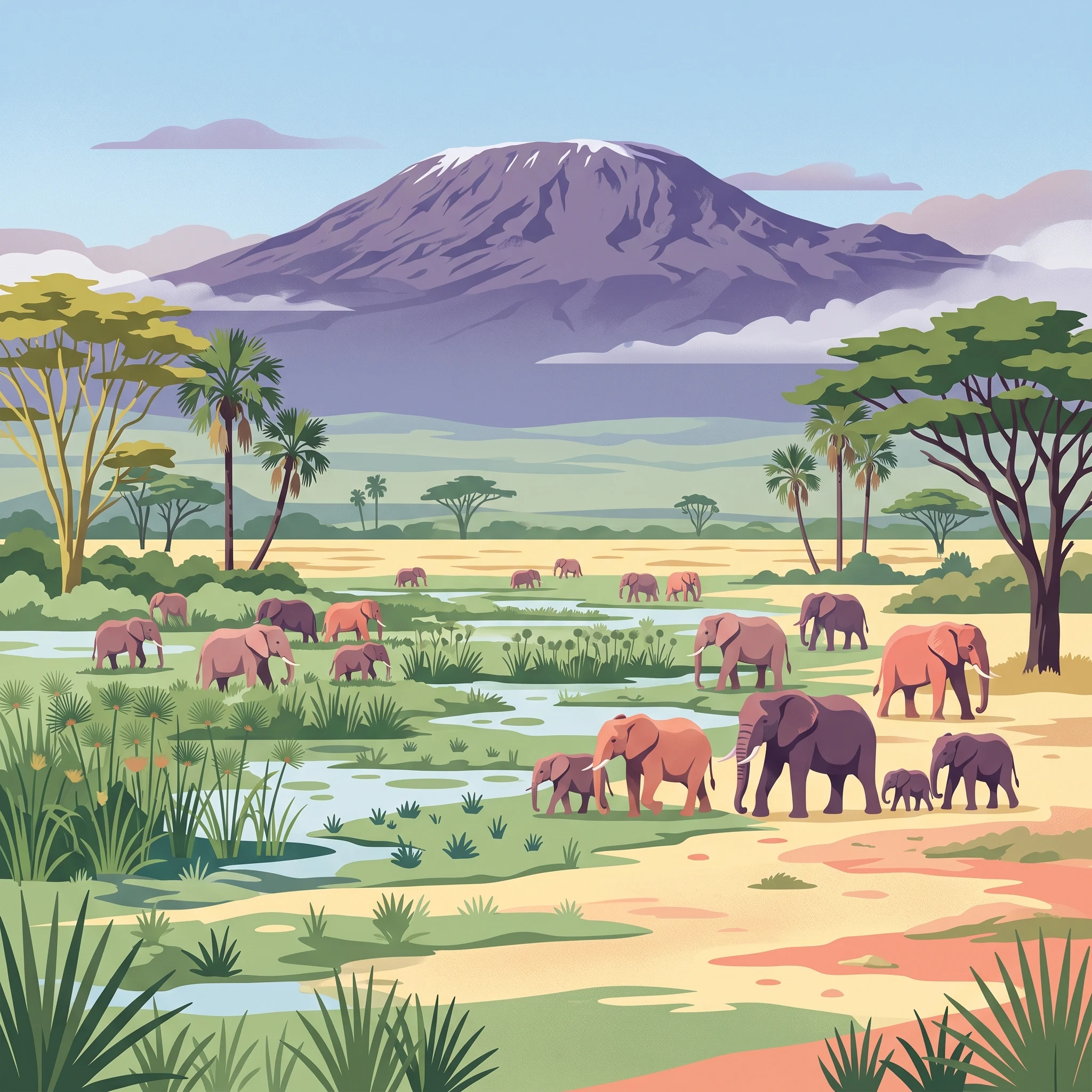
Determining the best time to visit Amboseli National Park requires balancing the desire for high-visibility wildlife viewing against the logistical realities of a landscape governed by extreme seasonal water cycles. For many travelers, the most effective window for a trip falls within the dry season months from June through October. During this period, the receding water in the park’s famous swamps and the thinning savanna vegetation force large mammals, including the park’s celebrated elephant herds, to congregate near permanent water sources. This natural concentration creates a predictable environment for wildlife observation, often framed by clear, cloud-free views of the neighboring Mount Kilimanjaro.
The Relationship Between Climate and Wildlife Visibility
While the dry season is widely preferred, the climate in Amboseli National Park introduces distinct trade-offs that influence the overall experience. The park’s geography, defined by its position at the base of Kilimanjaro and its unique wetland system, means that annual rainfall levels fluctuate significantly. During the wetter months, typically peaking in April and November, the landscape undergoes a transformation into a lush, green environment. While this surge in vegetation supports diverse birdlife and offers a different aesthetic character, it also allows wildlife to disperse across a wider area, making them harder to spot. Understanding this dynamic is crucial for setting expectations: your visit should be aligned with whether you prioritize the high-density wildlife sightings of the dry months or the vibrant, verdant scenery of the wetter transition periods.
Temperature and Daily Environmental Conditions
Visitors must also account for the park’s specific temperature patterns, which can be surprisingly stark. Despite its location in a semiarid region of Kenya, the elevation and the presence of the mountain mass influence local weather, leading to significant temperature variations within a single day. You might encounter warm, bright daylight hours followed by rapid temperature drops as the sun sets. These shifts are a constant factor throughout the year, regardless of the month, and require travelers to prepare for a range of conditions rather than a single stable climate. Because the park relies on these internal water systems, the seasonal accumulation of rain directly dictates accessibility, as roads and paths can be significantly impacted by even moderate precipitation. Prospective visitors should recognize that while the dry season offers the most reliable access, the character of the park remains sensitive to the annual pulse of the rain, ensuring that no single month provides a perfectly static experience. Planning should focus on balancing these environmental factors with your specific interests in photography, birding, or social wildlife interaction.
Seasonal Planning
Best Months to Visit Amboseli National Park for Wildlife and Weather
Peak Wildlife Viewing Window: June to October
The most straightforward window for those prioritizing wildlife photography and observation spans from June through October. This period aligns with the dry season, characterized by minimal precipitation, which averages less than 1 mm per day for much of this timeframe. As the surrounding savanna dries out, wildlife relies increasingly on the permanent swamps fed by underground meltwater from Mount Kilimanjaro. This concentration of fauna near predictable water sources significantly improves the likelihood of spotting large elephant herds and diverse bird life. The trade-off for this consistency is a landscape that appears dusty and parched, as the ancient lakebed loses its seasonal greenery, and daytime maximum temperatures begin a steady climb toward their peak in September and October.
Transition Periods: November and December, March and April
Travelers who prefer to avoid the highest concentration of visitors or those interested in seeing the landscape transform should consider the shoulder months. November and December mark the arrival of the short rains, while March and April represent the onset of the long rains. These months introduce higher humidity levels, often exceeding 70 percent, and increased precipitation that can occasionally complicate transit within the park. The primary advantage of these windows is the emergence of lush vegetation, which offers a striking visual contrast to the dry season, though it often results in wildlife dispersing across a wider area, making them more challenging to locate. These periods are ideal for those who find the dry-season dust and heat less appealing and are willing to sacrifice some wildlife density for more vivid scenery and cooler, albeit wetter, conditions.
The Dry Mid-Year Lull: July and August
For visitors specifically aiming for the most comfortable weather, July and August offer a unique balance. While these remain firmly within the dry season, the average maximum temperatures are slightly more moderate than those experienced in the preceding or following months. Wind speeds are also at their annual highest during this time, averaging over 4 m/s, which can help mitigate the intensity of the equatorial sun. This period suits those who find higher heat thresholds uncomfortable, although the park remains a sun-exposed environment throughout the day. It is important to note that while these months are a popular choice for many, the actual visitor numbers can fluctuate; travelers should focus on the consistent wildlife patterns and the relatively stable, dry climate when planning their itinerary during this window.
Annual Climate Overview
Understanding Weather and Climate Patterns in Amboseli National Park
Understanding the climate of Amboseli requires moving beyond general weather reports to look at how specific environmental normals influence the park landscape. The region operates on a pattern defined by significant shifts in humidity and precipitation that dictate the visibility of wildlife and the quality of the air. While these figures represent long-term climate normals from 1991 to 2020 and should not be confused with daily, real-time forecasts, they provide a reliable framework for identifying the annual rhythmic changes in the park environment.
The Relationship Between Precipitation and Wildlife Visibility
The most critical environmental factor for any visit is the variation in rainfall, which dictates whether the swamps remain dense or dry out. Precipitation peaks twice annually, with notable increases occurring in April and again in November. During these months, relative humidity levels often climb above 70 percent, creating a sense of moisture that contrasts sharply with the arid conditions of the mid-year window. In contrast, the period from June through September experiences the lowest precipitation, frequently dropping to less than 0.5 mm per day. This extended dry phase is what causes the swamps to recede, forcing wildlife to congregate near the few remaining permanent water sources. Visitors should view these precipitation trends as a biological regulator: when rain is highest, wildlife disperses across a greener, more challenging-to-navigate terrain, whereas the dry months consolidate animal activity into predictable, viewable zones.
Temperature Ranges and Daily Variance
Temperature patterns in this region remain relatively consistent throughout the year, but the daily fluctuations are what travelers most often notice. Average daily maximums typically hover between 30°C and 34°C, with the warmest periods occurring in the transition months of February and October. While these daytime highs suggest heat, the influence of altitude at roughly 1,178 meters moderates the experience, and average minimum temperatures usually remain in the 13°C to 16°C range. It is the combination of intense equatorial sun during the day and the rapid drop in temperature after sunset that defines the park’s thermal profile. Travelers should prepare for a significant drop in temperature during the early morning game drives compared to the heat of the afternoon, regardless of the month they choose to visit.
Wind, Humidity, and Daylight Dynamics
The wind profile in the park shows a distinct acceleration as the year progresses toward the driest months. Wind speeds reach their annual peaks in August and September, often exceeding 4.5 m/s. This increased airflow during the driest part of the year can be a mixed blessing: it helps mitigate the feeling of the afternoon heat, but it also kicks up dust from the dried-out lakebed, which can occasionally affect visibility. Daylight hours remain remarkably stable throughout the year, with a narrow range between 11.85 and 12.15 hours. Unlike regions in higher latitudes that experience dramatic seasonal changes in sunlight, visitors to the park can reliably plan for roughly 12 hours of light each day, meaning game viewing opportunities are largely defined by animal behavior and weather-induced visibility rather than the physical loss of daylight.
Seasonal dynamics
Understanding seasonal weather patterns in Amboseli National Park
Amboseli National Park does not experience the traditional four-season cycle common to temperate regions. Instead, the park landscape is governed by a distinct oscillation between long, arid stretches and shorter, concentrated wet phases. This rhythm is dictated by the biennial movement of rainfall, which fundamentally alters the visibility of wildlife and the accessibility of the park terrain. Understanding these dynamics is essential for timing a visit, as the park transitions between a dusty, semi-arid savanna and a vibrant, swamp-fed wetland.
The Extended Dry Phase: June through October
This period represents the primary window for wildlife observation, characterized by a persistent lack of rainfall and a steady decline in humidity. From June through September, the landscape undergoes a drying process that recedes the vast swamps toward their permanent water centers. During these months, vegetation thins significantly, which enhances visibility for spotting animals, particularly the park's iconic elephant herds. August and September often represent the driest months, with minimal precipitation levels. Visitors during this phase will notice that the environment becomes increasingly dusty as the ancient lakebed desiccates, creating the high-contrast backdrops that define the classic Amboseli aesthetic. Temperatures during this window remain moderate, though the lack of cloud cover often leads to cooler mornings, particularly in July.
The Short Rains and Transition: November and December
As the year draws to a close, the park experiences a transition characterized by the short rainy season. November and December see a marked increase in precipitation, which initiates a rapid transformation of the semiarid landscape. Visitors may notice the vegetation turning lush and green within a short span, which often causes wildlife to disperse away from the main swamps. While the landscape becomes more vibrant, photography conditions can become more challenging due to the increased density of foliage. This phase acts as a bridge, moving the park from the harsh, dry conditions of the preceding months into a more fertile state. The humidity levels begin to climb during this period, signaling a shift in the regional climatic influence.
The Warm Period and Second Transition: January through April
Following the short rains, the park enters its warmest months, typically peaking in February and March. During this window, temperatures reach their highest annual averages, often accompanied by drier days before the onset of the long rains in April. This time of year is a period of adjustment for the local ecosystem. By April, precipitation levels rise significantly, marking the return of the wetter, more humid cycle. For travelers, this transition period requires flexibility, as the increased rainfall can influence soil conditions on the park tracks. The landscape remains lush throughout the early months of this phase, gradually drying out as the park moves toward the start of the next long dry season in late May or June. These transitional months are less predictable than the deep dry season, and the environmental changes are often visible over the course of just a few weeks.
Seasonal Experiences
What Visiting Amboseli National Park is Like Through the Year
Elephant Herd Dynamics and Seasonal Wetland Access
The experience of observing Amboseli's elephant herds is fundamentally linked to the park's hydrological cycles. During the extended dry phase from June to October, when the central marshes reach their lowest levels, elephant families often congregate in specific, predictable areas near the perennial swamp springs. This concentration creates the classic, high-density wildlife viewing that defines the park experience. In contrast, when the short or long rains bring relief, these herds disperse into the wider surrounding ecosystem. While the lush, post-rain landscapes offer a different aesthetic, the density of elephant sightings frequently decreases, requiring more time and patience to locate families across the greener plains.
Photographic Visibility and Mount Kilimanjaro
For those prioritizing photography, the interaction between atmospheric moisture and distance visibility is a critical factor. The iconic view of Mount Kilimanjaro, often framed by the flat, dusty lakebeds, is statistically more likely to be clear in the early morning hours throughout the year. However, the dry season months of July, August, and September provide the most consistently dust-free and clear sky conditions. During the humid transitions in November, December, and April, increased cloud cover can frequently obscure the peak for long stretches of the day. Choosing a visit during the drier middle months significantly improves the probability of capturing the mountain without significant cloud obstruction, which remains a primary goal for many visitors using Observation Hill or the marsh edges as vantage points.
Migratory Bird Activity and Seasonal Wetlands
Amboseli functions as a critical corridor for avian migration, with activity peaking during the wetter months of November through April. Visitors interested in birdwatching will find the park's character transformed during this time, as migratory species join resident populations around the recharged wetlands. The swamp areas become hyper-active with water birds, including pelicans, herons, and egrets. While the higher precipitation during these months may present challenges for movement, the birding experience is at its most diverse. This period offers a distinct alternative to the dry-season focus, as the landscape shifts from a dusty safari setting to an active, green wetland habitat. Travelers should note that seasonal pools and ephemeral lakes may appear or expand during this time, creating temporary refuges that are absent for much of the year. This seasonal shift highlights the park's dual nature: a dry-land refuge for megafauna during the parched summer months and a vibrant, water-dependent ecosystem during the wetter periods.
Travel Priorities
Choosing the Best Time to Visit Amboseli Based on Your Travel Priorities
Selecting your travel dates in Amboseli involves balancing distinct ecological trade-offs. While many travelers gravitate toward the dry season for its reliable wildlife concentration, your specific goals regarding temperature, landscape aesthetics, or walking comfort may suggest a different window. The following priorities help narrow the decision based on the climate patterns that dictate the park's atmosphere.
Prioritizing Clear Views and Photographic Stability
If your primary objective is capturing the classic silhouette of elephants against a clear, snow-capped Mount Kilimanjaro, target the dry months of July, August, and September. During this period, the relative humidity typically drops below 60 percent, and the lack of significant precipitation ensures that dust and atmospheric haze are minimized compared to the cloud-heavy rainy seasons. The trade-off for this visual clarity is a dry, barren landscape. The lush green swamps retreat, and the park takes on a dusty, golden aesthetic. While this is the most photogenic time for mountain backdrop photography, travelers should be prepared for high sun exposure and a lack of shade across the open plains.
Seeking Cooler Temperatures for Daytime Comfort
Travelers who find high heat challenging should look toward the cooler mid-year period. June and July offer some of the lowest average maximum temperatures in the park, hovering around 30 to 31 degrees Celsius. These months benefit from the slightly increased wind speeds, which peak in July and August, providing a cooling effect during morning and afternoon game drives. The compromise here is that you are visiting during the peak of the dry season, meaning the park environment is at its most arid. While the temperature is more manageable, the lack of moisture requires vigilance regarding hydration and sun protection, as the semiarid sun remains intense even at lower ambient temperatures.
Avoiding Peak Aridity for Landscape Variety
For those who prefer a more vibrant, green landscape and are willing to accept lower wildlife visibility, the shoulder months of November and December present a compelling alternative. Following the short rains, the vegetation often flourishes, providing a lush contrast to the surrounding volcanic soil. This period offers a respite from the dustiness of the late dry season. However, this shift comes with increased humidity and the potential for intermittent rain, which can lead to muddier ground conditions on secondary tracks. The wildlife, while still present, tends to disperse more widely across the ecosystem, requiring more time and patience during game drives to locate the herds that are otherwise clustered near the permanent swamps during the peak dry months.
Timing for Longer Daylight and Consistent Warmth
Travelers who prioritize consistent daylight hours for extended game viewing will find the months of November through January optimal. Daylight fluctuates annually, but these months provide slightly longer intervals, reaching upwards of 12 hours. This period often sees an increase in the mean temperature, making it suitable for those who prefer warmer conditions throughout the day. The trade-off is the unpredictability of short-term weather shifts, as the park transitions between its wet and dry phases. This timing serves those who value active, long days, provided they maintain flexibility regarding potential changes in cloud cover and local precipitation.
Access and Logistics
Seasonal Access Considerations for Amboseli National Park
Navigating Park Roads and Seasonal Transit
While the park is accessible throughout the year, the physical condition of the road network is dictated by the regional rainfall cycles. During the drier months of June through October, the roads consist primarily of dry, dusty, and often corrugated surfaces. These conditions are manageable for most standard safari vehicles, though they require reduced speeds to minimize mechanical strain and avoid discomfort. During the wetter phases, particularly following the heavy rains in April and May or the secondary rains in November and December, certain areas, especially those surrounding the seasonal Lake Amboseli, can become prone to flooding or significant mud. You must verify current road status and accessibility through official park authorities or your safari operator before departure, as conditions can change rapidly following localized downpours.
Vehicle Requirements and Transport Recommendations
For any visit, a 4x4 safari vehicle is the standard recommendation for navigating the park effectively. This is particularly vital during the wetter months when ground clearance and four-wheel traction are necessary to traverse saturated tracks. Most visitors rely on professional driver-guides who possess the local knowledge to identify the safest routes and adapt to changing terrain. If you are planning to travel to the park using private transport or are staying at a lodge outside the main boundaries, ensure your logistics plan accounts for potentially long transfer times on rough conservancy roads. Because fuel stations are not available within the park, it is essential to stock up on fuel, water, and necessary supplies in neighboring towns like Kimana, Namanga, or Emali prior to entry. Always confirm specific gate opening times and entry protocols with the Kenya Wildlife Service or your authorized tour provider, as operational policies can be updated.
Park Access and On-Site Movement
Movement within the park is structured around designated game-driving loops, which radiate from the central Observation Hill area. While this hilltop provides one of the few locations where walking is permitted, the vast majority of the park is restricted to vehicle-based exploration to ensure safety and wildlife conservation. Cycling, motorbikes, and off-road driving are prohibited. GPS reception can be unreliable in parts of the reserve, so rely on physical maps provided at the entry gates and the expertise of your guide for navigation. Since park infrastructure and specific gate hours are subject to change based on management decisions, check the latest notices from the park administration before your arrival to ensure your itinerary remains feasible.
Safety and Logistics
Seasonal Safety and Practical Preparation for Amboseli National Park
Navigating Seasonal Thermal and Atmospheric Shifts
Preparation for your visit depends heavily on the time of year, as Amboseli experiences distinct climatic shifts that impact comfort and health. During the peak dry months of July through September, the landscape is characterized by high levels of dust due to the lack of precipitation and strong wind speeds, which peak at an average of 4.83 meters per second in September. For travelers with respiratory sensitivities, this dust is a primary consideration. Carrying personal water supplies and items such as a buff or scarf can help mitigate the effects of fine particulate matter during game drives. Conversely, the transition months of November, December, and April bring increased humidity levels, sometimes exceeding 70 percent, and more frequent rainfall. During these wetter periods, the primary safety focus shifts toward navigating potentially muddy terrain and managing the increased presence of mosquitoes. Always consult with a healthcare professional regarding malaria prophylaxis well in advance of your trip, as conditions within the park ecosystem remain consistent with regional health guidance.
Sun Exposure and Temperature Management
While Amboseli is located at an elevation of roughly 1,178 meters, the equatorial sun remains intense throughout the year. Daytime temperature maximums consistently hover between 30 and 34 degrees Celsius, with the hottest conditions typically recorded in February and October. Dehydration is a risk on long game drives, particularly when the landscape offers little shade. Because vehicles often spend extended periods in open areas to observe wildlife, relying on internal vehicle temperatures is insufficient for hydration management. Plan to carry your own water throughout the day, and use broad-brimmed hats and high-SPF sun protection as standard practice. Because temperature ranges between night and day can fluctuate, particularly with minimums dropping toward 13 degrees Celsius in the middle of the year, wearing layers allows for easier adjustment when mornings start cool and afternoons intensify.
Wildlife Safety and Environmental Awareness
Amboseli is a wild, unfenced environment where animal behavior is unpredictable. Safety is fundamentally rooted in distance and vehicle discipline. Regardless of the season, animals move freely throughout the park and around many lodging perimeters. Never exit your vehicle unless you are within a specifically designated area, such as Observation Hill, and always follow the instructions of your guide. If you are staying at an unfenced camp, treat the grounds as a wild habitat after dark. Lodge staff often provide escorts for guests moving between tents and main dining areas during the evening; prioritize these services. Ensure you carry a reliable flashlight, as unlit pathways are common once the sun sets. If you are self-driving, note that driving at night is hazardous due to the presence of large wildlife on roads and poor visibility, so ensure your itinerary allows for arrivals well before dark. Always verify current weather-related road alerts with the Kenya Wildlife Service, as sudden changes can affect track passability regardless of general seasonal trends.
Trip decision
Choosing the best time to visit Amboseli National Park
Synthesizing Your Seasonal Choice
Deciding when to visit Amboseli depends on how you weigh the trade-offs between wildlife density and the physical comfort of the environment. If your primary goal is high-frequency sightings of elephants against the iconic backdrop of Mount Kilimanjaro, the dry months from June to October provide the most reliable conditions. During this period, the receding swamp waters force large mammals to congregate at permanent water holes, and the reduced vegetation density makes tracking animals significantly easier. You should, however, be prepared for dusty conditions and the intensity of the midday sun, which reach peak maximums in late September and October.
For those who prioritize lush landscapes and are willing to accept lower wildlife visibility, the wetter periods in November and late spring offer a transformed, emerald-hued environment. While the rain brings the risk of muddy tracks and challenging park access, it also invites migratory bird activity and a more temperate, albeit humid, atmosphere. This window is ideal for travelers who prefer a quieter experience and are not reliant on the high-visibility game viewing that defines the peak dry season. If you choose this time, focus your planning on flexibility, as localized downpours can temporarily alter the state of park roads and observation loops.
Balancing Personal Priorities with Climatic Normals
Your final decision should align with your tolerance for specific environmental factors. If you prefer avoiding the peak heat of the day, early-to-mid year windows offer slightly more moderate mean temperatures before the October and November heatwaves take hold. Conversely, if you seek the longest daylight hours for extended game drives, the late-year transition into December provides more time in the field, though you must factor in the higher likelihood of afternoon rainfall.
Remember that climate records between 1991 and 2020 provide only a baseline for what to expect. Actual conditions can shift significantly, and daily weather patterns are never guaranteed. Before finalizing your travel dates, always consult current long-range forecasts, official park status reports from the Kenya Wildlife Service, and local road conditions. This proactive approach ensures that your chosen window remains practical for the specific type of safari experience you intend to have, allowing you to adapt to the reality of the park's dynamic ecosystem rather than relying solely on historical averages.