

Mori Atlas logo
Wildlife reserveBherjan-Borajan-Padumoni Wildlife Sanctuary

A vital tropical forest reserve defined by fragmented blocks across the Tinsukia district landscape.

Bherjan-Borajan-Padumoni Wildlife Sanctuary: Protected Landscape and Forest Geography in Assam

(Bherjan Bokajan Padumoni Wildlife Sanctuary)

Bherjan-Borajan-Padumoni Wildlife Sanctuary stands as a significant protected area within the Upper Assam region of northeastern India. Comprising the distinct Bherjan, Borajan, and Padumoni forest blocks, this wildlife reserve provides a necessary habitat sanctuary within a wider mosaic of lowland plains. Users can trace the unique spatial layout of these forest patches, which support diverse primate populations and avian communities in this tropical forest environment.

wildlife sanctuarytropical forestprimate conservationhoolock gibbonupper assamtinsukia district

Bherjan-Borajan-Padumoni Wildlife Sanctuary

Wildlife reserve

Park overview

Structured park overview, official facts, and landscape profile for Bherjan-Borajan-Padumoni Wildlife Sanctuary

Bherjan-Borajan-Padumoni Wildlife Sanctuary park facts, protected area profile, and essential visitor context

Review the core facts for Bherjan-Borajan-Padumoni Wildlife Sanctuary, including designation, size, terrain, visitor scale, habitats, and operating context in one park-focused overview.

About Bherjan-Borajan-Padumoni Wildlife Sanctuary

Bherjan-Borajan-Padumoni Wildlife Sanctuary lies in Tinsukia district, in the Upper Assam region of northeastern India, and functions as one of the smaller but ecologically distinctive forest reserves of the state. Although its total area is modest at approximately 7.22 square kilometers, the sanctuary is structured around three separately named forest blocks: Bherjan, Borajan, and Padumoni. This block-based configuration gives the protected area its identity and reflects how conservation in heavily settled regions often depends on safeguarding scattered patches of remaining forest.

The sanctuary was formally established in 1999 under the management of the Department of Environment and Forests, Government of Assam. Its IUCN category IV designation indicates that it is a habitat and species management area, a status that aligns with its focus on protecting specific wildlife communities rather than preserving an entire large-scale wilderness. In the regional context, where much of the surrounding lowland and foothill forest has been altered by agriculture, settlement, and development, Bherjan-Borajan-Padumoni represents a maintained pocket of natural habitat.

Ecologically, the sanctuary is most notable for its primates. The hoolock gibbon, the only ape species native to India, depends on continuous canopy forest, and the sanctuary's protected blocks support a population that has been documented as part of the broader Upper Assam gibbon range. Other primates recorded here include the capped langur, pig-tailed macaque, slow loris, and rhesus macaque, reflecting a diverse guild of arboreal and semi-arboreal mammals. The presence of leopards has also been noted, indicating the reserve supports larger predators despite its small size.

In addition to mammals, the sanctuary is recognized for its birdlife. Roughly eighty-four bird species have been recorded within and around its forest blocks, contributing to its significance as a birding and biodiversity site in Upper Assam. Together, these characteristics give Bherjan-Borajan-Padumoni a clearly defined identity as a compact, primate-focused reserve within one of India's most heavily forested northeastern states.

Quick facts and research context for Bherjan-Borajan-Padumoni Wildlife Sanctuary

Bherjan-Borajan-Padumoni Wildlife Sanctuary is a protected habitat and species management area located in Tinsukia district in Upper Assam, India. Established in 1999, it covers approximately 7.22 square kilometers across three forest blocks named Bherjan, Borajan, and Padumoni. The sanctuary is managed by the Department of Environment and Forests of the Government of Assam and is classified as an IUCN Category IV protected area. Its conservation profile is built around primates such as the hoolock gibbon, capped langur, pig-tailed macaque, slow loris, and rhesus macaque, alongside a recorded bird community of around eighty-four species.

Protection and recognition

Review documented terrestrial protection scope and international recognition data.

Bherjan-Borajan-Padumoni Wildlife Sanctuary Protection Status and Designation Facts

Bherjan-Borajan-Padumoni Wildlife Sanctuary maintains a defined terrestrial protection scope within its regional conservation framework. Official records compile verified designation history and international recognition sources for structured atlas navigation.

Protection details

Protection scope
Terrestrial
Transboundary protection
No
Park context

Deeper park guide and search-rich context for Bherjan-Borajan-Padumoni Wildlife Sanctuary

Bherjan-Borajan-Padumoni Wildlife Sanctuary history, landscape, wildlife, and travel context

Explore Bherjan-Borajan-Padumoni Wildlife Sanctuary through its history, landscape character, ecosystems, wildlife, conservation priorities, cultural context, and seasonal travel timing in a structured park guide built for atlas discovery and search intent.

Why Bherjan-Borajan-Padumoni Wildlife Sanctuary stands out

The sanctuary is best known as a small but important refuge for the hoolock gibbon in Upper Assam, set within a fragmented landscape of three named forest blocks. Its primate community, which also includes capped langur, pig-tailed macaque, and slow loris, gives the reserve a clear focus on arboreal mammal conservation. The bird checklist of around eighty-four recorded species adds further recognition, making the sanctuary a compact habitat island within a broader mosaic of Upper Assam forests.
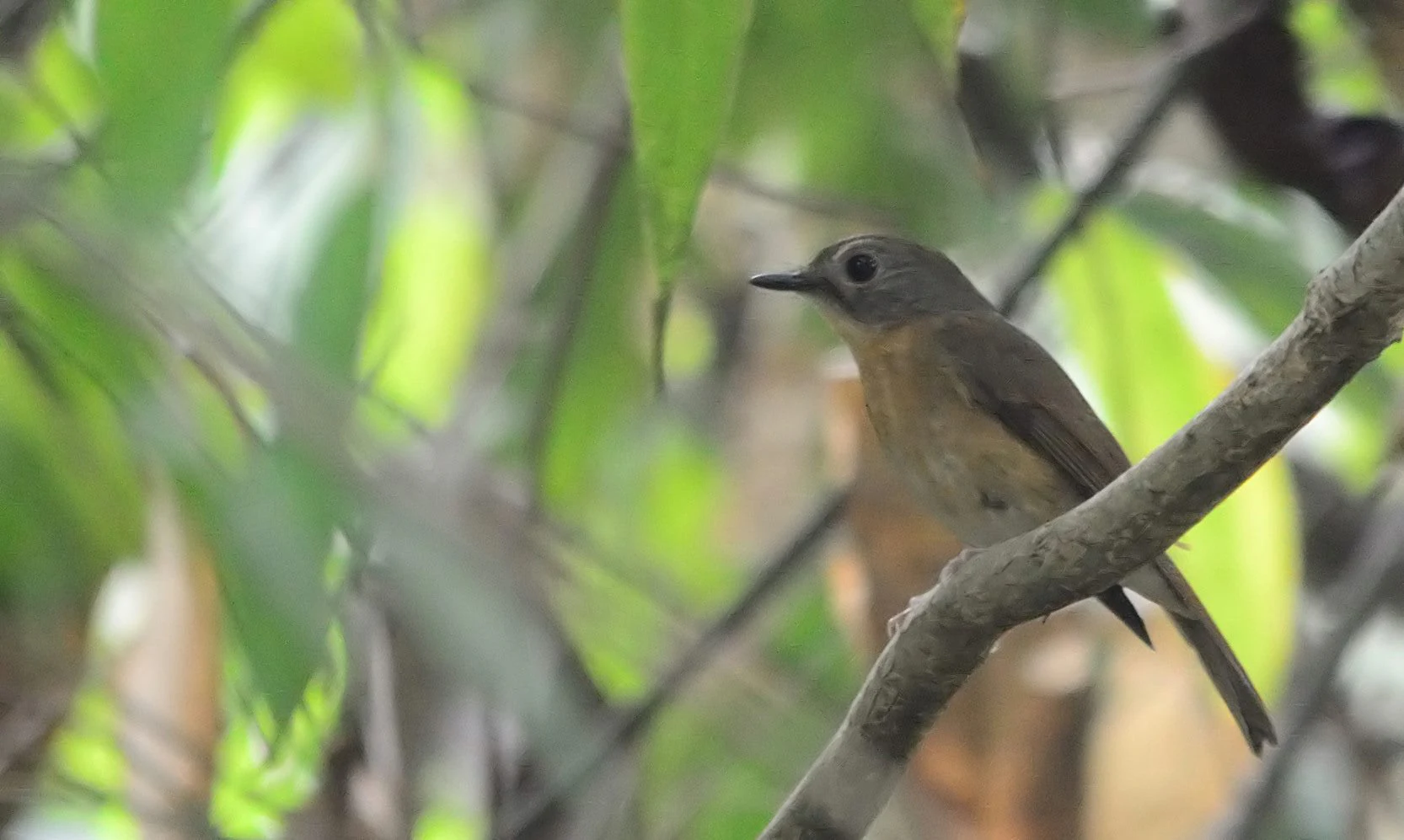
A small, brown, and buff-colored bird with a pale chin perched on a diagonal tree branch surrounded by lush green out-of-focus foliage.
A Pale-chinned Flycatcher perched on a branch within the forest canopy of Bherjan-Borajan-Padumoni Wildlife Sanctuary.

Bherjan-Borajan-Padumoni Wildlife Sanctuary history and protected-area timeline

Bherjan-Borajan-Padumoni Wildlife Sanctuary was formally established in 1999, consolidating three previously separate forest areas in Tinsukia district into a single protected wildlife refuge. The sanctuary is administered by the Department of Environment and Forests of the Government of Assam and is classified as an IUCN Category IV protected area, indicating its role as a habitat and species management site.

The creation of the sanctuary reflected growing recognition of the conservation value of these forest patches in Upper Assam, particularly for primate populations that depend on intact canopy cover. By bringing the Bherjan, Borajan, and Padumoni blocks under a unified protected framework, the establishment formalized ongoing efforts to maintain wildlife habitat within an otherwise heavily modified regional landscape.

Bherjan-Borajan-Padumoni Wildlife Sanctuary landscape and geographic character

The landscape of Bherjan-Borajan-Padumoni Wildlife Sanctuary is defined by three named forest blocks within Tinsukia district, in the upper part of Assam in northeastern India. Together these blocks account for the sanctuary's total area of around 7.22 square kilometers, making it one of the smaller reserves in the region but also giving it a distinctly fragmented physical character.

The surrounding regional terrain of Upper Assam includes a mix of lowland plains, river systems, and forested tracts typical of the Brahmaputra valley fringe. Within that broader setting, the sanctuary itself consists of tropical forest vegetation, with closed canopies and interior shaded ground that support arboreal wildlife. The block-based layout, with separate patches separated by non-forest land, shapes both the ecological dynamics and the management approach of the protected area.

Bherjan-Borajan-Padumoni Wildlife Sanctuary ecosystems, habitats, and plant life

Ecologically, Bherjan-Borajan-Padumoni functions as a tropical forest sanctuary maintained within a heavily altered Upper Assam landscape. Its habitat base is built around the canopy and sub-canopy vegetation of three protected forest blocks, which provide cover, food resources, and movement routes for arboreal mammals. The presence of fruiting trees, lianas, and mixed tropical vegetation supports a community of primates that depend heavily on forest structure.

The vegetation pattern reflects a mosaic typical of small, isolated reserves in northeastern India, where protected patches often serve as refuges in a wider matrix of human-used land. Despite its small total area, the sanctuary preserves habitat for species that are sensitive to forest fragmentation, including gibbons, langurs, and slow lorises. Birdlife recorded here, numbering around eighty-four species, indicates that the habitat supports a range of forest-interior and edge-associated avian communities.

Bherjan-Borajan-Padumoni Wildlife Sanctuary wildlife and species highlights

The wildlife profile of Bherjan-Borajan-Padumoni Wildlife Sanctuary is strongly defined by its primate community. The hoolock gibbon, one of the most important conservation targets in northeastern India, is present in the sanctuary's forest blocks and reflects the area's significance for ape conservation in Upper Assam. Alongside it, the capped langur, pig-tailed macaque, slow loris, and rhesus macaque form a diverse primate guild that occupies different layers and niches within the forest canopy.

Larger mammals are also part of the sanctuary's recorded fauna, with leopards noted as present, suggesting that even small forest fragments here can support apex predators when protected. The reptile and smaller mammal communities typical of northeastern Indian forests are part of the broader ecological setting, although they are less emphasized in the documented profile of the reserve.

Ornithologically, the sanctuary supports a recorded bird community of around eighty-four species. This avifauna includes both forest-interior species attracted to the closed-canopy blocks and birds associated with the surrounding mosaic of habitat types in Upper Assam. The combination of primate diversity and a substantial bird checklist shapes how the reserve is positioned within regional biodiversity conservation.

Bherjan-Borajan-Padumoni Wildlife Sanctuary conservation status and protection priorities

Bherjan-Borajan-Padumoni Wildlife Sanctuary holds a focused conservation role as a habitat and species management area within a heavily populated state. Its IUCN Category IV designation emphasizes targeted management for particular wildlife communities rather than broad wilderness preservation, and the reserve's protected blocks serve as a refuge for hoolock gibbons and other primates that are sensitive to habitat loss and fragmentation.

In the regional context, where much of Upper Assam's original forest cover has been converted for settlement, agriculture, and industrial use, the sanctuary represents an effort to maintain viable habitat for primate populations that would otherwise be restricted to smaller and more isolated forest patches. The presence of leopards alongside primate prey species suggests that a functioning predator-prey dynamic has been retained at least on a local scale.

By bringing three separate forest blocks under a single protected framework, the sanctuary also serves as a demonstration of how fragmented forest landscapes in northeastern India can be managed collectively for conservation. Its role in primate conservation, combined with its documented birdlife, gives it importance beyond its modest area, acting as a maintained biodiversity island within the Upper Assam landscape.

Top sights and standout views in Bherjan-Borajan-Padumoni Wildlife Sanctuary

Bherjan-Borajan-Padumoni Wildlife Sanctuary is a small but ecologically targeted reserve in Tinsukia district, Upper Assam, spread across the Bherjan, Borajan, and Padumoni forest blocks. Its strongest points of distinction are the continued presence of the hoolock gibbon and the broader primate community that includes capped langur, pig-tailed macaque, slow loris, and rhesus macaque. The recorded bird checklist of around eighty-four species adds a meaningful secondary layer of biodiversity value, reinforcing the sanctuary's role as a compact but species-rich protected area in northeastern India.

Best time to visit Bherjan-Borajan-Padumoni Wildlife Sanctuary

As a tropical forest sanctuary in Upper Assam, Bherjan-Borajan-Padumoni is shaped by the region's warm, humid climate with a pronounced monsoon season and a drier winter period. Visits during the cooler, drier months typically offer more comfortable conditions for forest walks and primate and bird observation, while the wetter monsoon period brings lush vegetation but also heavier rainfall and more difficult trail conditions. Choosing a time outside peak monsoon usually allows clearer views of wildlife activity in the sanctuary's three forest blocks.

Monthly climate preview

Long-term representative temperature ranges and monthly precipitation patterns across the protected terrain

Bherjan-Borajan-Padumoni Wildlife Sanctuary Climate Normals and Weather by Month

Representative coordinates record distinct seasonal shifts in monthly temperature and precipitation values across the protected landscape. Examining the complete twelve-month climatology profile reveals deeper multi-year weather patterns and averages for the designated sanctuary location.
Annual mean24 °C
15 °C29 °C
Jan15°
Feb18°
Mar23°
Apr26°
May28°
Jun29°
Jul29°
Aug29°
Sep28°
Oct25°
Nov21°
Dec17°
Warmest month
August

29.5 °C

Coolest month
January

15.4 °C

Wettest month
July

13.5 mm/day

Driest month
December

0.3 mm/day

Park location guide

Geography guide, regional context, and park location map for Bherjan-Borajan-Padumoni Wildlife Sanctuary

Bherjan-Borajan-Padumoni Wildlife Sanctuary park geography, regions, and map view in India

Understand where Bherjan-Borajan-Padumoni Wildlife Sanctuary sits in India through a broader geographic reading of the surrounding landscape, nearby location context, and its mapped position within the national park landscape.

How Bherjan-Borajan-Padumoni Wildlife Sanctuary fits into India

India is a South Asian country bordered by the Indian Ocean, Arabian Sea, and Bay of Bengal. It shares land borders with Pakistan, China, Nepal, Bhutan, Bangladesh, and Myanmar. The country has a population of over 1.4 billion people and operates as a federal parliamentary republic with its capital in New Delhi.

Wider geography shaping Bherjan-Borajan-Padumoni Wildlife Sanctuary in India

India occupies the Indian subcontinent in South Asia, bordered by the Arabian Sea to the southwest, the Bay of Bengal to the southeast, and the Indian Ocean to the south. It shares land borders with Pakistan to the west, China, Nepal, and Bhutan to the north, and Bangladesh and Myanmar to the east. The territory also includes the Andaman and Nicobar Islands in the Indian Ocean.

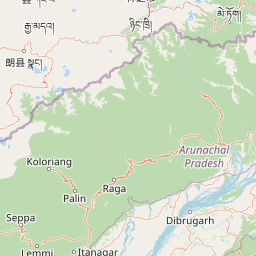
Map view of Bherjan-Borajan-Padumoni Wildlife Sanctuary

Use this park location map to pinpoint Bherjan-Borajan-Padumoni Wildlife Sanctuary in India, understand its exact geographic position, and read its mapped placement within the surrounding landscape more clearly.

Pigeon | © OpenStreetMap contributors

Location context for Bherjan-Borajan-Padumoni Wildlife Sanctuary

Assam

Visual exploration of tropical forest blocks, closed canopies, and regional habitats

Bherjan-Borajan-Padumoni Wildlife Sanctuary Photos and Landscape Scenery

Photographic documentation reveals the distinct terrain and fragmented forest structure defining Bherjan-Borajan-Padumoni Wildlife Sanctuary. Visual records provide crucial context for understanding the tropical habitats supporting arboreal mammals across Upper Assam.

A small, brown, and buff-colored bird with a pale chin perched on a diagonal tree branch surrounded by lush green out-of-focus foliage.

Park atlas

Compare regional protected areas and connected forest landscapes across Upper Assam

Explore Parks Near Bherjan-Borajan-Padumoni Wildlife Sanctuary and Surrounding Reserves

Browsing other protected areas near Bherjan-Borajan-Padumoni Wildlife Sanctuary reveals the wider network of lowland forest reserves and regional wildlife habitats across Upper Assam. Expanding the geographic comparison provides essential context for understanding biodiversity patterns across northeastern India.
Illustration of a landscape with green mountains, a river, bare trees, and a waterfall under a colorful sky
National parkAssam
About 15 km away#1 closest

North

Dibru-Saikhowa National Park: Mapped Protected Landscape and Regional Geography

Explore Assam's protected natural terrain and park boundaries.

Dibru-Saikhowa National Park represents a key protected area, providing valuable insight into the natural geography and landscape context of Assam. As a designated national park, its mapped boundaries and distinct regional setting are crucial for understanding the distribution of conservation lands in northeastern India. Explore the geographic specifics and atlas relevance of Dibru-Saikhowa National Park for a structured view of this protected landscape.

Area
350 km²
Established
1999
IUCN
II
Relief
Lowland
National parkAssam
About 27 km away#2 closest

Southeast

Dehing Patkai National Park: Assam's Extensive Lowland Tropical Rainforest Atlas

Explore mapped boundaries and critical primate habitat.

Dehing Patkai National Park is a vital protected area in Assam, renowned as India's largest contiguous lowland rainforest. This park provides a crucial habitat for diverse species, notably featuring seven primate species including the Hoolock gibbon, and serves as a key elephant reserve. Explore the mapped geography of this unique four-layered tropical forest ecosystem, understanding its ecological significance and protected landscape identity within northeastern India.

Area
231.65 km²
Established
2004
IUCN
II
Relief
Lowland
Wildlife reserveArunachal Pradesh
About 46 km away#3 closest

North

D'Ering Memorial Wildlife Sanctuary: Mapped Grassland and Floodplain Geography

A vital wildlife reserve within the Arunachal Pradesh landscape.

Spanning 190 square kilometers in the eastern Himalayas, D'Ering Memorial Wildlife Sanctuary is a distinct floodplain reserve characterized by open grasslands and riverine forest patches. The sanctuary serves as a key ecological anchor in the Siang river system, offering a look at managed, low-lying habitats that support predators and small mammals across the plains of Arunachal Pradesh.

Area
190 km²
Established
1978
IUCN
IV
Scope
Terrestrial
Wildlife reserveArunachal Pradesh
About 73 km away#4 closest

West

Kane Wildlife Sanctuary: Geography, Forest Mosaics, and Protected Himalayan Terrain

A vital wildlife reserve located in the West Siang district of Arunachal Pradesh.

Kane Wildlife Sanctuary presents a compact yet meaningful protected area defined by its unique transition of tropical evergreen and temperate broadleaf forest types. This Himalayan reserve serves as a critical habitat for large mammals and diverse bird populations, offering a focused look at the varied terrain and regional biodiversity found within the foothills of northeastern India.

Area
31 km²
Established
1991
IUCN
IV
Relief
Upland
Wildlife reserveArunachal Pradesh
About 89 km away#5 closest

Northeast

Mehao Wildlife Sanctuary: Geography and Protected Habitat Mapping in Northeast India

A diverse reserve within the Eastern Himalaya biodiversity hotspot.

Mehao Wildlife Sanctuary protects an expansive landscape featuring rare orchid-rich forests and high-altitude lake ecosystems. By preserving terrain that spans subtropical valleys to temperate coniferous ridges, this reserve provides essential habitat for iconic species like the Mishmi takin and red panda. Examine the complex forest layers and geographic features that define this significant Indian protected area.

Area
281.5 km²
Established
1980
IUCN
II
Relief
Mountain
National parkArunachal Pradesh
About 100 km away#6 closest

East

Namdapha National Park: A National Park Detailed Entry for Geographic and Atlas Exploration

Explore mapped boundaries and regional landscape context in Arunachal Pradesh.

Namdapha National Park serves as a key protected area, offering a unique opportunity for structured geographic discovery. This entry focuses on its designation as a national park, providing detailed information about its mapped landscape, regional setting within Arunachal Pradesh, and overall protected territory context. It is designed to assist users in understanding the park's boundaries and its significance within a broader atlas framework.

Area
1,985 km²
Established
1983
IUCN
II
Relief
Mountain
National parkArunachal Pradesh
About 127 km away#7 closest

Northwest

Mouling National Park: Explore Arunachal Pradesh National Park Geography and Protected Landscape

Mapped protected areas and regional geographic context.

Mouling National Park in Arunachal Pradesh offers a unique opportunity to explore the mapped boundaries and geographic characteristics of a significant protected landscape. This page provides structured insights into its role as a national park, detailing its regional setting and contributing to a broader atlas of protected areas. Understand the distinct natural terrain and landscape context that define this protected area within India.

Area
483 km²
Established
1986
IUCN
II
Relief
Mountain
Wildlife reserveArunachal Pradesh
About 145 km away#8 closest

West

Talle Valley Wildlife Sanctuary, Arunachal Pradesh: Protected Area and Forest Map

A vital Himalayan sanctuary of vertical forest gradients

Spanning from 1,200 to 3,000 meters in elevation, Talle Valley Wildlife Sanctuary contains a dense mosaic of broadleaf and conifer forests. This reserve in the Subansiri basin provides essential habitat for clouded leopards, hornbills, and various rare Himalayan plants, representing a significant study in biogeographic transition zones.

Area
337 km²
Established
1995
IUCN
IV
Relief
Mountain

Common questions about visiting, size, designation, and location context for Bherjan-Borajan-Padumoni Wildlife Sanctuary

Bherjan-Borajan-Padumoni Wildlife Sanctuary FAQs for park facts, access, geography, and protected area context

Find quick answers about Bherjan-Borajan-Padumoni Wildlife Sanctuary, including protected-area facts, park geography, trail and visitor context, and how the park fits into its surrounding country and regional landscape.
MoriAtlas Explorer

Continue Your Protected Areas Search Across the Global Atlas

Deepen your exploration by continuing the structured search for national parks and protected areas worldwide. Utilize the comprehensive filtering capabilities to compare different conservation landscapes and refine your understanding of global park geography. Discover more about the distribution and characteristics of protected natural areas.

Global natural geography