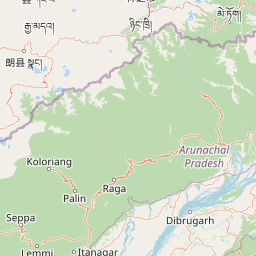
Why Bherjan-Borajan-Padumoni Wildlife Sanctuary stands out
The sanctuary is best known as a small but important refuge for the hoolock gibbon in Upper Assam, set within a fragmented landscape of three named forest blocks. Its primate community, which also includes capped langur, pig-tailed macaque, and slow loris, gives the reserve a clear focus on arboreal mammal conservation. The bird checklist of around eighty-four recorded species adds further recognition, making the sanctuary a compact habitat island within a broader mosaic of Upper Assam forests.
Bherjan-Borajan-Padumoni Wildlife Sanctuary history and protected-area timeline
Bherjan-Borajan-Padumoni Wildlife Sanctuary was formally established in 1999, consolidating three previously separate forest areas in Tinsukia district into a single protected wildlife refuge. The sanctuary is administered by the Department of Environment and Forests of the Government of Assam and is classified as an IUCN Category IV protected area, indicating its role as a habitat and species management site.
The creation of the sanctuary reflected growing recognition of the conservation value of these forest patches in Upper Assam, particularly for primate populations that depend on intact canopy cover. By bringing the Bherjan, Borajan, and Padumoni blocks under a unified protected framework, the establishment formalized ongoing efforts to maintain wildlife habitat within an otherwise heavily modified regional landscape.
Bherjan-Borajan-Padumoni Wildlife Sanctuary landscape and geographic character
The landscape of Bherjan-Borajan-Padumoni Wildlife Sanctuary is defined by three named forest blocks within Tinsukia district, in the upper part of Assam in northeastern India. Together these blocks account for the sanctuary's total area of around 7.22 square kilometers, making it one of the smaller reserves in the region but also giving it a distinctly fragmented physical character.
The surrounding regional terrain of Upper Assam includes a mix of lowland plains, river systems, and forested tracts typical of the Brahmaputra valley fringe. Within that broader setting, the sanctuary itself consists of tropical forest vegetation, with closed canopies and interior shaded ground that support arboreal wildlife. The block-based layout, with separate patches separated by non-forest land, shapes both the ecological dynamics and the management approach of the protected area.
Bherjan-Borajan-Padumoni Wildlife Sanctuary ecosystems, habitats, and plant life
Ecologically, Bherjan-Borajan-Padumoni functions as a tropical forest sanctuary maintained within a heavily altered Upper Assam landscape. Its habitat base is built around the canopy and sub-canopy vegetation of three protected forest blocks, which provide cover, food resources, and movement routes for arboreal mammals. The presence of fruiting trees, lianas, and mixed tropical vegetation supports a community of primates that depend heavily on forest structure.
The vegetation pattern reflects a mosaic typical of small, isolated reserves in northeastern India, where protected patches often serve as refuges in a wider matrix of human-used land. Despite its small total area, the sanctuary preserves habitat for species that are sensitive to forest fragmentation, including gibbons, langurs, and slow lorises. Birdlife recorded here, numbering around eighty-four species, indicates that the habitat supports a range of forest-interior and edge-associated avian communities.
Bherjan-Borajan-Padumoni Wildlife Sanctuary wildlife and species highlights
The wildlife profile of Bherjan-Borajan-Padumoni Wildlife Sanctuary is strongly defined by its primate community. The hoolock gibbon, one of the most important conservation targets in northeastern India, is present in the sanctuary's forest blocks and reflects the area's significance for ape conservation in Upper Assam. Alongside it, the capped langur, pig-tailed macaque, slow loris, and rhesus macaque form a diverse primate guild that occupies different layers and niches within the forest canopy.
Larger mammals are also part of the sanctuary's recorded fauna, with leopards noted as present, suggesting that even small forest fragments here can support apex predators when protected. The reptile and smaller mammal communities typical of northeastern Indian forests are part of the broader ecological setting, although they are less emphasized in the documented profile of the reserve.
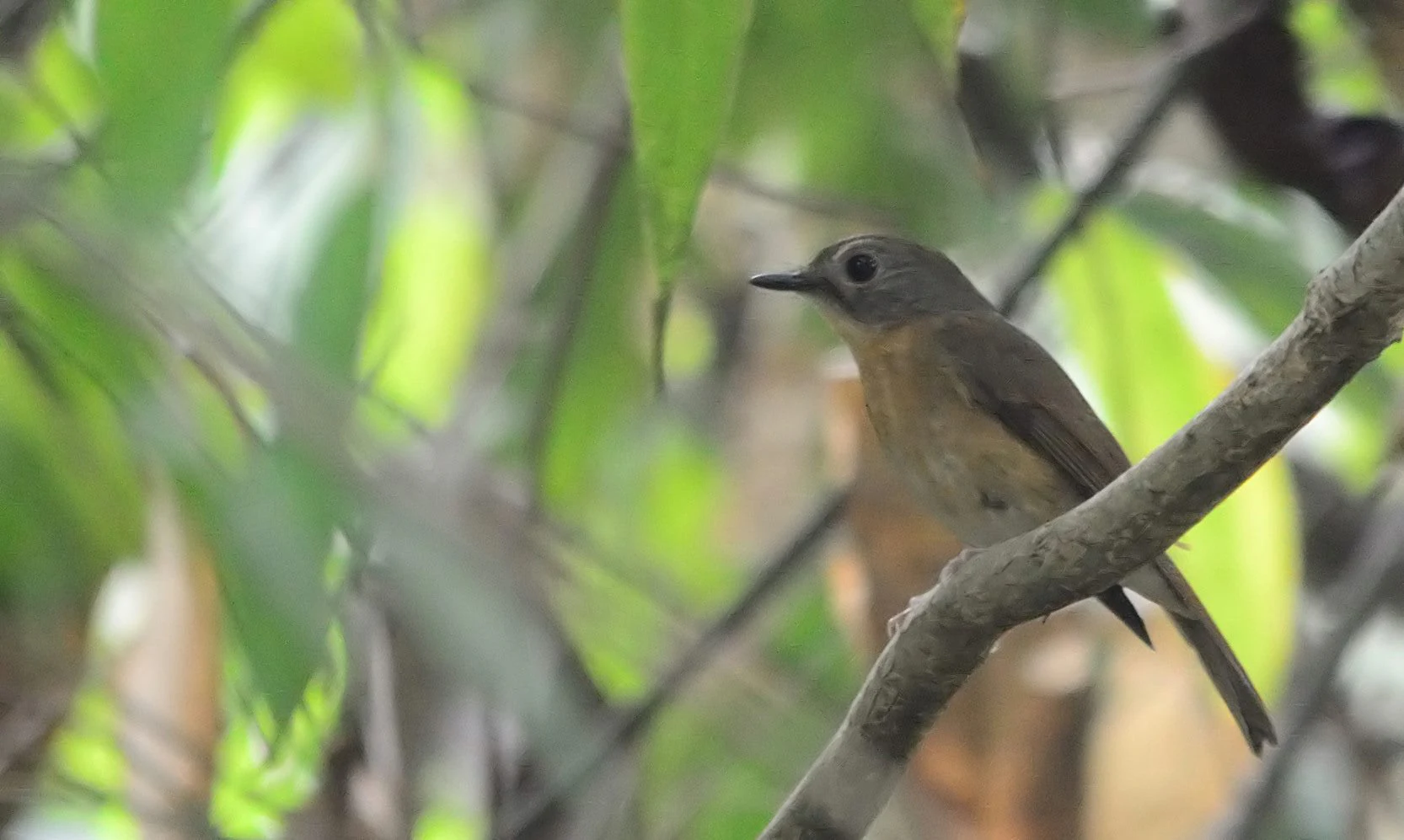
Ornithologically, the sanctuary supports a recorded bird community of around eighty-four species. This avifauna includes both forest-interior species attracted to the closed-canopy blocks and birds associated with the surrounding mosaic of habitat types in Upper Assam. The combination of primate diversity and a substantial bird checklist shapes how the reserve is positioned within regional biodiversity conservation.
Bherjan-Borajan-Padumoni Wildlife Sanctuary conservation status and protection priorities
Bherjan-Borajan-Padumoni Wildlife Sanctuary holds a focused conservation role as a habitat and species management area within a heavily populated state. Its IUCN Category IV designation emphasizes targeted management for particular wildlife communities rather than broad wilderness preservation, and the reserve's protected blocks serve as a refuge for hoolock gibbons and other primates that are sensitive to habitat loss and fragmentation.
In the regional context, where much of Upper Assam's original forest cover has been converted for settlement, agriculture, and industrial use, the sanctuary represents an effort to maintain viable habitat for primate populations that would otherwise be restricted to smaller and more isolated forest patches. The presence of leopards alongside primate prey species suggests that a functioning predator-prey dynamic has been retained at least on a local scale.
By bringing three separate forest blocks under a single protected framework, the sanctuary also serves as a demonstration of how fragmented forest landscapes in northeastern India can be managed collectively for conservation. Its role in primate conservation, combined with its documented birdlife, gives it importance beyond its modest area, acting as a maintained biodiversity island within the Upper Assam landscape.
Top sights and standout views in Bherjan-Borajan-Padumoni Wildlife Sanctuary
Bherjan-Borajan-Padumoni Wildlife Sanctuary is a small but ecologically targeted reserve in Tinsukia district, Upper Assam, spread across the Bherjan, Borajan, and Padumoni forest blocks. Its strongest points of distinction are the continued presence of the hoolock gibbon and the broader primate community that includes capped langur, pig-tailed macaque, slow loris, and rhesus macaque. The recorded bird checklist of around eighty-four species adds a meaningful secondary layer of biodiversity value, reinforcing the sanctuary's role as a compact but species-rich protected area in northeastern India.
Best time to visit Bherjan-Borajan-Padumoni Wildlife Sanctuary
As a tropical forest sanctuary in Upper Assam, Bherjan-Borajan-Padumoni is shaped by the region's warm, humid climate with a pronounced monsoon season and a drier winter period. Visits during the cooler, drier months typically offer more comfortable conditions for forest walks and primate and bird observation, while the wetter monsoon period brings lush vegetation but also heavier rainfall and more difficult trail conditions. Choosing a time outside peak monsoon usually allows clearer views of wildlife activity in the sanctuary's three forest blocks.