Why Blouberg Nature Reserve stands out
Blouberg Nature Reserve is most strongly associated with the Cape vulture colony on the Blouberg cliffs, widely described as the largest of its kind in South Africa. This raptor population is central to the reserve's conservation profile and draws ornithological and raptor-monitoring interest that sets the area apart from many neighbouring bushveld reserves. Beyond vultures, the reserve is known for the diversity compressed into a relatively compact footprint: cliff and mountain habitats, natural forest patches including a notable old Outeniqua yellowwood tree protected since 2013, baobab-studded northern plains, and a mammal-rich savanna sector in which Cape buffalo, sable antelope, and leopard are particular highlights. Together these features make Blouberg recognized as a multi-habitat reserve where raptors, large mammals, and old-growth trees converge.
Blouberg Nature Reserve history and protected-area timeline
Blouberg Nature Reserve was formally established as a protected area in 1990, when the region was brought under conservation management in the early post-apartheid period. Its creation consolidated protection of the eastern Blouberg mountain range together with adjacent lowland habitats, reflecting an era in which several northern Limpopo landscapes were formalised as provincial reserves.
Since its establishment the reserve has been administered by the Limpopo provincial authorities through the Department of Economic Development, Environment and Tourism. In 2013, a notably large Outeniqua yellowwood on the southern forested slopes received official individual protection, marking one of the more visible milestones in the reserve's recent conservation history and underscoring the importance of its small forest patches. Over time, Blouberg has continued to develop around its core identity as a raptor and mammal reserve, with practical visitor facilities added incrementally rather than through large-scale development.
Blouberg Nature Reserve landscape and geographic character
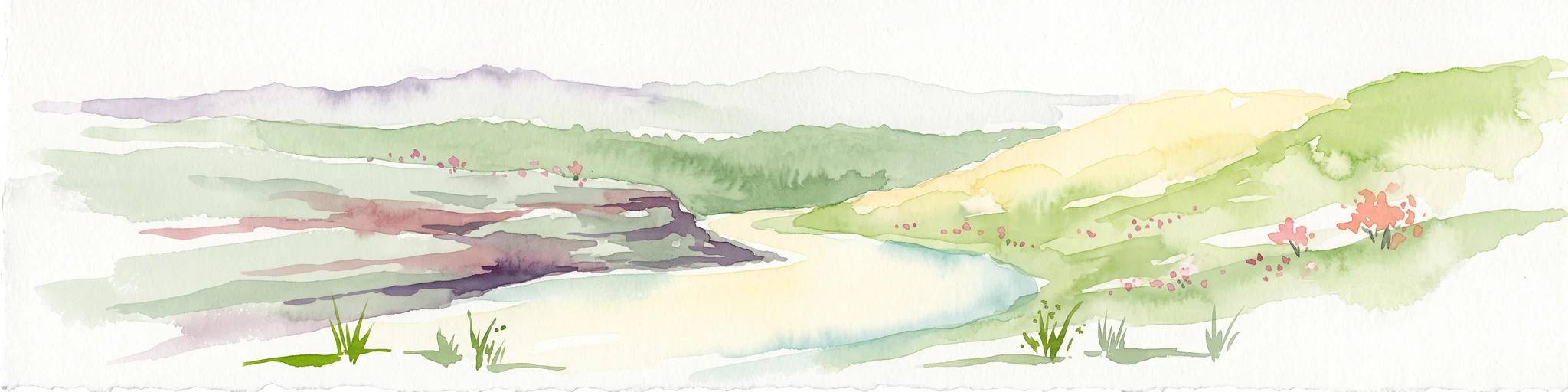
The landscape of Blouberg Nature Reserve is shaped by the contrast between the Blouberg mountain range and the surrounding lowveld. The western portion of the reserve climbs into rugged sandstone terrain, with steep cliffs, rocky slopes, and gullies that give the massif its character and provide the sheer faces on which vultures breed. From these heights, the land slopes eastward into progressively gentler terrain, eventually reaching the open plains near the Brak River.
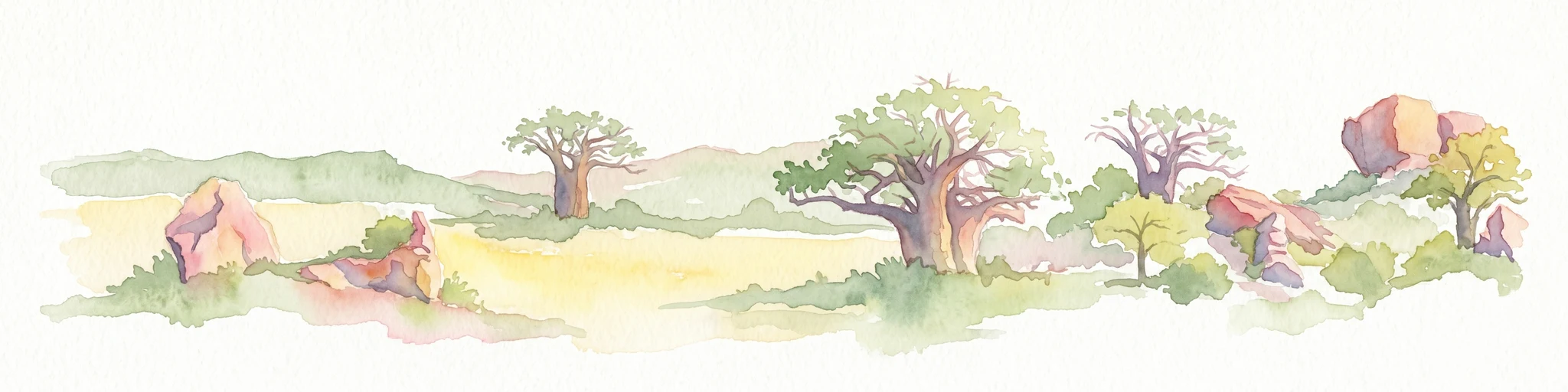
On the plains sector, scattered baobabs and tamboti trees rise above the mopane and mixed bushveld canopy, giving the lowland an unmistakable savanna character. The southern, more sheltered mountain slopes carry strips of natural forest, a relatively unusual feature in this otherwise arid region of Limpopo. These forests include old-growth specimens, such as a notably large yellowwood that has been formally protected. The combined effect is a reserve where cliff, forest, and savanna coexist in close proximity, allowing visitors to move between very different South African landscapes within a short drive.
Blouberg Nature Reserve ecosystems, habitats, and plant life
Ecologically, Blouberg Nature Reserve sits within the broader Bushveld biome, where mopane-dominated woodland, mixed savanna, and patches of Afromontane-type forest overlap along the Blouberg range. The vegetation pattern reflects both rainfall variability and topography, with the wetter southern mountain slopes carrying taller, closed-canopy forest while the drier northern and eastern plains remain open and bush-dominated.
Baobabs and tamboti trees are prominent features of the northern plains, contributing to the reserve's botanical character and providing structural landmarks visible from a considerable distance. The southern forest patches, though limited in extent, are ecologically disproportionate in importance because they support moisture-loving species and old individuals that would not survive on the surrounding plains. Together, these vegetation types give Blouberg a noticeably layered ecological profile for a reserve of its size.
Blouberg Nature Reserve wildlife and species highlights
Blouberg Nature Reserve supports a wide-ranging mammal community typical of the northern South African bushveld. On the plains sector, Cape buffalo and sable antelope are highlighted as characteristic species, alongside general game such as impala, kudu, waterbuck, zebra, giraffe, and eland. Leopard is present and regularly noted as a key predator of the reserve, while brown hyena, spotted hyena, caracal, and cheetah add to the carnivore profile. Smaller and nocturnal species include aardvark, aardwolf, pangolin, honey badger, bushpig, and porcupine, reflecting a robust small-mammal and nocturnal fauna.
The reserve's birdlife is one of its strongest attractions. The cliff-nesting Cape vulture colony on the Blouberg massif is the most prominent feature and is widely described as the largest breeding colony of the species in South Africa. Other vulture species, including white-backed, lappet-faced, hooded, and Rüppell's vulture, also occur, alongside a long list of typical bushveld and miombo-associated birds. Raptors such as Verreaux's eagle, martial eagle, African hawk-eagle, and lanner falcon are part of the regular avifauna, while waterbirds, hornbills, rollers, bee-eaters, and a wide range of smaller passerines contribute to one of the more bird-rich reserves in the Limpopo region.
Blouberg Nature Reserve conservation status and protection priorities
From a conservation perspective, Blouberg Nature Reserve's significance rests on three intersecting values. It protects one of South Africa's most important Cape vulture breeding colonies, a population of considerable national importance given the broader declines affecting the species across southern Africa. It also conserves a representative sample of Limpopo bushveld habitat, including the transition from semi-arid plains to mountain slopes.
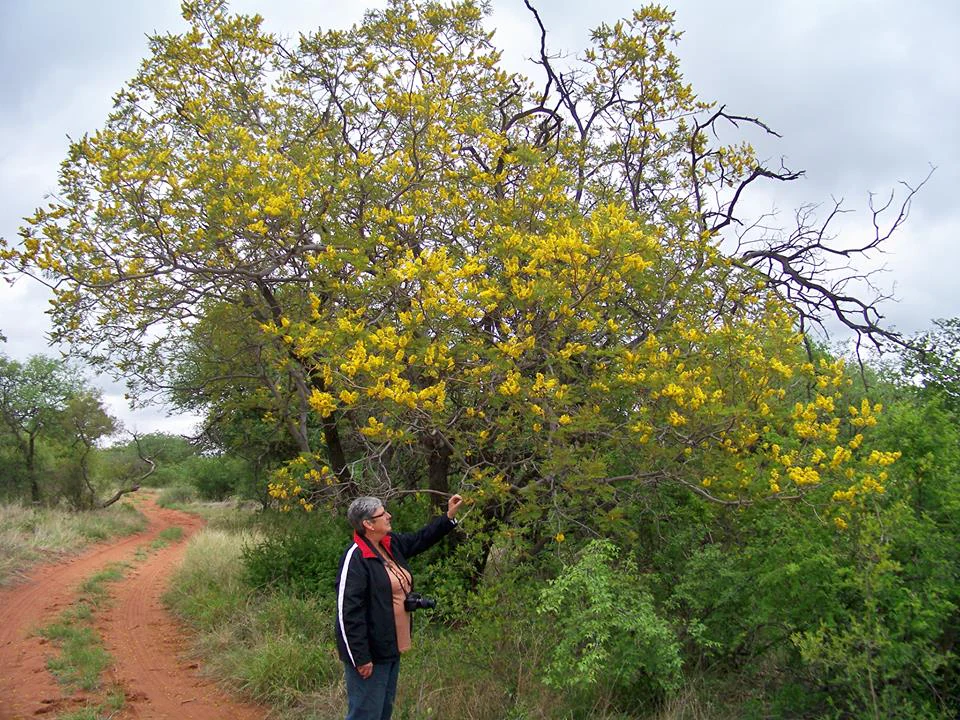
The reserve's natural forest patches, although small, are disproportionately valuable, both for the species they support and for the old trees they contain; the formal protection granted in 2013 to a large Outeniqua yellowwood on the southern slopes is an example of how individual trees within the reserve have been singled out for recognition. As a provincial reserve under the Limpopo Department of Economic Development, Environment and Tourism, Blouberg functions as a working conservation asset that complements nearby national parks and contributes to landscape connectivity in the far north of South Africa.
Blouberg Nature Reserve cultural meaning and human context
The Blouberg region carries a layered human history. The mountains and surrounding plains have long been part of the cultural landscape of northern Limpopo, with communities whose histories predate formal conservation boundaries. Place names within the reserve such as Rapanyana's Neck preserve local toponymy rooted in this earlier human geography.
In the broader regional context, Blouberg lies close to the area around Mapungubwe, a landscape of deep cultural significance including the UNESCO-listed Mapungubwe World Heritage Site. While Blouberg itself is focused on natural heritage rather than archaeological conservation, its position within this historically and culturally rich part of South Africa gives it a regional context that goes beyond its purely ecological profile, situating the reserve within a landscape of longstanding settlement, movement, and exchange in the Limpopo river basin.
Top sights and standout views in Blouberg Nature Reserve
Blouberg Nature Reserve stands out for combining a major Cape vulture breeding colony on sandstone cliffs with a mammal-rich bushveld plains sector in a single protected footprint. The presence of old-growth forest patches on sheltered southern slopes, including a formally protected yellowwood tree, adds a more unexpected vegetation dimension for a reserve of this size and region.
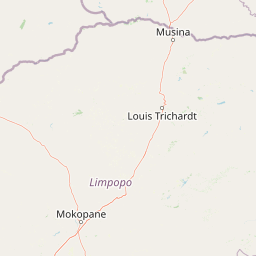
Its position near Vivo, between Louis Trichardt and the Limpopo River valley, gives Blouberg a strongly northern character and an out-of-the-way feel compared with flagship parks further south. The reserve's modest, distributed camp system and its setting in a transitional landscape between Soutpansberg and the broader Limpopo lowveld make it distinctive both ecologically and experientially.
Best time to visit Blouberg Nature Reserve
Blouberg Nature Reserve, like much of the Limpopo bushveld, is shaped by a strongly seasonal climate in which the dry winter months and the wet summer months produce very different conditions on the ground. The cooler, drier winter period tends to make wildlife viewing on the plains more predictable, with animals concentrating around remaining water and visibility improving as vegetation thins and the bushveld opens up. This is also a more comfortable time for travel and for exploring the rocky southern sectors of the reserve.
The wetter summer period brings the bushveld to life, with greener vegetation, denser bird activity including migrants and breeding species, and dramatic skies over the Blouberg cliffs. Raptor viewing, including Cape vultures, can be productive year-round, but the interplay between summer light on the cliffs and active vulture colonies is particularly memorable. Travellers aiming for a quieter, more atmospheric experience often favour the cooler months, while those interested in lush conditions and peak bird activity may prefer the summer.