Mori Atlas logo
National parkPark Narodowy „Bory Tucholskie”

Examining the postglacial terrain, sandy inland dunes, and oligotrophic waters of Poland

Park Narodowy „Bory Tucholskie”: A Protected Lowland Forest and Glacial Lake Landscape Map

Park Narodowy „Bory Tucholskie” stands as a vital protected core within the expansive Tuchola Forest, representing a rare postglacial lowland ecosystem in the Pomeranian Voivodeship. This landscape is defined by its characteristic pine-dominated forest, shifting inland dunes, and a unique network of exceptionally clear lobelia-type lakes. Through detailed map and terrain analysis, one can observe how the Struga Siedmiu Jezior connects these water bodies, shaping the ecological integrity of this national park.

lowland national parkpine forestsglacial lakeslobelia lakesinland dunesbiosphere reserve
A flat vector-style illustration of a waterfall cascading down a red cliff into a calm lake surrounded by pine trees and rolling landscape under a soft sun.

Park Narodowy „Bory Tucholskie”

National park

Park overview

Structured park overview, official facts, and landscape profile for Bory Tucholskie National Park

Bory Tucholskie National Park park facts, protected area profile, and essential visitor context

Review the core facts for Bory Tucholskie National Park, including designation, size, terrain, visitor scale, habitats, and operating context in one park-focused overview.

About Bory Tucholskie National Park

Bory Tucholskie National Park is a lowland national park in northern Poland, set within the much larger Tuchola Forest, one of the largest continuous forest complexes in the country. Although the protected area itself is modest in size, it captures the defining ecological character of this entire region: flat sandy terrain, vast pine forests shaped by glacial processes, inland dunes, and postglacial lakes arranged in a deeply indented young-glacial landscape.

The park lies in the Pomeranian Voivodeship, in the area around Chojnice, and forms a key protected core within the Bory Tucholskie Biosphere Reserve established under UNESCO in 2010. Its administrative seat is in Charzykowy, a small town on Lake Charzykowy just outside Chojnice. This positioning gives the park a clear role as both a conserved ecosystem and a regional focal point for environmental education, research, and low-impact recreation.

Ecologically, the park represents sandy lowland pine forests watered by a network of clear, oligotrophic lakes. Pine-forest habitats occupy almost the entire forested area, while lakes and rivulets account for about one eighth of the protected territory. The chain known as the Struga Siedmiu Jezior, a small river connecting seven lakes, is one of the park's most distinctive hydrological features. Although the surrounding Tuchola Forest extends far beyond the park's borders, the national park protects the most ecologically valuable samples of these habitats, including rare lobelia-type lakes and fragile bog and peatland communities.

The park's identity is closely tied to conservation of species and habitats that have been substantially reduced elsewhere in the Polish lowlands. It supports rich communities of lichens, mosses, liverworts, fungi, vascular plants, insects, fish, amphibians, birds, and mammals, including several species tied to old-growth and open-canopy pine forests. The park is also notable as a stronghold for lowland bird species that have become uncommon in intensively farmed parts of Poland, including black woodpecker, common crane, and white-tailed eagle.

As a national park within a UNESCO biosphere reserve, Bory Tucholskie combines strict nature protection with a broader landscape-scale approach that includes managed forests, traditional land use, and surrounding communities. This dual role makes it a benchmark for lowland conservation in Central Europe and an important reference for understanding sandy lowland ecosystems shaped by glaciation, fire, and centuries of forest management.

Quick facts and research context for Bory Tucholskie National Park

Bory Tucholskie National Park was established on 1 July 1996. It covers roughly 4,613 hectares, with a surrounding protective buffer zone of about 12,980 hectares. Forests dominate the park, taking up about 83 percent of its area, and almost all of these are coniferous pine-forest habitats typical of the broader Tuchola Forest.

The park belongs to the UNESCO-designated Bory Tucholskie Biosphere Reserve, created in 2010. It contains 21 lakes, including a chain of seven lakes linked by a stream called Struga Siedmiu Jezior, and four rare lobelia-type lakes. Although the park is small in overall size, it occupies a meaningful slice of the larger Tuchola Forest, which remains one of the largest forest complexes in Poland.

Protection and recognition

Examine the documented terrestrial protection scope and official recognition details.

Park Narodowy „Bory Tucholskie” Protection Status and Conservation Framework

Park Narodowy „Bory Tucholskie” maintains a defined terrestrial protection scope within its regional landscape. Official records outline the baseline conservation framework, management parameters, and recorded international designations.

Protection details

Protection scope
Terrestrial
Transboundary protection
No
Buffer area
129.8 km²
Park context

Deeper park guide and search-rich context for Bory Tucholskie National Park

Bory Tucholskie National Park history, landscape, wildlife, and travel context

Explore Bory Tucholskie National Park through its history, landscape character, ecosystems, wildlife, conservation priorities, cultural context, and seasonal travel timing in a structured park guide built for atlas discovery and search intent.

Why Bory Tucholskie National Park stands out

The park is best known for its flat pine-dominated lowland forests, glacial-origin lakes, and inland dunes. These elements together represent a classic postglacial landscape shaped at the end of the last ice age across the northern European plain. It is also recognized for its lobelia-type lakes, which are exceptionally clear, nutrient-poor, and acidic. These lakes support rare aquatic plants such as Lobelia dortmanna, Isoetes lacustris, and Luronium natans, as well as glacial relict species. The combination of pine forests, dune relicts from former firebreaks, and clear-water lakes gives the park a distinctive identity within the Polish national park system.
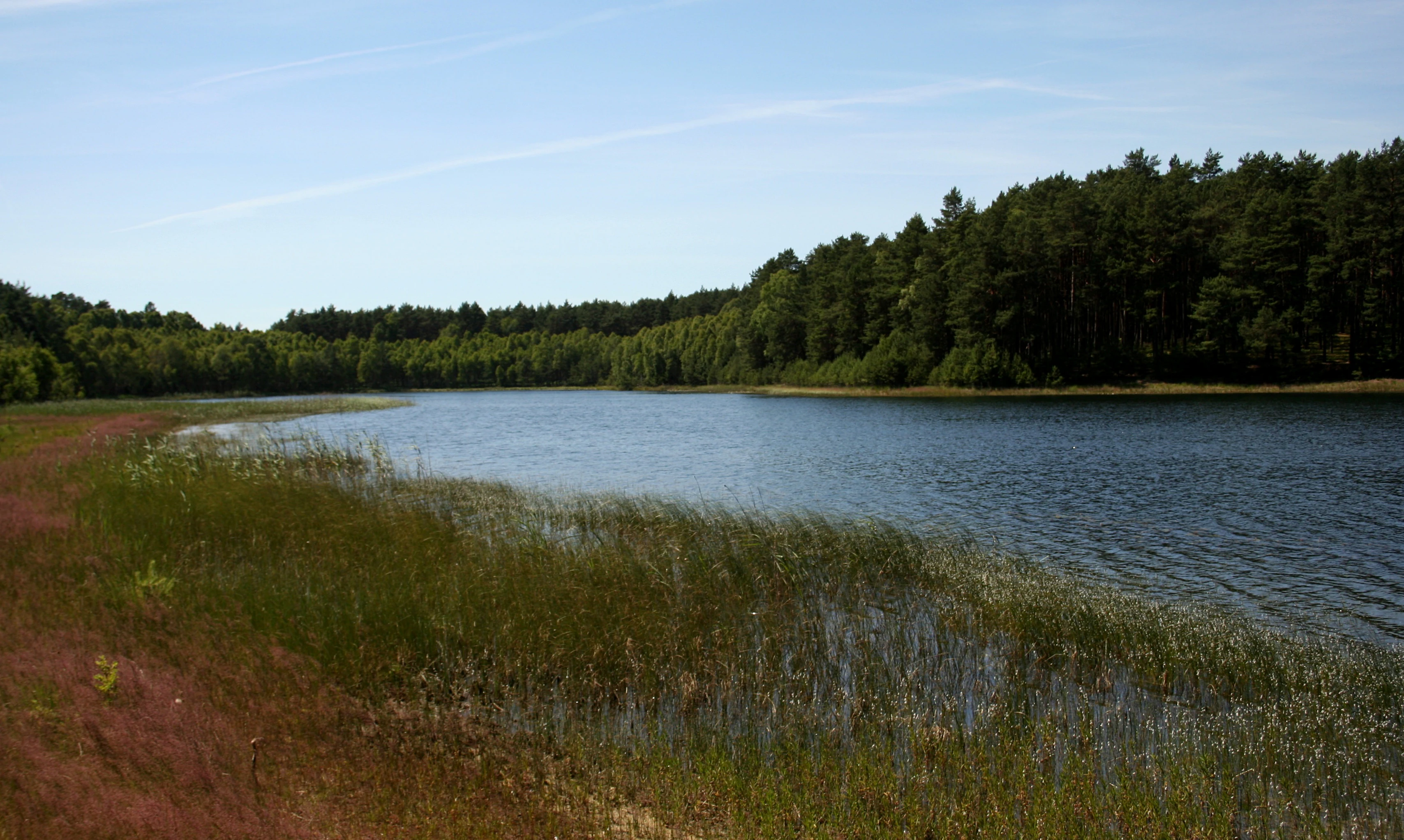
A wide view of a calm lake shore with marshy grasses in the foreground and a dense pine forest lining the opposite bank under a clear blue sky.
The shore of Gacno Wielkie lake in Bory Tucholskie National Park, featuring dense pine forest and wetland vegetation.

Bory Tucholskie National Park history and protected-area timeline

Bory Tucholskie National Park was created on 1 July 1996, becoming the eleventh lowland national park in Poland. Its establishment recognized the growing need to protect a representative sample of the Tuchola Forest, an enormous lowland pine-forest complex that had previously been shaped heavily by forestry, drainage, and historical settlement.

Although the park itself is relatively young, the broader Tuchola Forest has a long history of human use. Centuries of selective cutting, grazing, and pine monoculture planting have influenced the composition and structure of the forest that surrounds the park today. Inland dunes visible within the park, including a former firebreak dune line in its southern part, are reminders of how forestry and fire prevention historically shaped the sandy landscape.

In 2010 the park became part of the Bory Tucholskie Biosphere Reserve, designated under UNESCO's Man and the Biosphere Programme. This recognition underlined the park's role not only as a strictly protected area but also as a node within a larger managed landscape that includes production forests, rural communities, and buffer zones. The biosphere reserve designation strengthened conservation efforts while supporting continued traditional land use in surrounding areas.

The establishment of ten strict protection areas within the park, of which only two are accessible to visitors, reflects an evolving approach to balancing scientific research, habitat protection, and public access. The park's history is therefore one of progressive strengthening of protection, from a single national-park designation to inclusion in an internationally recognized biosphere framework.

Bory Tucholskie National Park landscape and geographic character

The landscape of Bory Tucholskie National Park is a textbook example of a young-glacial lowland. The terrain is generally flat, with sandy soils deposited during the retreat of the last ice sheet, and is shaped by postglacial processes that left behind a mosaic of pine forests, inland dunes, peatlands, and lakes.

The most characteristic landforms are inland dunes formed from wind-blown sand, including a former firebreak dune line in the southern part of the park that runs as a long low ridge through the forest. These dunes are not coastal, but instead reflect historical human management of sandy soils combined with natural sand mobility. They give the otherwise flat landscape subtle elevation changes and distinctly dry, open pine habitats.

The park's hydrology is equally distinctive. Water bodies occupy about 11.5 percent of the park area, and the network of 21 lakes includes some of the clearest and most acidic in Poland. The Struga Siedmiu Jezior, a short river about 13.9 kilometers long that links seven of these lakes, is one of the most important landscape features. It connects lakes such as Wielkie Gacno, Małe Gacno, Nierybno, and Głuche, draining the park's interior toward the broader Brda river system.

Together, the dunes, pine forests, peatland transitions, and clean lakes give the park a strong sense of place. Even though elevations are modest and the area is small, the variety of microhabitats, from dry dune crests to flooded lake margins, creates a surprisingly rich and visually quiet lowland landscape.

Bory Tucholskie National Park ecosystems, habitats, and plant life

Although the park's habitats are dominated by nutrient-poor, acidic, and ecologically uniform sandy soils, the resulting ecosystems are remarkably species-rich, especially for cryptogams. The combination of pine forests, dunes, peatlands, and lakes creates microhabitats that support a substantial share of Poland's known moss, liverwort, lichen, and fungal diversity.

Around 83 percent of the park is forested, and within that forest area roughly 98 percent consists of pine-forest habitats, meaning dry and mesic pine woods of the kind typical of the broader Tuchola Forest. The few non-pine stands, lake and peatland edges, transitional mires, and dune openings, are therefore disproportionately important for overall biodiversity.

Wetland habitats play a central ecological role. The park's lobelia-type lakes are exceptionally clear and nutrient-poor, supporting aquatic plants such as Lobelia dortmanna, Isoetes lacustris, Luronium natans, and northern water-lily, all indicators of high ecological quality. Bog and peatland communities host rare mosses, sedges, and relict plants, including species with boreal or subarctic affinities that have survived here since the end of the last glaciation.

Ecologically, the park stands out because it preserves a coherent example of a sandy, postglacial, lowland landscape with functioning lake, peatland, and forest subsystems. This makes it an essential reference site for understanding the ecology of the broader Tuchola Forest and of similar lowland landscapes across the North European Plain.

Bory Tucholskie National Park wildlife and species highlights

The park supports a wide spectrum of wildlife typical of pine-dominated lowland forests and clear-water lakes. Insects are particularly diverse, with dozens of butterfly, ant, dragonfly, and bee species recorded, including protected species like the scarce copper butterfly and the green snaketail dragonfly.

Fish communities are tied closely to the park's lakes and to the Struga Siedmiu Jezior. Surveys have identified numerous fish species in the connected lakes, with species such as European eel, pike, tench, perch, bream, roach, and asp occurring throughout the system. Protected fish species such as the stone loach and bitterling are also present, though some populations reflect historical stocking rather than natural colonization.

Amphibians and reptiles are represented by species that depend on the lakes, peatlands, and forest edges, while mammals include species typical of Polish lowland forests, among them red deer, pygmy shrew, and brown hare. The mammal community reflects the larger forest landscape of which the park is a part.

Birds are a major feature of the park's wildlife profile. The park supports a substantial breeding bird community dominated by passerines, with significant representation of waterfowl, waders, and raptors. Notable species include the white-tailed eagle, the common crane, the Eurasian bittern, the Eurasian woodcock, and a range of owls such as eagle owl, pygmy owl, tawny owl, and Tengmalm's owl. The white-backed woodpecker and the Eurasian three-toed woodpecker are among the species associated with the old pine stands. Many of the recorded bird species are legally protected, and a number fall under the European Union's Bird Directive.

The capercaillie, which famously appears in the park's logo, no longer occurs in the park itself; the last known individual in the broader Tuchola Forest was reportedly shot in 1975. Its symbolic presence on the park's emblem reflects both the region's former ecological richness and current conservation aspirations.

Bory Tucholskie National Park conservation status and protection priorities

The conservation significance of Bory Tucholskie National Park lies in its role as a strictly protected core within the largest biosphere reserve in Poland. The park safeguards representative samples of lowland pine forests, inland dunes, and oligotrophic lakes, including four lobelia-type lakes that are among the most ecologically valuable freshwater habitats in the country.

Strict protection covers a relatively small share of the park's total area, concentrated in ten strictly protected zones, most of which are closed to public access. This zonation reflects an approach that separates areas reserved for scientific research and ecosystem integrity from areas used for education, recreation, and ecological monitoring. As part of the larger biosphere reserve, the park contributes to maintaining ecological connectivity across a landscape that also includes production forests, peatlands, and agricultural land.

The park is also important for the conservation of species that depend on old-growth pine forests, open peatlands, and clear-water lakes. It sustains viable populations of many protected plant and animal species, including orchids, glacial relict mosses, large predatory birds, and forest owls. Its protected status contributes to broader biodiversity conservation objectives at both national and European levels, particularly in the context of protecting habitats listed under the EU Habitats Directive.

Top sights and standout views in Bory Tucholskie National Park

Bory Tucholskie National Park is celebrated for its flat pine forests, inland dunes, and exceptionally clear postglacial lakes, several of which are rare lobelia-type lakes. The chain of seven lakes connected by the Struga Siedmiu Jezior is a defining hydrological feature and one of the park's most recognizable elements.

Formally designated in 1996 and incorporated into a UNESCO biosphere reserve in 2010, the park stands at the heart of the largest biosphere reserve in Poland. It protects a meaningful slice of the Tuchola Forest, one of the country's largest forest complexes, and serves as a reference site for sandy lowland ecosystems shaped by glaciation, fire, and centuries of forestry.

Best time to visit Bory Tucholskie National Park

The park's character shifts considerably with the seasons. Spring and early summer are favorable for observing birdlife and a wide range of flowering plants, including orchids and other protected species. Lakes are most clearly visible at this time, and water levels are typically stable.

Late summer and early autumn often bring the calmest weather for visiting lakes and forests, with cooler temperatures and quieter trails. Autumn also tends to be a productive season for fungi and for observing seasonal changes in forest vegetation. Winter brings a quieter, more minimalist landscape of snow-covered pine stands and frozen lakes, though accessibility and conditions vary by year.

Because the park's defining landscapes are largely forest- and lake-based, the timing of a visit tends to affect atmosphere and biological activity more than access conditions. Visitors interested in particular species groups or in particular scenic qualities may benefit from adjusting their timing around those interests.

Monthly climate preview

Long term temperature and precipitation records measured at representative park coordinates

Park Narodowy „Bory Tucholskie” Climate Normals and Annual Weather Patterns

Historical climate data for Park Narodowy „Bory Tucholskie” charts measured monthly temperature variations and precipitation averages from 1991 to 2020. Examining the complete twelve month profile provides deeper insight into the long term environmental rhythm governing this protected landscape.
Annual mean8 °C
-3 °C18 °C
Jan-3°
Feb-2°
Mar
Apr
May12°
Jun16°
Jul18°
Aug18°
Sep14°
Oct
Nov
Dec-1°
Warmest month
July

18.3 °C

Coolest month
January

-2.7 °C

Wettest month
July

2.8 mm/day

Driest month
April

1.3 mm/day

Park location guide

Geography guide, regional context, and park location map for Bory Tucholskie National Park

Bory Tucholskie National Park park geography, regions, and map view in Poland

Understand where Bory Tucholskie National Park sits in Poland through a broader geographic reading of the surrounding landscape, nearby location context, and its mapped position within the national park landscape.

How Bory Tucholskie National Park fits into Poland

Poland, officially the Republic of Poland, is a Central European country spanning from the Baltic Sea in the north to the Carpathian Mountains in the south. It borders Germany, Czech Republic, Slovakia, Ukraine, Belarus, Lithuania, and Kaliningrad Oblast. The country has a temperate climate, diverse landscapes, and is known for its rich history, cultural heritage, and strong economic position within the EU.

Wider geography shaping Bory Tucholskie National Park in Poland

Poland occupies 312,696 km2 in Central Europe, extending from the Baltic Sea coast in the north to the Sudetes and Carpathian Mountains in the south. It borders Germany to the west, Czech Republic and Slovakia to the south, Ukraine and Belarus to the east, and Lithuania and Kaliningrad Oblast to the northeast. The landscape includes lowland plains, uplands, and mountain ranges.

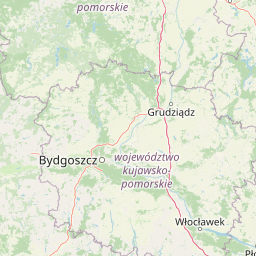
Map view of Bory Tucholskie National Park

Use this park location map to pinpoint Bory Tucholskie National Park in Poland, understand its exact geographic position, and read its mapped placement within the surrounding landscape more clearly.

Pigeon | © OpenStreetMap contributors

Location context for Bory Tucholskie National Park

Pomeranian Voivodeship
Natural feature types

Examine the Natural Landscape Atlas of Park Narodowy Bory Tucholskie

View the complete collection of mapped natural features within Park Narodowy Bory Tucholskie to better understand its glacial terrain and complex hydrology. MoriAtlas provides detailed geographic data for these protected areas, enabling a deeper look at the diverse physical components of the forest, dunes, and lake systems.

Visual exploration of pine forests, inland dunes, and crystal clear glacial lakes.

Park Narodowy „Bory Tucholskie” Photos and Landscape Scenery

Visual documentation captures the flat sandy plains, dense coniferous woodlands, and rare lobelia lakes that define the protected lowland terrain. Photographic records reveal the postglacial landscape character and microhabitats preserved within the biosphere reserve.

A wide view of a calm lake shore with marshy grasses in the foreground and a dense pine forest lining the opposite bank under a clear blue sky.

A wide, sandy clearing acting as a firebreak surrounded by dense evergreen forest under a clear blue sky.

Park atlas

Compare nearby national parks and connected lowland forest landscapes across the region

Parks Near Park Narodowy „Bory Tucholskie” and Surrounding Protected Areas

Visitors exploring Park Narodowy „Bory Tucholskie” can continue browsing nearby national parks and protected lowland landscapes across the surrounding region. Expanding the geographic scope allows researchers and travelers to compare postglacial terrain, pine forest reserves, and clean lake ecosystems.
Protected areaPomeranian Voivodeship
Park boundaries overlap#1 closest

North

Sandr Brdy: Protected Glacial Landscapes and Hydrological Networks in Pomeranian Voivodeship

A vital reference site for lowland habitat conservation and post-glacial terrain.

Sandr Brdy spans 7,492 hectares of outwash plains in northern Poland. Its terrain hosts a complex mosaic of calcareous fens, acid oak forests, and lobelia lakes, established to preserve fragile aquatic and terrestrial species like the gray wolf and lady's slipper orchid within a unique glacial framework.

Area
74.926 km²
Scope
Terrestrial
Water
Major water bodies
Watercolor painting of a river flowing through a forested area with colorful fields
National parkPomeranian Voivodeship
Park boundaries overlap#2 closest

South

Tuchola Forest National Park: Explore Poland's Largest Protected Woodland and Glacial Lakes

Detailed maps and geographic context of unique forest ecosystems and terrain.

MoriAtlas offers a comprehensive geographic overview of Tuchola Forest National Park, a vital protected area in Pomeranian Voivodeship, Poland. This page delves into the park's identity as Poland's largest contiguous forest, distinguished by its post-glacial landscape. Users can explore the mapped boundaries of its extensive coniferous forests, numerous interconnected glacial lakes, dynamic dunes, and ecologically rich peatlands. It serves as a key entry point for understanding the park's unique terrain and its significant place within the broader regional geography and protected lands atlas.

Area
46.13 km²
Established
1996
IUCN
II
Visitors
33K annual
Protected landscapePomeranian Voivodeship
Park boundaries overlap#3 closest

North

Zaborski Park Krajobrazowy: Geographic Profile of a Polish Protected Landscape Area

Tuchola Forest region, Pomeranian Voivodeship

Investigate the unique terrain of Zaborski Park Krajobrazowy, a protected landscape defined by its dense network of glacial lakes and sandy outwash plains. This territory provides a comprehensive view of northern Polish lowland geography, highlighting the ecological significance of its river valleys and relic forest habitats within the broader Tuchola Forest ecosystem.

Area
340.3 km²
Established
1990
Relief
Lowland
Climate
Temperate
Nature reservePomeranian Voivodeship
About 1.5 km away#4 closest

East

Rezerwat przyrody Moczadło: Protected Nature Reserve and Lobelia Lake in Pomeranian Voivodeship

Mapped ecological zone within the Bory Tucholskie lake region

Gain insight into the protected landscape of Rezerwat przyrody Moczadło, a nature reserve in Pomeranian Voivodeship defined by its exceptionally clear oligotrophic waters. This site offers valuable data for those studying post-glacial lake ecosystems, rare aquatic flora, and the sensitive transition zones between open water and peat-forming pine forest landscapes.

Area
0.262 km²
Established
2011
Water
Major water bodies
Nature reservePomeranian Voivodeship
About 3.3 km away#5 closest

West

Rezerwat przyrody Jezioro Małe Łowne: Protected Bog and Lake Landscape in Poland

A nature reserve in Pomeranian Voivodeship's wetland geography.

Located in the heart of the Bory Tucholskie forest region, this nature reserve protects a shallow post-glacial lake and its surrounding mire habitats. The protected area features a dynamic floating bog mat, boggy pine forests, and transitional peatlands, offering a clear look at the lowland hydrology and glacial topography that characterizes this specific part of northern Poland.

Area
0.378 km²
Established
1993
Relief
Lowland
Climate
Temperate
Nature reservePomeranian Voivodeship
About 5.7 km away#6 closest

Southwest

Jezioro Sporackie Nature Reserve: Mapped Geography and Protected Area Context

Exploring the lobelia lake and peatland mosaic in Pomeranian Voivodeship

Jezioro Sporackie Nature Reserve protects a vital ecological gradient ranging from nutrient-poor aquatic habitats to wooded terrestrial margins. The site preserves Sporacz, a glacial lake recognized for its specialized flora, alongside the surrounding transitional mire and forest compartments that form its primary buffer zone in Northern Poland.

Area
0.176 km²
Established
1965
Relief
Lowland
Climate
Temperate
Protected landscapeKuyavian-Pomeranian Voivodeship
8.9 km away#7 closest

Southeast

Tuchola Landscape Park: Mapped Protected Area and Riverine Geography in Poland

Pine-covered outwash plains and the meandering Brda River corridor

Covering a significant portion of northern Poland, Tuchola Landscape Park protects a distinctive postglacial landscape of sandy plains and dense pine forests. The park geography is anchored by the Brda River, which flows through a series of rapids and breakthroughs before reaching deep into the surrounding pine-clad outwash plain. Detailed map data provides insight into the park's eight nature reserves, which preserve critical wetland, bog, and riverine habitats.

Area
369.83 km²
Established
1985
Relief
Lowland
Climate
Temperate
Nature reservePomeranian Voivodeship
About 11 km away#8 closest

East

Rezerwat przyrody Mętne: An Atlas View of Peatlands in the Pomeranian Voivodeship, Poland

A preserved mosaic of mires, bog ecosystems, and forest lake habitats.

Rezerwat przyrody Mętne is a specialized protected area in northern Poland, centered on the intricate peat-building processes of the Tuchola Forest. The reserve features rare dwarf birch populations and sensitive bog communities, functioning as a critical natural site for hydrological stability. Gain insights into the mapped extent of these mire habitats and their ecological integration within the wider Bory Tucholskie landscape.

Area
1.034 km²
Established
1963
Relief
Lowland
Scope
Terrestrial

Common questions about visiting, size, designation, and location context for Bory Tucholskie National Park

Bory Tucholskie National Park FAQs for park facts, access, geography, and protected area context

Find quick answers about Bory Tucholskie National Park, including protected-area facts, park geography, trail and visitor context, and how the park fits into its surrounding country and regional landscape.
MoriAtlas Explorer

Continue Your Protected Areas Search Across the Global Atlas

Deepen your exploration by continuing the structured search for national parks and protected areas worldwide. Utilize the comprehensive filtering capabilities to compare different conservation landscapes and refine your understanding of global park geography. Discover more about the distribution and characteristics of protected natural areas.

Global natural geography