
Why Buchheide stands out
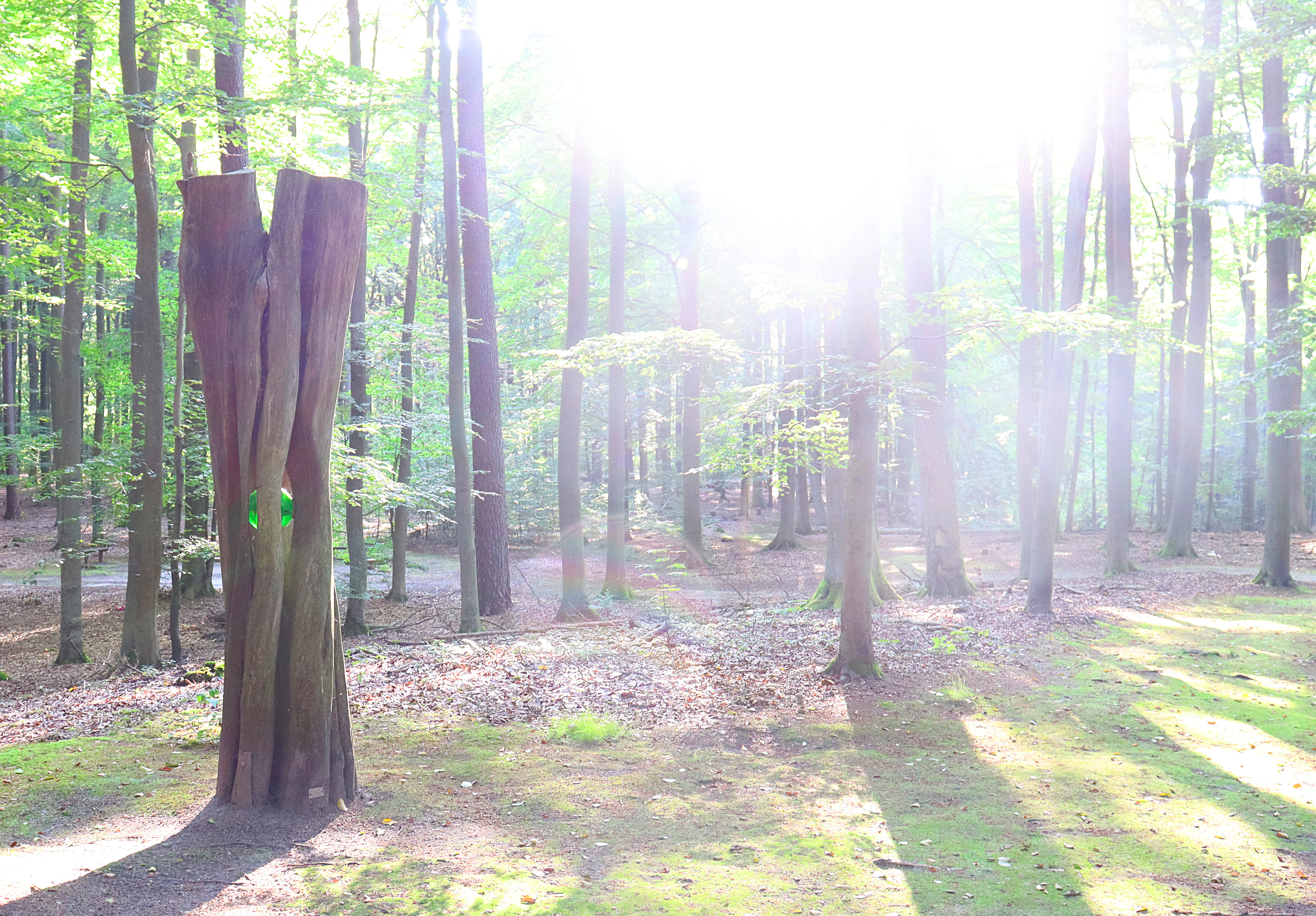
Buchheide is best known for its calcareous, partially waterlogged ground moraine landscape, which produces the unusual combination of lime-rich soils and wet habitats that the reserve was created to protect. This ecological setting, rather than dramatic scenery, is the defining feature of the area. The reserve is also notable for the Waldfriedhof Templiner Buchheide, a nature-oriented forest cemetery inaugurated in 2008 in the northern section adjoining Templin. With around 582 designated burial trees across roughly 8 hectares, it represents one of the more distinctive cultural integrations of a protected forest landscape in Brandenburg.
Buchheide history and protected-area timeline
The legal foundation of Buchheide dates to 1 October 1990, when the area was placed under nature protection by regulation as part of the broader designation of the Schorfheide-Chorin Biosphere Reserve. The accompanying decree defines the site's purpose as the conservation of habitats for threatened animal and plant species within a partially waterlogged, calcareous ground moraine landscape.
Following German reunification, the early 1990s brought a wave of formal nature reserve designations across Brandenburg, and Buchheide was established during this period. Its inclusion in the biosphere reserve framework tied its management to long-term regional conservation objectives rather than purely local protection.
In 2008, the northern section adjoining Templin was repurposed to host the Waldfriedhof Templiner Buchheide, an eight-hectare forest cemetery run by the town of Templin. The cemetery allows burials at 582 designated trees and explicitly prohibits conventional grave maintenance, ensuring that burials reinforce rather than disrupt the natural woodland setting. This integration of a civic function within a strictly protected area is one of the more notable recent developments in the reserve's history.
Buchheide landscape and geographic character
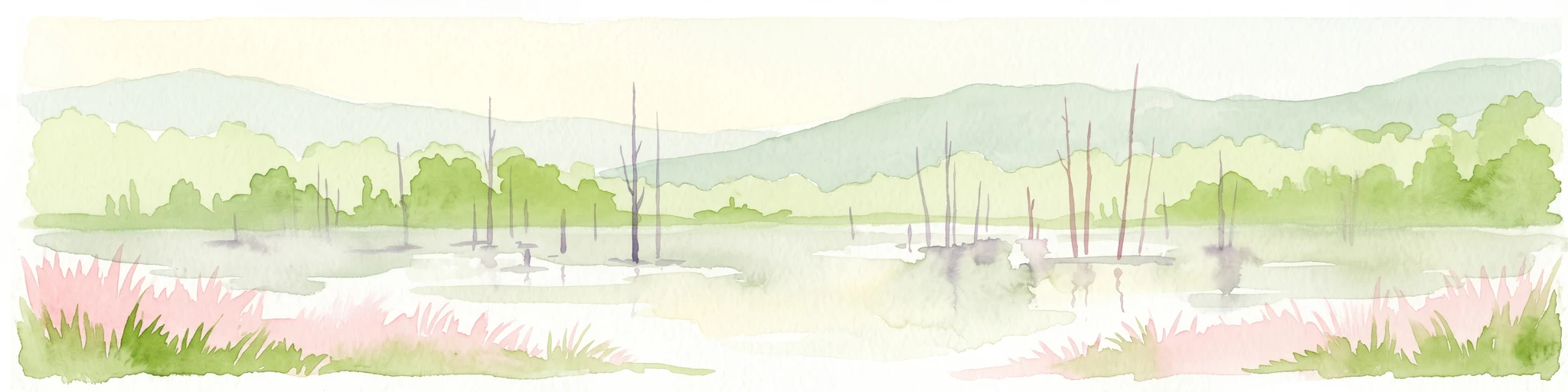
The landscape of Buchheide is shaped almost entirely by its glacial inheritance. The terrain consists of a ground moraine whose calcareous deposits give it a base-rich character unusual among the more typically acidic post-glacial substrates of northern Brandenburg. Combined with partial waterlogging, this has produced a varied micro-topography of slightly elevated dry sections interspersed with damp hollows.
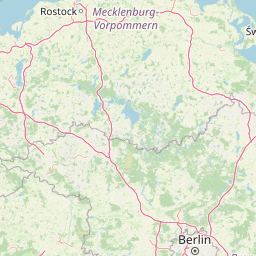
Lakes play a key role in defining the reserve's borders. To the northeast and east lies the Lübbesee, while the Krempsee and Polsensee close off the southern edge, giving the protected area a natural frame of standing water. The forest cover dominates the central and northern parts of the landscape, with the woodland opening up gradually toward the lakeshore transitions in the south.
Human infrastructure intersects the area modestly. The B 109 federal road runs along the western margin, and the L 216 between Templin and Vietmannsdorf bisects the reserve from north to south, paralleled further east by the road linking Templin and Dargersdorf. Despite these corridors, the interior of Buchheide retains a continuous forested, water-influenced character that defines its visual identity.
Buchheide ecosystems, habitats, and plant life
Buchheide's ecological character is defined by the convergence of calcareous substrate and partial waterlogging. The lime-rich ground moraine supports plant communities that would not thrive on the more acidic soils that dominate much of surrounding Brandenburg, while the wet depressions create conditions for moisture-dependent flora and fauna.
This combination of dry calcareous woodland margins and moist open areas produces the habitat heterogeneity that the reserve was established to safeguard. The mixture supports threatened plant species typical of base-rich soils alongside wetland-associated vegetation, making the site ecologically richer than its relatively modest size might suggest.
As part of the Schorfheide-Chorin Biosphere Reserve, Buchheide is embedded in a broader network of connected protected habitats, allowing species to move between analogous sites across the region. This connectivity enhances the long-term ecological value of the reserve beyond its own boundaries.
Buchheide wildlife and species highlights
The reserve was established specifically to protect threatened animal and plant species whose survival depends on the rare combination of calcareous soils and waterlogged terrain. The structural diversity of the landscape, with alternating dry woodland patches and wet depressions, provides niches for both forest-dwelling and wetland-associated fauna.
Wet conditions in parts of the moraine support amphibian and invertebrate communities adapted to seasonal flooding, while the dry, base-rich woodland sections host insects and associated species that depend on the specialized flora growing on calcareous soils. The mix of habitats increases the likelihood that bird species tied to either forest interior or wet-edge environments can find suitable conditions within the reserve.
Rather than being defined by a single charismatic species, Buchheide's wildlife significance lies in its assemblage of less conspicuous but ecologically specialized taxa reliant on the continued integrity of the calcareous, partially wet moraine landscape.
Buchheide conservation status and protection priorities
Buchheide's conservation importance rests on its position as one of the protected sites within the Schorfheide-Chorin Biosphere Reserve, a regionally significant landscape-scale conservation framework in northeastern Brandenburg. The site's inclusion in this biosphere reserve connects it to broader ecological objectives while giving it a clear individual protection mandate.
The 1990 protection decree explicitly identifies the preservation of habitats for threatened species in a partly waterlogged, calcareous ground moraine landscape as the site's purpose. This framing means that conservation management is oriented toward maintaining or restoring the specific combination of hydrological and edaphic conditions that make the site ecologically distinctive.
Management in practice emphasizes habitat preservation over public use. The reserve allows only low-intensity, non-extractive activities compatible with its ecological aims. Even the integration of the forest cemetery in 2008 was structured around strict limits: burials must use biodegradable urns at designated trees, and conventional grave maintenance is prohibited, ensuring that the cultural use does not erode the conservation value of the woodland.
Buchheide cultural meaning and human context
The most visible cultural dimension of Buchheide is the Waldfriedhof Templiner Buchheide, established in 2008 in the northern part of the reserve adjacent to Templin. Operated by the town, this 8-hectare forest cemetery allows burials at 582 designated trees and is explicitly designed to blend into the surrounding woodland.
The cemetery's rules reflect a deliberate cultural choice: biodegradable urns are required, and conventional grave care is not permitted, so that the natural appearance of the forest remains undisturbed. This model reflects a broader shift in German attitudes toward natural burial in protected or semi-natural settings, and Buchheide offers a notable example of how a nature reserve can absorb a civic function without compromising its ecological purpose.
Beyond the cemetery, the reserve's cultural imprint is modest. Its name, meaning roughly "beech heath," reflects the woodland character that has historically shaped local identity in the Templin area, though the reserve today is defined more by ecological objectives than by cultural heritage.
Top sights and standout views in Buchheide
The principal highlight of Buchheide is its ecological specialization: a base-rich, partially waterlogged ground moraine landscape that combines features not often found together in the region. This setting underpins both the species it protects and the management framework applied to it.
Equally distinctive is the Waldfriedhof Templiner Buchheide, which since 2008 has allowed natural burials in a strictly protected forest context. The combination of classical nature reserve goals with a practical, low-impact civic use gives Buchheide a profile that sets it apart from purely wilderness-oriented protected areas in Brandenburg.
Best time to visit Buchheide
The character of a visit to Buchheide shifts with the seasons primarily through changes in forest atmosphere, water levels, and visibility of ground vegetation. Late spring and early summer bring the most active display of understorey plants in the calcareous woodland sections, while damp areas remain accessible most of the year thanks to the relatively mild, moist conditions of the moraine.
Autumn offers a quieter forest experience, with leaf colour change across the beech and mixed woodland and reduced insect activity that can make walks more comfortable. Winter visits are possible regardless of snow cover, though shorter daylight hours and the partially waterlogged terrain call for appropriate preparation. Bird activity tends to be most noticeable during spring migration, when wetland edges within the reserve attract transient species.