Why Channel Islands National Marine Sanctuary stands out
Channel Islands National Marine Sanctuary is best known for its exceptional marine biodiversity, which is driven by the convergence of cold and warm ocean currents around the Northern Channel Islands. The resulting productivity supports extensive kelp forests, large seasonal aggregations of whales, breeding populations of California sea lions, and a striking mix of warm-water and cold-water species. It is also recognized for its rich maritime heritage. More than 150 historic ship and aircraft losses have been documented within its waters, and the area preserves submerged prehistoric Chumash cultural sites extending human history in the region back more than 13,000 years.
Channel Islands National Marine Sanctuary history and protected-area timeline
Channel Islands National Marine Sanctuary has its roots in growing public concern about the ecological and cultural value of the waters around California's Channel Islands. Although the islands themselves had long been recognized for their unique environments, large-scale industrial activity in the Santa Barbara Channel, including oil transportation and shipping, made their surrounding waters increasingly vulnerable to damage.
The turning point came with the 1969 Santa Barbara oil spill, a major blowout near the California coast that released large quantities of crude oil into the Santa Barbara Channel. The disaster underscored how little protection these waters had and helped build momentum for stronger federal safeguards. On October 2, 1980, the National Oceanic and Atmospheric Administration officially designated the Channel Islands National Marine Sanctuary, placing roughly 1,470 square miles of ocean under federal protection.
Since its designation, the sanctuary has continually expanded its scope. In 2002, California established a network of nearshore marine protected areas within the sanctuary, and NOAA extended additional protections into deeper waters in 2006 and 2007, substantially strengthening habitat safeguards across the region. The sanctuary's boundaries were also expanded in 2007. Over the decades, dedicated programs for education, research, maritime heritage preservation, and adaptive management have solidified the sanctuary's role as a flagship example of integrated ocean conservation in the United States.
Channel Islands National Marine Sanctuary landscape and geographic character
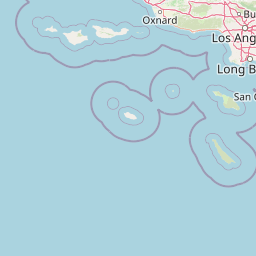
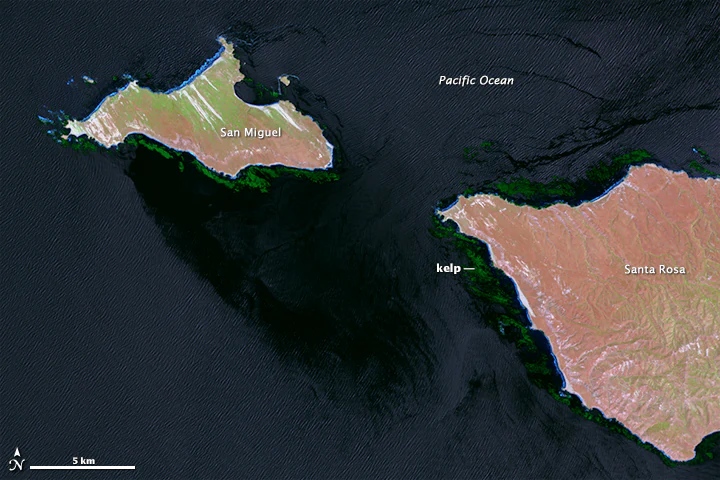
Although the sanctuary itself is composed of water rather than land, its physical character is defined by the islands it surrounds and the seafloor beneath it. The Northern Channel Islands, including Anacapa, Santa Cruz, Santa Rosa, San Miguel, and Santa Barbara Islands, form a chain off the Southern California coast, each with steep cliffs, sea caves, rocky intertidal zones, and sheltered coves that shape the surrounding currents and habitats.
The seafloor gradient inside the sanctuary is dramatic. Near the islands, shallow rocky reefs and kelp forests thrive in sunlit waters, but the vast majority of the sanctuary lies beyond the reach of significant light. About 91.5 percent of the sanctuary's area is deeper than 100 feet, descending into cold, low-oxygen waters that reach depths of more than 5,000 feet. This abrupt transition from bright, productive nearshore reefs to dark deep-water environments gives the sanctuary an unusually broad range of physical habitats within a relatively compact area.
Above the water, the islands and channel also influence atmospheric conditions. Wind patterns in the Santa Barbara Channel are affected by seasonal and long-term climate variability, which in turn drive upwelling and shape local marine productivity. The interplay between island topography, ocean currents, and wind makes the physical environment of the sanctuary as ecologically important as the species it supports.
Channel Islands National Marine Sanctuary ecosystems, habitats, and plant life
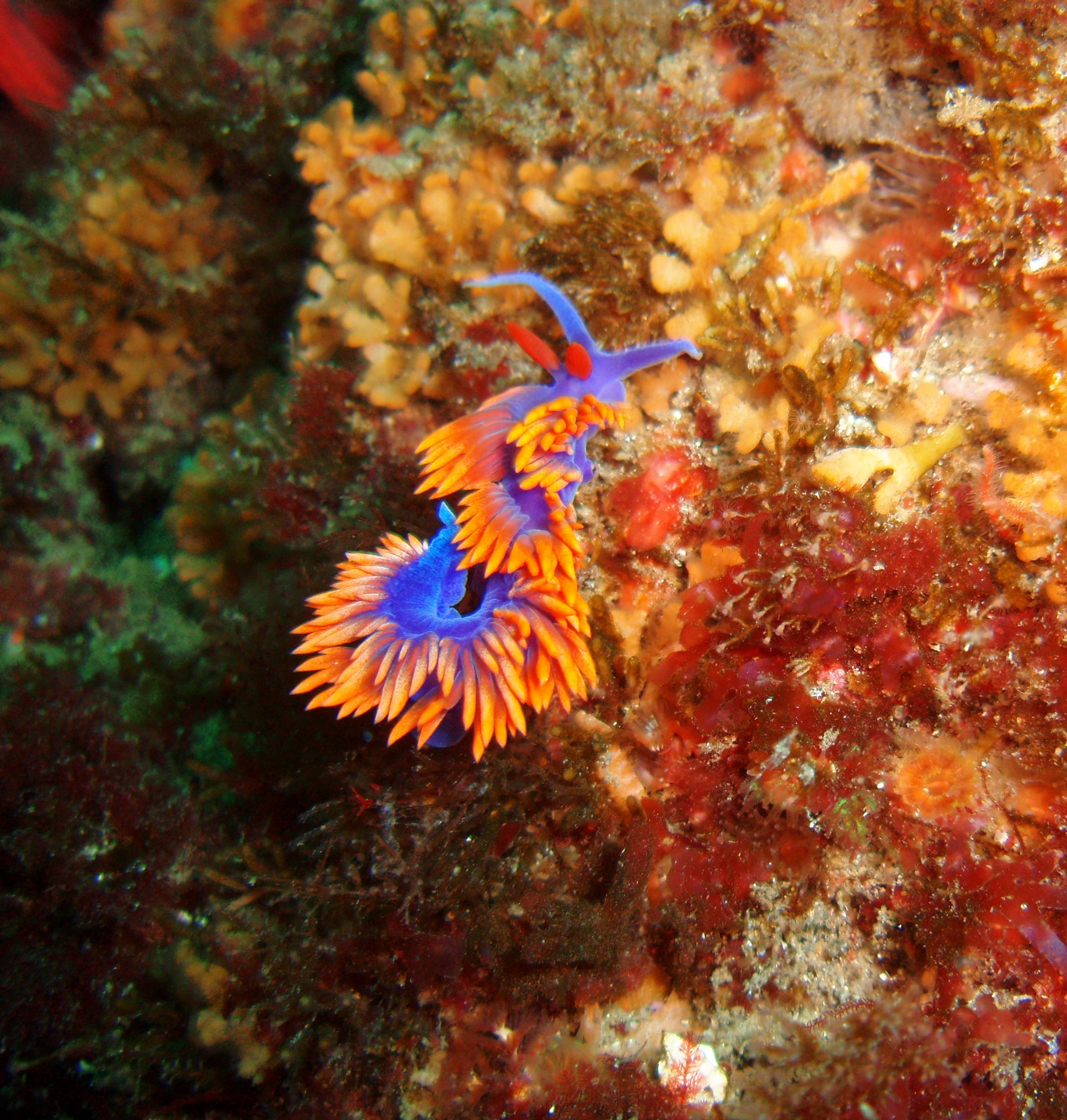
The ecological character of Channel Islands National Marine Sanctuary is shaped by its position at the confluence of two major ocean current systems. Cold water moving south along the California coast meets warmer southern currents, and the mixing of these waters produces exceptionally high productivity. Nutrient-rich upwelling fuels dense blooms of phytoplankton and zooplankton, which in turn support an unusually rich community of fish, marine mammals, seabirds, and invertebrates.
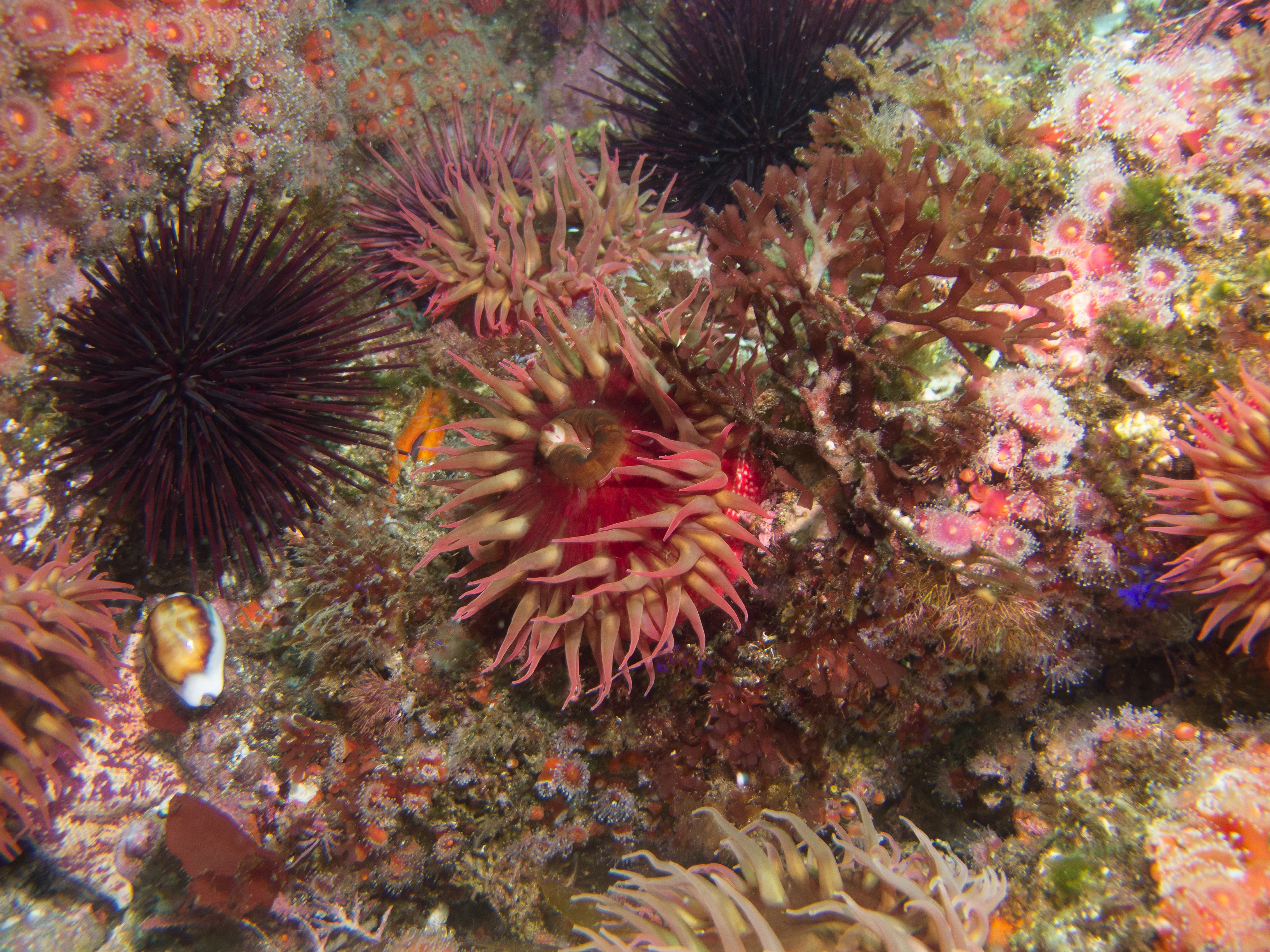
Kelp forests are among the most visible and ecologically important habitats in the sanctuary, particularly around the nearshore rocky reefs of San Miguel and Santa Rosa Islands. These underwater forests shelter sea lions, rockfish, and a wide range of invertebrates, and they also serve as important foraging grounds for larger predators. In deeper waters, communities of cold-water corals, sponges, crabs, sea stars, and other specialized animals occupy reefs and rocky outcrops, forming ecosystems that are less familiar but equally important to the sanctuary's overall biodiversity.
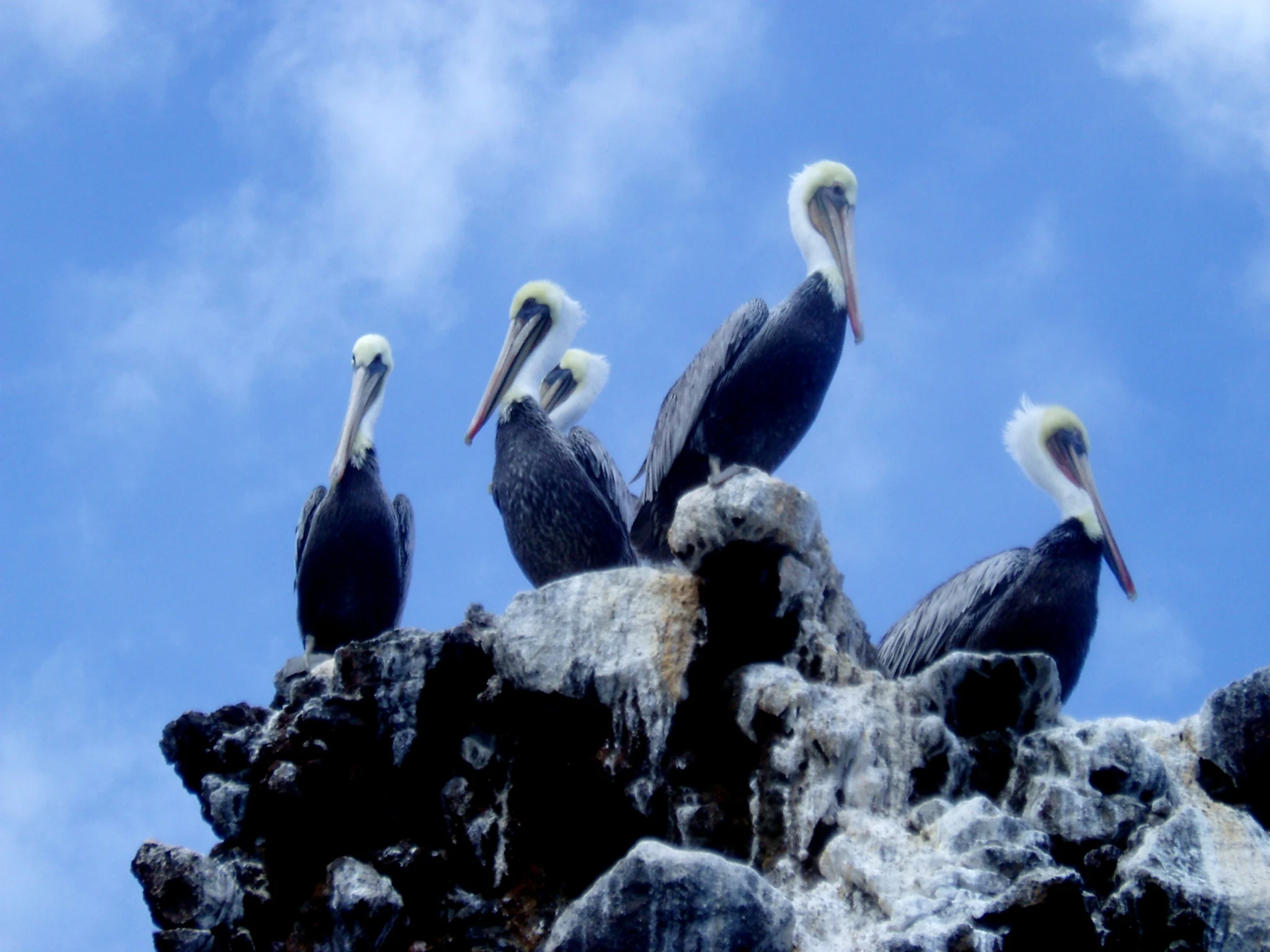
The islands also host significant seabird nesting and roosting habitat, including populations of brown pelicans, Scripps's murrelets, and other species that depend on both the terrestrial and marine environment. Eelgrass beds, shellfish populations, and intertidal habitats add to the mosaic of life and create a complex ecological network that the sanctuary's management and research programs actively monitor.
Channel Islands National Marine Sanctuary wildlife and species highlights
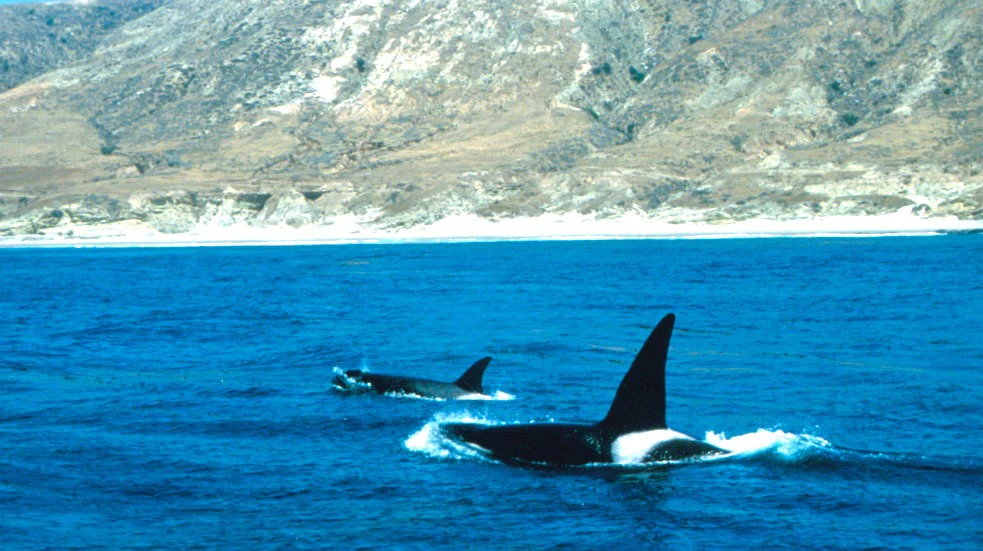
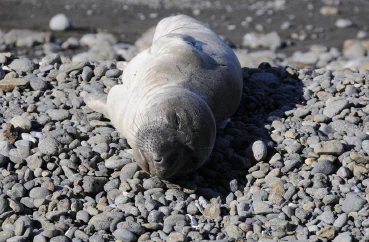
The wildlife of Channel Islands National Marine Sanctuary is one of its most striking features. California sea lions breed and haul out around the islands in large numbers, and northern elephant seals, harbor seals, and the occasional Steller sea lion use the rocky shores as resting and breeding habitat. The sanctuary's waters also host seasonal aggregations of large whales that draw international attention.
From early spring through late fall, humpback, blue, and fin whales come to the sanctuary in increasing numbers to feed on krill blooms and other prey. Gray whales pass through on their migrations between Alaska and the lagoons of Baja California. Researchers have documented extraordinary aggregations, including up to 186 unique whale photo identifications in a single day in some cases, underscoring how important the area is for recovering whale populations.
Birds are equally prominent in the sanctuary's wildlife profile. Brown pelicans, once severely reduced in number, now nest on the islands in large colonies. Scripps's murrelets, snowy plovers, and California least terns all rely on the islands and adjacent waters. Beneath the surface, fish such as canary rockfish, copper rockfish, and bocaccio inhabit kelp forest and rocky reef habitats, while white abalone, black abalone, and other invertebrates represent some of the rarer and more vulnerable species protected under the sanctuary's conservation framework.
Channel Islands National Marine Sanctuary conservation status and protection priorities
Conservation is central to the identity of Channel Islands National Marine Sanctuary and one of the reasons it was designated in 1980. The sanctuary was created to protect waters of national ecological and cultural significance, especially after the 1969 Santa Barbara oil spill highlighted how vulnerable the Santa Barbara Channel was to large-scale industrial damage. Federal designation placed these waters under NOAA's stewardship and introduced regulatory oversight of activities ranging from oil development and shipping to fishing and recreational use.
The sanctuary is supported by an extensive network of additional protections. Eleven marine reserves and additional marine conservation areas, covering roughly 241 square miles, prohibit or restrict take and harvest in important habitat zones. These no-take reserves are designed to protect whole ecosystems rather than individual species, and ongoing research suggests that food webs within them are more stable and resilient than those outside.
Conservation in the sanctuary extends beyond habitat protection. Programs monitor whale-ship interactions, ocean acidification, invasive species, damage to eelgrass beds, marine debris, poaching, and water pollution. Partnerships with universities, NOAA research vessels, and international collaborators support long-term ecological monitoring. The sanctuary's deep-water coral and sponge habitats, kelp forest ecosystem, and breeding areas for seabirds and marine mammals are all conservation priorities, and ongoing studies of cetacean populations, kelp forest food webs, and acoustic conditions continue to inform adaptive management decisions.
Channel Islands National Marine Sanctuary cultural meaning and human context
The waters of Channel Islands National Marine Sanctuary hold deep and enduring cultural significance. The Northern Channel Islands have been inhabited for at least 13,000 years, with the earliest known human remains in the area dating back to that period. The Chumash people developed a sophisticated maritime culture centered on these islands and the surrounding waters, building and sailing the traditional plank canoes known as tomols and maintaining complex trade and exchange networks along the California coast. Submerged archaeological sites within the sanctuary preserve evidence of this long human history, including prehistoric landforms now drowned by rising sea levels.
The sanctuary also carries a rich maritime heritage from more recent centuries. More than 150 ships and aircraft have been reported lost within its waters, and roughly two dozen of those wrecks have so far been located and documented. These include vessels such as the SS Winfield Scott, which has become a destination for recreational divers interested in the sanctuary's combined natural and cultural history. Preserving these wrecks, along with the broader underwater archaeological record, is an explicit part of the sanctuary's stewardship mission, and the site hosts public education efforts, interpretive programs, and continuing research into the region's layered history. Today, the Chumash community continues to honor this legacy through cultural events, including the annual traditional tomol crossing of the Santa Barbara Channel.
Top sights and standout views in Channel Islands National Marine Sanctuary
Channel Islands National Marine Sanctuary stands out as one of the most biologically productive marine areas on the United States West Coast, owing to the convergence of cold and warm ocean currents around the Northern Channel Islands. This ecological richness supports world-class kelp forests, seasonal aggregations of humpback, blue, and fin whales, and large breeding colonies of California sea lions and seabirds.
Equally distinctive is the sanctuary's dual natural and cultural identity. It preserves deep-water coral and sponge habitats, a system of marine reserves that protects entire food webs, and a remarkable maritime heritage that includes Chumash archaeological sites and more than 150 historic ship and aircraft losses. Combined, these qualities make the sanctuary a benchmark example of multi-layered ocean conservation.
Best time to visit Channel Islands National Marine Sanctuary
The character of a visit to Channel Islands National Marine Sanctuary shifts noticeably with the seasons. Late spring through early fall is generally the most active time above and below the water, when calm seas, longer daylight hours, and warmer temperatures make boating, kayaking, diving, and snorkeling more accessible. This window also coincides with peak whale activity, as humpback, blue, and fin whales feed in the area and gray whales pass through during their migrations.
Winter brings stronger winds, rougher seas, and reduced boating access, but it also brings its own rewards. Migratory seabirds are present, marine mammal breeding behaviors continue on the islands, and cooler conditions can offer clearer underwater visibility for divers on protected days. The best period for most visitors is typically spring to early fall, when the combination of weather, wildlife, and water conditions tends to be most favorable.