

Why Danggu (Geikie) Gorge National Park stands out
The park is best known for its spectacular Devonian-era limestone gorge, one of the most accessible and visually striking in the Kimberley region. The ancient reef formation, built by extinct organisms rather than corals, represents a unique geological window into Earth's deep past. The gorge also features remarkable seasonal flooding dynamics, with the Fitzroy River's wet season rise clearly visible as white scour marks on the gorge walls. Freshwater crocodiles, sawfish, stingrays, and barramundi inhabit the river, while the riparian vegetation supports diverse birdlife including fruit bats, bowerbirds, and warblers.
Danggu (Geikie) Gorge National Park history and protected-area timeline
The gorge carries a dual heritage of colonial geological naming and Indigenous cultural identity. It was first documented by European explorers in 1883 and named in honor of Sir Archibald Geikie, then Director General of the Geological Survey of Great Britain and Ireland. The Bunuba people have known the area as Danggu for generations, a name that translates to mean the area where the water is very deep under the cave. The park was formally established in 1967, providing statutory protection for the geological and natural values of the gorge. In 2023, the park experienced significant damage when the Fitzroy River rose dramatically, reaching heights of 15 meters and permanently altering some sections of the river channel. The flooding destroyed many park facilities, necessitating closure for recovery and rehabilitation. As of early 2024, the park remains closed with plans to reopen sometime during 2024.
Danggu (Geikie) Gorge National Park landscape and geographic character
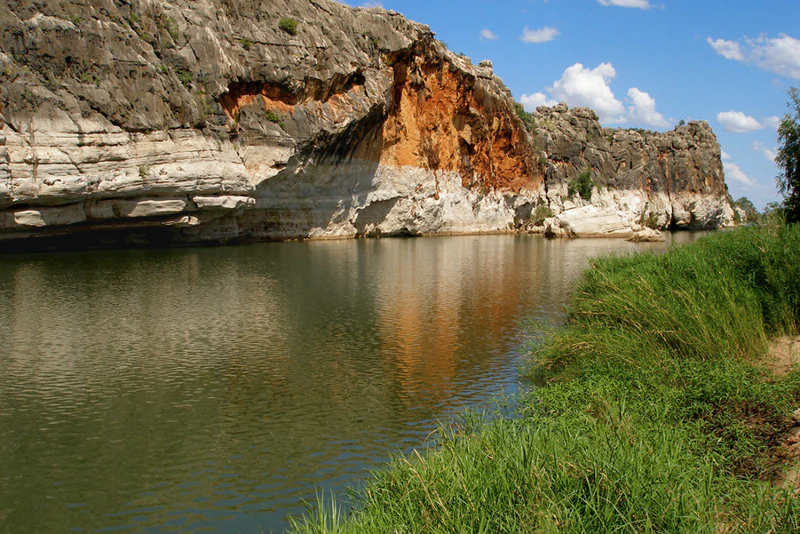
The physical landscape of Danggu (Geikie) Gorge centers on a dramatic limestone canyon cutting through the backbone of the Napier Range. The gorge walls rise 30 meters from the river level, while the surrounding limestone range stands up to 100 meters above the savanna plains. The reef limestone, formed during the Devonian Period, reaches thicknesses of up to two kilometers in places, representing one of the most substantial ancient reef systems exposed at the Earth's surface. The Fitzroy River continues to actively carve and shape the gorge, with seasonal flood waters depositing visible white scarring on the limestone walls where abrasive flow has stripped the surface. The terrain along the gorge floor is rough and uneven, with the river channel varying in depth and width as it threads through the canyon.
Danggu (Geikie) Gorge National Park ecosystems, habitats, and plant life
The ecological character of the park reflects the intersection of ancient geological formations with ongoing river processes and tropical savanna ecosystems. The Fitzroy River, which flows continuously through the gorge, serves as the lifeblood of the area, supporting abundant aquatic life and creating a verdant riparian corridor through the otherwise dry savanna landscape. The vegetation along the riverbanks includes river gums, freshwater mangroves, pandanus, paperbark, and native figs, with dense reed beds providing habitat for numerous bird species. This riparian zone contrasts sharply with the surrounding Kimberley savanna, creating a lush green corridor that supports wildlife dependent on permanent water. The Devonian limestone geology also contributes to the ecosystem, with fossil-rich strata visible in the gorge walls providing evidence of the ancient marine life that once inhabited this region.
Danggu (Geikie) Gorge National Park wildlife and species highlights
The Fitzroy River flowing through Danggu (Geikie) Gorge supports a notable collection of aquatic species, including large populations of barramundi, sawfish, and freshwater crocodiles. The sawfish found here include the largetooth sawfish, a species of conservation significance, while coach-whip stingrays also inhabit the river channels. Freshwater crocodiles can be observed basking on river banks or swimming in the shallower sections of the waterway. The riparian vegetation provides crucial habitat for various bird species, with fruit bats, great bowerbirds, lilac-crowned wrens, and reed warblers among the avian residents. The combination of permanent water, structurally diverse vegetation, and protection from disturbance makes this stretch of the Fitzroy River particularly important for wildlife in the Kimberley region.
Danggu (Geikie) Gorge National Park conservation status and protection priorities
Danggu (Geikie) Gorge National Park plays a significant role in protecting Kimberley biodiversity and geological heritage. The park is part of the broader Balili (Devonian Reef) Conservation Park network, which recognizes the outstanding universal value of the region's Devonian reef formations. The IUCN designation as Category II reflects the national park's primary objective of protecting natural ecosystems while allowing for sustainable visitor use. The co-management arrangement with Darlngunaya Aboriginal Corporation represents contemporary conservation practice that integrates Indigenous knowledge and cultural values into protected area management. The flood event of 2023 demonstrated both the dynamic natural processes that shape this landscape and the vulnerability of infrastructure to extreme weather events in the Kimberley.
Danggu (Geikie) Gorge National Park cultural meaning and human context
The park holds deep significance for the Bunuba people, the Traditional Owners of the land on which the gorge sits. The Bunuba name Danggu carries specific meaning relating to the place where water runs deep under a cave, reflecting Indigenous knowledge of the landscape's physical and spiritual characteristics. The gorge and surrounding country have been part of Bunuba Country for countless generations, with the river and its resources forming part of ongoing cultural practice and connection. The renaming to Dan͟ggu Geikie Gorge, incorporating both the Bunuba name and the historical European naming, reflects a collaborative approach to recognizing the dual heritage of this place.
Top sights and standout views in Danggu (Geikie) Gorge National Park
The defining highlight of Danggu (Geikie) Gorge is the spectacular canyon landscape carved through ancient Devonian limestone, offering one of the most visually impressive and geologically significant gorges in the Kimberley. The opportunity to see clearly visible flood marks on the gorge walls, showing the dramatic annual rise and fall of the Fitzroy River, provides a tangible connection to the seasonal dynamics that shape this landscape. The accessibility of the gorge, just 20 kilometers from Fitzroy Crossing via a sealed road, makes it a practical destination for visitors to the Kimberley. The presence of freshwater crocodiles, sawfish, and other aquatic wildlife in the clear river waters offers wildlife viewing opportunities that are unique to this riparian environment within the broader arid savanna landscape.
Best time to visit Danggu (Geikie) Gorge National Park
The Kimberley region experiences distinct wet and dry seasons that significantly affect the experience at Danggu (Geikie) Gorge. The dry season, typically from May to October, offers cooler temperatures, lower humidity, and more accessible conditions for walking and wildlife observation. However, the wet season (November to April) brings dramatic river rises that transform the gorge, though high water levels can restrict boat access and certain trail sections. The park has been closed since 2023 due to flood damage, with reopening planned for 2024, so visitors should check current conditions before planning trips. The contrast between the white scour marks on the limestone walls, showing previous flood levels, and the existing water level provides ongoing evidence of the river's seasonal behavior regardless of when one visits.
