Mori Atlas logo
Nature reserveRezerwat przyrody Dębina

Geographic analysis of mature oak-hornbeam stands and riparian woodland within Opole Voivodeship.

Rezerwat przyrody Dębina: A Protected Forest Sanctuary in the Nysa Kłodzka Valley, Poland

Rezerwat przyrody Dębina serves as a critical protected woodland fragment within the historic Puszcza Niemodlińska forest complex in southwestern Poland. This reserve preserves mature oak-hornbeam and riparian forest communities characterized by significant ancient tree specimens and dense spring-blooming flora. Situated within the broader Nysa Kłodzka valley, the area remains a vital sanctuary for woodland biodiversity and ecological continuity.

forest reserveoak-hornbeam forestriparian forestold-growth forestNysa Kłodzka valleyspring geophytes

Rezerwat przyrody Dębina

Nature reserve

Park overview

Structured park overview, official facts, and landscape profile for Dębina Nature Reserve

Dębina Nature Reserve park facts, protected area profile, and essential visitor context

Review the core facts for Dębina Nature Reserve, including designation, size, terrain, visitor scale, habitats, and operating context in one park-focused overview.

About Dębina Nature Reserve

Dębina Nature Reserve is a compact but ecologically significant woodland reserve in southwestern Poland, situated on the forested floor of the Nysa Kłodzka river valley near Grodków. Although small in area, occupying roughly 61 hectares, the reserve represents one of the remaining fragments of the once-extensive Puszcza Niemodlińska, a great lowland forest complex historically spanning parts of what is now the Opole region. The designation of Dębina in the year 2000 reflects an effort to safeguard the surviving natural character of these forests against centuries of fragmentation, agricultural expansion, and intensive forestry.

The reserve lies within the Dolina Nysy Kłodzkiej mesoregion and shares much of its environmental history with neighboring forest tracts. Its terrain is shaped by the river corridor, with riparian forests along the Nysa Kłodzka grading into richer oak-hornbeam communities on more stable ground. The two forest types, łęg and grąd, form the core of what the reserve is intended to protect, and the management framework emphasizes active protection rather than passive designation, meaning that intervention is used to maintain or restore natural stand structure.

Beyond its regional context, Dębina is layered into a wider network of protection. It sits inside the Bory Niemodlińskie Protected Landscape Area, a broader designation covering the surviving forest landscape around Niemodlin, and contributes to the Natura 2000 site Opolska Dolina Nysy Kłodzkiej, which is important for habitat conservation at the European level. Together, these overlapping layers of protection underline that Dębina, despite its modest size, is a meaningful node in the regional ecological infrastructure.

The visitor experience is secondary to the reserve’s conservation purpose. Because it is a forest reserve under active protection, public access is limited and the site is best understood as a quiet study area for woodland ecology, native flora, and breeding birdlife, rather than as a destination for mass tourism or recreation infrastructure.

Quick facts and research context for Dębina Nature Reserve

Dębina is a forest nature reserve in Gmina Grodków, Brzeski County, Opole Voivodeship, covering roughly 61 hectares along the Nysa Kłodzka river. It was established on 10 January 2000 by regulation of the Voivode of Opole and is managed under active protection. The reserve lies within the Bory Niemodlińskie Protected Landscape Area and contributes to the Natura 2000 site known as Opolska Dolina Nysy Kłodzkiej.

Protection and recognition

Examine the documented conservation scope, management framework, and recognized status of Rezerwat przyrody Dębina.

Rezerwat przyrody Dębina Protection Status and Terrestrial Designation

Rezerwat przyrody Dębina maintains a terrestrial protection scope within its designated conservation framework. Structured records outline the documented protection status and associated recognition details for this protected area.

Protection details

Protection scope
Terrestrial
Transboundary protection
No
Park context

Deeper park guide and search-rich context for Dębina Nature Reserve

Dębina Nature Reserve history, landscape, wildlife, and travel context

Explore Dębina Nature Reserve through its history, landscape character, ecosystems, wildlife, conservation priorities, cultural context, and seasonal travel timing in a structured park guide built for atlas discovery and search intent.

Why Dębina Nature Reserve stands out

Dębina is best known for preserving a naturally structured fragment of the historic Puszcza Niemodlińska, with mature stands of linden, oak, and ash, some individual trees reaching around 150 cm in trunk diameter, and reportedly close to 160 years of age in parts of the stand. Its most distinctive botanical signature is the mass occurrence of snowdrops (_Galanthus nivalis_) forming a continuous carpet, together with a dense, expansive population of wild garlic (_Allium ursinum_). These two spring-flowering species, alongside other woodland indicators such as primrose and alder buckthorn, give the reserve a particularly rich seasonal character in early spring.
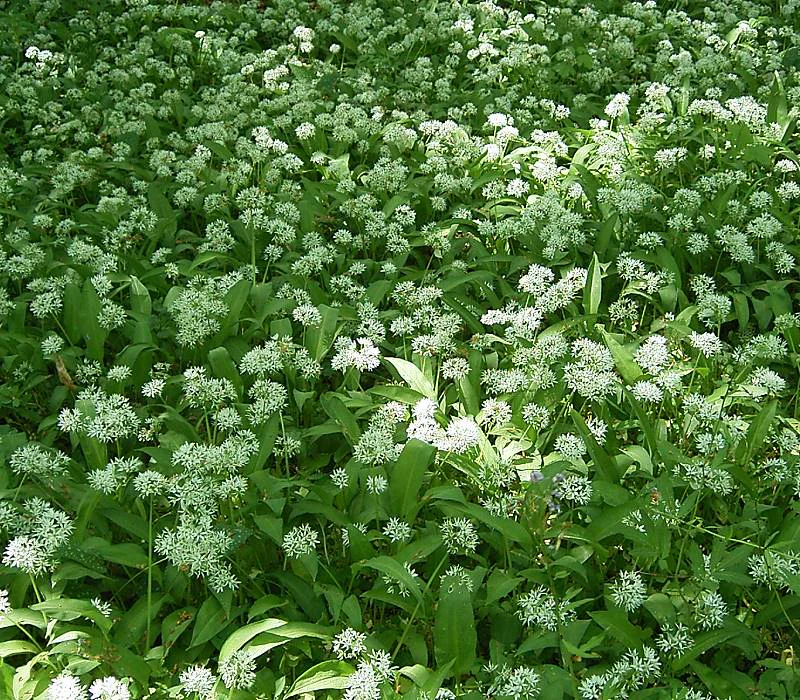
A carpet of white, spherical flower heads of wild garlic plants covering the forest floor with green, lance-shaped leaves.
A dense patch of flowering wild garlic (Allium ursinum) within the forest floor of the nature reserve.

Dębina Nature Reserve history and protected-area timeline

The Dębina Nature Reserve was established by regulation of the Voivody of Opole on 10 January 2000, after decades during which the surrounding forests of the Puszcza Niemodlińska had been increasingly reduced by agriculture and forestry. Its creation reflects a regional effort to preserve a fragment of the historical Niemodlin Forests with their natural stand structure, particularly the old-growth oak-hornbeam and riparian forests that have remained comparatively intact. The reserve has since been managed under active protection, aligning its objectives with the broader conservation framework of the Bory Niemodlińskie Protected Landscape Area and the Natura 2000 network.

Dębina Nature Reserve landscape and geographic character

Dębina occupies a lowland river-forest landscape in the Nysa Kłodzka valley, between the villages of Głębocko and Kopice. The topography is gentle and shaped by the river corridor, with riparian hardwood forests lining the floodplain and richer oak-hornbeam communities on slightly higher, more stable ground above the immediate river influence. The wider visual context is one of managed farmland broken by patches of woodland, with the reserve standing out as a denser, older, and less disturbed block of forest.

The reserve falls within the Dolina Nysy Kłodzkiej mesoregion, an area defined by the Nysa Kłodzka river and its valley morphology. While there are no dramatic landforms such as cliffs, peaks, or dunes, the landscape character is dominated by the contrast between the open valley floor and the closed canopy of the reserve, as well as by the presence of mature trees whose size and age give the forest a distinctly old-growth appearance within an otherwise heavily altered regional landscape.

Dębina Nature Reserve ecosystems, habitats, and plant life

Ecologically, Dębina is a representative example of Central European riverine and oak-hornbeam forest. The reserve preserves the natural layering of habitats typical of such forests: a canopy dominated by linden, oak, and ash, a shrub layer including alder buckthorn, and a herb layer famous for its early-spring geophytes. Together, these communities support the microclimatic conditions and the soil moisture regime on which the reserve’s most distinctive flora depends.

The confluence of łęg (ripian) and grąd (oak-hornbeam) forest types within a small area is itself ecologically valuable, as it allows gradual transitions from wetter to drier conditions over short distances. The reserve’s connection to the Nysa Kłodzka further integrates it with the wider river ecosystem, where aquatic and floodplain processes periodically interact with the forest. This combination of natural stand structure, intact hydrological linkage, and continuity with the broader Bory Niemodlińskie makes Dębina an important reference site for understanding what the original Niemodlin Forests looked like before modern fragmentation.

Dębina Nature Reserve wildlife and species highlights

The wildlife of Dębina reflects the character of mature deciduous and riparian forest in southwestern Poland. Among breeding birds, the reserve supports several species typical of old-growth deciduous woodland, including the stock dove, the collared flycatcher, and three woodpecker species: the grey-headed, black, and middle spotted woodpeckers. Their presence is itself an ecological indicator, as these species depend on the deadwood, cavity trees, and structural complexity found in older, less disturbed stands.

Mammals recorded in or expected from the area include the water shrew and the stoat, both small predators linked to moist forest environments, along with several bat species such as the common noctule, the greater and lesser pipistrelles, and the brown long-eared bat. The bat assemblage is particularly meaningful from a conservation perspective, as pipistrelle and long-eared bats use woodland interiors for foraging and tree cavities for roosting, reinforcing the importance of preserving the reserve’s mature trees and minimal-intervention management approach.

Dębina Nature Reserve conservation status and protection priorities

Dębina’s conservation significance rests on its role as a refuge for natural forest communities that have largely disappeared from the surrounding lowlands of Opole Voivodeship. By protecting both ripian and oak-hornbeam stands that retain near-natural composition and structure, the reserve provides a baseline against which the condition of other, more heavily managed forests in the region can be assessed. Its proximity to the Nysa Kłodzka adds a hydrological dimension to its protection value, conserving the functional link between river, floodplain, and forest.

The reserve operates under active protection, which means management actions are taken to maintain or restore natural forest processes and structure rather than excluding all human activity. Embedding Dębina within the Bory Niemodlińskie Protected Landscape Area and within the Natura 2000 site Opolska Dolina Nysy Kłodzkiej strengthens its role in regional and European ecological networks, ensuring that the site contributes both to habitat continuity across the former Puszcza Niemodlińska and to the conservation of habitats of Community interest.

Top sights and standout views in Dębina Nature Reserve

Dębina’s strongest qualities include its old-growth character within the regional context, the rare continuity of łęg and grąd forest types on a small site, and the biologically distinctive spring flora led by mass-flowering snowdrops and wild garlic. Its layered protection within the Bory Niemodlińskie landscape area and the Natura 2000 network makes it a small but consequential piece of the larger ecological fabric of the Nysa Kłodzka valley. For visitors and researchers alike, the reserve offers a compact window onto the surviving character of the historic Niemodlin Forests.

Best time to visit Dębina Nature Reserve

As a small forest reserve under active protection, Dębina is best appreciated in early spring, when the understory comes alive with the reserve’s most distinctive flora: extensive carpets of snowdrops and the dense flowering stands of wild garlic. Late spring into early summer offers a quieter but still rewarding experience, with mature canopy in full leaf and active breeding birdlife. Autumn brings rich forest color and fruiting, while winter reveals the structural character of the old stand. Heavy rain in any season can make the river-valley terrain wet underfoot, so drier days tend to be most comfortable for any on-site observation.

Monthly climate preview

Long-term representative point measurements for monthly temperature and precipitation variation

Rezerwat przyrody Dębina Climate Normals and Annual Temperature Rhythm

Representative point records for Rezerwat przyrody Dębina show measured monthly shifts in average temperature and precipitation rates from twelve-month NASA climate data. Reviewing the complete monthly profile provides detailed long-term averages for analyzing annual meteorological patterns across the coordinate point.
Annual mean8 °C
-3 °C20 °C
Jan-3°
Feb-1°
Mar
Apr
May13°
Jun17°
Jul20°
Aug19°
Sep14°
Oct
Nov
Dec-1°
Warmest month
July

19.6 °C

Coolest month
January

-2.8 °C

Wettest month
July

2.9 mm/day

Driest month
January

1.3 mm/day

Park location guide

Geography guide, regional context, and park location map for Dębina Nature Reserve

Dębina Nature Reserve park geography, regions, and map view in Poland

Understand where Dębina Nature Reserve sits in Poland through a broader geographic reading of the surrounding landscape, nearby location context, and its mapped position within the national park landscape.

How Dębina Nature Reserve fits into Poland

Poland, officially the Republic of Poland, is a Central European country spanning from the Baltic Sea in the north to the Carpathian Mountains in the south. It borders Germany, Czech Republic, Slovakia, Ukraine, Belarus, Lithuania, and Kaliningrad Oblast. The country has a temperate climate, diverse landscapes, and is known for its rich history, cultural heritage, and strong economic position within the EU.

Wider geography shaping Dębina Nature Reserve in Poland

Poland occupies 312,696 km2 in Central Europe, extending from the Baltic Sea coast in the north to the Sudetes and Carpathian Mountains in the south. It borders Germany to the west, Czech Republic and Slovakia to the south, Ukraine and Belarus to the east, and Lithuania and Kaliningrad Oblast to the northeast. The landscape includes lowland plains, uplands, and mountain ranges.

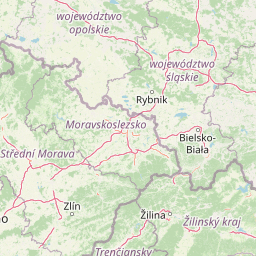
Map view of Dębina Nature Reserve

Use this park location map to pinpoint Dębina Nature Reserve in Poland, understand its exact geographic position, and read its mapped placement within the surrounding landscape more clearly.

Pigeon | © OpenStreetMap contributors

Location context for Dębina Nature Reserve

Opole Voivodeship

Visual reference of old growth woodland habitats, river valley terrain, and seasonal flora

Rezerwat przyrody Dębina Photos and Protected Forest Landscape Scenery

Photographic records document the mature oak-hornbeam stands, dense spring geophyte carpets, and river-corridor terrain defining Rezerwat przyrody Dębina. Visual exploration reveals the protected forest structure and old-growth character within the wider Nysa Kłodzka valley landscape.

A carpet of white, spherical flower heads of wild garlic plants covering the forest floor with green, lance-shaped leaves.

A rectangular orange sign in a forest with white text that reads REZERWAT PRZYRODY DĘBINA, featuring a small white Polish eagle emblem above the text.

Park atlas

Explore nearby forest reserves and connected regional protected landscapes

Parks Near Rezerwat przyrody Dębina and Surrounding Protected Areas

Browse other parks and protected areas situated near Rezerwat przyrody Dębina to compare regional forest types and valley geography. Discover adjacent woodland reserves and river corridors to expand your understanding of southwestern Poland conservation zones.
Protected areaLower Silesian Voivodeship
About 24 km away#1 closest

West

Wzgórza Strzelińskie Protected Area: Geographic Atlas and Regional Landscape Mapping

A diverse Natura 2000 hill landscape in southwestern Poland.

Spanning over 3,800 hectares, Wzgórza Strzelińskie functions as a vital refuge for specialized European habitats. The area features a complex intersection of beech-dominated forests, rocky cliff communities, and traditional meadows that define the local Silesian topography. This record provides a detailed look at the park boundaries, ecosystem distribution, and the natural terrain that shapes this conservation site.

Area
38.362 km²
Relief
Upland
Water
Minor water
Protected areaOpole Voivodeship
About 31 km away#2 closest

South

Przyłęk nad Białą Głuchołaską: Protected Area and River Landscape Geography in Poland

Mapped riparian habitats within Opole Voivodeship

Focusing on the Biała Głuchołaska river valley, this area preserves a complex system of active river channels, gravel bars, and terrace forests. The landscape transitions from wet willow-poplar galleries to stable oak-hornbeam communities. As a Natura 2000 site in the Opole Voivodeship, the terrain provides a clear look at submontane river processes interacting with lowland forest habitats.

Area
3.193 km²
Relief
Lowland
Climate
Temperate
Scope
Terrestrial
Protected landscapeOpole Voivodeship
About 34 km away#3 closest

Northeast

Stobrawski Park Krajobrazowy: Geographic Profile and Protected Landscape Context

Extensive pine forests and fluvial corridors in Opole Voivodeship

Spanning over 52,600 hectares, Stobrawski Park Krajobrazowy serves as a massive lowland refuge. The protected landscape combines the continuous Bory Stobrawskie pine forests with a network of river basins and ponds. It remains a focal point for understanding lowland ecological connectivity, bird protection zones, and the physical geography of the Silesian plains.

Area
526.365 km²
Established
1999
Relief
Lowland
Climate
Temperate
A soft, artistic watercolor painting showing a stylized, rolling green landscape with forests, meadows, and a winding path.
Nature reserveOlomouc Region
About 49 km away#4 closest

Southwest

Račí údolí Nature Reserve: A Protected Forest Valley in the Olomouc Region

Geographic boundaries and metamorphic woodland terrain

Račí údolí serves as a vital protected area in the Jeseník foothills, showcasing remnants of oak and beech forests amidst rocky gneiss terrain. This valley map highlights the intersection of natural stream-cut geography and centuries of human cultural presence, providing a dense, immersive look at regional forest conservation and metamorphic geology.

Area
0.62 km²
Established
1998
IUCN
IV
Relief
Upland
Protected landscapeDolnośląskie
About 50 km away#5 closest

Southwest

Śnieżnicki Park Krajobrazowy: Protected Landscape and Mountain Geography Atlas

Eastern Sudetes protected area in Dolnoslaskie, Poland

Located in the Dolnoslaskie region, Śnieżnicki Park Krajobrazowy protects a striking mosaic of primeval forest and varied mountain relief. This entry maps its core components, from the high peak of Śnieżnik to the intricate karst landforms and deep river valleys that define its regional geographic character.

Area
288 km²
Established
1981
Relief
Mountain
Climate
Alpine
Natural monumentOlomouc Region
About 54 km away#6 closest

Southwest

Vodopády Stříbrného potoka: Natural Monument and Mountain Stream Geography in Olomouc Region

Geomorphological landmark within the Rychlebské hory mountain range

Vodopády Stříbrného potoka is a protected natural monument in the Czech Republic, encompassing a narrow, steep-sided valley defined by bedrock cascades. This compact site highlights mountain stream geomorphology and serves as a significant feature in the Rychlebské hory, offering insight into the distinctive eroded terrain of the Jeseník District.

Area
0.017 km²
Established
1965
IUCN
III
Relief
Mountain
Protected areaLower Silesian Voivodeship
About 61 km away#7 closest

Northwest

Przeplatki nad Bystrzycą Protected Area: Regional Geography and Riverine Habitat Mapping

Protected riparian corridors and floodplain landscapes in southwestern Poland

Trace the three enclaves of Przeplatki nad Bystrzycą across the Lower Silesian Voivodeship. This protected area offers insight into European lowland river systems, where alluvial forests, oxbow lakes, and traditionally managed grasslands form a vital ecological mosaic for rare meadow butterflies and freshwater species.

Area
8.437 km²
Watercolor painting of a lush green landscape with trees, rolling hills, and a water feature in a soft pastel palette.
Protected landscapeSilesian Voivodeship
About 74 km away#8 closest

Southeast

Park Krajobrazowy Cysterskie Kompozycje Krajobrazowe Rud Wielkich: A Silesian Protected Area

Riverine landscapes, forest corridors, and historic Cistercian pond networks

Situated in the Silesian Voivodeship, this protected landscape encompasses a significant portion of the Upper Oder basin. Its geography is characterized by a balance of managed forest, agricultural fields, and an intricate lattice of fishponds. These features provide critical refuge for waterbirds and preserve riparian woodland patterns that reflect centuries of deliberate landscape transformation by the Cistercian order.

Area
493.87 km²
Established
1993
Relief
Lowland
Climate
Temperate

Common questions about visiting, size, designation, and location context for Dębina Nature Reserve

Dębina Nature Reserve FAQs for park facts, access, geography, and protected area context

Find quick answers about Dębina Nature Reserve, including protected-area facts, park geography, trail and visitor context, and how the park fits into its surrounding country and regional landscape.
MoriAtlas Explorer

Continue Your Protected Areas Search Across the Global Atlas

Deepen your exploration by continuing the structured search for national parks and protected areas worldwide. Utilize the comprehensive filtering capabilities to compare different conservation landscapes and refine your understanding of global park geography. Discover more about the distribution and characteristics of protected natural areas.

Global natural geography