Mori Atlas logo
National parkEl Cimatario National Park

Discover the mapped boundaries and regional geographic context of El Cimatario National Park.

El Cimatario National Park: Mexico's Protected National Park Landscape in Querétaro

(Parque Nacional El Cimatario)

Delve into El Cimatario National Park, a designated national park situated within the Querétaro region of Mexico. This page offers a detailed atlas-style view, focusing on the park's protected landscape identity and its geographical placement. Understand the mapped boundaries and regional terrain that define this significant natural area, providing a foundation for structured exploration and geographic context.

Volcanic mountainDry forest ecosystemMatorral habitatArchaeological siteUrban proximity parkCentral Mexico

El Cimatario National Park

National park

Park overview

Structured park overview, official facts, and landscape profile for El Cimatario National Park

El Cimatario National Park park facts, protected area profile, and essential visitor context
Review the core facts for El Cimatario National Park, including designation, size, terrain, visitor scale, habitats, and operating context in one park-focused overview.

About El Cimatario National Park

El Cimatario National Park occupies a strategic position in the central Mexican highlands, protecting the volcanic edifice of Cerro del Cimatario and its surrounding terrain just south of Santiago de Querétaro. The mountain rises dramatically from the surrounding valley, reaching approximately 2,400 meters above sea level and creating a distinctive backdrop visible from throughout the metropolitan area. The park's establishment in 1982 reflected recognition that this landscape represented a valuable portion of territory containing diverse ecosystems, biological richness, and historical significance, while providing essential environmental services to the central Mexican region. The volcanic origin of the mountain, dating to Pliocene-era eruptions, has produced soils dominated by the characteristic red porous tezontle rock that has been historically quarried for construction materials including bricks, baths, and bread ovens. Beyond its ecological value, the park serves as a critical regulator of local and regional climate, filters water to underground aquifers, and provides carbon dioxide-oxygen exchange that benefits the heavily populated Queretano metropolitan area. The park is administered by the Querétaro State Government with a small staff including a coordinator, forest engineer, guides, a driver, a veterinarian, assistants, and security personnel. Visitors can explore two main trails: a 1,200-meter flora and fauna trail showcasing desert vegetation and wildlife, and a cave trail exploring legends and historical passages. The ascent to the summit follows an 8-kilometer spiral path known as "el caracol" (the snail), leading past the telecommunications installations that have become the mountain's most recognizable feature.

Quick facts and research context for El Cimatario National Park

El Cimatario National Park spans 24.48 km² in Querétaro state, Mexico, protecting the volcanic Cerro del Cimatario mountain at approximately 2,400 meters elevation. The park was established in 1982 and is administered by the Querétaro State Government. The climate is semi-arid subtropical with average annual rainfall of 549.3 mm concentrated between June and September. The mountain is the dominant visual feature of the region, crowned by telecommunications antennas visible across the Santiago de Querétaro metropolitan area. The park contains portions of two major ecoregions: Bajío dry forests and Central Mexican matorral.

Park context

Deeper park guide and search-rich context for El Cimatario National Park

El Cimatario National Park history, landscape, wildlife, and travel context
Explore El Cimatario National Park through its history, landscape character, ecosystems, wildlife, conservation priorities, cultural context, and seasonal travel timing in a structured park guide built for atlas discovery and search intent.

Why El Cimatario National Park stands out

El Cimatario National Park is best known as the prominent volcanic mountain that dominates the skyline of Santiago de Querétaro, serving as the city's primary natural landmark and environmental lung. The park is distinguished by its unique position as a protected area within the central Mexican highland environment, preserving elements of both dry forest and matorral ecosystems at an elevation that creates a transitional ecological character. The mountain's archaeological significance, with pre-Hispanic sites and historical battle locations, adds cultural depth to its natural value. The telecommunications antennas at the summit have become an iconic element of the Queretan landscape.

El Cimatario National Park history and protected-area timeline

The history of El Cimatario National Park spans millennia of human interaction with this volcanic landscape. Pre-Hispanic populations of the Querétaro valley identified Cerro del Cimatario as a sacred site, the dwelling place of deities who protected their agricultural crops. Archaeological evidence found on the mountain dates from 350 BCE to the present, representing continuous human presence through multiple cultural periods. The name "Cimatario" itself derives from the Chichimeca-jonaz language, representing a castellanization of "simaathe" (coyote) and "e iro" (male), reflecting the indigenous understanding of the landscape. Following the Spanish Conquest, the Crown initially decreed protection for the mountain, though this proved insufficient to prevent exploitation. The forest was heavily utilized for construction materials, with timber harvested for doors, windows, and beams in the fine buildings of colonial Querétaro. Exploitation intensified in 1867 when the telegraph line between Querétaro and San Luis Potosí was constructed, requiring additional wood for poles and infrastructure. The mountain also witnessed significant military events, including battles in 1446 between acolhua warriors and mexica and purépecha forces, and the famous 1821 confrontation known as "treinta contra los cuatrocientos" (thirty against four hundred). The caves known as La Culebra and Coyote Macho are believed to have been deepened during the colonial period to serve as gunpowder magazines storing weapons and powder for various conflicts. The modern protected status was established in July 1982, recognizing both the ecological importance and the historical significance of this unique mountain landscape.

El Cimatario National Park landscape and geographic character

The landscape of El Cimatario National Park is defined by its volcanic origins and the dramatic topography of Cerro del Cimatario rising from the central Mexican highlands. The mountain reaches approximately 2,400 meters elevation, creating significant relief above the surrounding Queretano valley floor. The volcanic soils, derived from Pliocene eruptions, are predominantly composed of tezontle, a distinctive red porous rock that has been historically quarried for construction purposes. This volcanic substrate creates unique growing conditions that support the park's diverse vegetation communities. The terrain ranges from lower slopes covered in cactus scrub and semi-desert vegetation to higher elevations where tropical dry forest persists in sheltered areas. The summit area, while dominated by telecommunications installations, offers panoramic views across Santiago de Querétaro and the broader countryside. The park's position creates a visual landmark that defines the regional identity, with the antenna towers at the peak visible from virtually any point in the metropolitan area. The landscape represents a rare remaining wild space within the rapidly expanding urban environment.

El Cimatario National Park ecosystems, habitats, and plant life

El Cimatario National Park protects portions of two significant ecoregions: the Bajío dry forests and the Central Mexican matorral. These ecosystems combine to create a diverse vegetation mosaic across the park's elevation range. At lower elevations, cactus scrub dominates the landscape, characterized by shrubs reaching up to four meters in height and numerous cactus species including Myrtillocactus geometrizans, Opuntia leucotricha, and Opuntia imbricata. The tropical dry forest occurs at higher elevations and in sheltered canyons, with trees typically ranging from 4 to 12 meters tall that lose their leaves during the dry season. Characteristic species include Bursera fagaroides with its bright-colored exfoliating bark, Erythrina coralloides, and Lysiloma divaricatum. The forest understory supports diverse herbs and climbing vines, while epiphytes such as Tillandsia recurvata and Tillandsia calothyrsus grow in the canopy. In disturbed areas, induced pasture has developed where overgrazing and quarrying activities have occurred, dominated by grasses up to 30 centimeters tall. Reforested areas contain various introduced species from other parts of Mexico and beyond. The park's biodiversity is significant, with more than 690 species of plants and animals documented, including ten species listed in some category of risk under Mexican environmental regulations.

El Cimatario National Park wildlife and species highlights

The wildlife of El Cimatario National Park represents a remarkable diversity for a protected area situated near a major metropolitan center. The park provides crucial habitat for species that once ranged throughout the Querétaro valley but have been displaced by urban expansion. Large mammals present include white-tailed deer (Odocoileus virginianus), which have been the subject of captive breeding programs within the park. Smaller mammals include skunks (Mephitidae), opossums (Didelphimorphia), rabbits, and badgers. The coyote (Canis latrans), reflected in the park's name, remains present in the area. The avifauna is particularly diverse, with dozens of bird species including hawks, pigeons, and hummingbirds. The park is notable for hosting monarch butterflies (Danaus plexippus) during their seasonal migrations. Captive breeding facilities within the park maintain populations of white-tailed deer, rabbits, and a small aviary that includes species such as the toucan (Ramphastos sulfuratus), caracara (Polyborus plancus), and horned owl (Bubo virginianus). Some animals in captivity were seized from private individuals who had kept them as pets, representing rescued wildlife now housed in appropriate conditions within the park.

El Cimatario National Park conservation status and protection priorities

El Cimatario National Park holds significant conservation value for central Mexico as one of the last remaining wild spaces within the Santiago de Querétaro metropolitan area. The park protects representative samples of both Bajío dry forest and Central Mexican matorral ecoregions, ecosystems that have been heavily altered across their historical ranges by agricultural expansion and urban development. More than 690 species of plants and animals have been documented within the park, including ten species listed under Mexico's NOM-059 official list of species at risk. The park provides essential ecosystem services to the surrounding region, including local and regional climate regulation, carbon dioxide absorption and oxygen production, nitrogen fixation in soils, water filtration to underground aquifers, and soil protection that reduces erosion. The protected area also serves as a barrier against extreme weather events and helps moderate the local climate. However, the park faces ongoing threats from urban expansion, with neighboring lands being converted to residential developments. There have been repeated attempts to remove the national park designation to permit construction, and the park's perimeter continues to face pressure from development interests. The increasing visitor numbers, exceeding ten thousand monthly by 2026, create management challenges related to waste, noise pollution, and human disturbance of wildlife.

El Cimatario National Park cultural meaning and human context

El Cimatario National Park carries deep cultural significance rooted in millennia of human occupation and the historical development of the Querétaro region. The mountain was identified by pre-Hispanic populations as a sacred landscape, the dwelling place of deities who watched over agricultural cultivation in the valley below. Archaeological evidence of human presence dates to 350 BCE, representing continuous cultural connection to this landscape through multiple historical periods. The name "Cimatario" derives from the Chichimeca-jonaz language, specifically from the terms "simaathe" meaning coyote and "e iro" meaning male, reflecting the indigenous understanding of the mountain's identity. Following the Spanish Conquest, the colonial administration recognized the mountain's significance, though protection proved difficult to enforce against the demand for construction timber. The mountain witnessed several significant historical events, including pre-Hispanic military conflicts between acolhua warriors and mexica and purépecha forces in 1446, and the famous 1821 battle known as "treinta contra los cuatrocientos." The caves of La Culebra and Coyote Macho were apparently modified to serve as ammunition storage during various conflicts. Today, the park functions as an emblematic symbol of Querétaro's identity, providing residents with a rare connection to natural and historical heritage within the urban environment.

Top sights and standout views in El Cimatario National Park

El Cimatario National Park stands as the defining natural landmark of Santiago de Querétaro, a volcanic mountain rising dramatically from the metropolitan landscape and providing essential ecological services to the region. The park preserves significant examples of dry forest and matorral ecosystems that once covered much of central Mexico but now survive in protected fragments. The archaeological heritage of the mountain, with evidence of occupation dating to 350 BCE, connects the modern park to millennia of human history and cultural significance. The telecommunications antennas at the summit have become an iconic visual element, visible from throughout the city and recognized by residents as the symbolic crown of the mountain. Visitors can explore maintained trails showcasing the desert and dry forest vegetation, while the summit offers panoramic views across the valley. The park's role as the "last lung" of the heavily polluted Queretano metropolitan area underscores its irreplaceable environmental importance.

Best time to visit El Cimatario National Park

The best time to visit El Cimatario National Park depends on the experience sought. The rainy season from June through September brings higher temperatures and more active vegetation, with the landscape displaying more vibrant green in the lower elevations as moisture encourages new growth. However, these months also correspond to warmer conditions and occasional heavy rainfall that may affect trail conditions. The dry season from October through May offers more stable weather for hiking, though the landscape appears more subdued as vegetation enters dormancy. The cooler months from November through February provide comfortable temperatures for the ascent, particularly in the mornings when temperatures are lowest. The spring months of March through May bring warming temperatures and increased bird activity as migratory species return. Visitors seeking to avoid crowds may prefer weekdays or early mornings, particularly given the increasing popularity that has brought visitor numbers exceeding ten thousand monthly in recent years. The climate data indicates average annual temperatures of 18 to 19°C, with May typically being the warmest month.

Park location guide

Geography guide, regional context, and park location map for El Cimatario National Park

El Cimatario National Park park geography, regions, and map view in Mexico
Understand where El Cimatario National Park sits in Mexico through a broader geographic reading of the surrounding landscape, nearby location context, and its mapped position within the national park landscape.

How El Cimatario National Park fits into Mexico

Mexico, officially the United Mexican States, is a country in North America spanning the Sierra Madre mountain ranges, coastal plains, and tropical regions. It borders the United States to the north, Guatemala and Belize to the southeast, and has coastlines along the Pacific Ocean, Gulf of Mexico, and Caribbean Sea. With a population exceeding 130 million, Mexico is home to one of the world's most significant concentrations of Indigenous languages alongside Spanish.

Wider geography shaping El Cimatario National Park in Mexico

Mexico occupies a land area of 1,972,550 km2, making it the thirteenth-largest country in the world. The terrain is highly diverse, featuring the Sierra Madre Occidental and Sierra Madre Oriental mountain ranges, the Mexican Plateau, coastal lowlands along the Pacific and Gulf/Caribbean margins, and the Yucatan Peninsula. The country spans multiple climate zones from desert in the north to tropical rainforest in the south.

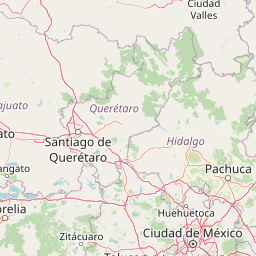
Map view of El Cimatario National Park

Use this park location map to pinpoint El Cimatario National Park in Mexico, understand its exact geographic position, and read its mapped placement within the surrounding landscape more clearly.

Pigeon | © OpenStreetMap contributors

Location context for El Cimatario National Park

Querétaro
Park atlas

Map and Compare Protected Natural Areas Across the Diverse Regional Geography Surrounding El Cimatario National Park

Explore Other National Parks and Protected Areas Near El Cimatario National Park
Browse additional national parks and protected areas near El Cimatario National Park, tracing their geographic spread within the central Mexican highlands and Querétaro state. This park list provides deeper context on diverse volcanic terrain, dry forest ecosystems, and matorral habitats, expanding your view of regional conservation landscapes.
National parkMichoacán

Insurgente José María Morelos y Pavón National Park: Mapped Protected Landscape in Michoacán

Discover its geographic context and protected area boundaries.

Explore Insurgente José María Morelos y Pavón National Park, a designated national park in Michoacán, Mexico. This page provides detailed insights into its protected status, mapped geographic features, and its role as a significant natural landscape within the regional atlas. Understand the park's protected boundaries and its contribution to the geographic understanding of Michoacán.

Area
71.92 km²
Established
1939
IUCN
II
Relief
Mountain
National parkMichoacán

Cerro de Garnica National Park: Its Geography and Protected Landscape Identity

Explore mapped boundaries within Michoacán's natural terrain.

Cerro de Garnica National Park serves as a distinct protected area contributing to the geographic understanding of Michoacán. This page offers a focused view on its mapped boundaries and natural landscape characteristics, providing essential context for atlas exploration. Discover the park's specific identity as a national park and its place within the regional geography, highlighting its value for structured discovery.

Area
19.36 km²
Established
1936
IUCN
II
Relief
Mountain
National parkSan Luis Potosí

El Potosí National Park: Detailed Protected Area Geography and Landscape Context

Explore its mapped boundaries within San Luis Potosí.

Uncover the protected landscape of El Potosí National Park, a designated national park situated in San Luis Potosí, Mexico. This entry offers a detailed perspective on its geographic significance, providing insights into its mapped boundaries and regional natural terrain. Understand how this protected area contributes to the broader atlas of natural landscapes in Mexico, ideal for geographic discovery.

Area
20 km²
Established
1936
IUCN
II
Relief
Mountain
National parkMexico State

Los Remedios National Park: Protected Landscape and Historical Geography of Mexico State

Mapped terrain and cultural heritage within this unique national park.

Delve into the protected landscape of Los Remedios National Park, a national park situated in Mexico State. This page provides detailed geographic context, focusing on its volcanic terrain, mapped boundaries, and the convergence of pre-Hispanic and colonial heritage. Understand its role as a protected area within the western Valley of Mexico and explore the mapped elements that define its cultural and natural identity.

Area
4 km²
Established
1938
IUCN
II
Relief
Mountain
National parkMexico City

Desierto de los Leones National Park: Protected National Park and its Geographic Setting

Explore mapped boundaries and regional landscape context near Mexico City.

Delve into the specifics of Desierto de los Leones National Park, a designated national park recognized for its protected landscape. This MoriAtlas entry focuses on its geographic presence within the Mexico City region, providing clear insights into its mapped boundaries and the surrounding natural terrain. Understand the park's importance as a conservation area and its contribution to the regional geography through dedicated atlas data.

Area
18.67 km²
Established
1917
IUCN
II
Visitors
205K annual
National parkHidalgo

El Chico National Park: National Park Boundaries and Regional Geography in Hidalgo

Explore the mapped protected landscape and terrain of this national park.

El Chico National Park is a distinct protected area offering insight into Mexico's regional geography and conservation landscapes. This page details its specific geographic footprint, the character of its natural terrain, and its place within Hidalgo's broader protected areas atlas. Users can examine mapped boundaries and understand the park's unique environmental context.

Area
27.39 km²
Established
1982
IUCN
II
Relief
Mountain
National parkMexico

Fuentes Brotantes de Tlalpan National Park: National Park Geographic Atlas and Terrain Exploration

Explore protected land boundaries and mapped natural landscapes.

Delve into the geographic specifics of Fuentes Brotantes de Tlalpan National Park, a protected national park situated within Mexico. This detailed view highlights the park's mapped terrain and its significance as a distinct natural landscape. Understand its role in the country's protected area network and its contribution to the broader atlas of natural geography.

Area
0.08 km²
Established
1936
IUCN
II
Relief
Upland
National parkMexico

Cumbres del Ajusco National Park: Exploring Mexico's National Park Protected Landscape

Discover mapped boundaries and regional geography.

Cumbres del Ajusco National Park is an important national park offering rich opportunities for geographic exploration. This detailed profile focuses on its identity as a protected landscape within Mexico, providing essential context for map-based discovery. Understand the park's specific location, its mapped territory, and its role within the nation's network of conservation areas, facilitating a structured atlas view.

Area
9.2 km²
Established
1936
IUCN
II
Relief
Mountain

Common questions about visiting, size, designation, and location context for El Cimatario National Park

El Cimatario National Park FAQs for park facts, access, geography, and protected area context
Find quick answers about El Cimatario National Park, including protected-area facts, park geography, trail and visitor context, and how the park fits into its surrounding country and regional landscape.
MoriAtlas Explorer

Continue Your Protected Areas Search Across the Global Atlas

Deepen your exploration by continuing the structured search for national parks and protected areas worldwide. Utilize the comprehensive filtering capabilities to compare different conservation landscapes and refine your understanding of global park geography. Discover more about the distribution and characteristics of protected natural areas.

Global natural geography