Why Forêt classée de Divo stands out
The Forêt classée de Divo is best known as a classified fragment of Guinean rainforest in southwestern Côte d'Ivoire that has endured despite severe agricultural and settlement pressure. Its profile is defined by low, gently undulating terrain, seasonal streams that feed a moist understory, and vegetation dense enough to reflect the once-broader humid forest cover of the region. Equally defining is its modern conservation story: a long-established reserve that has been substantially reduced in effective forest cover over recent decades, making it a notable case study of how classified forests in Côte d'Ivoire interact with cocoa, rubber, and rural expansion pressures.
Forêt classée de Divo history and protected-area timeline
The forest was first placed under state protection during the colonial period, initially known as the Réserve de Divo. On 3 September 1928, an arrêté formally classified the area, establishing it as part of what would become Côte d'Ivoire's enduring network of forêts classées. Its boundaries were modified a few years later by an arrêté dated 20 December 1932, reflecting the early administrative adjustments that shaped many of the country's classified forests.
By 1978, the reserve appeared in the official list of classified state forests of Côte d'Ivoire with a recorded extent of around 7,350 hectares, a figure that captures its scale at that point in the post-colonial forestry record.
In 2021, a decree set out a general framework for the management of classified forests belonging to the private state forest domain, under which the Forêt classée de Divo is listed among forests eligible for concessions of limited duration under defined conditions. This arrangement marks a shift toward a more concession-based approach to managing some classified forests in the country, while still preserving the reserve's protected status within the national forest estate.
Forêt classée de Divo landscape and geographic character
The Forêt classée de Divo occupies a low-relief landscape typical of southwestern Côte d'Ivoire, where elevation changes are subtle and the terrain reads as broadly flat with only gentle undulations. There are no prominent peaks, cliffs, or dramatic landforms; instead, the scenery is shaped by rolling ground, patches of dense vegetation, and the textures of a humid forest understory.
The area's hydrology is dominated by seasonal streams rather than large permanent rivers. These watercourses carry water during the rainy periods of the year, sustaining moisture in the forest floor and contributing to the dense vegetation that defines the reserve. Outside the wetter zones, the transitional edges between forest, farmland, and rural settlement shape much of the contemporary visual character of the landscape, particularly where agricultural encroachment has thinned or fragmented the original forest cover.
Forêt classée de Divo ecosystems, habitats, and plant life
Ecologically, the Forêt classée de Divo belongs to the Guinean forest zone of West Africa, a humid forest environment characterized by closed canopy, dense understory, and the kind of moisture-loving plant communities that thrive where seasonal streams keep the ground well supplied with water. Its vegetation reflects the conditions typical of southwestern Côte d'Ivoire, where rainfall patterns and humidity support thick, layered forest growth.
While the reserve's current condition reflects significant disturbance, its ecological role remains connected to the preservation of a humid forest patch within a wider agricultural landscape. The presence of streams that feed the understory gives the classified forest a particular capacity to retain moisture-loving vegetation, distinguishing its ecological conditions from drier, more open forests elsewhere in the country.
Forêt classée de Divo wildlife and species highlights
The source material does not provide sufficient detail on the specific fauna of the Forêt classée de Divo to support a detailed wildlife profile. While the reserve forms part of a humid forest environment in southwestern Côte d'Ivoire that would historically have supported typical West African forest wildlife, the available text focuses on land cover, agricultural pressures, and administrative history rather than on species composition.
Forêt classée de Divo conservation status and protection priorities
The Forêt classée de Divo is part of Côte d'Ivoire's official forest heritage and is administered through the country's framework for forêts classées. Its conservation significance lies less in its scale than in what it represents: a surviving classified fragment of humid forest within a region that has experienced extensive transformation.
Its conservation profile is dominated by threats rather than by a long list of achievements. In recent years, the reserve has experienced substantial deforestation driven by agricultural expansion, especially the cultivation of cocoa and rubber (hévéa), by illicit timber extraction, by bush fires, and by the spread of human settlement into and around the classified perimeter. These pressures have meaningfully reduced the forest's effective cover and fragmentation across the reserve and its surroundings.
At the same time, the reserve's inclusion in the 2021 framework for the management of classified forests of the private state forest domain, including the possibility of time-limited, conditional concessions, signals an ongoing effort to reconcile protection goals with sustainable exploitation and revenue frameworks.
Top sights and standout views in Forêt classée de Divo
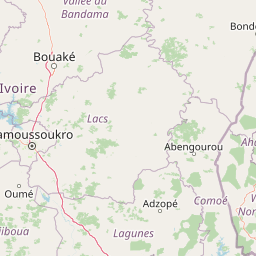
A classified state forest reserve dating to 1928, with boundaries later revised in 1932, situated in the département of Divo in southwestern Côte d'Ivoire near the village of Datta. The reserve lies in a setting of low, gently undulating terrain crossed by seasonal streams that help sustain the humid vegetation typical of the Guinean forest zone.
Although it was recorded at around 7,350 hectares in 1978 and later listed at 2,000 hectares under the 2021 management framework, the Forêt classée de Divo is defined as much by the pressures it faces as by its protected status. Cocoa and rubber cultivation, illegal logging, bush fires, and expanding human settlement have driven significant deforestation, making the reserve a striking case where a long-standing classified forest continues to negotiate its ecological future against strong land-use competition.
Best time to visit Forêt classée de Divo
Seasonal context for the Forêt classée de Divo is best understood through the annual rhythm of Côte d'Ivoire's southwestern humid zone, where rainfall supports the streams and understory moisture that characterize the forest. Visiting during the wetter part of the year, when streams are flowing and vegetation is at its most lush, gives a stronger sense of the reserve's humid forest character, while drier periods may make forest edges and surrounding farmland more visible but reduce the visual density of the vegetation.